The Great Paper Check Paradox: How U.S. B2B Payments Are Evolving Amidst Persistent Reliance on Legacy Systems

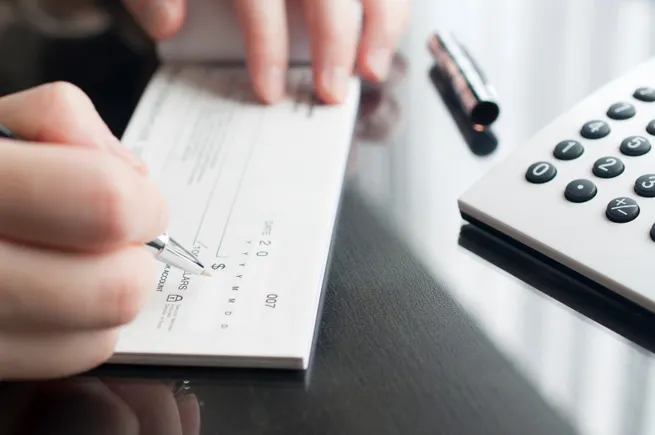
The landscape of business-to-business (B2B) payments in the United States is currently defined by a profound contradiction. While the aggregate value of electronic transactions has soared to unprecedented levels, signaling a long-awaited digital maturation, American enterprises remain stubbornly tethered to the traditional paper check. Recent data from the Federal Reserve, juxtaposed against industry surveys from the Association for Financial Professionals (AFP), paints a picture of a financial ecosystem caught between the efficiency of the digital age and the inertia of long-standing operational habits.
A Decade of Transformation: The Shift in Payment Modalities
Over the last ten years, the trajectory of U.S. B2B payments has been characterized by a steady, if uneven, migration away from paper-based settlement. Historically, U.S. businesses lagged significantly behind their international counterparts in adopting electronic payment infrastructures. This hesitation was driven by several factors: the capital expenditure required to overhaul legacy accounting systems, a lack of interoperability between banking platforms, and the strategic benefit of the "float"—the settlement lag time that allows companies to retain funds in their accounts for several days before a check clears.
However, the period between 2015 and 2024 has witnessed a seismic shift. In 2015, checks stood as the undisputed primary instrument for B2B payments. By 2021, that status had eroded, with checks sliding to the fourth most-used method, trailing behind Automated Clearing House (ACH) transfers, credit cards, and debit cards. The Fed’s latest study indicates that this decline is not merely a statistical anomaly but a structural transformation in how American commerce reconciles its debts.
The Persistent Shadow of Paper Checks
Despite the clear technological pivot, paper checks remain an enduring fixture in the American corporate office. A striking paradox emerged in the 2024 AFP survey, which revealed that 91% of respondents still utilize checks for B2B payments—a sharp increase from the 75% reported in 2023. This uptick suggests that while the total volume of check transactions may be decreasing, the ubiquity of the check as a fallback or specialized payment tool remains virtually unshaken.
This continued reliance persists even in the face of significant security risks. The Financial Crimes Enforcement Network (FinCEN) has reported an alarming rise in check fraud across the United States. Criminal syndicates have increasingly targeted the U.S. mail system to conduct "check washing" schemes, where stolen checks are chemically altered to change the payee and the amount. Despite these risks, businesses often cite the simplicity of the check, the lack of a need for vendor banking information, and the ease of attaching remittance advice as reasons for their continued loyalty to the medium.
Quantifying the Value: ACH vs. The Wire
While the frequency of check use remains high, the economic value of these transactions tells a different story. The transition to electronic methods is most visible when analyzing the total dollar volume flowing through these channels.
According to the Federal Reserve, the value of ACH payments has experienced explosive growth, climbing from $36 trillion in 2015 to approximately $70 trillion by 2024. This doubling in value underscores the scalability and cost-efficiency of the ACH network, which has become the backbone of modern corporate accounts payable departments. In stark contrast, the total value of check payments has remained remarkably stagnant, plateauing at $15 trillion annually.
The hierarchy of value reveals the specific use cases for different instruments:
- Wire Transfers: These remain the undisputed kings of high-value transactions. Used primarily for large, time-sensitive, or cross-border settlements, the value of wire transfers skyrocketed from $820 trillion in 2015 to $1 quadrillion by 2024. They offer the finality and certainty that businesses require for high-stakes capital allocation.
- ACH Transfers: As the preferred choice for recurring and mid-sized B2B payments, ACH has cemented itself as the primary alternative to wires.
- Card Payments: While credit and debit card usage has doubled in value over the last decade, their total footprint remains modest, representing $4 trillion or less. These instruments are generally relegated to smaller, lower-value expenditures, such as travel, entertainment, or minor supplies.
The Implications of "Less Intensive" Usage
The Federal Reserve’s analysis suggests that the decline in B2B check usage is a result of reduced intensity rather than complete abandonment. Nearly 90% of businesses surveyed in 2025 indicated they still utilize checks in some capacity. This suggests that American businesses are practicing a "hybrid" payment strategy, where they maintain the infrastructure for check processing even as they shift the bulk of their volume to digital channels.
This hybrid approach carries hidden costs. Maintaining dual systems—one for electronic payments and one for legacy paper processing—increases the administrative burden on treasury departments. Furthermore, the reliance on check-based systems leaves firms vulnerable to the aforementioned fraud vectors. Financial analysts note that the longer firms take to fully divest from paper, the longer they remain exposed to these systemic risks.
Strategic Outlook and Future Trends
The transition away from paper is expected to continue, driven by the emergence of real-time payment (RTP) networks and the FedNow service. These platforms aim to bridge the gap between the speed of a wire transfer and the cost-efficiency of an ACH payment, potentially providing the final incentive for businesses to abandon checks entirely.
However, the cultural and procedural barriers to total digitization remain significant. For many small-to-mid-sized enterprises, the check is tied to accounting software that is deeply integrated into their daily workflows. Changing these systems requires not just technological investment, but a change in the organizational culture that views the paper check as a reliable, tangible record of payment.
Conclusion: A Slow March Toward Digitization
The U.S. B2B payment market is in a state of extended transition. While the total value of electronic payments is dwarfing that of paper checks, the sheer persistence of the check—used by 90% of firms as of 2025—demonstrates that the digital revolution in finance is not a binary switch. Instead, it is a gradual process of attrition.
The primary challenge for CFOs and treasury managers in the coming years will be to balance the convenience of legacy habits with the necessity of modern security and efficiency. As the value of ACH and wire transfers continues to climb, the check may eventually find itself relegated to a niche status, but the current data suggests that this day is still years, if not decades, away. For now, the American business landscape remains a testament to the fact that while technology moves at the speed of light, operational habits often move at the speed of tradition.
Related posts: