WestStar Bank Expands Regional Footprint Through Strategic Acquisition of Albuquerque-Based Southwest Capital Bank

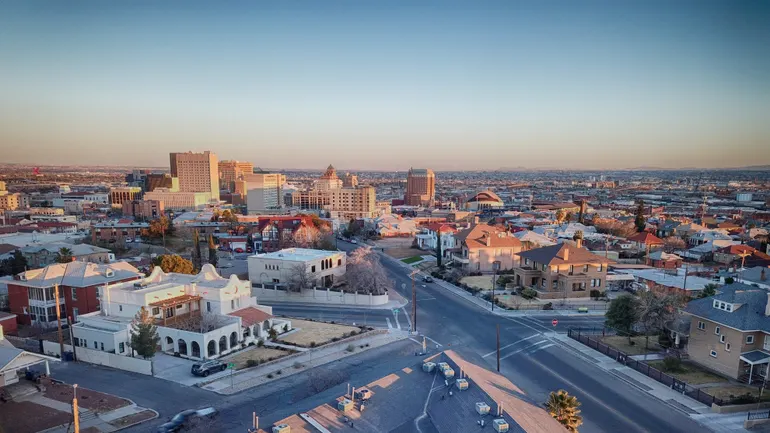
El Paso-based WestStar Bank has officially announced a definitive agreement to acquire Albuquerque-headquartered Southwest Capital Bank, a strategic transaction that will dramatically expand the Texas financial institution’s physical presence in New Mexico from a single branch to a robust network of seven locations. The merger, which was announced jointly by both institutions, marks a significant milestone in regional banking consolidation across the Southwest. Financial terms of the agreement were not disclosed by either party, but the transaction is projected to officially close in the first quarter of 2027, pending customary regulatory approvals and closing conditions.
When finalized, the combined entity will command approximately $3.8 billion in total assets, roughly $3.3 billion in deposits, and a robust loan portfolio totaling $2.9 billion. This substantial scale positions the newly expanded WestStar Bank as a formidable regional lender capable of competing more aggressively with larger national institutions while retaining the core tenets of relationship-driven, community-focused banking. For WestStar, the acquisition serves as a strategic gateway into New Mexico’s largest metropolitan market, Albuquerque, while simultaneously extending its geographic reach further north into the state. Prior to this agreement, WestStar’s operational footprint in New Mexico was limited strictly to a lone branch located in Las Cruces. Conversely, the acquisition provides Southwest Capital Bank with a much-needed strategic harbor following a turbulent period marked by a collapsed merger attempt with a credit union last year.
Strategic Vision and Cultural Alignment
Leadership from both institutions have emphasized that the merger is rooted in shared operational philosophies, mutual respect for community banking, and complementary corporate cultures. Rick Francis, executive chair of WestStar, underscored these sentiments in a formal statement released alongside the merger announcement, noting that the two organizations possess "remarkably similar values."
"Both institutions were shaped by generations of bankers, business owners, and families who believed their communities deserved a bank that understood them," Francis said. "Just as important, we share a vision for the future and a belief that locally guided community banks continue to play a vital role in helping businesses, families, and communities thrive."
Under the terms of the agreement, continuity of leadership will be a foundational priority for the merged entity. Chez Steel, the current chief executive officer of Southwest Capital Bank, is slated to transition into the role of New Mexico president for the combined bank, ensuring that institutional knowledge and local decision-making authority remain firmly intact within the communities the bank serves.
"As we considered how best to position our clients, team members, and communities for the future, it was important to find a partner that respected our history, shared our values, and was committed to relationship banking," Steel stated. "We found that partner in WestStar."
Executives from both banks have reiterated that the transaction is designed to preserve local leadership and localized decision-making frameworks. Furthermore, the integration will grant Southwest Capital’s existing customer base access to WestStar’s considerably broader suite of financial capabilities. These enhanced services include advanced commercial banking solutions, sophisticated treasury management, comprehensive wealth management, title services, and state-of-the-art digital banking platforms. The banks noted that clients and staff members will receive comprehensive information well in advance of any operational transitions that might affect them.
A Second Chance at M&A: The Backdrop of the U.S. Eagle Fallout
The announcement of the WestStar acquisition brings a welcome sense of stability and strategic clarity to Southwest Capital Bank, arriving on the heels of a failed 2024 merger attempt that ultimately unraveled due to regulatory hurdles and financial pressures faced by the prospective buyer, U.S. Eagle Federal Credit Union.
In the summer of 2024, initial headlines suggested that U.S. Eagle was poised to absorb Southwest Capital Bank in a deal that would have represented a notable consolidation of credit union and banking assets within New Mexico. However, the transaction encountered severe headwinds as the regulatory review process dragged on, accompanied by mounting financial strain at the credit union level.
By July 2025, the underlying vulnerabilities of the proposed transaction came to light when Chez Steel spoke frankly about the dynamics of the failed deal to the Albuquerque Journal. Steel pointedly remarked at the time that "Southwest Capital Bank is very profitable. [U.S. Eagle is] not. They’re having trouble."
Those troubles were soon validated by industry reporting. The Credit Union Times revealed that U.S. Eagle had sustained a staggering $20.5 million net loss during the second quarter of the preceding year. Marsha Majors, who was serving as the CEO of U.S. Eagle during the tumultuous period, attributed the poor financial performance to the underperformance of the credit union’s commercial lending portfolio. In statements to industry media, Majors explained that the portfolio had suffered from the lingering, adverse economic after-effects of the COVID-19 pandemic.
Ultimately, the compounding financial losses and regulatory roadblocks proved insurmountable. In July 2025, Majors confirmed to the Credit Union Times that the acquisition of Southwest Capital Bank had been officially terminated after failing to secure the requisite regulatory approvals. Shortly thereafter, leadership transitions began to unfold at the credit union, with Majors announcing her retirement in January following a distinguished 40-year career in the industry, paving the way for Michael Moore to step in as president and CEO.
For Southwest Capital Bank, the collapse of the U.S. Eagle deal left the profitable institution seeking a reliable, culturally aligned partner that could navigate regulatory expectations and provide long-term stability. The newly minted agreement with WestStar Bank successfully fulfills that objective, offering a traditional banking partner with deep roots in the Southwest and a clean regulatory and financial track record.
Financial Scope and Asset Integration
The amalgamation of WestStar Bank and Southwest Capital Bank represents a substantial scaling of operations for the El Paso-based institution. By absorbing Southwest Capital’s infrastructure, WestStar will instantly augment its asset base by approximately $500 million, pushing its total assets to the $3.8 billion threshold.
A breakdown of the combined financial metrics underscores the balanced nature of the transaction:
- Total Assets: Approximately $3.8 billion
- Total Deposits: Approximately $3.3 billion
- Total Loans: Approximately $2.9 billion
- Branch Footprint: Expansion from 1 New Mexico location (Las Cruces) to a total of 7 locations across the state, including key hubs in Albuquerque.
Industry analysts note that while $500 million in acquired assets may not alter the national banking landscape, it represents a transformative regional consolidation within the Southwest corridor. By bridging the economic corridor between El Paso, Las Cruces, and Albuquerque, WestStar is positioning itself as a dominant regional player capable of servicing cross-border commercial enterprises, agricultural clients, and family-owned businesses that operate throughout West Texas and New Mexico.
Furthermore, the retention of approximately $3.3 billion in deposits provides the combined bank with robust liquidity, insulating it against macroeconomic volatility and enabling steady, organic lending growth across its newly expanded footprint.
Chronology of Events
To fully understand the trajectory of the WestStar and Southwest Capital merger, it is helpful to examine the chronological sequence of developments that shaped the regional banking landscape in recent years:
- 2024: U.S. Eagle Federal Credit Union announces a proposed acquisition of Southwest Capital Bank, aiming to expand its market share and commercial lending capabilities in New Mexico.
- Mid-2024 to Early 2025: The proposed credit union transaction encounters prolonged regulatory scrutiny and unexpected financial headwinds.
- Second Quarter 2025: U.S. Eagle reports a significant financial loss of $20.5 million, driven largely by pandemic-era stress within its commercial lending portfolio.
- July 2025: Executives from both Southwest Capital and U.S. Eagle publicly confirm that the acquisition deal has officially collapsed after failing to receive necessary regulatory approvals. Chez Steel highlights the profitability of Southwest Capital in contrast to the credit union’s struggles.
- January 2026: Marsha Majors retires after a 40-year career at U.S. Eagle, with Michael Moore stepping in as the new president and CEO.
- Early 2026: Southwest Capital actively seeks a stable, profitable banking partner to secure its long-term future and client interests.
- Wednesday, Announcement Date: WestStar Bank and Southwest Capital Bank jointly announce a definitive acquisition agreement, expanding WestStar’s New Mexico footprint to seven branches, establishing a $3.8 billion asset base, and naming Chez Steel as the incoming New Mexico president.
- First Quarter 2027 (Projected): The transaction is officially scheduled to close, subject to customary closing conditions and regulatory clearances.
Broader Implications for Regional and Community Banking
The WestStar-Southwest Capital merger arrives at a time of intense structural evolution within the American banking sector. Across the United States, community banks face mounting pressures driven by compliance costs, technological upgrade cycles, and fierce competition from both mega-banks and digital-first financial technology platforms. In this environment, scale has increasingly become a prerequisite for long-term survival and competitiveness.
At the same time, the attempted—and ultimately failed—acquisition of Southwest Capital by a credit union highlights a broader, ongoing debate within the financial services industry regarding the convergence of credit unions and traditional banks. Critics of credit union acquisitions of tax-paying community banks often point to structural differences in taxation, regulatory oversight, and community reinvestment obligations. The ultimate failure of the U.S. Eagle transaction, attributed in part to regulatory hurdles and portfolio performance issues, served as a case study in the complexities of cross-industry consolidation.
By contrast, a bank-to-bank merger like the one between WestStar and Southwest Capital offers a more streamlined regulatory pathway and cultural continuity. Both entities operate under the same federal and state banking charters, adhere to identical tax structures, and share a common understanding of commercial underwriting standards.
For the Albuquerque business community and the broader New Mexico market, the preservation of local leadership is expected to mitigate concerns regarding potential corporate displacement. Banking industry observers have noted that when out-of-market mega-banks acquire regional institutions, branch closures and centralized customer service models often alienate local clientele. However, by explicitly promising to maintain local decision-making frameworks and appointing Chez Steel to head the New Mexico division, WestStar is deliberately signaling its commitment to the relationship-driven model that defined Southwest Capital’s legacy.
As the financial services industry looks toward 2027 and the eventual closing of the transaction, the integration of WestStar and Southwest Capital will serve as a bellwether for successful regional bank expansion. If executed smoothly, the merger will demonstrate how two culturally aligned community banks can pool their resources to achieve vital economies of scale without sacrificing the personalized service and local responsiveness that their customers have come to expect.
Related posts: