The Paradox of Progress: Why Artificial Intelligence Infrastructure Constraints Are Buying Humanity Essential Time

CHICAGO—The relentless march of artificial intelligence has long been characterized by a fierce, hyper-competitive race among elite research laboratories to continuously expand technological frontiers. Yet, paradoxically, growing public, regulatory, and logistical resistance to the massive physical build-out of computing resources may be offering society a vital, unintended benefit. Industry analysts and policy experts increasingly suggest that every hurdle, delay, and bottleneck slowing down the construction of next-generation data centers buys critical time—time that humanity desperately needs to maximize the staggering potential benefits of artificial intelligence while actively mitigating its profound, systemic risks.
This delicate tension between acceleration and caution was recently underscored in an academic setting in Chicago. A tenured mathematics professor recently made the difficult decision to step away from his university post for a full sabbatical year, shifting his focus entirely to the study of artificial intelligence safety. His abrupt pivot was catalyzed by a landmark development: OpenAI released a massive repository of 722 research manuscripts claiming rigorous solutions to 377 previously unresolved mathematics problems. As advanced language and reasoning models demonstrate an unprecedented capacity to conquer domains once considered the exclusive purview of human genius, foundational questions regarding the future of specialized labor have come to the fore. If brilliant, highly specialized professionals face the prospect of technological displacement, the broader question remains: why is the rest of the global workforce not experiencing a commensurate level of urgency?
Main Facts and the Current Landscape of Generative Intelligence
The core driver of the contemporary artificial intelligence boom is an insatiable demand for computational power, often referred to simply as compute. Leading AI labs—backed by unprecedented capital investments from major technology conglomerates—are locked in an escalating arms race to train models with parameters scaling into the trillions. These systems rely on specialized hardware, primarily advanced graphics processing units (GPUs) and custom application-specific integrated circuits (ASICs), housed within sprawling, energy-intensive data centers.
However, this exponential scaling trajectory has run headlong into physical and economic realities. Modern data centers require gargantuan amounts of electrical power, frequently straining local power grids and forcing tech companies to explore unconventional energy solutions, including the rehabilitation of decommissioned nuclear reactors. Simultaneously, supply chain constraints for silicon wafers, geopolitical trade restrictions on advanced microchips, and mounting environmental opposition from local communities have begun to put the brakes on rapid infrastructure expansion.
Rather than viewing these friction points purely as commercial setbacks, a growing cohort of risk researchers and governance experts argue that these physical constraints act as a natural speed bump. Without them, the deployment velocity of artificial intelligence systems would outpace humanity’s capacity to establish safety frameworks, ethical guardrails, and regulatory oversight.
Chronology of the Compute Boom and Mathematical Milestones
The rapid escalation of artificial intelligence capabilities is the result of a multi-decade evolution, though the current phase of generative dominance follows a distinct and compressed timeline:
- November 2022: OpenAI launches ChatGPT, igniting global mainstream awareness of generative artificial intelligence and touching off a massive corporate race for market dominance.
- Throughout 2023: Technology giants redirect capital expenditure budgets toward artificial intelligence infrastructure, triggering a global shortage of advanced GPUs and skyrocketing the valuation of semiconductor manufacturers like NVIDIA.
- 2024: Power grid operators in major technology hubs, such as Northern Virginia and the American Midwest, report unprecedented spikes in electricity demand driven by planned data center construction, leading to friction with environmental regulators.
- Late 2025: Leading AI laboratories transition from simply scaling model size to enhancing advanced reasoning capabilities, moving past pattern recognition into domains requiring symbolic logic and abstract problem-solving.
- October 2026: OpenAI releases a landmark batch of 722 research manuscripts asserting definitive solutions to 377 long-standing, unresolved mathematics problems. This milestone sparks acute anxiety within academic circles regarding the automation of high-level intellectual labor.
- Present Day: Policymakers, industry leaders, and academic researchers grapple with the dual imperatives of maintaining global technological competitiveness while establishing robust safety protocols to manage autonomous systems.
Supporting Data and Infrastructure Realities
To understand the scale of the artificial intelligence infrastructure race, one must examine the macroeconomic and infrastructural data underpinning the industry. According to industry estimates from leading financial institutions, capital expenditures by the top four technology firms—Microsoft, Alphabet, Amazon, and Meta—surpassed $200 billion annually, with a disproportionate share dedicated to artificial intelligence data centers and hardware procurement.
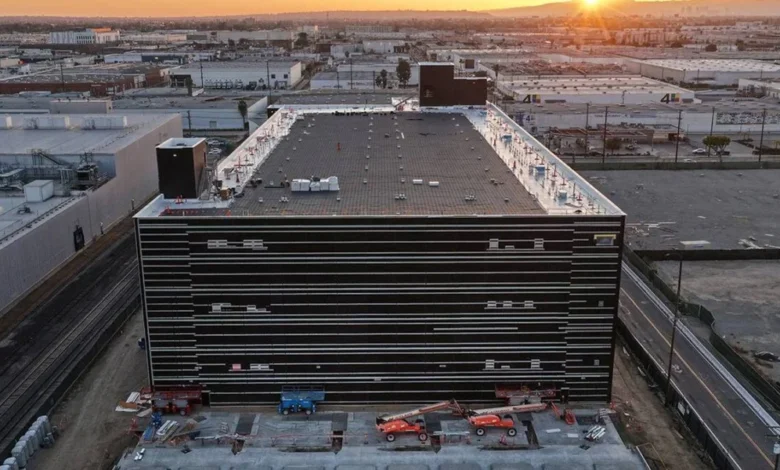
A single next-generation training cluster often demands upwards of 100 megawatts of continuous power, roughly equivalent to the electricity consumption of 80,000 American households. These facilities require extensive cooling systems, millions of gallons of water, and dedicated high-voltage transmission lines.
| Metric / Indicator | Approximate Scale / Estimate | Potential Implication |
|---|---|---|
| Top Tech CapEx (AI Focus) | Over $200 Billion Annually | Unprecedented financial backing accelerating hardware deployment. |
| Data Center Power Demand | 100+ Megawatts per Large Cluster | Strains local electrical grids and accelerates green energy demands. |
| Advanced Math Benchmarks | Hundreds of Unresolved Problems Solved | Signals rapid encroachment on domains requiring complex human reasoning. |
| Infrastructure Bottleneck Delay | Estimated 12 to 36 Months | Provides a window for policy frameworks and safety research to catch up. |
These figures illustrate that the build-out of artificial intelligence is not merely a software phenomenon; it is a heavy industrial undertaking. Consequently, any regulatory delays, zoning disputes, or energy shortages that slow down this physical construction directly throttle the speed at which frontier models can be trained and deployed.
Official Responses and Stakeholder Perspectives
The rapid advancement of artificial intelligence and the concurrent race for infrastructure have elicited starkly contrasting reactions from various sectors of society.
Technology executives and laboratory leaders generally maintain that aggressive scaling is necessary to unlock solutions to humanity’s most complex challenges, including climate modeling, disease eradication, and advanced material science. Speaking at a recent technology policy symposium, a leading laboratory executive emphasized that "the velocity of our research is directly tied to our ability to harness compute. Slowing down innovation arbitrarily risks ceding technological leadership to jurisdictions with less stringent safety standards or ethical considerations."
Conversely, labor economists, ethicists, and safety researchers advocate for a more measured approach. They point to milestones such as the automated resolution of complex mathematical problems as a clear warning sign for professional knowledge workers. Academics argue that society is drastically unprepared for the socio-economic dislocation that could occur if cognitive automation outpaces labor market adaptation.
Furthermore, environmental advocacy groups and public utility regulators have pushed back against the unchecked expansion of data centers. Their concerns center on carbon emissions, water scarcity, and the diversion of renewable energy sources away from residential grids. From this perspective, the friction slowing down data center construction is a welcome check on corporate expansion that protects public resources.
Broader Impact and Implications for the Future
The intersection of infrastructure bottlenecks and rapid capability gains creates a complex operational environment for global society. The central thesis emerging from policy analysts is that time is the most valuable commodity in the current technological paradigm.
If computing resource expansion were frictionless, frontier models might advance through successive generations of capability leaps before institutions could even begin to comprehend their systemic vulnerabilities. Unchecked deployment could lead to widespread economic displacement, profound disruptions in higher education, and the proliferation of sophisticated disinformation without adequate cryptographic or social defenses in place.
By introducing friction—whether through energy grid limitations, environmental regulations, supply chain bottlenecks, or social resistance—society inadvertently purchases breathing room. This window allows policymakers to draft comprehensive regulatory frameworks, enables academic institutions to adapt curricula and study safety protocols, and gives the workforce time to pivot toward roles that require uniquely human empathy, ethical judgment, and complex interpersonal skills.
Ultimately, the anxiety felt by mathematicians and knowledge workers is a rational response to an unprecedented technological shift. Yet, the physical limits governing the expansion of artificial intelligence may ultimately serve as its most effective safety valve, ensuring that human ingenuity retains a fighting chance to steer the trajectory of the machine age.
Related posts: