THORChain Token Surges 13 Percent as Binance Exploit Spotlights Cross-Chain Laundering Controversies

The native token of the decentralized cross-chain liquidity protocol THORChain, RUNE, experienced a sharp market movement, climbing more than 13 percent in value from a multi-week low of $0.59 to approximately $0.67. This sudden valuation increase arrived in the wake of a high-profile security breach at major cryptocurrency exchange Binance. On-chain analytics and blockchain forensics have revealed that funds stolen during the Binance exploit were funneled through THORChain’s permissionless infrastructure. The incident has once again thrust the protocol into a global debate concerning the balance between financial privacy, decentralization, and the systemic vulnerabilities exploited by state-sponsored cybercriminal organizations.
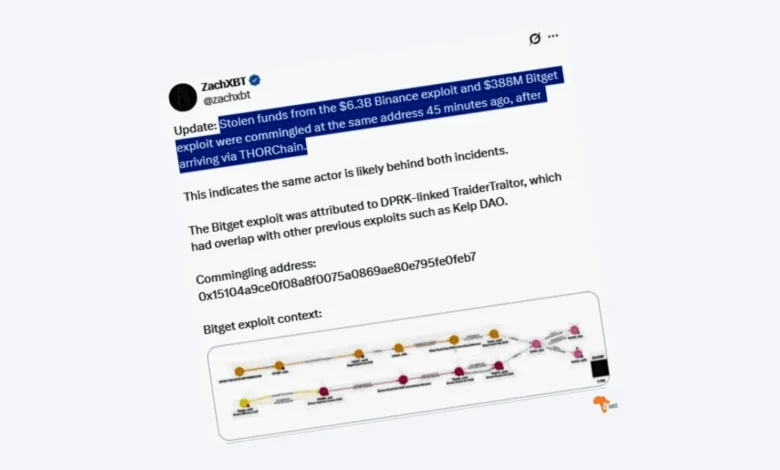
According to prominent on-chain investigator ZachXBT, capital compromised in the Binance security incident was routed through THORChain before being consolidated into a specific Ethereum-based address. This receiving address had previously been flagged by blockchain investigators for housing funds linked to another devastating cyberattack: the September Bitget exchange exploit, which resulted in losses scaling toward $387.5 million. Cybersecurity researchers and intelligence agencies have attributed both security breaches to sophisticated North Korean hacking syndicates, notably state-backed entities like the Lazarus Group, which systematically target cryptocurrency exchanges and decentralized finance (DeFi) platforms to generate state revenue.
Mechanics of Cross-Chain Exploits and THORChain’s Architecture
The repeated utilization of THORChain by malicious actors attempting to launder stolen capital highlights the fundamental design principles of the protocol and the distinct challenges facing decentralized finance oversight. Unlike centralized exchanges—such as Binance, Coinbase, or Kraken—which maintain the authority to freeze accounts, halt withdrawals, and blacklist suspicious wallet addresses upon receiving alerts from law enforcement, THORChain operates entirely on a decentralized, permissionless architecture.
The protocol is designed to facilitate native asset swaps across disparate blockchains—including Bitcoin, Ethereum, Litecoin, and Binance Smart Chain—without requiring trusted intermediaries or centralized order books. Users interact directly with automated liquidity pools. Once an attacker successfully introduces stolen cryptocurrency into THORChain’s liquidity infrastructure, the system processes the swaps algorithmically. Consequently, third parties, developers, and node operators possess no administrative backdoors or centralized controls to intervene, reverse transactions, or freeze assets once they enter the protocol’s swap mechanism.
In the aftermath of the Bitget exploit, the attacker leveraged this capability to seamlessly convert millions of dollars worth of diverse stolen altcoins into native Bitcoin. Furthermore, the perpetrator shifted approximately $83 million worth of stolen XRP across a vast network of decentralized wallets, utilizing THORChain and subsequent bridging mechanisms to obfuscate the trail of funds.
The Immutability Dilemma: Ripple and the XRP Freeze Impasse
The movement of $83 million in stolen XRP brought to light a critical architectural divergence within the broader digital asset ecosystem regarding asset recovery capabilities. Unlike stablecoins issued by centralized entities—such as Tether’s USDT or Circle’s USDC—which feature smart contract functions allowing issuers to blacklist and freeze tokens in malicious wallets instantly, native layer-1 assets present entirely different recovery obstacles.

Ripple, the technology company associated with the XRP Ledger, cannot unilaterally freeze native XRP residing in non-custodial wallets controlled by external private keys or attackers. Because the XRP Ledger operates on a decentralized consensus protocol governed by independent validators rather than a corporate authority with asset-freezing capabilities, stolen native coins remain entirely outside the direct control of any single corporate entity. This technical limitation contrasts sharply with Ethereum-based tokens or centralized stablecoins, where freezing mechanisms are frequently deployed to render stolen funds unspendable on centralized trading platforms.
Industry Clashes Over Censorship Resistance Versus Accountability
THORChain’s steadfast refusal to blacklist or censor wallet addresses linked to major hacks has historically sparked intense friction between centralized exchange executives and decentralized finance purists. Following the Bitget breach, Bitget CEO Gracy Chen engaged in a public dispute with figures in the THORChain ecosystem. Chen argued that absolute decentralization should not morph into a shield that protects infrastructure explicitly facilitating the laundering of identifiable, stolen funds.
Conversely, THORChain core contributors and advocates have maintained that implementing address blacklists would fundamentally compromise the censorship-resistant ethos that underpins the protocol. Proponents argue that once a protocol introduces administrative intervention or selective transaction censorship, it ceases to be truly decentralized and becomes vulnerable to external regulatory coercion, censorship, and systemic bias.
This ideological clash is not unprecedented. It mirrors the severe controversies that erupted in February 2025 following the massive Bybit exchange exploit, wherein attackers utilized THORChain to launder approximately $1.4 billion in stolen digital assets. That historic security breach prompted intense discord among decentralized network contributors over whether protocol-level upgrades should be introduced to restrict transactions tied to illicit activities, ultimately leading to legal actions by centralized platforms seeking asset freezes against foreign state actors.
Chronology of Major Cross-Chain Exploits Involving THORChain
To understand the current market and regulatory focus on THORChain, industry analysts frequently review the timeline of major incidents where the protocol’s liquidity routing was leveraged by threat actors:
- February 2025: Attackers orchestrate a historic $1.4 billion exploit against the Bybit exchange, utilizing THORChain to rapidly break down and launder stolen multi-chain assets. The incident triggers international lawsuits and intense industry-wide debates regarding accountability in DeFi.
- September 2026: A security breach compromises Bitget, with stolen funds rapidly escalating toward $400 million. The perpetrators route substantial portions of the loot through THORChain and move approximately $83 million in native XRP, exposing the limitations of native asset freezing.
- October 2026: Binance suffers a high-profile security breach. On-chain investigators, including ZachXBT, trace the movement of stolen cryptocurrency through THORChain, linking the destination addresses directly to those utilized in the September Bitget attack.
- October 2026 (Present): RUNE token experiences a 13 percent price appreciation—climbing from $0.59 to $0.67—driven by heightened network activity, while reigniting regulatory and ethical debates over decentralized cross-chain liquidity protocols.
Market Implications and Economic Realities
While the influx of transaction volume resulting from major exchange hacks often triggers temporary surges in protocol usage and fee generation for liquidity providers—translating into upward price momentum for governance and utility tokens like RUNE—market analysts caution against viewing illicit volume as a sign of healthy ecosystem growth.
Hack-related transaction flows do not represent sustainable, organic demand from everyday retail or institutional users. Instead, they underscore the ongoing cat-and-mouse game between advanced threat actors—particularly state-sponsored hacking groups seeking to evade international sanctions—and decentralized protocol developers. As global financial regulators increase their scrutiny on cross-chain bridges and decentralized exchanges, protocols like THORChain face mounting pressure to innovate compliance-preserving privacy solutions or brace for heightened regulatory friction in traditional and digital financial markets alike.