Unusual Market Divergence: U.S. Treasury Volatility Surges While Bitcoin Hovers Near Yearly Lows

In a remarkable shift that has caught financial analysts off guard, the traditionally turbulent cryptocurrency market is currently exhibiting an aura of calm, while the global bond market faces mounting agitation. U.S. Treasury volatility has experienced a sharp and sudden upward trajectory, contrasting starkly with Bitcoin options traders who are pricing in historically low levels of turbulence. This macroeconomic divergence has upended conventional market wisdom, prompting economists, institutional investors, and digital asset strategists to re-evaluate the complex interconnections between traditional safe-haven assets and decentralized cryptocurrencies.
To understand the weight of the current market structure, one must examine the metrics governing institutional fear and uncertainty. Over the course of the trading week, the MOVE index—widely regarded as the benchmark gauge for U.S. Treasury market volatility, tracking options on interest rate swaps—climbed precipitously from approximately 80 to roughly 104. This notable ascent marks the highest reading for the index since March, signaling deep-seated anxiety among fixed-income investors regarding the trajectory of sovereign debt, government spending, and monetary policy.
In sharp contrast, the digital asset ecosystem is currently witnessing subdued price fluctuations. Volmex’s 30-day Bitcoin implied volatility index, known as the BVIV, has hovered persistently around 37, resting comfortably close to its yearly low of approximately 35. Meanwhile, the Cboe Volatility Index (VIX), which measures expected 30-day volatility for the S&P 500 equity benchmark, mirrors this tranquility, trading near its annual lows at roughly 14. This creates a fascinating macro-financial paradox: government bonds, traditionally heralded as the ultimate risk-free and liquid bedrock of the global financial architecture, are generating higher anxiety among traders than a digital asset notorious for its aggressive historical price swings.
The underlying catalyst driving distress in the fixed-income sector stems from a potent cocktail of persistent inflation worries, stubbornly high energy costs, and profound uncertainty regarding the path of central bank interest rates. As macroeconomic data continues to challenge the "last mile" of disinflation, the U.S. 10-year Treasury yield recently staged a dramatic advance, touching approximately 5.2% before trimming some of those gains to ease slightly.
Historically, a rapid tightening of financial conditions and a spike in sovereign yields acts as a gravitational pull that drains liquidity from speculative and risk-on asset classes. Higher yields not only elevate the risk-free rate of return available on government-backed debt—making cash and bonds extraordinarily attractive relative to equities and crypto—but they also systematically raise borrowing and financing costs across the broader economy.
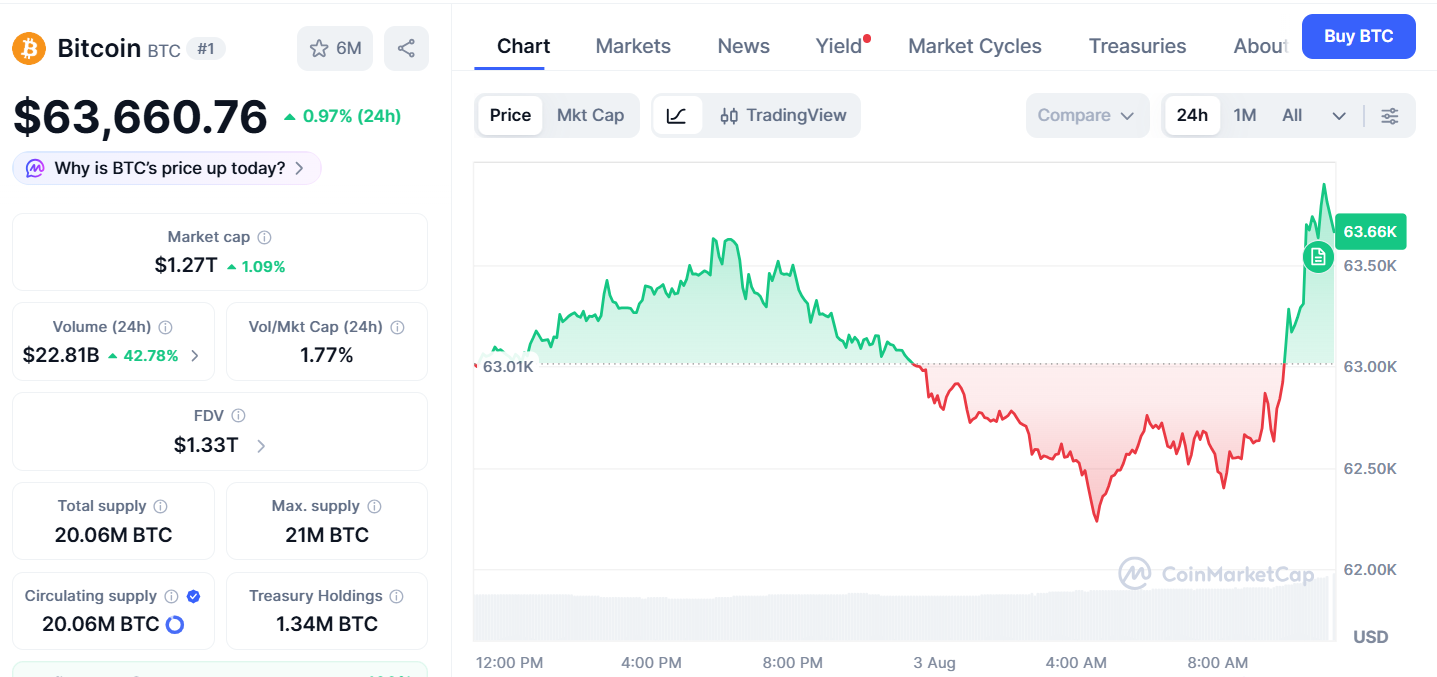
Bitcoin has not remained entirely immune to these macroeconomic headwinds. As benchmark yields ascended toward the 5.2% threshold earlier in the week, the leading cryptocurrency experienced a stalling of its upward price momentum, forcing bulls to pause their campaigns. However, unlike previous cycles where an aggressive spike in Treasury yields triggered cascading liquidations and severe drawdowns across the crypto landscape, the options market is notably failing to price in violent Bitcoin price swings. Derivative traders are evidently refusing to panic, keeping expected volatility compressed despite the brewing storm in the debt market.
A deeper dive into quantitative finance reveals that the historical statistical relationship between these asset classes has undergone a structural mutation. Recent correlation analyses indicate that the statistical relationship between the MOVE index and equity or Bitcoin volatility has decoupled, turning negative or hovering near zero. This breakdown suggests that cross-market contagion channels are operating differently than they have in prior monetary tightening cycles.
Financial market historians note that Bitcoin’s lifecycle has largely been defined by its status as a high-beta volatility asset. Since its inception, institutional adoption has walked hand-in-hand with the narrative that digital assets offer explosive upside coupled with punishing drawdowns. Yet, the current snapshot in time presents a vastly different reality. The anxiety that traditionally characterizes the crypto asset class has migrated wholesale into sovereign debt markets, where institutional portfolio managers grapple with the mathematical realities of mounting national debt and shifting monetary levers.
Market analysts and economic strategists are quick to temper these observations with necessary caution. The current decoupling of volatility indices does not imply that Bitcoin has suddenly graduated into a risk-free safe-haven asset, nor does it guarantee that systemic stress originating in the bond market will permanently spare the digital economy. Financial history is rife with examples of delayed shocks; macroeconomic pressures often take weeks or months to filter through complex financial conduits before manifesting in localized liquidity crunches.
Instead, the divergence points to a fundamental recalibration of market expectations. Bond traders are actively pricing in the fiscal and monetary risks of a changing global order, while cryptocurrency participants are digesting distinct internal catalysts, including shifting regulatory landscapes, institutional exchange-traded fund (ETF) inflows, and evolving network dynamics. For the time being, the traditional roles have reversed, with the most profound market nerves concentrated firmly within the halls of sovereign debt rather than the decentralized ledgers of the blockchain. As the Federal Reserve navigates its next policy moves and bond auctions continue to test investor appetite, all eyes remain fixed on whether the tranquility in the crypto options market can endure or if a convergence with traditional market volatility is ultimately inevitable.
Related posts: