As of April 7, 2025, global financial markets are experiencing a period of significant volatility, mirroring the anxiety that characterized the onset of the COVID-19 pandemic. Investors are currently grappling with the dual pressures of shifting international trade policies—specifically the implementation of new, aggressive tariffs—and a lingering sense of economic uncertainty. While market indices have faced sharp declines in recent trading sessions, the current climate serves as a reminder of the historical cycles that define long-term equity investment.
Market Chronology and Current Volatility
The current market instability began in earnest toward the end of the first week of April 2025. Following a period of relative calm, Thursday and Friday of the preceding week saw a marked sell-off that pushed major indices toward bear market territory. On Monday, April 7, the S&P 500 continued to fluctuate, trading down by approximately 0.65% mid-day.
This environment bears a striking resemblance to the market reactions observed during the spring of 2020. During that period, the global economy faced a systemic shock as nations enforced lockdowns to mitigate the spread of COVID-19. Much like today, the prevailing sentiment among retail investors was that the "rules" of the market had fundamentally changed. However, historical data suggests that while the catalysts for volatility are always unique, the structural behavior of the market remains consistent.
Historical Context: Lessons from 2000-2010
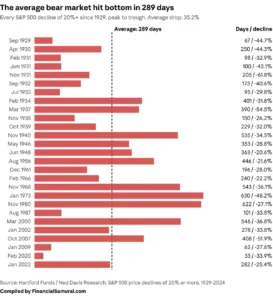
To understand the current climate, analysts often point to the "lost decade" of 2000-2010 as a primary case study for long-term investors. That period was defined by two significant market corrections: the bursting of the dot-com bubble (2000–2002) and the Global Financial Crisis (2008–2009).
During the 2000-2002 period, the S&P 500 experienced a decline of approximately 49%. This was followed by the 2008-2009 crash, during which the index fell by 56.8%. Despite these dramatic bookend events, the annualized return for the S&P 500 over that ten-year span was approximately 2%, or -0.26% when adjusted for inflation. While these figures appear discouraging in isolation, they underscore the resilience of the market for those who maintained their positions rather than capitulating during the height of the panic.
The Role of Trade Policy and Economic Indicators
The current market pressure is largely attributed to a hardening stance on international trade. The introduction of new tariffs has created a atmosphere of concern regarding global supply chains and corporate profitability. Economists note that trade protectionism often leads to increased costs for consumers and reduced margins for multinational corporations, which are the primary drivers of equity market performance.
However, the correlation between political policy and market performance is rarely linear. While current trade tensions have acted as a negative catalyst, the broader economic foundation—including labor market strength, corporate earnings growth, and interest rate policy—continues to exert influence. Financial experts advise that reacting to specific policy changes in the short term often leads to "market timing" errors, which statistically reduce long-term portfolio yields.
Media Influence and Investor Psychology
A critical component of modern market volatility is the role of media dissemination. In the digital age, financial news outlets operate in a 24-hour cycle that prioritizes high-engagement content. Academic studies on media sentiment suggest that fear-based reporting—often referred to as "doom-scrolling"—is a primary driver of retail investor panic.

The psychological phenomenon of "loss aversion" causes investors to feel the pain of a market decline significantly more intensely than they feel the joy of an equivalent gain. When media outlets amplify this sentiment, it creates a feedback loop of selling that can exacerbate a correction. Financial advisors suggest that institutional investors generally ignore these cycles, focusing instead on long-term value, while retail investors are more susceptible to the pressure to liquidate assets during periods of uncertainty.
Quantitative Analysis of Market Cycles
Data regarding long-term market performance indicates that the probability of positive returns increases in correlation with the duration of the investment horizon.
- Five-Year Horizon: While unpredictable, the likelihood of a higher index value compared to today is statistically significant.
- Ten-Year Horizon: Historical data from the last century shows that the S&P 500 has consistently provided positive nominal returns over any ten-year rolling period.
- Twenty-Year Horizon: The probability of capital appreciation is historically high, as the market has survived wars, pandemics, technological shifts, and legislative overhauls.
The current "bear" territory is viewed by many institutional analysts not as an outlier, but as a standard feature of market mechanics. A bear market is defined by a 20% decline from recent highs; reaching this threshold requires a collective sentiment of fear. By definition, if the market did not elicit fear, it would not be a bear market.
Professional Perspectives on Strategy
Financial commentators and investment strategists emphasize that market timing is an ineffective strategy for the vast majority of participants. The "Simple Path" investment philosophy—a common strategy among passive index investors—relies on the assumption that market turmoil is a constant.
Those who adhere to a "stay the course" strategy during these periods effectively continue to purchase shares at a discount. In the 2000-2010 example, investors who maintained their automated contributions saw their cost basis lowered by the market’s decline, leading to substantial wealth accumulation during the subsequent recovery. Conversely, those who exited the market during the troughs of 2002 or 2009 missed the primary recovery phases, which historically occur rapidly and without warning.
Implications for Future Economic Stability
As of April 2025, the primary implication for the average investor is a requirement for patience. The uncertainty surrounding trade tariffs and geopolitical stability is unlikely to resolve in the immediate short term. However, the fundamental structure of the global economy remains tethered to productivity and innovation.
Market participants are cautioned against assuming that current conditions signify an permanent change to global wealth building. Instead, history suggests that what feels like an unprecedented "Armageddon" is, in reality, a recurring pattern of economic adjustment. Whether the current downturn leads to a protracted multi-year bear market or a rapid correction remains a subject of intense debate among economists.
However, the consensus among long-term wealth managers remains unchanged: the primary risk to individual investors is not the market’s volatility, but rather their own reaction to that volatility. The decision to sell during a period of contraction is the most frequent cause of permanent capital loss, as it locks in losses that might otherwise have been recovered through market normalization.
Conclusion
The events of April 2025 demonstrate that while the specific triggers for market volatility—such as global pandemics or trade tariffs—may change, the fundamental human reaction to financial loss remains consistent. The current economic climate, while uncomfortable, is a known quantity in the history of the S&P 500. Investors are encouraged to maintain a focus on their long-term objectives, remain skeptical of alarmist media narratives, and acknowledge that the future of the market, while uncertain, is historically tied to upward growth. The cycle of fear, panic, and eventual recovery is a hallmark of the modern financial system, and history suggests that those who remain positioned for the long term are the most likely to capture the eventual rebound.