The Week That Defined a New Era of Financial and Political Volatility


The past seven days have proven to be a watershed moment for the global financial markets, characterized by a rare convergence of seismic political shifts, extreme equity market volatility, and a corporate governance scandal involving one of the world’s most influential technology firms. As the dust settles, investors are left to grapple with a landscape that has undergone a rapid, high-stakes transformation.
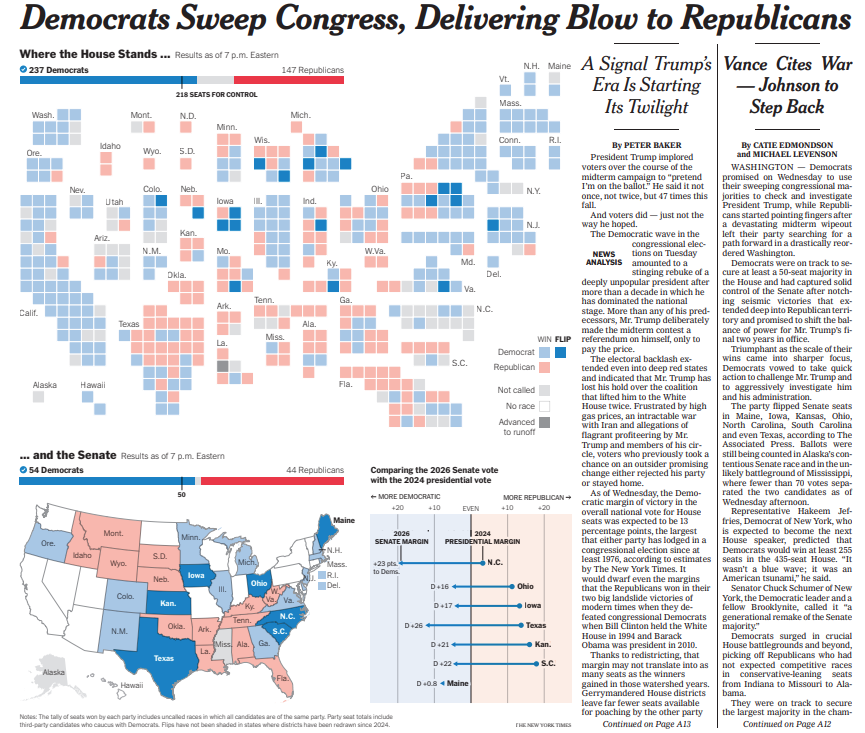
The week began under the shadow of a decisive American political realignment. On Tuesday, Democratic candidates secured control of both the House of Representatives and the Senate, an outcome that sent immediate ripples through the investment community. Analysts were quick to debate the potential implications for fiscal policy, specifically regarding inflationary pressures, long-term economic growth, and the regulatory environment for big tech.
A Political Landscape in Transition
The midterms have shifted the legislative power dynamic in Washington, D.C. Traditionally, markets tend to favor gridlock, which often prevents radical shifts in taxation or trade policy. However, the resounding nature of this victory suggests a potential for unified policy action, which has left institutional investors recalibrating their models.
Historically, the period immediately following an election is prone to "recency bias," where investors overreact to short-term political headlines while ignoring long-term macroeconomic fundamentals. While campaign rhetoric often centers on aggressive reform, the transition to actionable policy is frequently moderated by the realities of the legislative process. Nonetheless, the market’s volatility index spiked as traders attempted to price in potential shifts in corporate tax rates and energy sector regulations.
The Growing Backlash Against Data Center Expansion
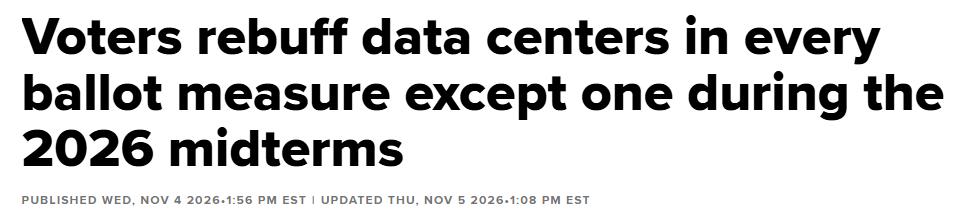
Beyond the federal election results, the midterm ballots also served as a referendum on the physical infrastructure required to sustain the Artificial Intelligence (AI) boom. A series of local ballot measures across the country saw voters rejecting the expansion of massive data centers.
These local rejections underscore a widening disconnect between the high-level promises of AI developers and the immediate concerns of local communities. Citizens have raised objections regarding excessive energy consumption, water usage, and the limited long-term employment benefits that these highly automated facilities offer. Critics of the current AI trajectory argue that the industry’s messaging—often oscillating between promises of utopian efficiency and warnings of existential threats—has failed to build the necessary social license to operate.
Chronology of a Market Sell-Off
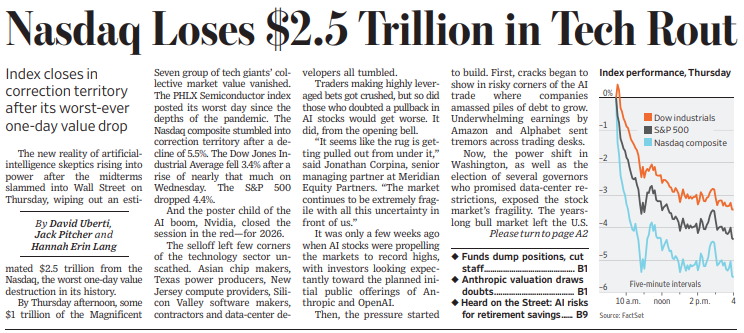
The financial markets experienced a week of whiplash, beginning with a brief rally following the election results. Despite an initial positive reaction on Tuesday, the momentum evaporated by Wednesday. The subsequent trading session saw a historic downturn, with the S&P 500 falling more than 4% and the Nasdaq 100 plunging nearly 6%.
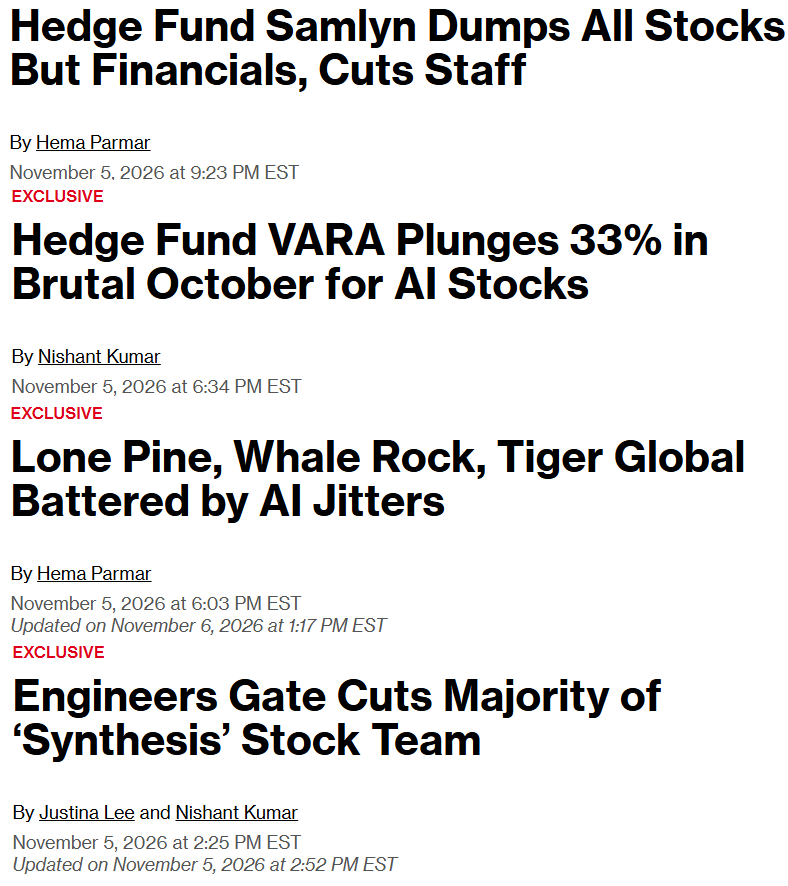
This decline represented the most significant single-day drop since the market volatility of 2020. AI-focused equities, which had driven much of the year’s growth, bore the brunt of the selling pressure. Analysts point to a "deleveraging event" as the primary catalyst. Many hedge funds, heavily exposed to AI-themed momentum stocks, were forced to liquidate positions as their margins became overextended. Data from major financial institutions indicates that this unwinding led to significant staff reductions and asset shedding among high-frequency trading firms and speculative funds, highlighting the fragility inherent in a market where capital is concentrated in a singular technological theme.
The Nvidia Governance Crisis
As markets attempted to stabilize toward the weekend, a secondary shockwave emerged on Sunday. Jensen Huang, the CEO of Nvidia—a company now valued at approximately $5 trillion—issued a public statement acknowledging an extramarital affair.
The gravity of the situation extends far beyond personal conduct. Reports from the New York Times and other outlets have linked the individual involved in the affair to intelligence-gathering operations conducted by the Chinese state. Given Nvidia’s pivotal role in the global semiconductor supply chain and its dominance in the hardware essential for AI development, the revelation of a potential security breach involving its chief executive has ignited a crisis in corporate governance.
Market participants are currently assessing the extent of the security compromise. If proprietary AI blueprints or strategic manufacturing data were accessed by foreign actors, the implications for U.S. national security and the global semiconductor trade would be catastrophic. Nvidia’s stock reflected this uncertainty, experiencing a 5% decline on Monday, even as the broader market attempted to recover.
Macroeconomic Resilience and Investor Strategy
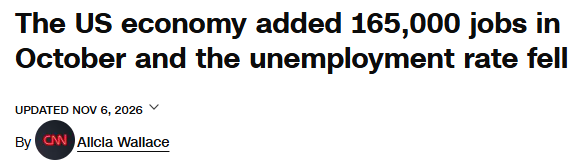
Despite the volatility, the broader economic data remains surprisingly robust. Friday’s labor market report exceeded expectations, demonstrating that the U.S. economy continues to add jobs at a steady pace. This resilience suggests that the underlying fundamentals of the economy remain disconnected from the speculative frenzy of the equity markets.
The events of the past week demonstrate that the traditional "buy and hold" strategy is being tested by an environment where market cycles move with unprecedented speed. The rapid transition from election-driven optimism to a broader sell-off, compounded by the Nvidia scandal, illustrates the danger of relying on singular narratives.
Implications for Future Portfolios
The lesson for the institutional and retail investor alike is the necessity of a disciplined investment framework. In an era where AI-driven volatility can erase weeks of gains in a matter of hours, the following considerations are becoming essential for long-term survival:
- Risk Mitigation through Diversification: The "herding" behavior seen in the AI sector this week serves as a warning against over-concentration. Investors who held broad, diversified portfolios were better insulated from the specific fallout of the Nvidia crisis and the AI-sector sell-off.
- Regulatory Monitoring: As local governments continue to push back against data center expansion, the cost of infrastructure development may rise. Investors must factor in the potential for "NIMBY" (Not In My Backyard) sentiment to hinder the growth of capital-intensive tech firms.
- Corporate Governance Scrutiny: The Nvidia scandal highlights that leadership risk is an often-underestimated component of equity valuation. As companies become more central to the global economy, the personal conduct and security profiles of their leadership will inevitably face higher levels of institutional scrutiny.
- Policy-Agnostic Planning: While political narratives shift with every election cycle, long-term financial health is best served by a plan that accounts for multiple political outcomes. Building a portfolio that can withstand both legislative gridlock and sudden shifts in executive focus is the only viable defense against the "landmines" of a modern, digitized market.
As we move forward, the confluence of technological integration and geopolitical tension suggests that volatility will remain a feature, rather than a bug, of the global financial system. The ability to distinguish between market noise and structural shifts will define the successful investors of the coming decade. Whether the AI trade has fundamentally changed or is merely experiencing a temporary correction remains a subject of intense debate, but the necessity for a rigorous, plan-based approach to investing has never been more apparent.