Fear Erupts, AI Stocks Tank, but so Do Gold, Silver, Cryptos, Nearly Everything but Treasuries


The financial markets experienced a period of profound volatility this past week, characterized by a broad-based sell-off that erased trillions of dollars in paper wealth and fueled speculation regarding the structural integrity of the artificial intelligence sector. As investors recalibrated their risk exposure, the Nasdaq Composite and the S&P 500 both suffered significant drawdowns, marking a decisive shift from the bullish sentiment that defined much of the previous quarter.
Market Performance and Statistical Overview
The Nasdaq Composite index bore the brunt of the selling pressure on Friday, sliding 5.3% to close at 22,618. This decline contributed to a cumulative weekly loss of 10.0%, pushing the index 18.4% below its October 6 peak. While the index remains nominally higher than its start-of-year position, the rapid erosion of gains has reignited debates over the sustainability of high-valuation tech stocks.
Similarly, the S&P 500 retreated 3.7% on Friday, concluding the week with an 8.6% decline and settling 11.9% lower than its early October high. Despite these losses, the index maintains a marginal 1% gain year-to-date and a 4.7% increase on a year-over-year basis. The sell-off was not limited to equities; commodities, including gold and silver, alongside cryptocurrencies, saw substantial liquidation as market participants sought the safety of Treasury securities.
The Unraveling of the AI Trade
At the epicenter of this market turbulence is the semiconductor industry, with Nvidia serving as a focal point for institutional concern. Nvidia’s shares fell 14% on Friday, closing at $125.53—a staggering 47% decline from its October 6 zenith. This seven-week slide has effectively erased all capital appreciation accrued since June 2024.
Industry analysts note that Nvidia’s business model, once lauded for its efficiency in supplying the "shovels" for the AI gold rush, is facing intense scrutiny. The company’s revenue growth had been heavily bolstered by a circular financing ecosystem, wherein Nvidia provided substantial financial support to its customers, enabling them to purchase high-priced hardware. As this funding structure faces increased regulatory and market pressure, investors are questioning the long-term revenue viability of the firm. The broader semiconductor sector, including firms such as Intel and SanDisk, has experienced a similar "bloodletting," with many stocks retracing gains earned over the past eighteen months.
Chronology of the Volatility Spike
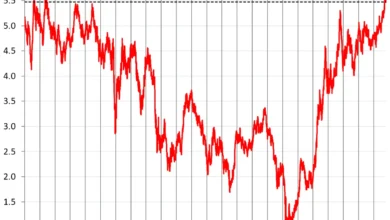
The current market environment is defined by a rapid transition from complacency to acute risk aversion. The Cboe Volatility Index (VIX), often referred to as Wall Street’s "fear gauge," surged to an intraday high of 40.03 on Friday before stabilizing at 35.89. This represents a doubling of volatility expectations in just one week, as the index had been trading below 20 just days prior.

- October 6: The market reaches a cycle peak, with both the Nasdaq and S&P 500 recording record highs.
- Late October: Early warnings regarding the sustainability of AI capital expenditures emerge, prompting initial profit-taking.
- Early November: The Anthropic IPO launches amidst cooling investor sentiment, with shares closing at $88.91 on Friday, struggling to maintain a premium over their $83 offering price.
- Friday, November 14: A broad sell-off across equities, precious metals, and digital assets occurs as institutional portfolios are rebalanced.
Commodities and Digital Assets
The contraction has extended beyond equities into the alternative asset space. Precious metals, which had enjoyed a sustained rally through much of the year, have seen a sharp reversal. Silver dropped 7.4% on Friday to $41.08 per troy ounce, reflecting a 66% decline from its all-time high set in January. Gold followed a similar trajectory, falling 4.0% to $3,539 per troy ounce, a 37% decline from its recent peak.
Bitcoin, the bellwether for the cryptocurrency market, saw a 14% weekly decline to $58,761. This price level represents a return to valuations not seen since March 2021, highlighting the extreme volatility and lack of income-generating utility that has characterized the asset class over the past six years.
Broader Economic Implications
The evaporation of trillions of dollars in market capitalization carries significant implications for consumer sentiment and macroeconomic stability. Wealth effects—the psychological impact of fluctuating portfolio values on individual spending habits—are expected to dampen consumer demand in the coming months. When households witness significant reductions in their 401(k) and brokerage accounts, personal consumption expenditures often contract, potentially impacting GDP growth.
However, historical market data suggests that corrections rarely occur in a linear fashion. The "dead-cat bounce" phenomenon, characterized by short-term rallies following steep declines, remains a distinct possibility. Indeed, after-hours trading on Friday indicated a nascent recovery, with several semiconductor stocks rising 2% to 3% as bargain hunters sought to capitalize on lower entry points.
Strategic Outlook and Contrarian Signals
Market participants are currently divided between those fleeing to the safety of U.S. Treasuries and those identifying potential entry points in oversold equities. The reversal in the 10-year Treasury yield during late Friday trading suggests that the initial "flight to quality" may be moderating as investors reconsider the risk-reward ratio of discounted technology shares.
Contrarian investors often interpret a spike in the VIX—such as the one observed this week—as a technical buy signal for short-term market stabilization. While the fundamental concerns regarding AI sector profitability remain, the market’s propensity for exhaustion suggests that the current level of fear may be nearing its near-term ceiling.
As the markets prepare for the upcoming week, the focus will remain on whether institutional liquidity can sustain the anticipated bounce in tech stocks. Analysts will be monitoring corporate disclosures for further evidence of "circular financing" and assessing whether the current valuation reset is sufficient to attract long-term capital back into the technology sector. For now, the prevailing sentiment is one of cautious observation, as the market navigates the transition from a period of speculative excess to one of valuation-based discipline.
Related posts: