Two Assets, Two Very Different Logics: Bitcoin and Ethereum’s Divergent Paths to 2030

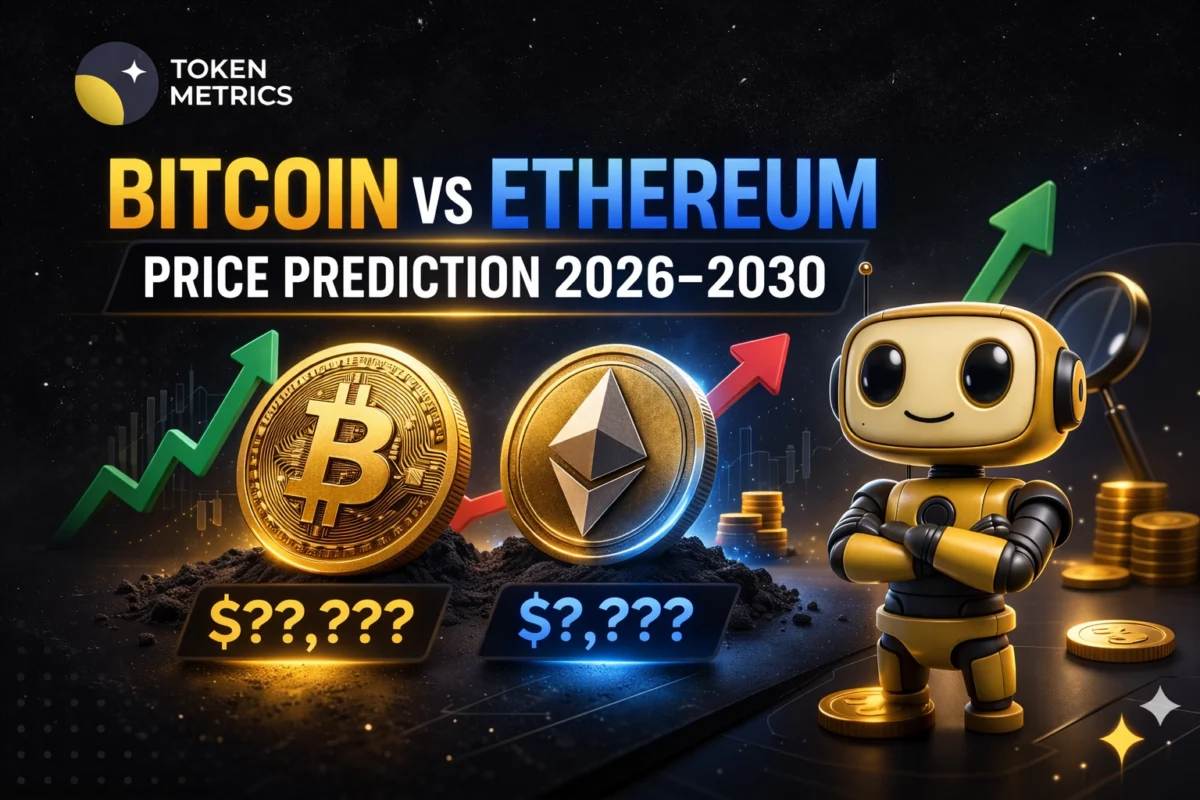
Bitcoin and Ethereum, frequently juxtaposed in market commentary, portfolio allocations, and broad cryptocurrency narratives, are often perceived as two sides of the same digital coin. While their price movements can exhibit surface-level correlation, a deeper analysis reveals that they are fundamentally driven by distinct structural characteristics, motivations, limitations, and risk factors. As the cryptocurrency market matures and progresses into the latter half of the current decade, these inherent distinctions are poised to exert an increasingly significant influence on their respective trajectories. Viewing them merely as variations of a singular overarching idea risks oversimplifying the complex economic and technological frameworks underpinning each asset.
Bitcoin’s Enduring Outlook: Durability Forged Through Constraint
Bitcoin’s long-term value proposition and market outlook are inextricably linked to a narrow and remarkably stable set of structural characteristics. Its protocol, designed by Satoshi Nakamoto, enshrines a fixed total supply of 21 million coins, an issuance rate that halves approximately every four years (the "halving" event), and an intentionally conservative approach to protocol-level changes. This design prioritizes predictability, security, and resistance to manipulation.
Background and Chronology:
Conceived in the aftermath of the 2008 global financial crisis, Bitcoin emerged as a decentralized digital currency, offering a peer-to-peer electronic cash system independent of central authorities. Its genesis block was mined in January 2009, marking the birth of a novel asset class. Key chronological milestones include its first halving in November 2012, the second in July 2016, the third in May 2020, and most recently, the fourth halving in April 2024. Each halving event reduces the rate at which new Bitcoin enters circulation, thereby reinforcing its scarcity model. Historically, these events have often preceded periods of significant price appreciation, though past performance is not indicative of future results.
Structural Rigidity and Price Formation Post-2026:
By 2026, Bitcoin will have firmly entered a deeply entrenched low-issuance environment. The daily new supply of Bitcoin will have been significantly curtailed by successive halvings, rendering it a diminishing factor in price formation. For instance, post-April 2024, the daily issuance dropped from 6.25 BTC per block to 3.125 BTC per block, translating to approximately 450 new Bitcoin per day. In such a landscape, demand-side factors are expected to exert predominant influence. These include global liquidity conditions, driven by central bank monetary policies; the accelerating pace of institutional participation, exemplified by the launch of spot Bitcoin Exchange-Traded Funds (ETFs) in major markets; and broader macroeconomic signals such as inflation rates, interest rate trajectories, and geopolitical stability.
Supporting Data and Analysis:
The introduction of spot Bitcoin ETFs in early 2024 marked a pivotal moment, providing regulated, accessible avenues for traditional investors to gain exposure. These instruments have seen billions of dollars in inflows, indicating a clear institutional appetite. Data from major asset managers and on-chain analytics platforms consistently highlights the growing accumulation by long-term holders and institutional entities, suggesting a shift from retail-dominated speculation to more mature investment behavior. This institutional integration, coupled with its finite supply, is often cited as a contributing factor to potentially reduced volatility compared to earlier, more nascent market cycles. While large inflows or drawdowns will still occur, the increasing depth and liquidity offered by traditional financial rails could lead to more gradual price discovery rather than abrupt, shock-driven movements.
Implications and Inferred Statements:
In this evolving context, Bitcoin’s role is increasingly perceived less as a vehicle for speculative, surprise-driven returns and more as a foundational asset defined by consistency and resilience across diverse market regimes. Analysts from major financial institutions, such as BlackRock and Fidelity, have increasingly framed Bitcoin as a "digital gold" or a hedge against inflation and currency debasement, solidifying its narrative as a store of value. From a long-term analytical perspective, Bitcoin’s trajectory between 2026 and 2030 is projected as a function of resilience and integration, rather than rapid, unbridled expansion. Its inherent resistance to change, while potentially limiting its functional evolution, underpins its stability narrative, making it an appealing component in diversified portfolios seeking exposure to digital scarcity.
Ethereum’s Evolving Landscape: Growth with Internal Trade-offs
Ethereum, in stark contrast to Bitcoin, presents a more dynamic and analytically complex framework. Designed as a decentralized platform for smart contracts and decentralized applications (dApps), its economic outcomes are intrinsically linked to its continuous technological evolution, network usage, and the success of its scaling solutions.
Background and Chronology:
Launched in 2015 following a highly successful Initial Coin Offering (ICO), Ethereum introduced the concept of a "world computer" – a global, decentralized platform capable of executing any programmatic code. Key chronological milestones include the launch of its mainnet, the rise of decentralized finance (DeFi) in 2020-2021, the explosion of non-fungible tokens (NFTs), and critically, its transition from a proof-of-work (PoW) consensus mechanism to proof-of-stake (PoS) in September 2022, known as "The Merge." Subsequent upgrades, such as Shanghai (enabling staked ETH withdrawals) and Dencun (introducing ‘proto-danksharding’ for Layer-2 cost reduction), underscore its commitment to ongoing development.
Dynamic Economics and Scaling Challenges:
Unlike Bitcoin’s static supply schedule, Ethereum’s economic model is more fluid. While "The Merge" and the implementation of EIP-1559 (which burns a portion of transaction fees) introduced deflationary pressures under high network usage, the total supply of ETH is not capped in the same way Bitcoin’s is. Network usage, the adoption of scaling solutions (Layer-2s), and the expansion of its vast ecosystem introduce ongoing trade-offs. Growth in transaction volume, for instance, does not automatically translate into sustained demand for ETH at the base layer. Layer-2 solutions, such as Optimism, Arbitrum, zkSync, and Polygon, are designed to process transactions off-chain, bundling them and submitting a compressed proof to the Ethereum mainnet. While this significantly reduces transaction costs and increases throughput, it raises questions about value capture.
Supporting Data and Analysis:
Current data indicates a robust and active developer community, with Ethereum consistently leading in the number of active developers compared to other blockchain ecosystems. Its Total Value Locked (TVL) in DeFi applications remains dominant, often exceeding 50% of the entire DeFi market. However, the increasing adoption of Layer-2 solutions is fundamentally reshaping transaction flows. Data from L2 aggregators shows billions of dollars in TVL on these networks and millions of transactions processed daily, significantly outstripping mainnet activity in terms of volume. This migration of activity to Layer-2s, while crucial for scalability, presents a complex economic dilemma: whether this activity ultimately strengthens Ethereum’s base-layer economics through increased demand for security and settlement, or gradually dilutes value accrual to the base layer by reducing demand for mainnet gas fees.
Regulatory Uncertainty and Inferred Statements:
Adding another layer of complexity, the regulatory classification of ETH remains subject to ongoing review by securities regulators across multiple jurisdictions, most notably the U.S. Securities and Exchange Commission (SEC). While the SEC has stated that Bitcoin is not a security, its stance on Ethereum has historically been less definitive, despite recent indications that it may not pursue a securities classification for ETH. This regulatory uncertainty forms a significant part of the broader context in which Ethereum’s long-term economic model continues to evolve. Statements from SEC officials have often highlighted the "decentralization" factor as a key determinant, creating a moving target for the Ethereum community.
By the end of the decade, market participants are likely to place greater emphasis on how Ethereum functions in practice – its ability to efficiently scale, manage its internal economics, and maintain its competitive edge – rather than solely on its development roadmap. Despite growing competition from alternative Layer-1 blockchains, Ethereum continues to benefit from a strong degree of developer alignment and network effects. DeFi, tokenization efforts, and on-chain infrastructure experiments are still predominantly pursued within Ethereum-based environments, representing a structural advantage that is not easily displaced. From a long-term perspective, Ethereum’s trajectory involves a wider range of potential outcomes—both positive and negative—relative to Bitcoin. How these opposing forces balance over time will largely shape its performance through 2030.
BTC and ETH: Different Responses to Different Pressures
Comparing Bitcoin and Ethereum through a singular analytical lens often obscures more than it clarifies, given their fundamentally different design philosophies and market roles. Their distinct structural characteristics dictate markedly different responses to external and internal pressures.
Bitcoin, by design, tends to respond primarily to external forces. These include global monetary policy shifts, such as interest rate hikes or quantitative easing cycles by central banks; changes in global risk sentiment, which can drive investors towards or away from perceived safe-haven assets; and the behavior of large institutional allocators, whose movements can significantly impact market liquidity and demand. Its price movements are often observed to correlate with broader macro trends, such as inflation expectations or the performance of other risk assets like equities, albeit with its own unique volatility profile.
Ethereum, by contrast, is more acutely exposed to internal dynamics of its own ecosystem. Its value is intricately tied to factors such as fee generation at the base layer, the success and adoption of its scaling solutions (Layer-2s), its competitive positioning against other smart contract platforms, and the economic implications of its continuous upgrades. For example, a surge in DeFi activity driving high gas fees might initially appear bullish for ETH, but if these fees become prohibitive, users may migrate to Layer-2s or rival chains, impacting base-layer value accrual. Similarly, a major protocol upgrade or a significant hack within a prominent dApp on Ethereum can have immediate and profound effects on market sentiment and ETH’s price.
This divergence in responsiveness means that investors often employ different analytical frameworks and risk management strategies for each asset. Bitcoin is analyzed through a macroeconomic and store-of-value lens, while Ethereum requires a deep understanding of blockchain technology, decentralized application economics, and ecosystem competition.
Market Maturity and Accessibility: The Evolving User Experience
As crypto markets mature, the accessibility and usability of digital assets increasingly matter as much as their underlying technology or allocation rationale. The shift from early-adopter, tech-savvy users to a broader mainstream audience necessitates user-friendly interfaces and seamless transactional capabilities.
Supporting Data and Analysis:
The proliferation of mobile-first crypto applications highlights this trend. Data from app analytics firms consistently shows millions of active users engaging with crypto via smartphone applications, which offer simplified onboarding, intuitive trading interfaces, and integrated wallet functionalities. These consumer-facing tools, as highlighted in recent overviews of top crypto apps for iPhone, are democratizing access and shaping how market participants interact with digital assets. The days of solely relying on complex desktop platforms are giving way to a more integrated, mobile-centric experience.
Furthermore, as capital increasingly moves across fragmented blockchain environments—ranging from Ethereum’s mainnet to its numerous Layer-2s, and competing Layer-1 blockchains—the ability to shift liquidity between networks has transitioned from a purely technical challenge for developers to a practical consideration for everyday users. Cross-chain infrastructure, including tools that enable a cross-chain swap, has become indispensable. These solutions facilitate the seamless movement of assets between different blockchain ecosystems, addressing the inherent fragmentation of the multi-network reality. The volume of assets bridged or swapped across chains has grown significantly, with billions of dollars routinely flowing through these protocols, indicating that market participants are adapting to a diverse blockchain landscape rather than committing to a single ecosystem. This adaptation reflects a pragmatic approach to maximizing opportunities and managing assets efficiently across the burgeoning web3 landscape.
Scenario-Based Outlook, 2026-2030: Navigating Uncertainty
Long-term market analysis in dynamic sectors like cryptocurrency benefits significantly from scenario framing rather than fixed, deterministic targets. Given the distinct structural underpinnings of Bitcoin and Ethereum, their future trajectories through 2030 are best understood through a range of potential outcomes.
Bitcoin Scenarios:
An initial, constructive scenario for Bitcoin posits a slow but steady price increase, driven by the sustained growth of global liquidity and its further normalization within traditional institutional frameworks. In this scenario, Bitcoin’s narrative as a "digital gold" or a reserve asset against inflationary pressures solidifies, attracting continued institutional inflows via ETFs and corporate treasury allocations. Macroeconomic stability, coupled with regulatory clarity, would support its integration into mainstream finance, potentially leading to reduced volatility and a higher floor price.
However, alternative macroeconomic or regulatory situations could lead to markedly different results. For example, a global financial tightening cycle, characterized by sustained high interest rates and a flight to traditional safe havens like the U.S. dollar, could see Bitcoin prices stagnate or even fall, as risk appetite diminishes. Similarly, unforeseen stringent regulatory changes in major economies, particularly concerning self-custody or the broader crypto ecosystem, could introduce significant headwinds, impacting investor confidence and market liquidity. A less favorable scenario might also involve a re-evaluation of its "digital gold" thesis if it consistently fails to act as an effective inflation hedge or uncorrelated asset during periods of economic turmoil.
Ethereum Scenarios:
Ethereum’s outlook is inherently more conditional and subject to a wider array of variables. In constructive scenarios, sustained network usage, particularly driven by a thriving dApp ecosystem (DeFi, NFTs, gaming, enterprise solutions), combined with effective value capture amid Layer-2 expansion, could significantly reinforce demand for ETH. This would entail Layer-2s successfully offloading transactional load while mechanisms like EIP-1559’s fee burning and ETH staking continue to create deflationary pressure and yield for stakers, making ETH an attractive productive asset. Regulatory clarity regarding its classification as a non-security would also be a major catalyst, potentially opening doors for institutional investment vehicles similar to Bitcoin ETFs.
Conversely, less favorable scenarios could see growth in activity on Layer-2s fail to translate into robust economic reinforcement at the base layer. If the majority of value capture remains on Layer-2s and the demand for mainnet gas fees dwindles significantly, the economic incentives for securing the base layer might weaken, or the supply-side dynamics of ETH could become less compelling. Intense competition from alternative Layer-1 ecosystems, offering superior scalability, lower costs, or more developer-friendly environments, could also erode Ethereum’s network effects more rapidly than anticipated. Furthermore, an adverse regulatory ruling, classifying ETH as a security, could severely restrict its trading and adoption in regulated markets.
These dynamics collectively suggest that the relative performance between Bitcoin and Ethereum is likely to remain uneven across market cycles, rather than exhibiting a consistently directional trend. Each asset’s resilience and growth will be tested by different forces, leading to periods where one might outperform the other based on prevailing conditions.
Divergence Rather Than Convergence
A common, yet increasingly challenged, assumption in nascent crypto markets has been the eventual convergence of major assets, perhaps in functionality or market narrative. Over time, however, Bitcoin and Ethereum appear to be diverging in their fundamental purpose and operational philosophy rather than converging.
Bitcoin’s core value proposition is defined by its resistance to change. Its strength lies in its predictable, immutable monetary policy and its role as a decentralized, censorship-resistant store of value. It offers a clear, stable narrative rooted in digital scarcity and a verifiable, fixed supply cap. Its development is intentionally slow and highly scrutinized, prioritizing security and stability above all else. This approach appeals to those seeking a reliable, long-term asset akin to digital gold, largely unaffected by internal protocol debates or dynamic economic models.
Ethereum’s value proposition, conversely, is deeply intertwined with its capacity to evolve, innovate, and adapt without undermining its own economic structure or security. It is a platform designed for continuous development, supporting a vast ecosystem of applications and aiming to be the foundational layer for a decentralized internet. Its ongoing upgrades, scaling solutions, and the active participation of its developer community underscore this adaptive philosophy. The success of Ethereum hinges on its ability to manage these complex internal trade-offs, balancing innovation with stability, and scalability with decentralization.
Both approaches involve inherent trade-offs. Bitcoin’s rigidity, while offering security, limits its functional scope. Ethereum’s adaptability, while fostering innovation, introduces complexity and a wider range of potential outcomes. Both assets’ long-term success ultimately depends on effective execution, a supportive regulatory environment, and broader market conditions.
Between 2026 and 2030, Bitcoin may increasingly be perceived as offering greater narrative stability and a more defined risk profile, appealing to investors seeking a relatively straightforward exposure to digital scarcity. Ethereum, by virtue of its dynamic nature and complex ecosystem, may present a wider range of potential outcomes—both upside and downside—reflecting the higher inherent operational and regulatory risks associated with its innovative trajectory. Neither characterization constitutes an investment recommendation, but rather reflects differing risk profiles observed by sophisticated market segments.
Final Thoughts and Disclosures
Expectations concerning the long-term behavior of the cryptocurrency market are most effectively utilized as analytical frameworks rather than as infallible prediction tools. Market behavior, while influenced by fundamental structural factors, remains profoundly susceptible to regulatory shifts, the emergence of disruptive technologies, and evolving macroeconomic conditions. The inherent unpredictability of these external variables necessitates a dynamic and adaptable analytical approach.
Bitcoin and Ethereum have transcended their experimental phases, now operating as systemically significant networks within the global financial landscape. Each is governed by a distinct set of economic principles, technological designs, and inherent risk dynamics. Acknowledging and understanding these profound differences provides far greater insight into their individual potential and challenges than attempting to compress both assets into a single, simplistic comparative narrative. Investors and market participants who grasp these fundamental divergences will be better equipped to navigate the complex and rapidly evolving digital asset ecosystem through the remainder of the decade and beyond.
Disclaimer: This article is provided for informational and analytical purposes only and does not constitute investment advice, financial advice, or a recommendation to buy or sell any digital asset. Digital assets discussed may be subject to securities or financial regulations in certain jurisdictions. Forward-looking statements are based on current assumptions and represent only one of many possible scenarios; actual outcomes may differ materially. Readers should consult a qualified financial advisor before making investment decisions. Any references to third-party platforms or services are included for contextual purposes only and do not imply endorsement.