Momentum Meltdown and Oil Volatility Signal Major Market Rotation as Semiconductor Complex Faces Bear Market Territory

The global financial markets experienced a significant divergence this week as headline index stability masked a violent internal restructuring characterized by a historic collapse in momentum stocks and a sharp spike in energy prices. While the S&P 500 closed the week with a relatively modest loss of 1.5% at 7,457.69, the underlying "crowded trades" that have defined the 2024 bull market began to unravel with unprecedented velocity. The tech-heavy Nasdaq 100 bore the brunt of the selling, retreating roughly 4%, while the Dow Jones Industrial Average remained comparatively resilient, highlighting a massive rotation of capital out of growth and into defensive and value-oriented sectors.
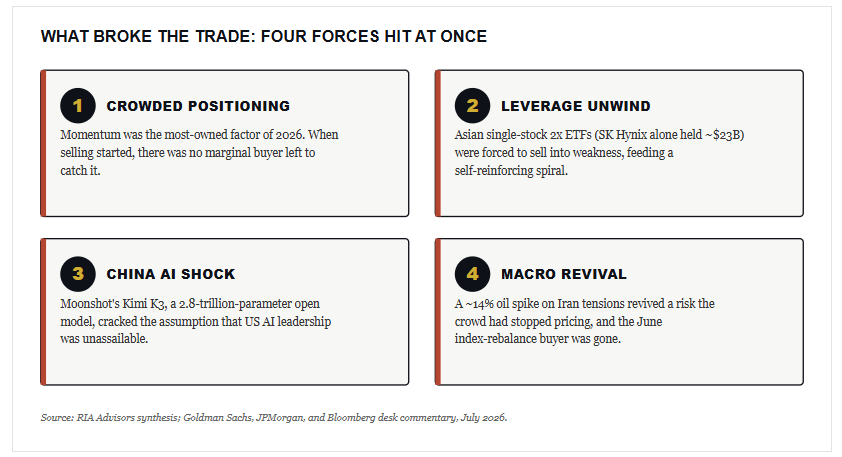
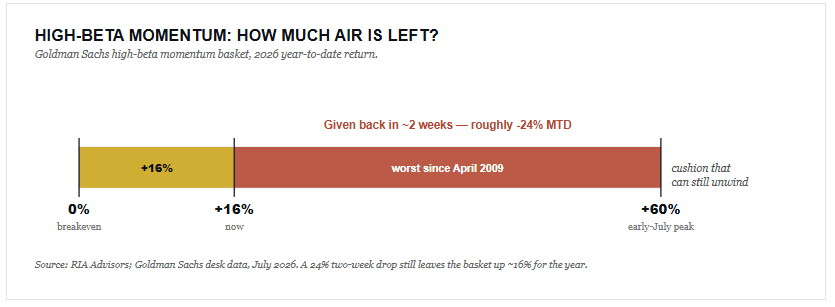
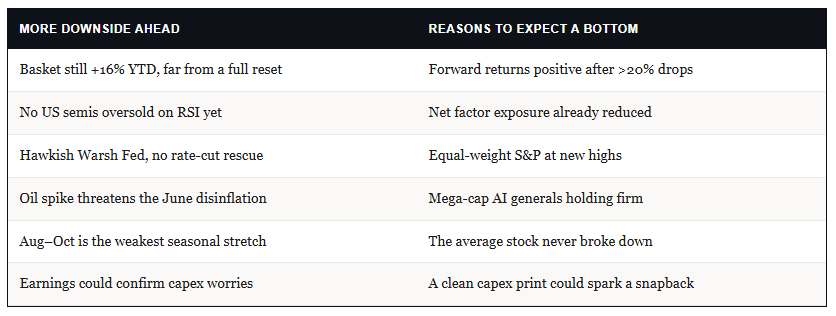
Underneath the seemingly calm surface of the major indices, the "momentum meltdown" reached levels of severity not seen since the global financial crisis. Data from Goldman Sachs indicated that its high-beta momentum basket plummeted approximately 24% month-to-date through the first half of July, marking its most disastrous stretch since April 2009. Similarly, Morgan Stanley’s tech momentum index recorded a 17-day rate of change of -35%, the worst reading in the 27 years the firm has tracked the metric. This rapid deleveraging suggests that the parabolic rally in the semiconductor and artificial intelligence (AI) sectors has finally reached a breaking point, triggered by a combination of geopolitical tensions, competitive technological breakthroughs, and shifting macroeconomic expectations.
Catalysts of the Semiconductor Correction and the Rise of AI Fatigue
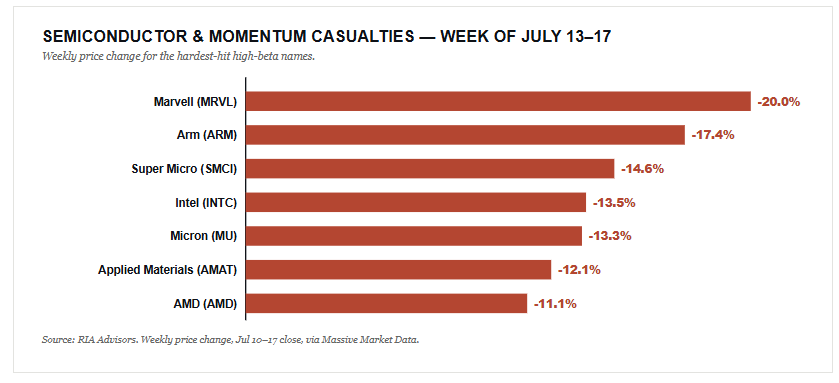
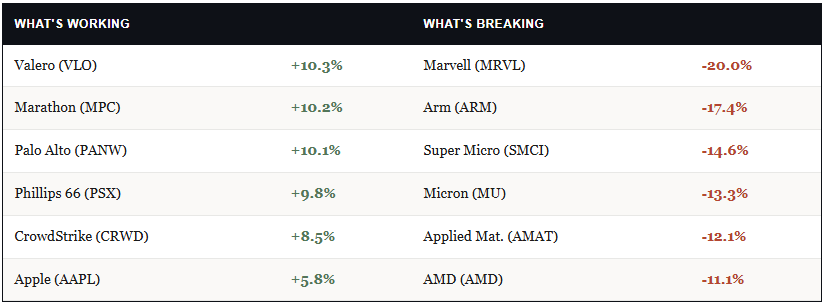
The primary driver of the week’s volatility was a sudden and aggressive repricing of the semiconductor sector. The Philadelphia Semiconductor Index (SOX) dropped more than 10% on the week, placing it nearly 20% below its June peak—the technical threshold that defines a bear market. High-flying industry leaders were not spared, with Marvell Technology falling 20%, Arm Holdings dropping 17%, and Micron Technology losing 13%.
The catalyst for this sell-off was two-fold. First, the emergence of a formidable international competitor in the AI space rattled investors. China’s Moonshot AI unveiled its Kimi K3 model, a 2.8-trillion-parameter open-weight system that reportedly benchmarks close to leading U.S. systems while operating at a significantly lower cost. This development reignited concerns regarding the durability of the "American AI premium" and whether the massive capital expenditures by U.S. hyperscalers would continue to yield undisputed market dominance.
Second, a wave of "AI fatigue" has begun to permeate the investor base. Market analysts, including Ed Yardeni, have noted that investors are increasingly questioning the timeline for return on investment regarding the trillion-dollar AI buildout. This skepticism was exacerbated by concerns over earnings quality among mega-cap tech firms, where headline profits have occasionally been bolstered by non-operating gains rather than core business growth.
Energy Spikes Amid Geopolitical Tensions
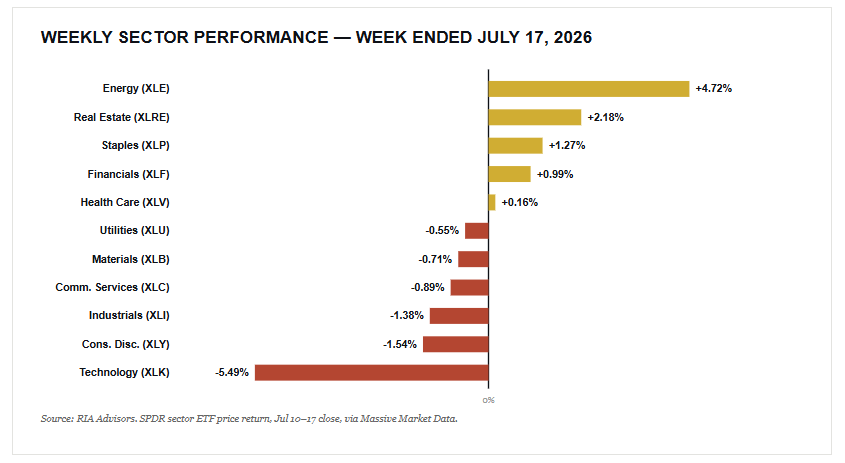
While technology faltered, the energy sector surged to the top of the performance leaderboard. Renewed strikes involving U.S. and Iranian interests in the Middle East sent shockwaves through the commodities markets. West Texas Intermediate (WTI) crude oil jumped approximately 14% on the week, while Brent crude rose more than 15%. This spike handed the Energy sector a 4.7% weekly gain, making it the standout performer in an otherwise turbulent environment.

The rise in oil prices has complicated the broader macroeconomic narrative. Just as inflation readings began to soften, the sudden increase in energy costs threatens to reignite inflationary pressures. This dynamic was reflected in the University of Michigan’s preliminary July sentiment reading, which climbed to 54.4 from 49.5, largely due to a temporary cooling of gasoline prices earlier in the month—a trend that the recent oil spike may soon reverse.
A Chronology of the Weekly Rotation
The week’s market action followed a distinct pattern of internal migration rather than a wholesale exit from equities. On Monday and Tuesday, the indices remained relatively flat, but the momentum factor began to show signs of stress as institutional investors started trimming positions in over-extended chipmakers. By Wednesday, the selling accelerated as reports of the Kimi K3 release reached the West, leading to a "gap down" in semiconductor stocks.
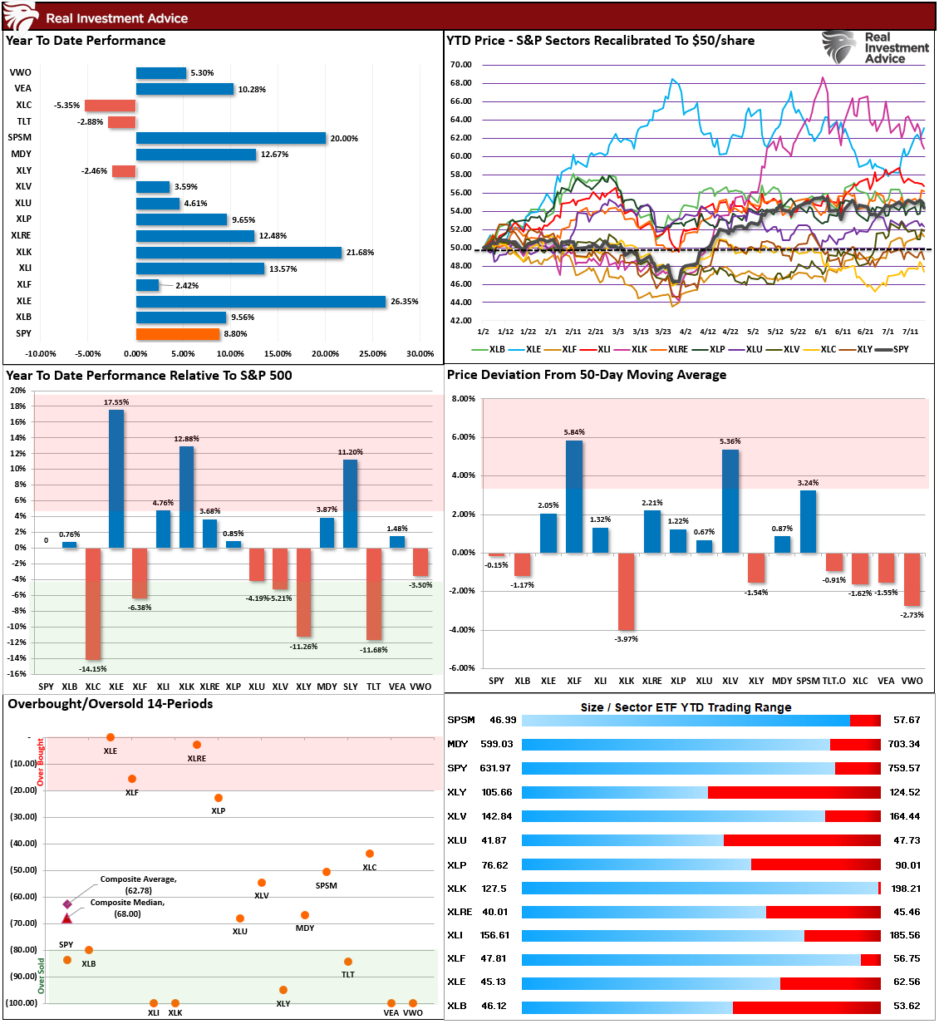
On Thursday, the focus shifted to the commodities and currency markets. Gold slipped 2% and silver dropped nearly 6%, as investors moved toward the liquidity of the U.S. dollar, which remained largely flat on the week. By Friday, the rotation was in full swing. While the cap-weighted S&P 500 struggled, the equal-weight version of the index actually touched a fresh all-time record high midweek. This indicates that while the "generals" of the market (the Magnificent Seven and major chipmakers) were being sold, the "average stock" in sectors like Real Estate, Staples, and Financials was attracting fresh inflows.
Technical Analysis: Coiling Below the Record
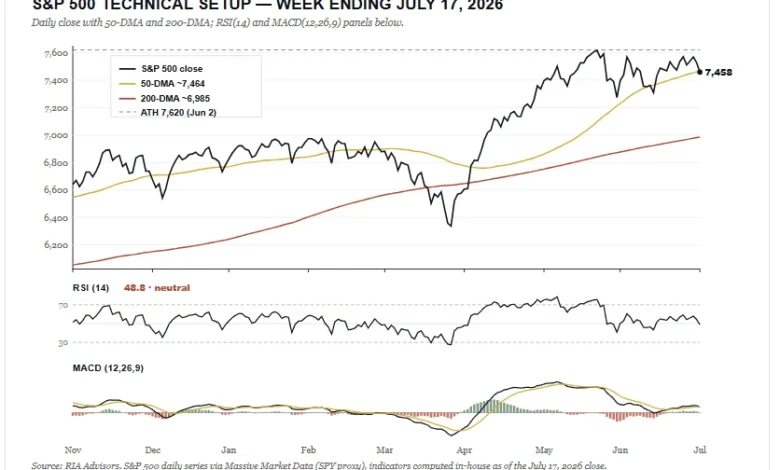
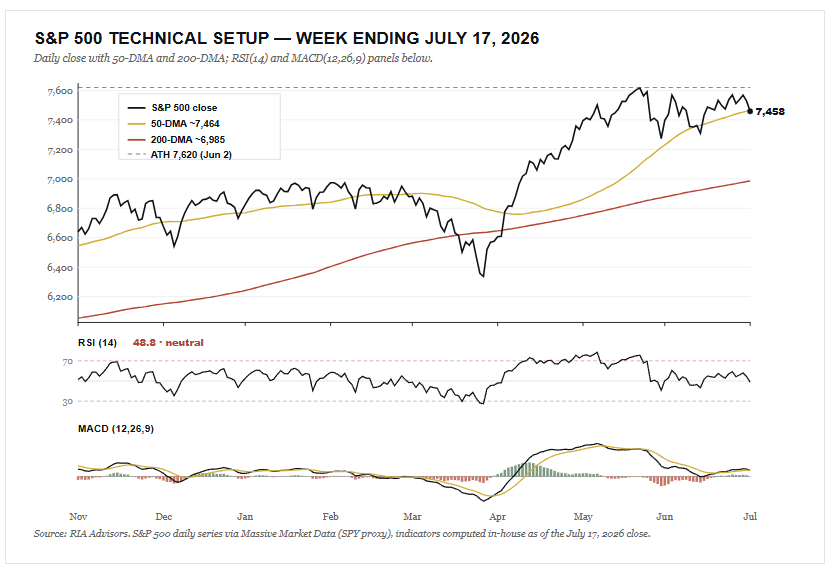
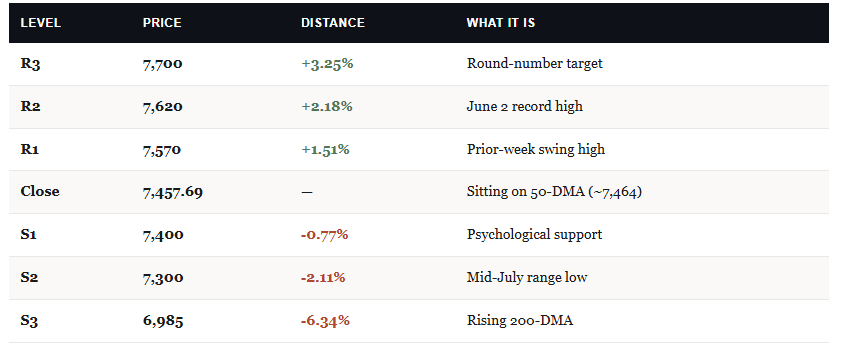
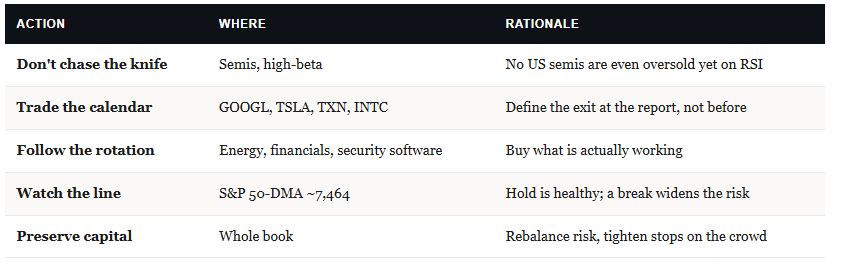
From a technical perspective, the S&P 500 is currently at a critical juncture. The index closed at 7,457.69, placing it almost exactly on its 50-day moving average of 7,464. This level represents a "line in the sand" for many traders. While the primary long-term uptrend remains intact—the index is still 6.8% above its 200-day moving average of 6,985—short-term momentum has shifted to neutral.
The 14-day Relative Strength Index (RSI) sits at 48.8, indicating that the market is neither overbought nor oversold. However, the Moving Average Convergence Divergence (MACD) indicator has provided a bearish signal, rolling below its signal line for the first time since the April lows. Historically, such crossovers serve as a warning that a more protracted correction may be building. The Momentum ETF (MTUM) is even weaker, printing an RSI of 41, further confirming that the pain is concentrated in the factor that led the market higher throughout the first half of the year.
Macroeconomic Pressures and Federal Reserve Blackout
The macroeconomic backdrop has turned less hospitable for growth-oriented trades. Former Fed Governor Kevin Warsh, in recent testimony to Congress, emphasized that the Federal Reserve has "no tolerance for persistently elevated inflation." Warsh’s refusal to offer forward guidance suggests that the central bank remains data-dependent and cautious, despite June CPI data showing a 0.4% monthly decline in prices.
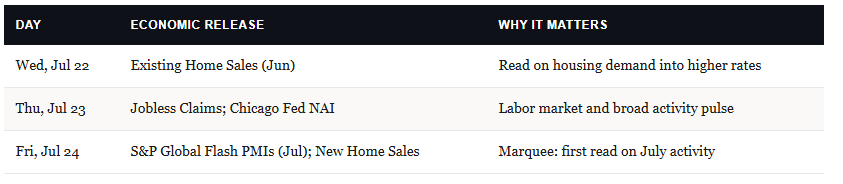
The market is currently grappling with a hawkish Federal Reserve that appears reluctant to commit to a September rate cut, even as the economy shows signs of cooling. For high-valuation growth stocks, the combination of high interest rates and rising energy costs acts as a double-edged sword, compressing multiples while increasing operational costs. As the Federal Reserve enters its "blackout window" ahead of the July 28–29 FOMC meeting, investors will be left without official guidance, likely increasing market sensitivity to upcoming economic data releases.

The Earnings Crucible: Alphabet and Tesla in Focus
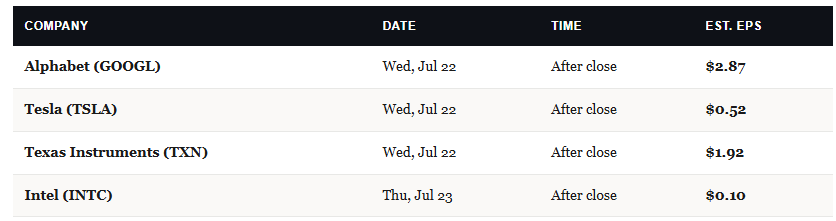
The coming week is expected to be the "main event" for the summer trading season, as mega-cap earnings reports provide a referendum on the AI investment thesis. On Wednesday evening, Alphabet and Tesla will report results, followed by Intel on Thursday.

Alphabet’s report is particularly crucial. The company has guided toward approximately $175 billion in capital expenditures through 2026, but buy-side expectations for 2027 are rumored to be as high as $350 billion. If Alphabet or other hyperscalers signal any hesitation in their AI spending plans, the semiconductor stocks that depend on this demand could face another leg down. Furthermore, analysts will be scrutinizing the "quality" of these earnings. In previous quarters, Alphabet’s headline numbers were bolstered by mark-to-market gains on private stakes in companies like SpaceX and Anthropic. Investors are now demanding to see growth in core operating margins and cloud revenue to justify current valuations.
Broader Implications and Strategic Outlook
The current market environment suggests a transition from a narrow, momentum-driven market to a broader, value-conscious one. This "leadership shift" is rarely a single-day event; history suggests that such rotations can take months to fully resolve. While the sharp two-week sell-off in momentum stocks has reduced some of the "froth" in the market, many semiconductors are still not technically oversold, suggesting there may be more room for the correction to run.
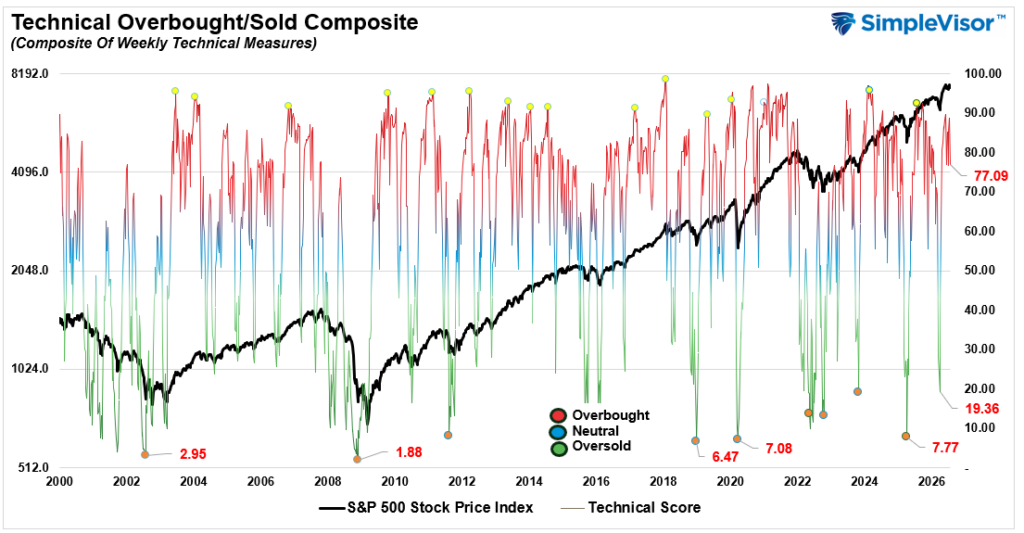
Investors are advised to prioritize capital preservation and risk management over aggressive directional bets. The seasonal weakness typically seen from August through October, combined with the uncertainty of an upcoming U.S. election cycle, adds a layer of complexity to the near-term outlook.
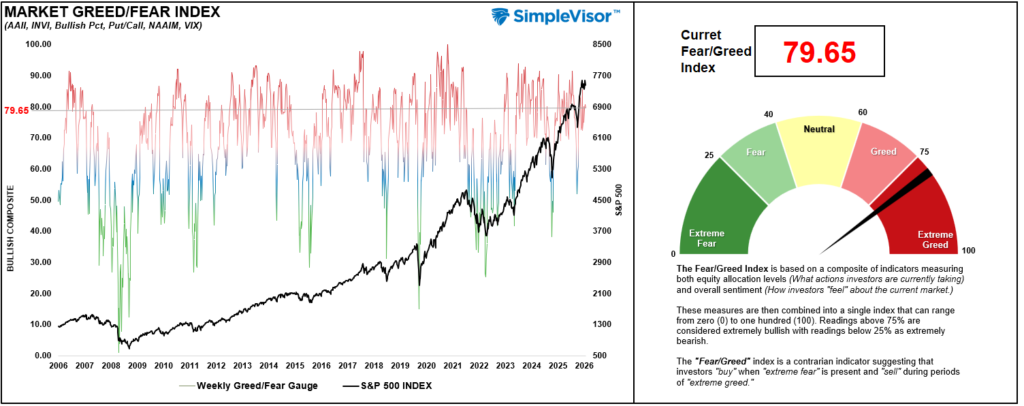
In conclusion, the "momentum meltdown" serves as a stark reminder of the risks associated with crowded trades. While the broader market remains supported by a healthy rotation into defensive sectors, the path forward for the technology and semiconductor complex depends heavily on the upcoming earnings cycle and the Federal Reserve’s ability to navigate the tension between cooling inflation and rising energy risks. The market is not currently signaling a collapse, but it is demanding a rebalancing of risk as the "perfection" priced into the AI narrative begins to face its first real-world challenges.