Strategies for Long-Term Renting and Financial Independence for Modern Families


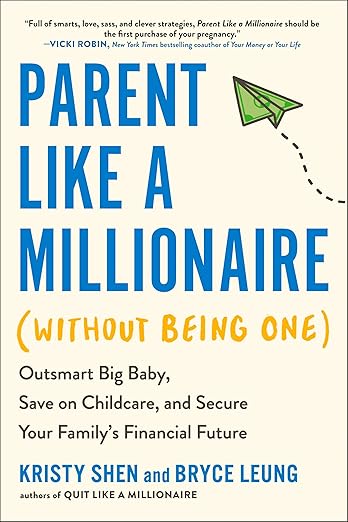
The paradigm of the traditional American Dream, long defined by the acquisition of a suburban home and a thirty-year mortgage, is facing a rigorous challenge from a growing demographic of financially independent families. As housing affordability reaches historic lows across North America, a segment of the Financial Independence, Retire Early (FIRE) movement is demonstrating that parenthood does not necessitate a retreat into homeownership. This shift is exemplified by the recent experiences of Kristy Shen and Bryce Leung, prominent figures in the FIRE community, who have successfully navigated nomadic international travel and domestic relocation with a toddler while maintaining a strictly rental-based lifestyle. Their approach provides a blueprint for a broader economic trend: the prioritization of liquid assets and temporal freedom over the illiquid equity of a primary residence.
The Evolution of the FIRE Lifestyle and the Parenthood Pivot
The journey of Shen and Leung began in the mid-2010s when they retired from their careers as computer engineers in their early thirties. At the time, they were part of a wave of "digital nomads" who leveraged high savings rates and low-cost index fund investing to exit the workforce decades ahead of schedule. In 2016, they gained international attention for their "Buy Your Freedom and Rent the Rest" philosophy, which posited that homeownership in overvalued markets acted as a "wealth-killing" anchor.
For years, critics of the FIRE movement argued that such a lifestyle was only sustainable for "DINKs" (Double Income, No Kids). The prevailing sentiment suggested that the arrival of children would inevitably force a return to traditional employment and the "stability" of a purchased home. However, the couple’s recent three-month nomadic stint in Spain with their toddler, followed by a cross-country move within Canada, has provided a case study to the contrary. By remaining "jobless" and continuing to rent, they have highlighted a strategic alternative for families who find themselves priced out of the current real estate market or who simply value geographic flexibility.
Chronology of a Decad-Long Financial Strategy
The timeline of this financial experiment began in earnest in 2012, when the couple reached their "FI" (Financial Independence) number. By 2015, they had officially retired and began traveling the world. In 2016, they participated in the Chautauqua financial conference in Ecuador, an event led by financial author JL Collins, where they began publicly advocating for the rental model.
The period between 2016 and 2022 saw the couple traveling to dozens of countries, utilizing the "geographic arbitrage" strategy—living in regions where the cost of living is significantly lower than their investment returns. In 2022, following the conclusion of the final Chautauqua event, the couple transitioned into a new phase of life: parenthood. This transition served as the ultimate stress test for their "rent everything" philosophy. Contrary to expectations of settling down, 2024 saw the family living in Valencia, Spain, for an extended period before relocating to a new rental in Canada, proving that the nomadic framework could be adapted to accommodate the needs of a developing child.
Data-Driven Analysis of the Rent vs. Buy Dilemma
The decision to rent as a family is supported by significant economic data. According to the U.S. Census Bureau, the national homeownership rate stood at 65.6% in the fourth quarter of 2023, a figure that has remained relatively stable despite surging property values. However, the "overhead" costs of homeownership—property taxes, maintenance, insurance, and mortgage interest—often exceed the cost of renting in many major metropolitan areas.
Financial analysts often cite the "1% Rule" for home maintenance, suggesting that homeowners should expect to spend at least 1% of their home’s value annually on repairs. In a market where a starter home costs $500,000, this equates to $5,000 per year in non-equity-building expenses. When combined with property taxes (averaging 1.1% nationally) and homeowners insurance, the "unrecoverable costs" of owning can frequently outpace the cost of a rental.
The FIRE philosophy suggests that by renting, families can keep their capital invested in the S&P 500 or total stock market indices, which have historically returned approximately 10% annually before inflation. This creates a "dividend-funded" lifestyle where the growth of the investment portfolio covers the rent, effectively allowing the family to live in a "home paid for by the market" without the liability of a mortgage.
The Strategic Framework for Stable Family Renting
To mitigate the inherent risks of renting—such as "renovictions" or unstable landlords—Shen and Leung have developed a ten-point strategic framework. This methodology shifts the focus from passive renting to professionalized tenancy management.
1. Prioritizing Purpose-Built Rentals
The most critical factor in rental stability is the ownership structure of the property. The couple advocates for "purpose-built" rental apartments—buildings owned by corporations or long-term institutional investors specifically for the purpose of leasing. Unlike individual condos or houses, which a landlord might sell at any time, an apartment building is an institutional asset. The likelihood of an entire building being liquidated and all tenants being evicted is statistically negligible compared to the sale of a single-family home.
2. Rigorous Landlord Vetting
Professionalized renters treat the selection of a landlord with the same scrutiny a bank uses for a loan. This includes researching management companies for past litigation, checking city records for code violations, and interviewing current tenants. The rise of platforms like "Rate the Landlord" has provided tenants with a centralized database to identify "slumlords" versus professional management firms.
3. The "A++ Tenant" Profile
Stability in renting is often a byproduct of being a desirable tenant. Landlords seek reliability and low maintenance. By providing a "renter’s resume" that includes stellar credit scores, references from previous landlords, and proof of significant liquid assets (often a year’s worth of rent in a liquid account), families can negotiate better terms and secure the most desirable units in competitive markets.
4. The "Pick Two" Location Strategy
Families often struggle with the cost of large homes in premium neighborhoods. The "Pick Two" rule suggests that renters must choose between Convenience, Size, and Neighborhood. By opting for a smaller footprint (e.g., 800 square feet instead of 1,200) in a high-walkability, high-safety neighborhood, families can eliminate the need for a car, further reducing their cost of living and increasing their investment capacity.

5. Leveraging Educational Infrastructure
A common driver of homeownership is the desire to live within specific school district boundaries. However, the couple highlights the utility of "magnet schools" and specialized educational programs (STEM, arts, or IB programs) that draw students from across traditional boundary lines. By focusing on academic performance and lottery-based admissions, renting families can access top-tier education without the "zip code premium" associated with purchasing a home in an elite district.
Broader Implications for the Housing Market and Society
The trend of "renting by choice" among high-net-worth or financially independent families has broader implications for urban planning and the economy. As the "lock-in effect" of low mortgage rates keeps existing homeowners from selling, the rental market is becoming the primary entry point for young families.
This shift challenges the psychological stigma associated with renting. For decades, renting was viewed as "throwing money away," but in an era of high interest rates and inflated home prices, the opportunity cost of a down payment is significant. A $100,000 down payment invested in a diversified portfolio could potentially grow to over $400,000 in fifteen years (assuming a 7% real return), whereas that same $100,000 is "dead capital" when locked in a home’s equity.
Furthermore, the nomadic capability of renting families allows for greater economic resilience. If a local labor market collapses or a region is affected by climate-related risks, renters can relocate with minimal friction. This "geographic liquidity" is becoming an increasingly valuable asset in a volatile global economy.
Conclusion: Redefining Stability in the 21st Century
The narrative of Kristy Shen and Bryce Leung serves as a practical refutation of the idea that children and renting are incompatible. By applying engineering-style rigor to the rental market and prioritizing investment growth over property equity, they have maintained a lifestyle of total autonomy.
Their approach suggests that "stability" for a modern family does not come from the walls of a house, but from the strength of a balance sheet. As more families adopt this mindset, the definition of the "American Dream" may continue to evolve from the ownership of a specific plot of land to the ownership of one’s time and global mobility. The transition from "carefree nomads" to "nomadic parents" demonstrates that the core tenets of financial independence—frugality, strategic investing, and the rejection of societal pressures—are adaptable to every stage of life. For the modern family, the choice to rent is not a sign of financial failure, but a calculated move toward long-term wealth and freedom.