Financial Independence and the Rental Paradigm Why Families Are Choosing Leasing Over Homeownership


The long-held social contract of the middle class, which dictates that marriage and parenthood must inevitably lead to a 30-year mortgage, is facing a rigorous challenge from a growing demographic of financially independent families. As the "Financial Independence, Retire Early" (FIRE) movement matures, its early adherents are now entering the phase of parenthood, testing the resilience of nomadic and rental-based lifestyles against the traditional pressures of child-rearing. A prominent case study in this shift is Kristy and Bryce, two former engineers who retired in their early thirties and have continued to reject homeownership despite the recent addition of a toddler to their family. Their journey, which recently included a three-month nomadic stint in Spain and a cross-country move in Canada, serves as a blueprint for a burgeoning segment of the population that prioritizes liquidity and time over property equity.
The Evolution of the Nomadic FIRE Movement
The narrative of Kristy and Bryce began to gain international attention within financial circles in 2016, following their appearance at the Chautauqua financial conference in Ecuador. At the time, they were celebrated as "carefree DINKs" (Double Income, No Kids) who had successfully leveraged their engineering salaries to build a portfolio capable of sustaining a perpetual global itinerary. Critics within the personal finance community frequently argued that their lifestyle was a temporary luxury afforded by the absence of dependents. The prevailing skepticism suggested that the arrival of a child would necessitate a return to the traditional workforce and the purchase of a suburban home to ensure "stability."
However, the chronology of their post-retirement life has defied these expectations. After several years of nomadic travel and serving as speakers at international financial events, the couple transitioned into parenthood without abandoning their core financial principles. Following the birth of their child, they embarked on a three-month residency in Spain, utilizing the Turia Fountain in Valencia as a backdrop for a new chapter of nomadic parenting. Upon returning to North America, they executed a move from one side of Canada to the other, maintaining their status as renters throughout the process. This trajectory highlights a significant shift in the FIRE movement: the application of aggressive financial optimization to the complexities of modern parenting.
The Economic Logic of the Professional Renter
The decision to rent as a family is often viewed through a lens of instability, yet for those in the FIRE community, it is an calculated investment strategy. According to the U.S. Census Bureau, approximately 65.3% of Americans own their homes, a statistic driven by the cultural perception of renting as a "missed" adulthood milestone. However, financial analysts point to the "unrecoverable costs" of homeownership—property taxes, maintenance, and insurance—as significant drains on capital that could otherwise be deployed in higher-yielding assets.
The core of Kristy and Bryce’s philosophy, often echoed by financial mentor JL Collins, author of The Simple Path to Wealth, is the concept of "buying freedom and renting the rest." This approach posits that while one cannot live inside a stock certificate, the dividends and capital gains generated by a well-managed portfolio can comfortably cover the cost of a high-quality rental. This liquidity provides a level of "time sovereignty" that many homeowners lack, as they are often tethered to specific geographic locations by their mortgage obligations and the illiquidity of their primary residence.
Strategic Stability: The 10-Point Framework for Families
To mitigate the inherent risks of renting—such as "renovictions" or sudden lease terminations—this new class of professional renters employs a sophisticated vetting process. Their strategy moves beyond the aesthetics of a property and focuses on the underlying ownership structure.
- Ownership Structure Analysis: The primary safeguard for rental stability is the "purpose-built" rental apartment. Unlike individual condos or single-family homes, which can be sold at the whim of an owner, purpose-built buildings are owned by corporations or long-term investors. These entities are in the business of leasing, making the eviction of a stable tenant for the purpose of a sale highly unlikely.
- Landlord Due Diligence: Prospective tenants are now using tools like "Rate My Landlord" and Google reviews to vet management companies. Checking the maintenance of common areas, such as laundry rooms and lawns, serves as a proxy for how the landlord handles essential repairs.
- Professionalism in Applications: In competitive markets, families are treating rental viewings as job interviews. Punctuality, presentation, and organized documentation are used to signal to landlords that the family is a "low-risk" asset.
- Financial Transparency: Providing a "stellar" reference list and proof of a year’s worth of rent in liquid assets allows these families to compete with higher-income earners who may have less stability.
- Leveraging Approval Social Proof: By announcing existing approvals to other landlords, renters create a sense of competition, making themselves more desirable to high-quality property managers.
- The "Two-Out-of-Three" Rule: Families prioritize convenience and neighborhood quality over sheer square footage. By opting for modular furniture and a minimalist lifestyle, they can afford to live in premium school districts without the premium cost of a large mortgage.
- Strategic Geographic Selection: Rather than aiming for the most expensive "trophy" neighborhoods, these renters target "up-and-coming" areas adjacent to high-value districts. This allows access to the same amenities and schools at a reduced rental rate.
- Educational Access via Magnet Schools: To decouple housing from education, many families are utilizing "magnet schools"—public schools with specialized curricula that draw students from across traditional boundary lines. This removes the necessity of living in the most expensive zip codes to access elite public education.
- Platform Optimization: Utilizing high-risk, high-reward platforms like Craigslist requires a sophisticated eye for scams but often yields the most competitive prices from individual landlords who may not be optimized for maximum market rent.
- Legal Literacy: Understanding local tenant-landlord laws, rent control regulations, and "renoviction" protections is the final pillar of the strategy. Knowledge of these laws acts as a defensive shield against unscrupulous management practices.
Broader Implications for the Real Estate Market
The rise of the "permanent renter" class among high-net-worth families has broader implications for the real estate and labor markets. As more families opt for the flexibility of renting, the demand for high-end, family-oriented rental units is expected to increase. This shift could lead to a diversification of urban housing, with developers focusing more on three-bedroom apartments and child-friendly amenities within purpose-built rental structures.

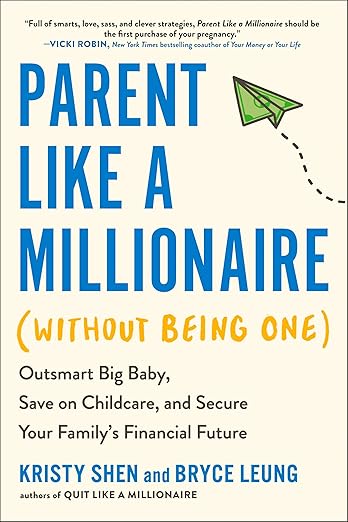
Furthermore, the "jobless" status of Kristy and Bryce—maintained through their investment portfolio—represents a decoupling of parenting from the traditional 9-to-5 grind. This "Parent Like a Millionaire" approach, as detailed in their new book, emphasizes the use of time as the primary currency of family life. By avoiding the overhead of homeownership, they argue that parents can be more present, less stressed, and more capable of providing their children with diverse cultural experiences, such as the three-month immersion in Spain.
Fact-Based Analysis: The Opportunity Cost of the American Dream
The financial analysis supporting this lifestyle is rooted in the "Opportunity Cost of a Down Payment." In a market where home prices are at record highs, a 20% down payment on a $500,000 home ($100,000) represents significant lost potential. If that $100,000 were invested in a total stock market index fund with an average 7% annual return, it would grow to nearly $200,000 in ten years, even without additional contributions. When the costs of interest, taxes, and maintenance are added, the "investment" of a primary residence often underperforms a simple brokerage account.
Critics point out that homeownership is a form of forced savings, which benefits those who lack the discipline to invest. However, for the FIRE community, discipline is a foundational trait. For this group, the house is seen not as an investment, but as a "lifestyle consumption" item. By renting that lifestyle, they maintain the ability to pivot their living situation in response to economic shifts or personal desires.
Conclusion: A Redefined Stability
The story of Kristy and Bryce is more than a travelogue; it is a signal of a shifting definition of "stability." For previous generations, stability was found in bricks and mortar. For the modern, financially independent family, stability is found in a diversified portfolio, a deep understanding of tenant rights, and the geographic flexibility to move where opportunities—or desires—lead. As they continue to raise their child without a "forever home," they are proving that the "adulting checkbox" of homeownership may be an optional feature, rather than a requirement, of a successful family life. Their experience suggests that while you cannot live inside a stock, the life you build around it can be far more expansive than the four walls of a traditional home.