Evaluating the Economic Realities and Long-Term Value of the Youth Sports Industrial Complex

The global fascination with elite-level athletics, most recently exemplified by the high-stakes matches of the FIFA World Cup, has fueled a massive surge in private youth sports expenditures, with many American families now spending between $3,500 and $15,000 annually per child on travel leagues and private training. While the dream of seeing a child don a national team jersey or secure a professional contract remains a powerful motivator for parents, a growing body of financial data and athletic statistics suggests that the return on investment for youth sports is rarely found in the form of a college scholarship. Instead, experts suggest that the true value of these investments lies in the development of "lifetime sports" skills and the cultivation of personal discipline, rather than the elusive pursuit of professional-level mastery.
The Rising Cost of the Travel League Phenomenon
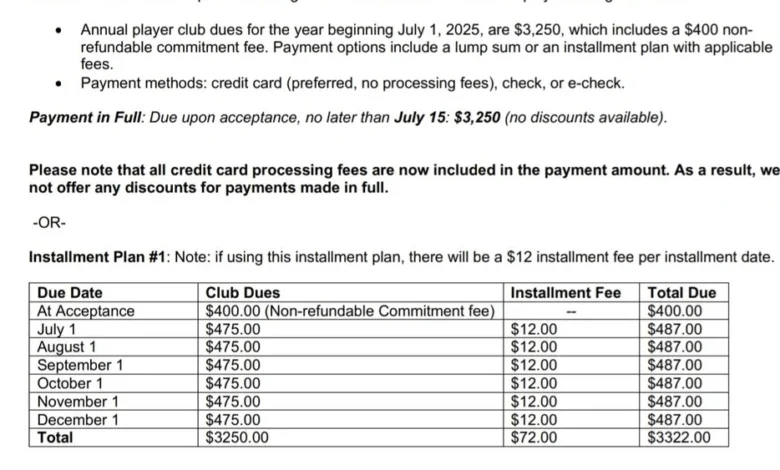
The landscape of youth sports has undergone a radical transformation over the last two decades. What was once a community-based system of local "rec leagues" has evolved into a multi-billion dollar "youth sports industrial complex" dominated by elite travel clubs. For families participating in these leagues, the base tuition for club soccer, volleyball, or baseball is often just the starting point.
When accounting for tournament entry fees, specialized uniforms, gas, flights, and hotel stays for out-of-state competitions, the annual cost frequently escalates. Elite club families often find themselves spending upwards of $8,000 to $15,000 a year. These figures often include supplemental costs such as private skills coaching, strength and conditioning trainers, and video analysis services intended to help players stand out in the recruiting process.
This financial commitment is often driven by the "lottery ticket" mentality. Watching the heirs to superstars like Lionel Messi or Kylian Mbappé perform on the world stage provides a powerful psychological incentive. However, financial analysts warn that the "sunk cost fallacy" often takes hold, leading parents to continue funding expensive hobbies long after the child’s interest or competitive trajectory has plateaued.
The Scholarship Mirage: Analyzing NCAA Statistics
The primary justification cited by many parents for these high expenditures is the hope of a college athletic scholarship. However, data provided by the National Collegiate Athletic Association (NCAA) paints a sobering picture of the actual probabilities involved. According to NCAA research, only about 2% of high school athletes receive any form of athletic scholarship to compete in college.
Furthermore, the majority of these scholarships are "partial" rather than "full rides." Full-tuition scholarships are largely concentrated in "headcount" sports such as football and Division I basketball. In "equivalency" sports like soccer, baseball, and track, coaches typically split a limited number of scholarships among a larger roster, resulting in awards that may only cover 10% to 25% of a student’s tuition.
Statistically, if a child joins a youth sports club with 100 participants, only one or two will likely see any scholarship money. Even then, the award often fails to cover the total cost of attendance. When compared to the cumulative cost of travel sports from age 10 to 18, the "expected value" of a scholarship is frequently lower than the total amount spent on the training itself.
A Financial Decision Framework: Joy, Mastery, and Money
To navigate the emotional and financial pressures of youth sports, financial advisors and child development experts recommend a structured decision-making framework. This framework relies on three primary variables: Joy, Mastery, and Financial Sustainability.
Variable #1: The Metric of Joy
The most critical factor in determining whether to continue an expensive activity is the child’s intrinsic motivation. Experts argue that the goal of youth activities should be the cultivation of joy so intense that the child becomes self-motivated to practice.
The "hostage negotiation" test is a common diagnostic tool for parents: if a child must be dragged to every practice or lesson for months on end, the "joy" has likely left the equation. Without self-directed obsession, a child is unlikely to reach the elite levels required for collegiate play, making the continued high-level expenditure difficult to justify.
Variable #2: The Path to Mastery
The second reason to maintain high investment is if the child demonstrates clear "mastery" relative to their peer group. This is typically defined as performing in the top 25% of their age bracket and showing a consistent upward trajectory.

To avoid "parental delusion," experts suggest triangulating data through objective measures:
- Standardized rankings or tournament results.
- Feedback from objective, third-party coaches.
- Comparing the child’s performance against regional or national benchmarks rather than just local teammates.
If an activity lacks both joy and a trajectory toward mastery, it is often a signal to gracefully wind down the investment and redirect resources toward a new experiment.
Variable #3: The Financial Budget
From a wealth management perspective, spending on children’s activities should be tethered to the family’s broader financial health. Unchecked spending can undermine a family’s long-term security, including retirement savings and the ability to pay for college through traditional means. Three common budgeting methods include:
- Income-Based: Allocating 2% to 5% of gross household income toward all extracurriculars.
- Net Worth-Based: Allocating 1% to 2% of total net worth annually, a strategy often used by families who have achieved financial independence.
- Performance-Based: Allocating 10% of the prior year’s investment gains to fund current lessons and travel.
The Opportunity Cost: Soccer vs. The S&P 500
A factual analysis of the "opportunity cost" reveals the potential financial trade-offs of the travel sports lifestyle. If a family spends $5,000 annually on travel soccer from the time a child is 10 until they turn 18, the total cash outlay is approximately $40,000.
If that same $5,000 annual investment were instead placed into an S&P 500 index fund with an average annual return of 8%, the account would grow to approximately $53,000 by the time the child graduates high school. If left untouched to compound until the child reaches age 40, that $53,000 would grow to nearly $290,000.
In contrast, the "expected value" of a soccer scholarship—calculated as a 2% chance of receiving a $20,000 annual award over four years—is roughly $1,600. From a purely mathematical standpoint, a "boring" 529 college savings plan or a diversified brokerage account is 98 times more likely to fund a college education than a travel sports league.
The Role and Risk of Parent-Coaches
Many parents attempt to mitigate these costs by taking on the role of coach themselves. While this can foster bonding and reduce tuition expenses, it carries unique risks. Being proficient at a sport and being proficient at teaching it are distinct skill sets.
A common pitfall for parent-coaches is focusing on isolated mechanics (such as a tennis stroke or a soccer kick) while failing to teach "game sense," such as footwork, anticipation, and live-play rallying. Professional instructors often emphasize that while parents can provide the "reps" and volume of practice, professional guidance is often necessary to ensure that the technique being practiced is actually applicable in a competitive environment. A hybrid model—professional instruction for technique and parent-led sessions for repetition—is often cited as the most cost-effective path to improvement.
The Long-Term Return: Lifetime Sports Competence
Despite the low probability of professional or collegiate success, many families continue to invest in sports for a different reason: the "lifetime dividend." The ultimate goal of youth sports, according to many health and social experts, should be to help a child become competent enough to play for their entire life.
Competence in "lifetime sports" such as tennis, golf, swimming, or pickleball provides four major long-term benefits:
- Health and Longevity: Regular physical activity disguised as play reduces the long-term risk of chronic illness without the psychological burden of forced exercise.
- Social Capital: Sports clubs provide a ready-made social network for adults, making it easier to build community after moving to a new city or transitioning through different life stages.
- Professional Networking: Many business relationships and investment opportunities are forged on the golf course or the tennis court, where relaxed contact allows for organic serendipity.
- Discipline and Resilience: The process of losing, practicing, and improving builds a psychological framework that is transferable to professional and personal challenges in adulthood.
Conclusion and Broader Implications
The youth sports industrial complex remains a polarizing topic in modern parenting. While the financial math rarely supports the pursuit of scholarships, the developmental benefits of sports are undeniable when the focus remains on the child’s well-being rather than a professional dream.
As the costs of travel leagues continue to rise, the divide between families who can afford elite training and those who cannot continues to widen, raising questions about social mobility and the "pay-to-play" nature of American athletics. For the individual family, the most sustainable path forward involves balancing the desire for their child’s success with the cold reality of compound interest. By viewing sports as a tool for building healthy, social, and resilient adults—rather than as a lottery ticket for college—parents can find a rational and rewarding middle ground in the high-stakes world of youth athletics.