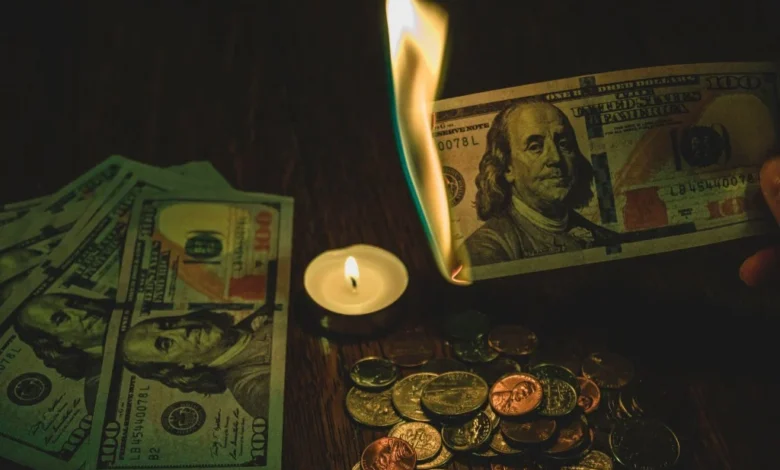
The core of the debate rests on the realization that the behaviors required to achieve financial independence, such as delayed gratification and disciplined saving, are often diametrically opposed to the behaviors required to enjoy wealth once it is attained. For many in the community, the habits of deprivation become so deeply ingrained that the shift toward spending feels counter-intuitive or even irresponsible.
The Philosophy of "Buying Freedom"
A fundamental shift in perspective is being championed by prominent figures in the financial independence community, including JL Collins, author of The Simple Path to Wealth, and Peter Adeney, known as Mr. Money Mustache. This perspective reframes the act of saving not as deprivation, but as a proactive purchase. Under this framework, every dollar diverted from traditional consumption—such as luxury vehicles, designer apparel, or high-end real estate—is viewed as a direct payment toward "Financial Freedom."
This conceptualization suggests that individuals are not "saving" money in the traditional, passive sense. Instead, they are spending 100% of their income, with a significant portion allocated toward the purchase of low-cost, broad-based stock index funds. These assets are categorized as the ultimate consumer good: autonomy. By framing investment as a purchase of time and agency, the psychological burden of "delayed gratification" is replaced by the immediate gratification of increasing one’s financial strength.
The Mechanics of Sustainable Spending: The 4% Rule and Beyond
The mathematical foundation for this lifestyle transition is largely rooted in the Trinity Study, a 1998 research paper by three professors at Trinity University. The study introduced what is now known as the "4% Rule," which suggests that a retiree can withdraw 4% of their initial portfolio value (adjusted for inflation annually) with a high probability of the money lasting at least 30 years.
Data from the Trinity Study and subsequent updates indicate:
- A portfolio consisting of 50% to 75% stocks has historically survived 30-year periods even during market downturns.
- In many historical scenarios, the "safe withdrawal rate" resulted in the individual having significantly more money after 30 years than they started with.
- This leads to the concept of "overflowing wealth," where investment returns consistently outpace withdrawals, effectively making all subsequent spending "free."
In this context, "free" spending occurs when the capital gains and dividends generated by an investment portfolio exceed the individual’s cost of living. This creates a self-sustaining financial ecosystem, akin to the historical allegory found in George S. Clason’s The Richest Man in Babylon, where a "purse" continues to refill regardless of how liberally the owner spends.
The Relationship Between Consumption and Happiness
A critical component of the current financial discourse is the objective analysis of how spending affects human happiness. Journalistic and psychological research, including the well-known 2010 study by Daniel Kahneman and Angus Deaton, suggests that while a lack of money causes significant distress, the correlation between increased spending and increased happiness plateaus once basic needs and moderate comforts are met.
Current observations within the FI community highlight two specific types of spending:
- Value-Negative Spending: This includes purchases that introduce complexity or "feature creep" into a person’s life. A common example is the modern automotive market, where high-end vehicles are increasingly laden with telemetry, touchscreens, and digital subscriptions. For many consumers, these features represent a decrease in utility and an increase in annoyance, suggesting that spending more can, in some cases, diminish the quality of life.
- Strategic Hedonic Spending: This involves spending on services that mitigate misery rather than seeking to manufacture joy. An example is the purchase of first-class air travel. While often viewed as a poor value proposition in terms of raw cost, the expenditure is justified by its ability to reduce the physical and psychological toll of modern travel, thereby making a necessary task "slightly less miserable."
A Chronology of the Financial Independence Movement
To understand the current focus on spending, it is necessary to examine the timeline of the FI movement’s evolution:
- 1992: Vicki Robin and Joe Dominguez publish Your Money or Your Life, establishing the concept of "life energy" as the true cost of money.
- 2011: The launch of the Mr. Money Mustache blog brings the concept of "Mustachianism" and aggressive frugality to a mainstream digital audience.
- 2012-2016: The "Stock Series" by JL Collins and the rise of the "Mad Fientist" podcast formalize the mathematical and investment strategies of the movement.
- 2020-Present: As the first major wave of "FIRE" (Financial Independence, Retire Early) adherents enter their second decade of independence, the focus has shifted from "How do I get there?" to "What do I do now that I am here?"
This evolution has led to a broader cultural critique of the "deprivation" model. Critics argue that excessive saving can lead to a "dying with too much" scenario, a concept popularized by Bill Perkins in his book Die With Zero. The FI community is currently attempting to find a middle ground between the "Simple Path" of Collins and the "Optimization" model of Perkins.
Economic Context: National Debt and Inflation
The discussion of individual spending occurs against a backdrop of broader economic volatility. As of 2024, the United States federal debt is approaching $35 trillion, with projections suggesting it could reach $40 trillion within the next decade. The interest payments on this debt now exceed $1 trillion annually, accounting for approximately 15% of total government spending.
This macro-economic environment reinforces the FI community’s preference for "buying freedom" through assets. Inflation and government fiscal policy serve as a reminder that the "safe" path of holding cash or relying solely on state-sponsored pensions may be riskier than participating in the growth of the global economy through equity markets.
The Role of Work and Purpose in the Post-FI Era
One of the most significant shifts in the FI narrative is the decoupling of "Financial Independence" from "Retirement." While the FIRE acronym remains popular, many leaders in the space now emphasize that the goal is not the cessation of work, but the attainment of autonomy.
Evolutionary psychology suggests that humans are "hardwired" for productive activity. Historical data shows that prior to the industrial revolution and the implementation of Social Security systems in the 20th century, the concept of "retirement" as a multi-decade period of leisure was virtually non-existent. Most individuals worked in some capacity until physical decline made it impossible.
In the modern era, the challenge for the financially independent is not how to pay bills, but how to allocate their "life energy." The rise of Artificial Intelligence (AI) and automation adds a layer of complexity to this issue. As AI potentially replaces human labor in traditional sectors, the "work" of the future may shift entirely toward creative, artisanal, or philanthropic pursuits—activities that many in the FI community already engage in as "hobbies."
Philanthropy: The Ultimate Value Proposition
As the debate over spending continues, philanthropy has emerged as a high-value outlet for excess capital. Many who find it difficult to spend on personal luxuries find immense satisfaction in "giving like a billionaire." This involves the strategic distribution of wealth to causes that provide a sense of purpose and social impact.
From a journalistic perspective, this shift toward philanthropy represents a maturing of the FI movement. It moves the conversation from self-centered accumulation to community-centered contribution. For those who have achieved "Enough," the act of giving becomes the ultimate luxury, providing a level of "selfish pleasure" and psychological fulfillment that consumer goods rarely replicate.
Conclusion: The Freedom of Choice
The overarching implication of the current discourse on spending is that financial independence is, ultimately, about the power of choice. Whether an individual chooses to continue living a frugal lifestyle, begins to spend more liberally on comforts, or focuses on charitable giving, the success lies in the ability to make that decision without the pressure of economic necessity.
The transition from a "saver" to a "spender" is not a requirement of financial independence, but an option. For some, the satisfaction of watching a nest egg grow remains greater than the satisfaction of depleting it. The professional consensus within the community is that there is no "wrong" way to handle wealth, provided the individual has first secured their freedom and continues to live within the sustainable parameters of their "Enough" number. In an era of economic uncertainty, the ability to choose one’s path remains the most valuable asset of all.
Related posts: