The Escalating Cost of Urban Living and the $408,000 Income Threshold for Middle-Class Stability in Major American Cities

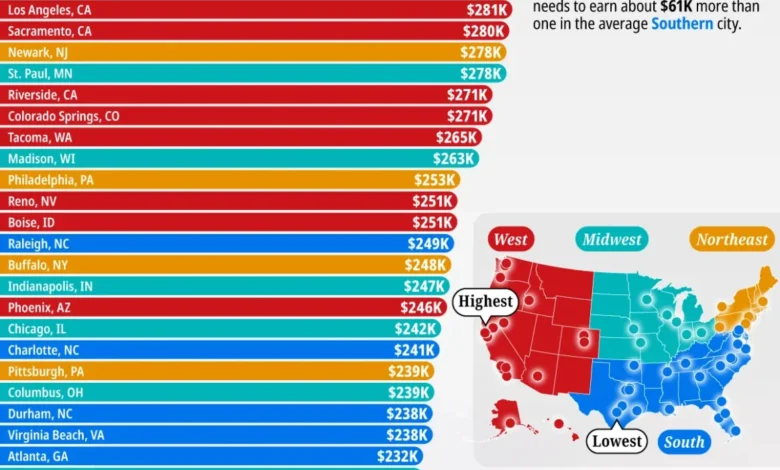
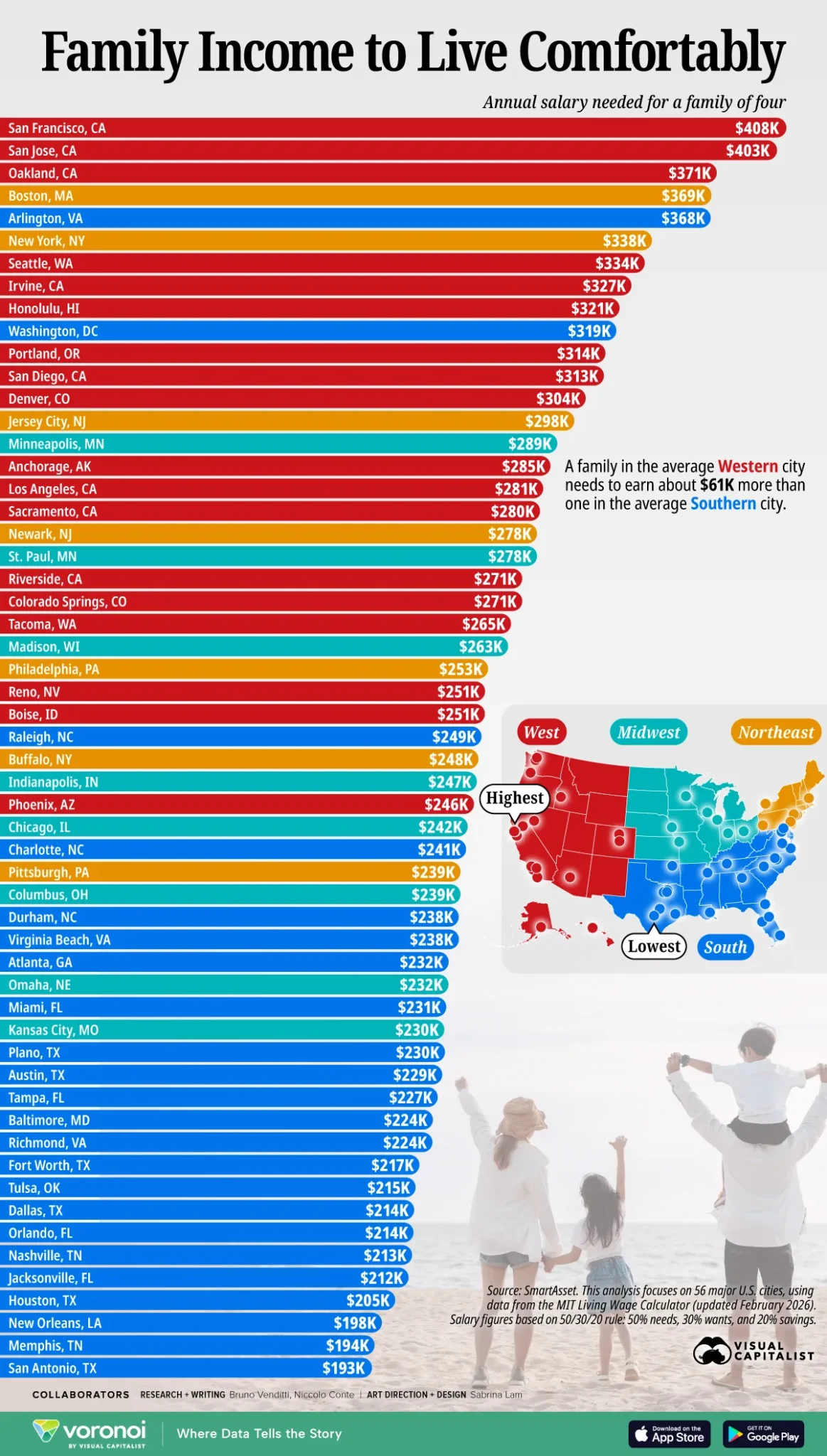
The definition of a middle-class lifestyle in the United States has undergone a radical transformation over the past decade, particularly within high-cost coastal hubs. Recent financial data and cost-of-living analyses indicate that for a family of four to maintain a comfortable, traditional middle-class existence in San Francisco, a household income of approximately $408,000 is now required. This figure represents a significant escalation from previous years, highlighting a growing gap between stagnating median wages and the soaring costs of essential services such as housing, education, and healthcare.
The Evolution of the $400,000 Middle-Class Threshold
The trajectory of income requirements for urban stability has moved upward at a pace that frequently exceeds the official Consumer Price Index (CPI). In 2018, financial analysts estimated that a household income of $300,000 was sufficient to secure a middle-class lifestyle in expensive coastal cities. By late 2019, following shifts in the economic landscape and rising childcare costs, that estimate was revised to $350,000.
The current 2024–2026 projections, which place the requirement at $408,000 for San Francisco, represent a 36% increase over an eight-year period. This equates to a compound annual inflation rate of approximately 3.5% for a family’s specific "inflation basket." While this figure is only slightly higher than the broader national inflation targets set by the Federal Reserve, the composition of these costs—heavily weighted toward non-discretionary items like tuition and property—creates a more acute financial pressure on professional households.
Deconstructing the $408,000 Household Budget
To understand how a top-tier income can result in a modest net surplus, it is necessary to examine the mandatory outflows associated with living in a premier American city. A gross income of $408,000 is subject to significant erosion through taxation and structural costs.
Taxation and Effective Take-Home Pay
In high-tax jurisdictions such as California or New York, the combined burden of federal and state income taxes, along with FICA contributions, results in an effective tax rate of approximately 32% for this income bracket. This leaves a household with roughly $277,440 in annual disposable income before any retirement contributions or savings are factored in.
Financial experts note that the tax efficiency of this income varies depending on its source. For instance, investment income—comprising qualified dividends, long-term capital gains, and rental income shielded by depreciation—is often taxed at a lower effective rate (roughly 26%) than standard W-2 wage income. Consequently, households relying solely on salaries must earn significantly more to match the purchasing power of those with diversified passive income streams.

The Impact of Education and Childcare
Perhaps the most significant variable in the modern middle-class budget is the cost of education. In San Francisco and similar markets, private grade school tuition for two children can exceed $90,000 annually. This single line item often dictates whether a family feels "comfortable" or financially strained. While public education remains an option, many families in high-competition professional environments view private education as a necessary investment in their children’s future human capital, particularly for specialized language immersion or college preparatory tracks.
Housing and Essential Expenditures
Beyond education, housing remains the primary driver of cost-of-living disparities. In a $408,000 budget, housing costs, including mortgages, property taxes, and maintenance, typically consume a substantial portion of the after-tax income. When combined with food costs (estimated at over $3,000 per month for a family of four) and basic utilities, the remaining "discretionary" funds are often redirected into retirement vehicles like 401(k) plans or college savings accounts (529 plans).
Comparative Analysis of Major U.S. Cities
San Francisco remains the most expensive market for a family of four, but the trend of rising income requirements is a national phenomenon. Data indicates a clear geographic divide in the cost of "comfort," with Western and Northeastern states commanding a significant premium over the South and Midwest.
| City | Required Income for Family of Four |
|---|---|
| San Francisco, CA | $408,000 |
| Honolulu, HI | $321,000 |
| San Diego, CA | $313,000 |
| New York, NY | $305,000 |
| Los Angeles, CA | $281,000 |
| Richmond, VA | $224,000 |
| Orlando, FL | $214,000 |
This data suggests that a family can achieve an identical standard of living in Richmond, Virginia, on nearly half the income required in San Francisco. This "sunshine and lifestyle premium" is a calculated trade-off for many residents who value proximity to tech hubs, diverse cultural institutions, and temperate climates despite the financial burden.
The Strategy of Geoarbitrage
As the income threshold for urban comfort continues to rise, many households are employing "geoarbitrage"—the practice of taking advantage of the difference in the cost of living between two locations. However, financial advisors suggest a tiered approach to this strategy rather than immediate relocation to international or rural areas.
Intra-City Relocation
The first level of geoarbitrage involves moving to a more affordable neighborhood within the same metropolitan area. In cities like San Francisco, moving just a few miles can result in a 30% to 40% reduction in housing costs while maintaining access to the same professional networks and social circles. This minimizes disruption to a family’s lifestyle while significantly increasing the monthly savings rate.
State and Regional Shifts
The second level involves moving to a different city or state. Relocating from San Francisco to Honolulu, for example, could theoretically reduce a family’s required income by over $80,000. At a standard 4% safe withdrawal rate for retirement, this reduction in annual spending is equivalent to having $2.2 million less in required net worth.
Psychological and Social Implications of High-Income Living
The realization that a top 5% income is required for a middle-class lifestyle has led to a sense of "wealth fatigue" among professional classes. Despite earning amounts that would be considered astronomical in other parts of the country, many families in coastal cities report feeling financially precarious.
The rise of remote work has complicated this dynamic. During the COVID-19 pandemic, the ability for "knowledge workers" to maintain high salaries while living in lower-cost areas briefly challenged the necessity of living in expensive urban cores. However, as many firms return to in-office or hybrid models, the pressure to reside near expensive city centers has returned.
Furthermore, social media has amplified the discourse surrounding these budgets. When detailed breakdowns of $400,000 incomes are shared publicly, they often receive polarized reactions. Some view these figures as evidence of an "out of touch" elite, while others see them as a sobering reflection of the eroding purchasing power of the dollar in the face of institutionalized costs like healthcare and education.
Future Outlook and Strategic Recommendations
Economists suggest that the trend of rising urban costs shows no signs of reversing. For households currently navigating these environments, several strategic levers remain available:
- Passive Income Growth: Given the tax advantages of investment income over wage income, building a portfolio of dividend-paying stocks, real estate, or municipal bonds is essential for long-term stability.
- Education Optimization: Utilizing public schools or seeking scholarships can free up nearly six figures of annual cash flow, which can then be redirected into taxable investment portfolios.
- Severance Negotiation: For those looking to exit high-stress urban environments, negotiating a severance package rather than simply quitting can provide the necessary capital to fund a move to a more affordable region.
- Lifestyle Adjustments: Shifting focus from luxury goods and "status" expenditures to "freedom" as the ultimate luxury good.
The data confirms that while the "American Dream" remains attainable, its price tag in the nation’s most productive cities has reached a historic high. The $408,000 threshold is not merely a number but a reflection of a changing economic order where the traditional middle-class life—once accessible to many—now requires elite-level earnings and sophisticated financial management. For the modern family, the path to comfort is increasingly found not just in how much they earn, but in where they choose to live and how they navigate the complex landscape of 21st-century inflation.