The United States Treasury Department announced a significant escalation in its bond buyback program this morning, signaling a strategic pivot in its management of national debt. The Treasury confirmed it would purchase up to $6 billion in face value of long-term Treasury bonds during the upcoming auction. This move represents a tripling of the program’s scale compared to the initial buyback auctions launched under Secretary Janet Yellen in April 2024. While the policy was intended to provide a measure of stability to the volatility-prone bond market, the immediate market reaction was characterized by a sharp rise in yields rather than the cooling effect officials had anticipated.
The Evolution of the Buyback Strategy
The origins of the current Treasury buyback regime date back to early 2024, when the Department sought to improve market liquidity and streamline the maturity profile of government debt. Under the initial framework established by Secretary Yellen, the Treasury began conducting regular buyback operations capped at $2 billion per auction. The objective was largely operational: to retire legacy bonds issued during the low-interest-rate environment of 2020 and 2021 and to support secondary market functioning.
On August 19, 2026, Treasury Secretary Scott Bessent announced a formal expansion of this initiative. The directive aimed to double the minimum buyback volume for 10-year notes and 20- to 30-year bonds to $4 billion. By increasing the ceiling to $6 billion for the latest auction, the Treasury is attempting to address the growing pressure on long-term yields, which have struggled against the backdrop of significant federal fiscal deficits and shifting investor sentiment regarding inflation and terminal interest rate expectations.
Market Reaction and Yield Volatility
The announcement was met with skepticism by institutional traders and bond market participants. Immediately following the disclosure, Treasury yields—which move inversely to bond prices—spiked across the curve. The 30-year Treasury yield rose by 5 basis points to reach 5.31%, briefly touching levels that match the multi-decade highs observed in recent months. The 10-year Treasury yield similarly surged to 4.85%, a level not sustained consistently since the volatility spike of October 2023.
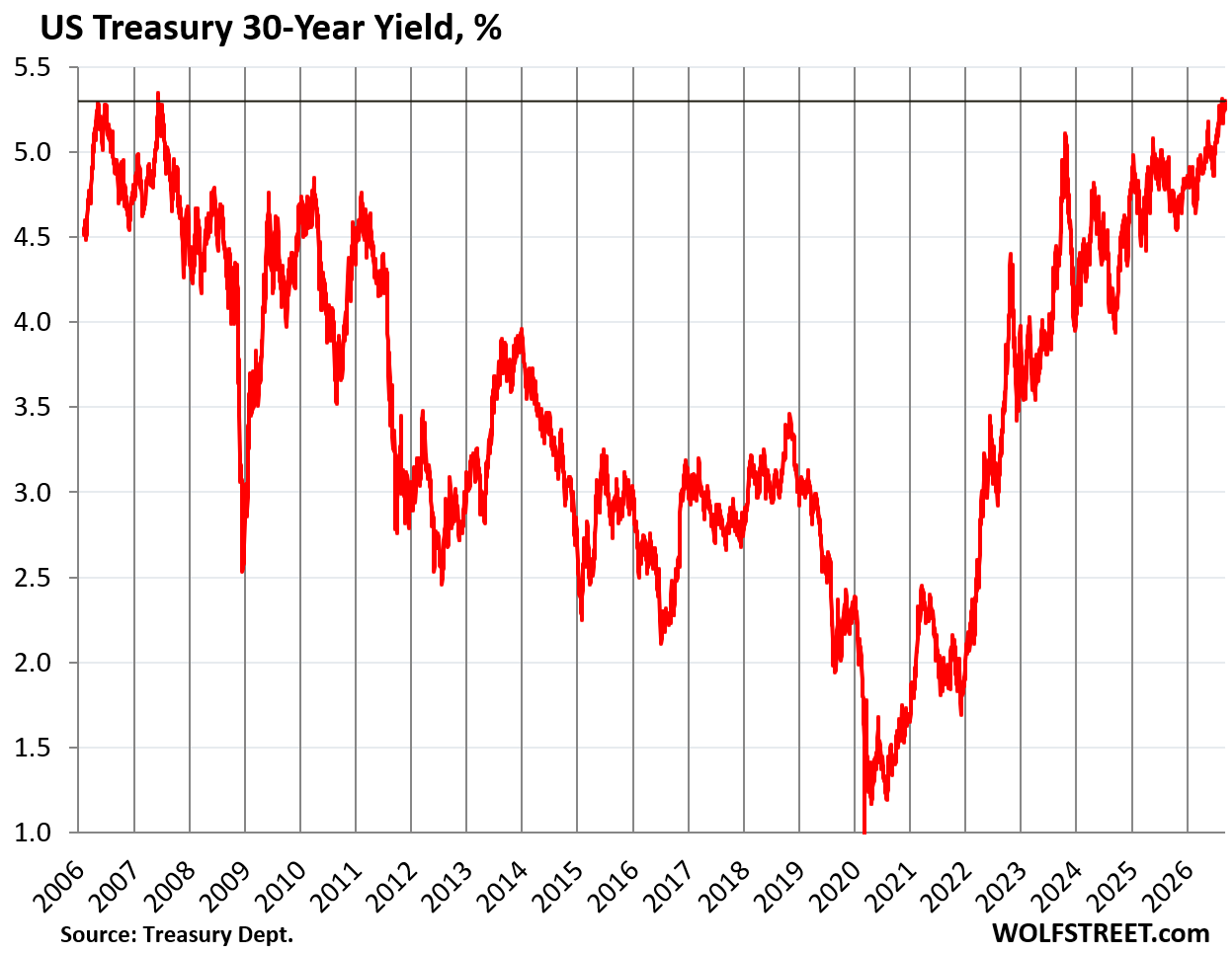
Market analysts noted that the $6 billion figure, while triple the original volume, fell short of the "big-kahuna" expectations held by some corners of the trading community. Investors had speculated that the Treasury might opt for an open-ended buyback structure or a significantly larger injection of liquidity to dampen yield volatility. The failure of the announcement to meet these aggressive expectations triggered a sell-off, as traders reacted to the realization that the Treasury’s intervention capacity remains constrained by fiscal reality.
Mechanics of the Debt Swap
The Treasury’s buyback strategy functions as a sophisticated debt-management tool, though its long-term efficacy remains a subject of intense economic debate. By repurchasing bonds issued in 2020 and 2021—which carry historically low coupon rates—the Treasury is effectively retiring "cheap" debt at a significant discount.
For instance, the list of securities eligible for the upcoming auction includes 40 distinct issues, ranging from 20-year to 30-year bonds with maturity dates between May 2040 and August 2046. A notable example is a 20-year bond maturing in May 2040 (CUSIP 912810SR0). Originally issued in May 2020 with a 1.125% coupon, this bond currently trades at a substantial discount to par value due to the sharp rise in market interest rates over the last three years.
During the February 10, 2026, auction, the Treasury retired $1.95 billion of this specific security at a price of 64 cents on the dollar, effectively costing the government $1.248 billion. With current yields for that maturity hovering around 5.12%, it is anticipated that the Treasury will secure the bonds at an even steeper discount in the current cycle. While this reduces the total par value of outstanding debt, it necessitates the issuance of new, higher-interest-rate debt to fund the buybacks, creating a shift in the government’s interest expense profile.
Fiscal Implications and Strategic Trade-offs
The broader economic implications of this policy shift are multi-faceted. By prioritizing the retirement of long-term, low-coupon debt, the Treasury is effectively shifting its debt composition toward shorter-term instruments, such as T-bills. This strategy carries inherent risks; while it reduces immediate principal burdens, it increases the government’s sensitivity to interest rate fluctuations.
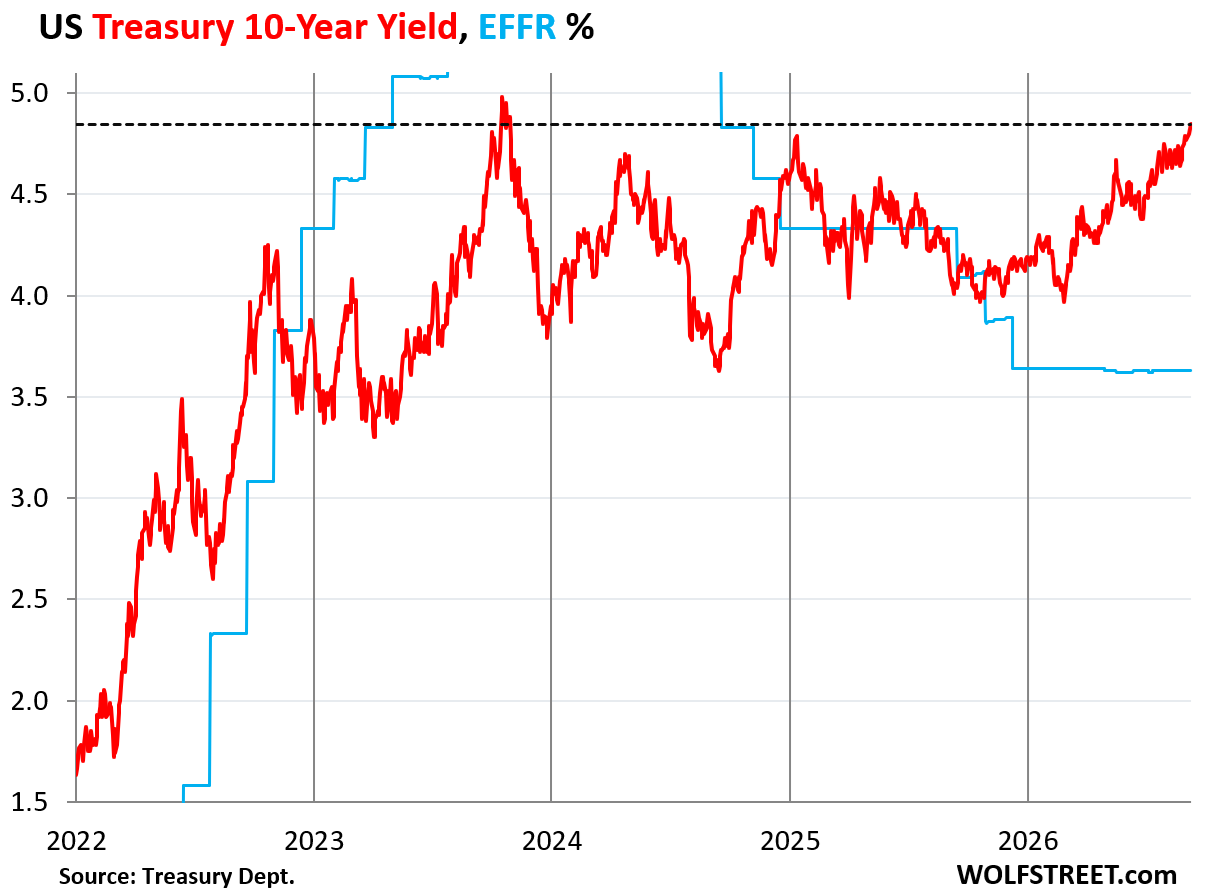
Unlike the fixed, low-cost debt being retired, T-bills are subject to the Federal Reserve’s policy rate cycles. In a high-inflation environment, this transition could lead to higher aggregate interest payments over the medium term. Furthermore, the reliance on T-bill issuance as a funding mechanism means that the federal budget becomes more exposed to the "unstable" nature of short-term rates, which respond rapidly to monetary policy tightening.
Critics of the program suggest that the buyback auctions represent a "hocus-pocus" maneuver designed to influence market optics rather than provide structural fiscal relief. By "cleaning up" the balance sheet, the Treasury may be attempting to project an image of active debt management ahead of significant political milestones. However, the disconnect between the Treasury’s stated goal—to suppress long-term yields—and the market’s actual response suggests that investors remain focused on the underlying fiscal trajectory of the United States.
Chronology of the 2026 Treasury Intervention
- April 2024: The Treasury Department officially launches the bond buyback program with $2 billion auctions to manage liquidity.
- August 19, 2026: Secretary Bessent announces a formal doubling of the buyback volume, signaling a more aggressive stance on yield management.
- September 8, 2026 (Morning): The Treasury announces an increase in the buyback cap to $6 billion, just hours before a scheduled 10-year Treasury auction.
- September 8, 2026 (Afternoon): Market yields spike following the announcement, with the 30-year yield reaching 5.31%.
- September 9, 2026: The first auction under the new $6 billion cap is scheduled to take place, alongside a concurrent 30-year Treasury auction.
Looking Ahead: The Credibility Gap
The current situation highlights a growing tension between Treasury policy and the bond market’s assessment of U.S. sovereign risk. The Treasury’s ability to influence market rates is fundamentally limited by the massive supply of new debt required to cover ongoing fiscal deficits. When the government issues more debt than the market is willing to absorb at current yield levels, even aggressive buyback programs struggle to provide the intended price support.
As the Treasury proceeds with its $6 billion buyback, the focus will shift to the participation rates of primary dealers and the final pricing of the securities. If the market continues to react with volatility, the Treasury may find itself in a position where further increases in buyback volumes are required, potentially creating a feedback loop between debt issuance and debt retirement.
For now, the policy remains a test of whether administrative intervention can override the fundamental forces of supply and demand in the world’s largest and most liquid bond market. As yields remain elevated and the fiscal outlook remains challenged, the "hocus-pocus" of debt management is likely to continue, though the market’s patience for such maneuvers may be increasingly thin. The upcoming data from the 10-year and 30-year auctions will serve as a crucial barometer for investor appetite and the ultimate success of the Treasury’s recalibrated strategy.