HaasOnline Integrates WEEX Exchange and Launches Elite API Trader Tournament

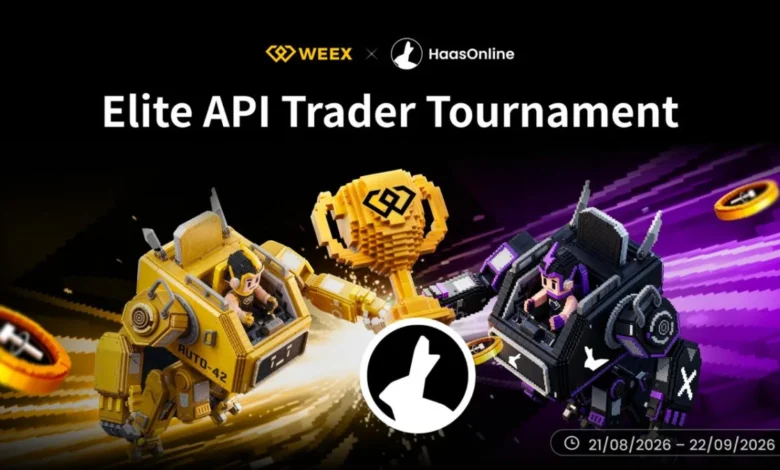
The integration of HaasOnline’s automated trading infrastructure with the WEEX exchange marks a significant expansion for both platforms, providing quant traders with a high-performance environment for algorithmic execution. Starting August 21, 2026, and continuing through September 22, 2026, users can leverage the newly established connectivity to participate in the Elite API Trader Tournament. This competition is specifically designed to test the efficacy of automated strategies, ranging from grid trading and Dollar Cost Averaging (DCA) to complex, proprietary HaasScript logic, while competing for a share of a centralized prize pool based on individual trading volume.
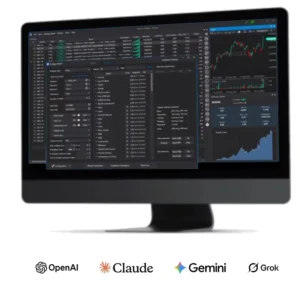
The technical marriage of HaasOnline’s TradeServer—available in both cloud-hosted and self-hosted configurations—and WEEX’s exchange infrastructure allows users to execute trades across more than 1,500 spot markets and 950 USDT-margined perpetual futures pairs. By utilizing a single set of API credentials, traders can manage both spot and futures portfolios seamlessly, eliminating the friction often associated with multi-account management in high-frequency environments.
Chronology and Event Framework
The tournament is structured to incentivize rapid integration and deployment. The competition window spans exactly 33 days, beginning on August 21, 2026, and concluding at the end of the business day on September 22, 2026. Participants are required to register through the official event portal, link their WEEX API keys to their HaasOnline TradeServer, and maintain active trading bots throughout the duration of the challenge.
The leaderboard rankings are determined by cumulative trading volume. This metric serves as a proxy for the intensity and scale of the automated strategies deployed by participants. By focusing on volume rather than pure percentage returns, the tournament organizers aim to reward consistent, high-uptime algorithmic performance over short-term speculative volatility. HaasOnline has confirmed that all existing subscribers, regardless of their current service tier, have immediate access to the WEEX integration, ensuring that even retail-level quant traders can participate alongside institutional-grade automated systems.
Technical Infrastructure and Integration Capabilities
WEEX’s architecture, which has historically focused on deep liquidity in the derivatives space, is now fully compatible with HaasOnline’s proprietary automation engine. For traders accustomed to other major exchanges, the transition is intended to be frictionless. Because WEEX employs a Binance-compatible API structure, existing HaasOnline users can effectively "re-point" their established strategies to the WEEX endpoint with minimal configuration changes.
The integration supports a comprehensive array of trading modes. On the spot side, the platform facilitates standard buy-sell operations without the risks associated with leverage, providing a stable foundation for long-term accumulation strategies. For more aggressive traders, the USDT-margined perpetual futures suite offers high levels of flexibility. Users can switch between "one-way" mode—a standard netted position model—and "hedge" mode, which permits the simultaneous holding of long and short positions on the same contract. This capability is particularly critical for quantitative strategies such as delta-neutral trading, funding-rate arbitrage, and mean-reversion setups.
Furthermore, the integration includes cross and isolated margin settings, allowing traders to define their risk exposure on a per-contract basis. The inclusion of simulation or "paper trading" environments ensures that developers can stress-test their algorithms against real-time market data without risking capital, a necessary step before activating live bots in the competitive environment of the tournament.
The Role of Algorithmic Trading in Modern Markets
The collaboration between HaasOnline and WEEX reflects a broader trend in the digital asset industry: the professionalization of the retail trader. As markets have matured, the reliance on manual execution has increasingly given way to automated systems capable of reacting to price action in milliseconds. HaasOnline, which has been a staple in the automated trading space for years, provides the logic layer, while WEEX provides the execution venue.
Market analysts observe that the move toward "API-first" exchange ecosystems is a defensive necessity for mid-tier exchanges looking to capture volume from professional-grade participants. By incentivizing the use of HaasOnline’s bots, WEEX is effectively encouraging the development of a more robust, liquid order book driven by systematic market makers and trend-following algorithms. This, in turn, can help narrow spreads and increase market efficiency, benefiting the broader ecosystem.
Risk Management and Security Protocols
Despite the sophisticated nature of the HaasOnline-WEEX integration, the risks inherent in automated trading remain significant. The automated execution of strategies at high speeds can lead to rapid capital depletion if a strategy contains logic errors or if market conditions deviate from historical backtesting patterns.
HaasOnline and WEEX have both emphasized the importance of rigorous risk management. Best practices recommended for participants include the implementation of hard-coded "stop-loss" thresholds within HaasScript, the use of isolated margin to prevent contagion across a portfolio, and the consistent monitoring of bot performance during high-volatility events.
The security of API credentials is also a primary concern. The integration process requires users to generate API keys with specific permissions—typically limited to "trade" and "read-only" functions—while explicitly disabling "withdraw" permissions. This architecture ensures that even in the event of a compromised API key, the trader’s underlying assets remain secure within the exchange’s cold or warm storage wallets.
Market Context and Institutional Background
WEEX, which operates out of Dubai with a history in the Singaporean market, has sought to establish itself as a regulated and reliable venue for global traders. Its registration with FinCEN in the United States and FINTRAC in Canada provides a level of regulatory transparency that is increasingly demanded by professional traders. By aligning itself with a long-standing automation provider like HaasOnline, WEEX is signaling a pivot toward capturing a more sophisticated, technologically driven demographic.
The tournament serves as a stress test for this new ecosystem. For HaasOnline, the integration expands its list of supported venues, reinforcing its position as a "platform-agnostic" automation solution. For WEEX, the tournament is a strategic play to drive volume to its futures and spot markets during a critical period of market development.
Implications for the Future of Trading
As the tournament progresses through September 2026, the data gathered regarding bot performance and strategy efficacy will likely influence future iterations of the platform’s integration. If successful, this collaboration may pave the way for more native integrations, potentially including advanced order types, algorithmic execution via webhooks, and deeper analytical tools within the HaasOnline dashboard.
Traders looking to participate are encouraged to review the official campaign terms, as prize pool distributions and leaderboard rules are governed exclusively by WEEX. Participants should ensure their systems are configured for low-latency connectivity, as the competitive nature of the tournament suggests that slippage and execution speed will be key differentiators in the final standings.
In summary, the HaasOnline-WEEX partnership represents a significant advancement in the accessibility of professional-grade trading tools. By combining a mature, reliable automation engine with an exchange that offers deep liquidity across both spot and perpetual futures, traders are provided with a powerful toolset for navigating the complexities of the digital asset markets. As the industry continues to move toward automated, data-driven decision-making, the ability to seamlessly integrate and execute complex strategies will remain a vital skill set for any market participant seeking to maintain a competitive edge.
Disclaimer: This report is provided for informational purposes only and does not constitute financial, investment, or trading advice. Trading digital assets involves substantial risk of loss. Past performance, particularly in backtesting or simulated environments, is not indicative of future results. Participants should conduct their own due diligence and consult with professional financial advisors before deploying capital into automated trading systems.