The Shifting Sands of Homeownership: Boomers’ Wealth and the New Real Estate Reality

The traditional narratives surrounding real estate ownership in the United States are undergoing a significant transformation, particularly as the Baby Boomer generation, now in its retirement years, navigates its financial future. For decades, deeply ingrained cultural beliefs have positioned homeownership as the ultimate financial achievement, a secure investment, and a clear pathway to retirement security. However, recent trends, fueled by the unprecedented wealth accumulation of older Americans and evolving economic landscapes, are challenging these long-held assumptions, creating new dynamics in the housing market and raising questions about the accessibility of homeownership for younger generations.
The Boomer Wealth Effect and the Upsizing Trend
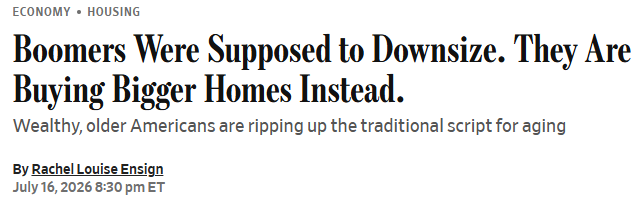
A key driver of this shift is the substantial financial advantage held by Baby Boomers. This generation, which comprises individuals born between 1946 and 1964, possesses an estimated $110 trillion in total wealth, a figure that significantly dwarfs that of younger Americans. Many Boomers have benefited from decades of asset appreciation, including their primary residences and stock portfolios, and have often paid off their mortgages. This financial bedrock is enabling a counter-intuitive trend: instead of downsizing as is traditionally expected upon retirement, a growing number of affluent Baby Boomers are choosing to "upsize" their homes or maintain their larger residences.
Merrill Lynch financial advisor April Tardiff observed this phenomenon firsthand, noting that of the eight clients who retired this year, all eight opted to upsize their living arrangements. "The historic retirement play of sell your home and buy a smaller one just isn’t happening," Tardiff stated, reflecting a sentiment echoed by many in the financial advisory sector. This practice is particularly prevalent among wealthier individuals who can leverage their considerable assets to acquire larger, more luxurious properties, sometimes even purchasing outright in cash. As a result, this demographic now accounts for a significant portion of homebuyers, with some reports indicating that Boomers represent as much as 42% of the current buyer pool.
This decision to remain in or acquire larger homes is not merely a matter of preference but a reflection of their financial capacity. With significant equity built up over decades, many Boomers are not constrained by the financial considerations that typically dictate retirement housing choices. Victor, a 64-year-old individual quoted in a recent Wall Street Journal report, succinctly captured this sentiment: "We’ll downsize when they plant me 6 feet into the ground." This indicates a generational shift in how retirement and homeownership are perceived, prioritizing lifestyle and comfort over the traditional notion of shedding assets.
The Growing Divide: Housing Affordability for Younger Generations
While older generations are enjoying the fruits of their long-term investments, younger Americans, particularly Millennials and Gen Z, are facing escalating challenges in achieving homeownership. The same report from The Wall Street Journal, referencing data from The New York Times, highlights a stark disparity in real estate wealth accumulation. Since 2010, Americans aged 55 and older have added approximately $20 trillion in real estate wealth, while those under 40 have seen an increase of only $3.5 trillion. This means that two out of every three dollars in added housing wealth in the U.S. since 2010 now belongs to individuals 55 and older.
The implications of this wealth concentration are significant. Empty nesters, those whose children have left home, own about 28% of large homes in the U.S., while Millennials with children, a demographic often looking to establish roots and accommodate growing families, own only about 16% of these larger properties. This creates a scenario where the housing stock suitable for families is largely occupied by individuals who no longer require that space, and who are financially capable of retaining it.
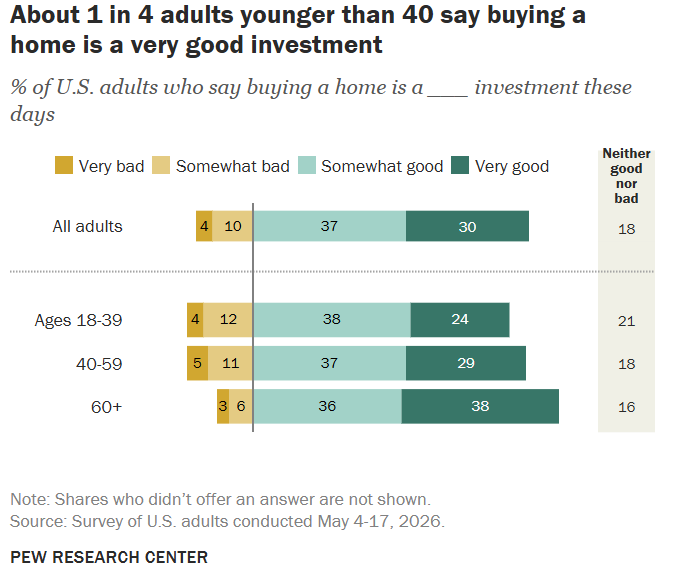
Furthermore, the cost of housing has become a significant barrier. Pew Research data from June 2026 reveals that only about one-quarter of adults aged 18-39 believe housing is a very good investment, a stark contrast to the sentiment among older demographics. This skepticism is likely rooted in the perceived inaccessibility and the financial strain associated with purchasing a home. The rising cost of entry, coupled with the expenses of home maintenance and ownership, makes the prospect daunting for many young adults.
The Stock Market Alternative and Shifting Investment Paradigms
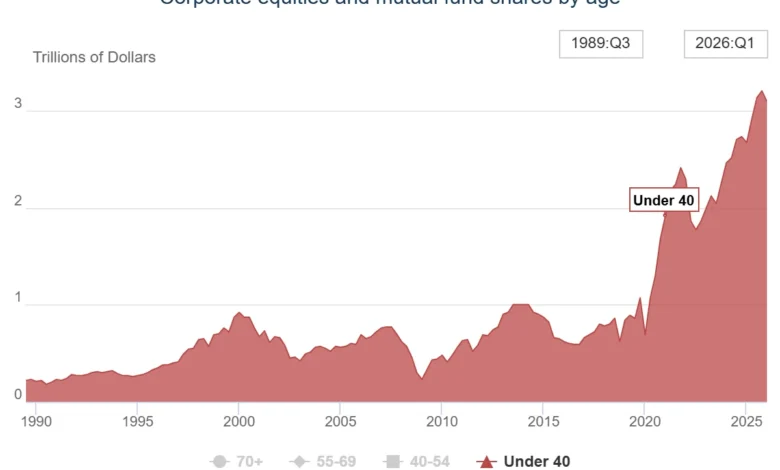
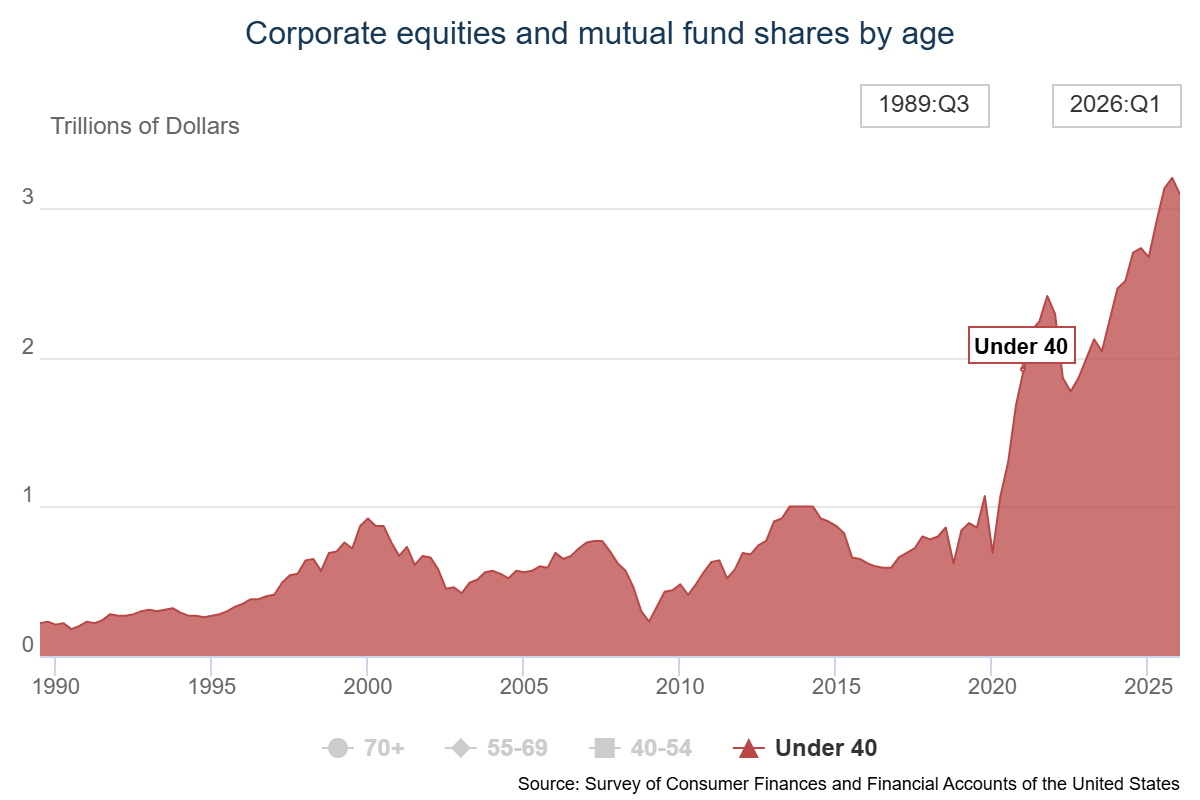
The unattainability of homeownership for many young households has, in turn, driven a surge in equity holdings among individuals under 40 throughout the 2020s. As housing markets become increasingly prohibitive, many are turning to the stock market as a more accessible and potentially lucrative investment avenue. This trend challenges the long-held cultural script that unequivocally champions real estate as the superior investment.
An analysis by Bloomberg illustrates this point vividly by comparing real estate appreciation in a high-cost market like Nantucket, Massachusetts, with the performance of the S&P 500 Index. In 1995, the median house price in Nantucket was $500,000. By 2026, it had soared to nearly $4 million. However, an investment of $500,000 in the S&P 500 in 1995 would have grown to over $8.2 million by 2026, an even greater sum if dividends were reinvested. This comparison suggests that, from a purely financial returns perspective, the stock market has outperformed even the hottest real estate markets, especially when considering the hidden costs of homeownership.
Homeowners often overlook the myriad expenses associated with maintaining a property, including repairs, upgrades, property taxes, insurance, and potential special assessments. These costs can significantly diminish the net return on a real estate investment, a factor that is often not factored into the common perception of housing as a foolproof investment. While the "psychic income" – the emotional satisfaction and sense of security derived from owning a home – is undeniable, its financial implications are often less straightforward than popularly believed.
Broader Societal and Economic Implications
The confluence of these trends has profound implications for the future of housing and wealth distribution in the United States. The continued dominance of older generations in the housing market, coupled with the ongoing struggle of younger generations to gain a foothold, could exacerbate existing economic inequalities. If younger people are priced out of homeownership, they may miss out on a significant avenue for wealth building, potentially leading to a widening wealth gap across generations.
One of the most significant challenges lies in the insufficient construction of new housing. Despite increasing demand, particularly in desirable urban and suburban areas, the pace of new home building has lagged behind population growth for years. This chronic undersupply contributes directly to rising prices and limits the options available to potential buyers. The political and regulatory hurdles to increasing housing density and facilitating new construction are substantial, and a lack of political will to address these issues further compounds the problem. This lack of action means that millions of young people who would otherwise aspire to homeownership may be forced to rent indefinitely, or to abandon their aspirations altogether, as it simply does not make financial sense for them.
The downstream effects of this evolving housing landscape are far-reaching. It raises critical questions about the long-term health of the stock market, the potential for increased economic mobility, and the overall well-being of younger generations. Will a generation that is more heavily invested in the stock market due to housing unaffordability ultimately be wealthier? And if so, will that wealth translate into happiness and stability, or will other factors, such as economic insecurity and a lack of generational wealth transfer through property, lead to persistent dissatisfaction?
The Future of Homeownership Beliefs
As these trends continue to unfold, the deeply held beliefs about real estate as the ultimate financial vehicle and a guaranteed path to retirement security are likely to be tested. The ability of older, wealthier generations to maintain and expand their housing assets, while younger generations struggle to enter the market, signifies a fundamental shift. The ideal of homeownership for all, a cornerstone of the American Dream, faces significant headwinds.
The narrative around housing is no longer as monolithic as it once was. While the emotional and personal benefits of owning a home remain, the financial calculus is becoming increasingly complex and, for many, less favorable. The coming years will likely reveal the true downstream effects of this changing real estate paradigm, potentially reshaping societal expectations and financial strategies for generations to come. The challenge for policymakers and society at large will be to find solutions that address the affordability crisis and ensure that the opportunity for homeownership remains attainable for a broader segment of the population, or to acknowledge and adapt to a future where it is not the primary vehicle for wealth accumulation for all.