Not even sky-high gasoline prices could dent their spending on bars & restaurants, ecommerce, cannabis stores, etc.


By Wolf Richter for WOLF STREET.
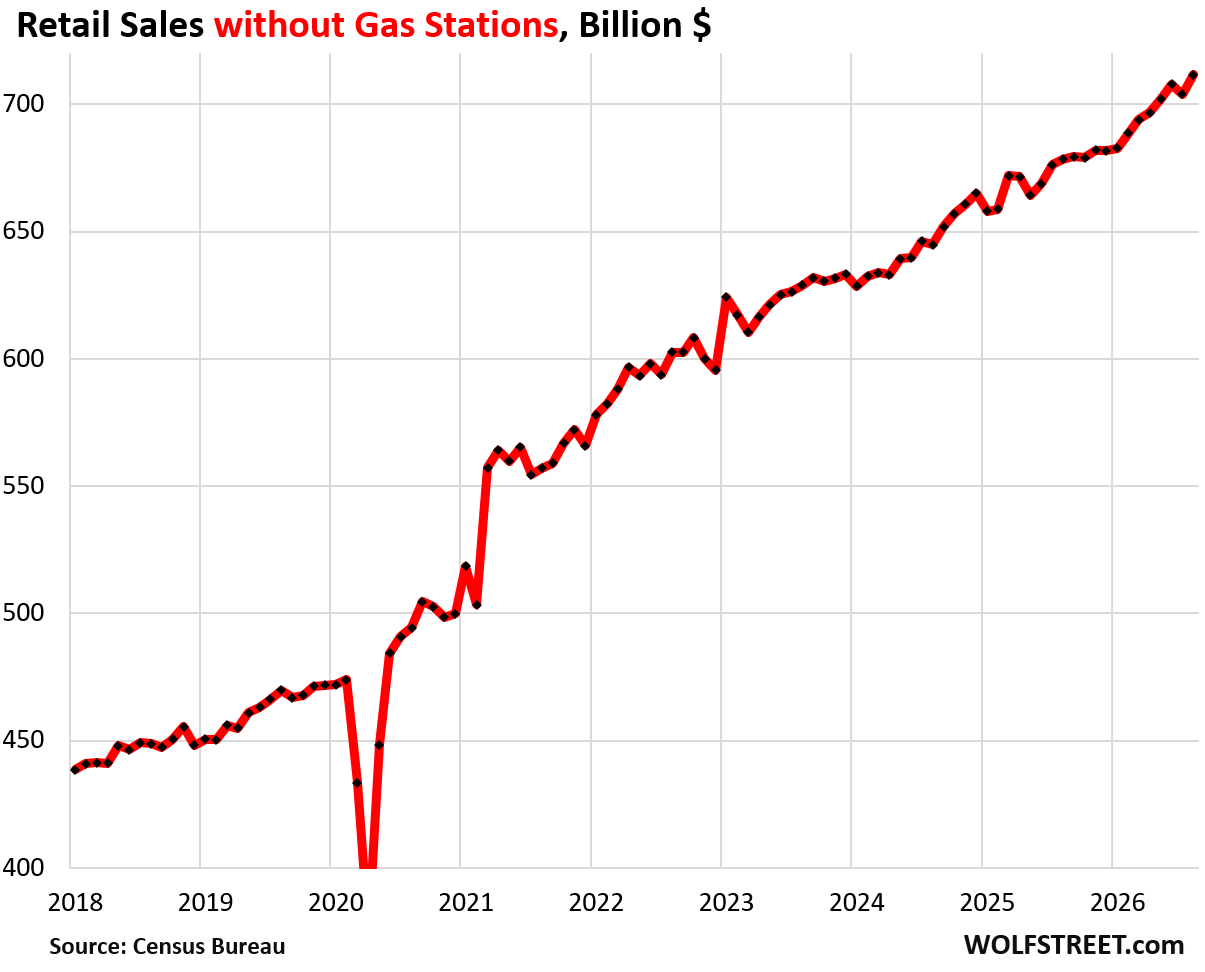
The latest data from the United States Census Bureau, released mid-September 2026, presents a robust, if complex, picture of the American consumer. Despite a sharp, inflationary spike in gasoline prices throughout August, retail spending remained remarkably resilient. Total retail sales for the month reached $773 billion, a seasonally adjusted increase of 1.2% over July and a 6.0% gain compared to the same period in 2025. Even when stripping away the volatile gasoline sector—where higher prices forced consumers to pay more for the same amount of fuel—retail sales still climbed by 1.1% month-over-month and 4.9% year-over-year.
Understanding the Retail Resurgence
The August figures serve as a correction to a somewhat disjointed July, during which retail data was skewed by the shifting calendar of Amazon Prime Day. In 2026, the event moved from its traditional July slot into June, creating an artificial dip in July’s reported spending. When looking at the three-month average, which effectively smooths out these seasonal anomalies, the underlying trend reveals a consumer base that is consistently expanding its footprint across both digital and physical marketplaces.
This sustained growth is particularly noteworthy given the macroeconomic backdrop of 2026. While inflation remains a persistent concern, the volume of transactions suggests that household budgets are being managed with a preference for continued consumption rather than retrenchment.
The Ascendancy of Ecommerce
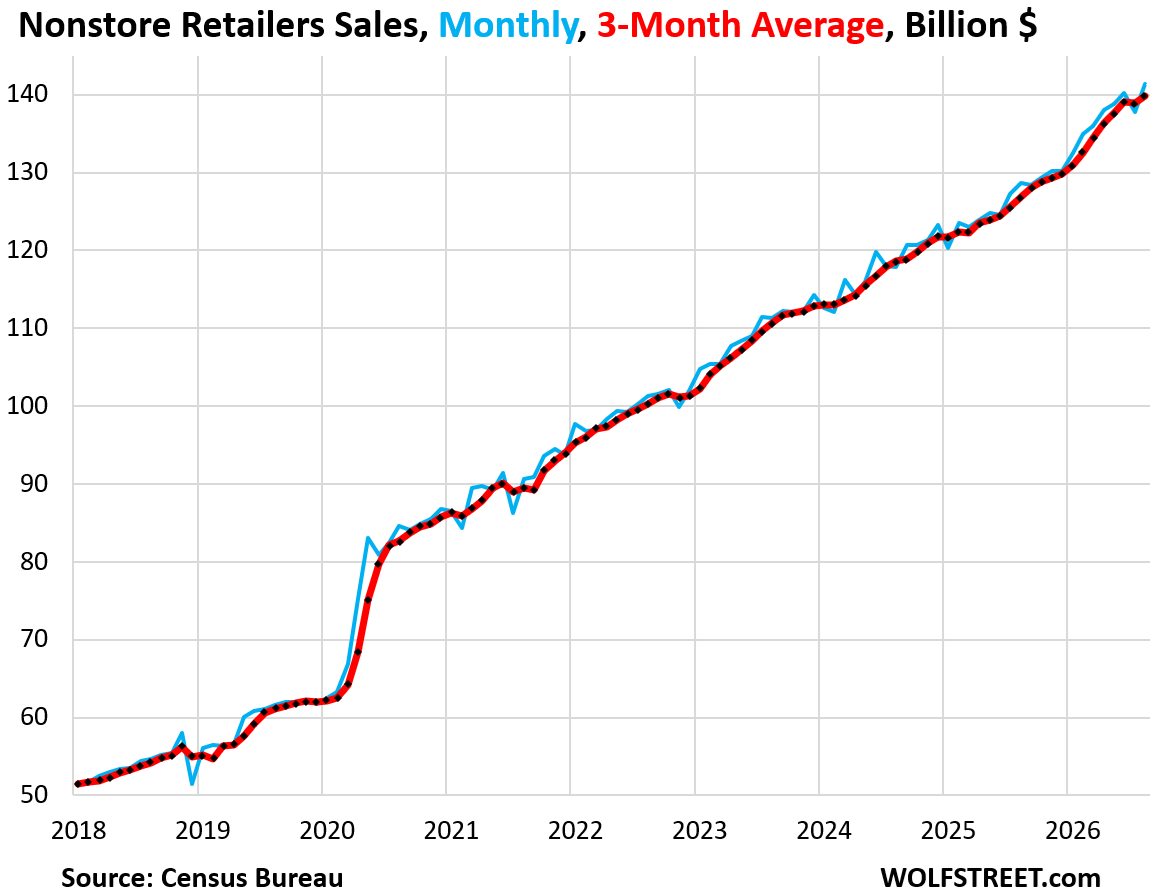
Ecommerce continues to reshape the retail landscape, solidifying its position as the dominant force in the American economy. August sales in the sector rose by 2.6% month-over-month and 10% year-over-year. On a twelve-month rolling basis, ecommerce now commands an 18% share of total retail sales, officially surpassing motor vehicle dealers to become the single largest retail category in the United States.
This shift is not merely driven by online-only platforms. Large-scale brick-and-mortar retailers—including Walmart, Target, and Macy’s—have successfully integrated their digital and physical operations. The boundary between a "store" and a "website" has become increasingly porous, with even grocery segments experiencing significant migration to online delivery and curbside pickup models. This evolution has forced traditional retailers to rethink their logistical infrastructure, shifting capital expenditure from storefront renovation to high-efficiency fulfillment centers.
Automotive and Discretionary Spending
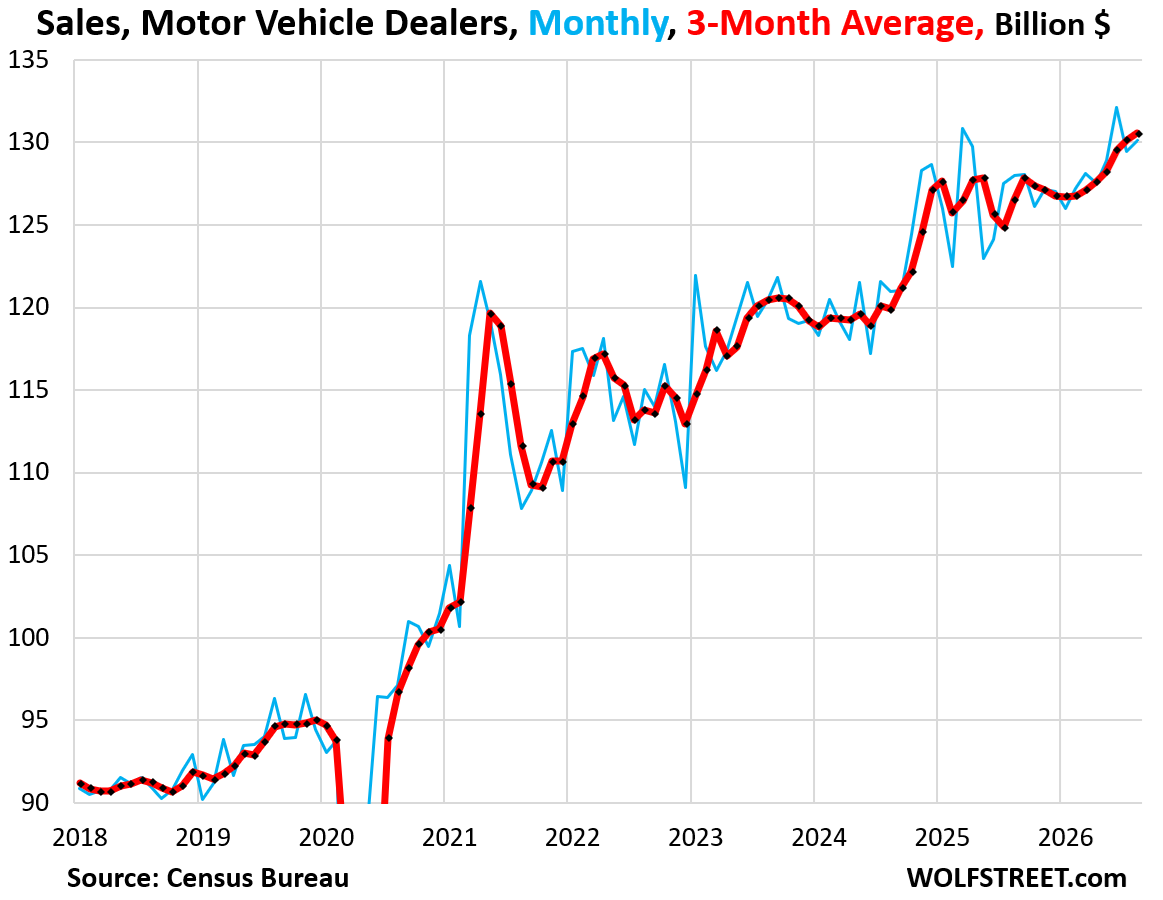
The motor vehicle sector, traditionally the titan of retail, has settled into a more moderate growth pattern. In August, sales at motor vehicle and parts dealers—a category encompassing cars, motorcycles, RVs, and powersports equipment—rose by 0.5% over July and 1.7% year-over-year, totaling $130 billion. While the three-month average shows a 3.2% annual growth rate, the sector’s 17% market share indicates a gradual ceding of dominance to the digital retail space.
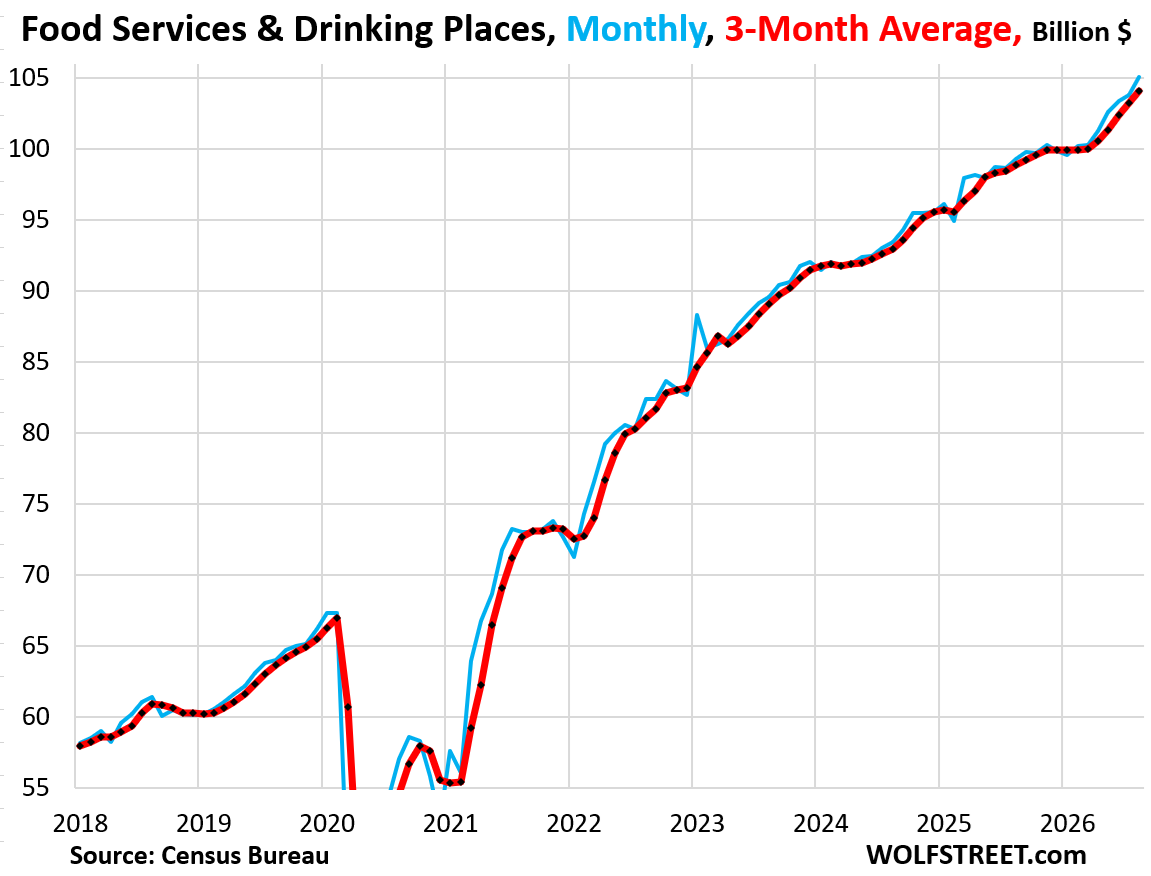
Conversely, the "food services and drinking places" category has become a vital barometer for consumer health. As of August, spending at bars and restaurants spiked by 1.2%, reaching $105 billion. This 5.8% year-over-year growth underscores a broader societal trend: consumers are prioritizing experiential spending. This discretionary category now accounts for 12% of total retail, reflecting a willingness to allocate income toward services rather than durable goods.
The Structural Decline of Traditional Grocers
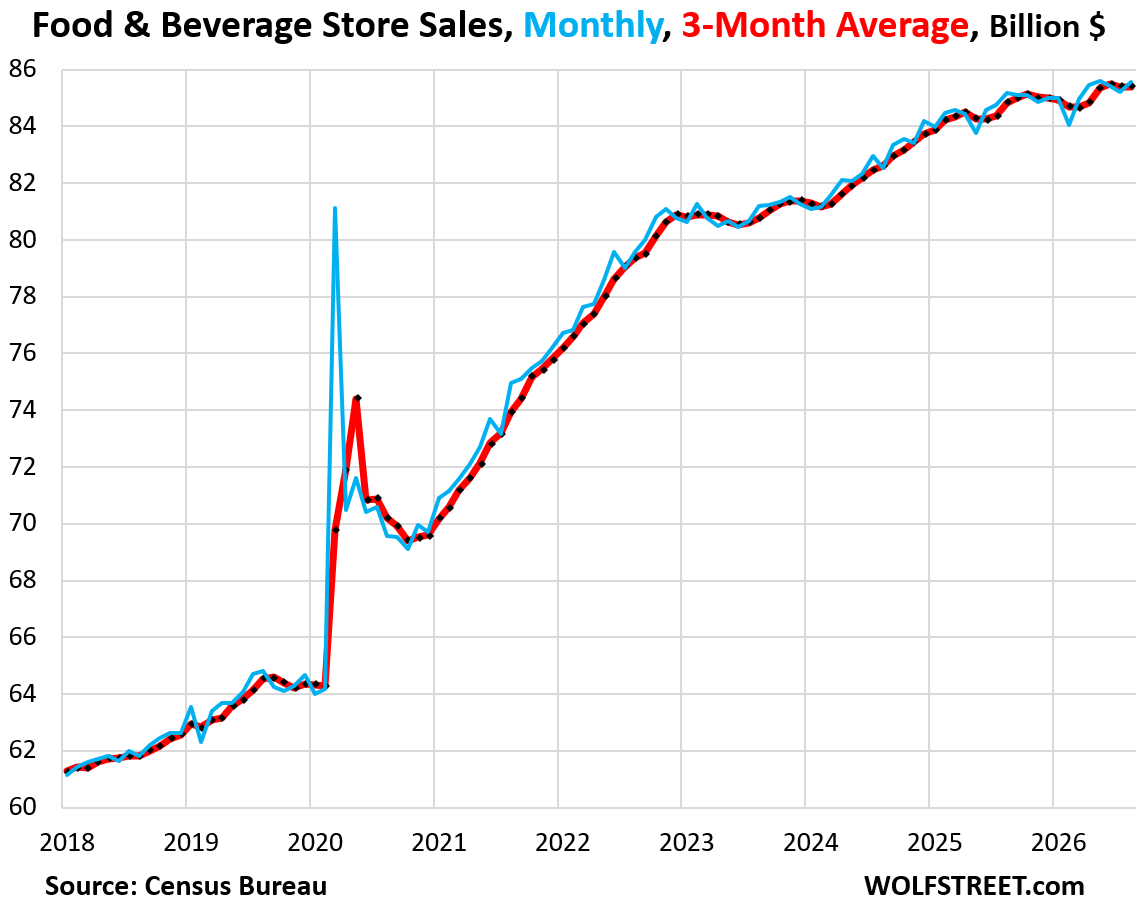
The landscape for physical food and beverage stores has become increasingly precarious. While sales rose by a modest 0.4% in August, their long-term growth is stagnant, up only 0.5% year-over-year. This sector is under siege from two directions: the rise of "general merchandise" giants like Costco and Walmart, which utilize bulk buying power to dominate food sales, and the convenience-driven migration toward ecommerce platforms.

Since 2019, the gap between what Americans spend at grocery stores and what they spend at restaurants has widened significantly. Analysts note that as convenience becomes the primary driver for middle-to-upper-income demographics, the traditional grocery model—which requires travel and manual selection—is struggling to maintain its market share, which has now slipped to 11.3% of total retail.
General Merchandise and Miscellaneous Retail
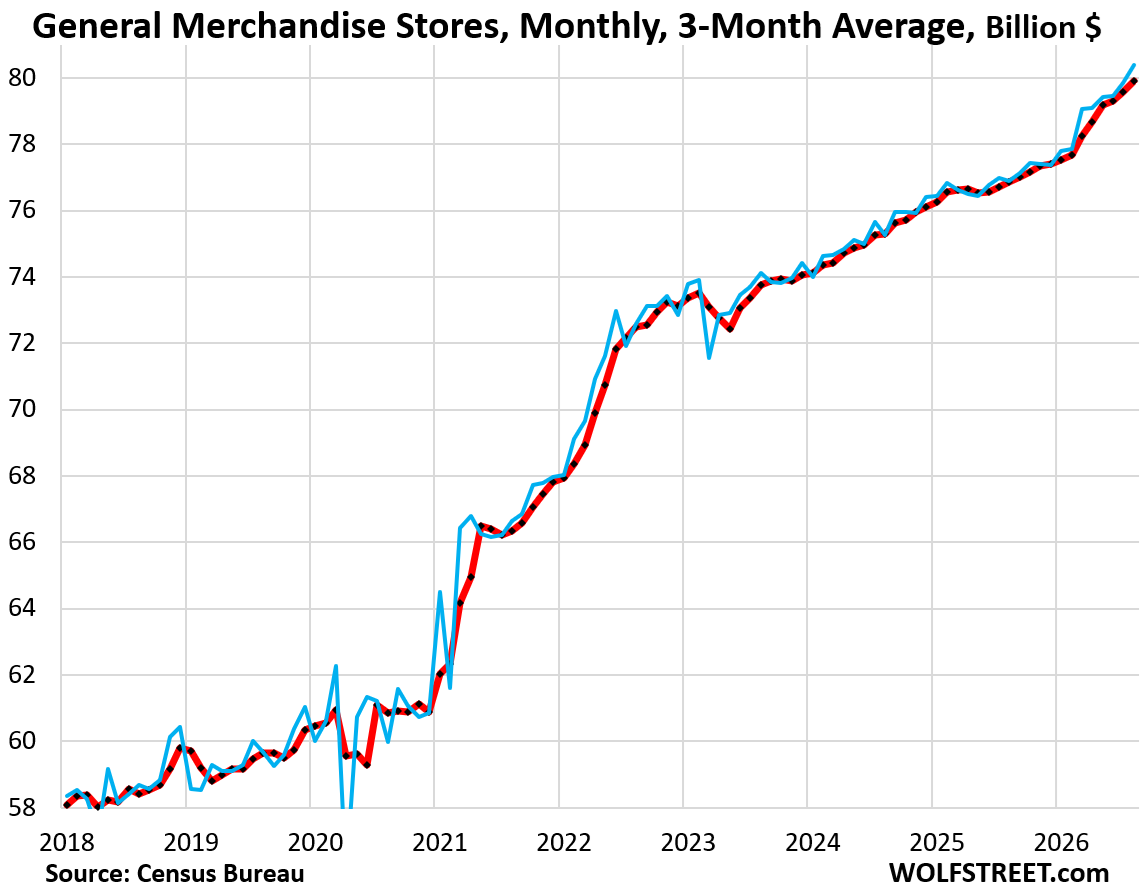
General merchandise stores, representing 10.6% of the market, saw a 0.7% monthly increase in sales, totaling $80 billion. This category serves as a catch-all for major retailers that have not yet fully transitioned their sales volume to the ecommerce category.
Perhaps most indicative of changing consumer behavior is the "miscellaneous store retailers" category, which saw a 1.8% spike in August and a staggering 14.0% year-over-year growth. This category is heavily bolstered by the growth of legal cannabis dispensaries. As more states have moved toward legalization and normalization, this sub-sector has transitioned from a niche market to a significant driver of retail growth, consistently outperforming traditional retail staples.
Broader Economic Context and Implications
The persistence of these retail numbers suggests that the American economy is not currently experiencing the type of consumer-led recession that many economists feared earlier in the year. However, the data also highlights an economy deeply sensitive to price fluctuations.
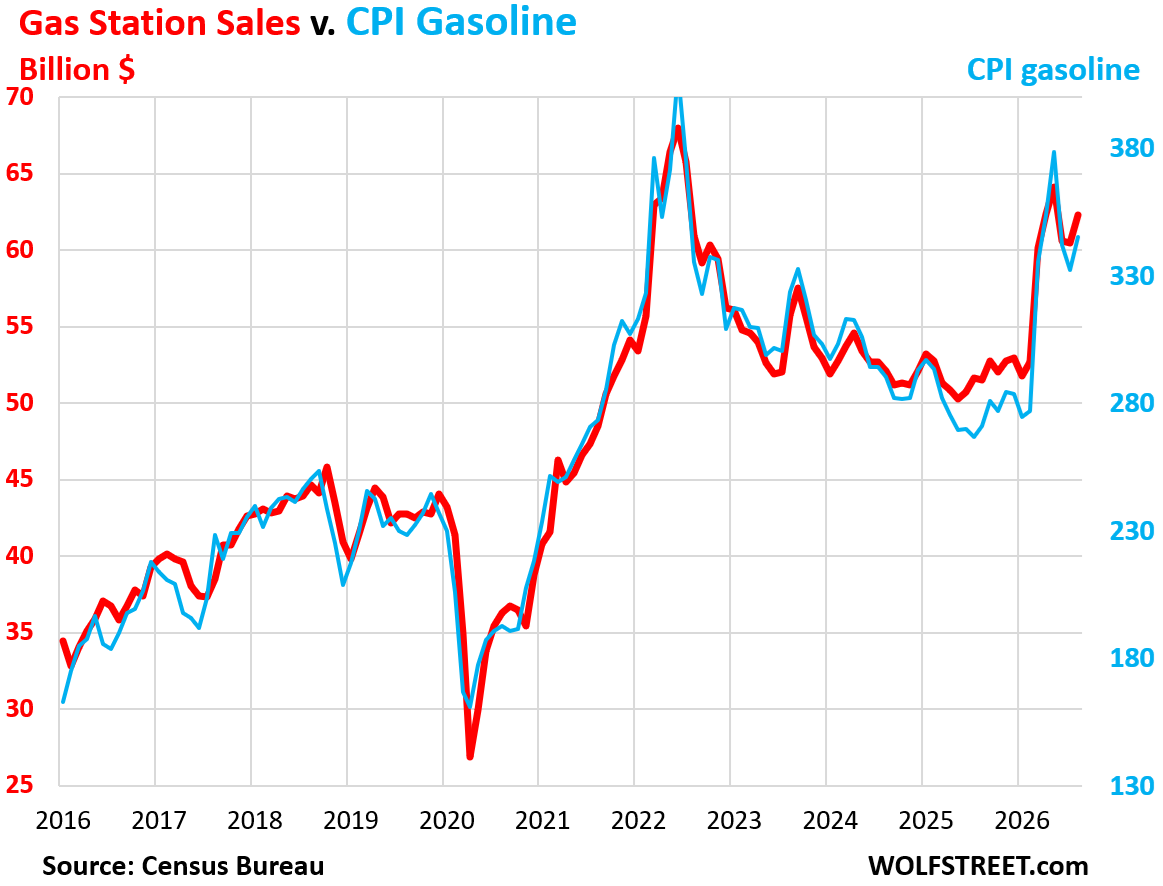
The 3.1% surge in gas station sales, which directly tracks the rise in retail gasoline prices, demonstrates that consumers are currently willing to absorb inflationary shocks in energy costs without immediately sacrificing discretionary spending. Yet, this behavior carries inherent risks. When a greater percentage of the household wallet is dedicated to non-discretionary items like fuel and food, the "buffer" for other retail spending becomes thinner.
Furthermore, the recent trend of Americans piling into money-market funds and Certificates of Deposit (CDs), despite modest yields, suggests a dual-track strategy. While consumers are spending on goods and services, they are simultaneously seeking to protect their capital in low-risk interest-bearing accounts. This indicates that while the current retail environment is strong, there is an underlying sense of caution among households regarding the long-term outlook for inflation and purchasing power.
Conclusion: A Transformed Marketplace
The August retail data reaffirms that the retail industry is undergoing a structural, rather than cyclical, transformation. The migration of sales to digital channels and the pivot toward experiential spending at restaurants are not temporary anomalies, but rather the new standard for the American consumer.
As we move toward the final quarter of 2026, the strength of these retail numbers will likely influence federal fiscal and monetary considerations. While the current appetite for spending remains robust, the divergence between the growth of ecommerce and the struggle of traditional grocery and brick-and-mortar models will likely dictate the next wave of capital investment and employment trends in the retail sector. Retailers that can successfully bridge the gap between physical experience and digital convenience are clearly the ones capturing the majority of the current market growth.