The Shifting Global Order: How the Iran Conflict Has Weakened Washington and Beijing While Offering Europe a Vital Window for Reform

BERLIN — The military campaign launched by the United States and Israel against Iran has fundamentally transformed the architecture of international relations, exposing the inherent limits of both American and Chinese hard power. Far from consolidating unipolar dominance or accelerating a smooth transition to a Beijing-led bipolar order, the ongoing conflict in the Middle East has left both global superpowers strategically overextended and domestically vulnerable. While analysts in Western capitals and Asian metropolises initially debated whether the war would decisively tip the scales of the twenty-first century, the reality on the ground points to a more complex and hazardous outcome: a decentralized, volatile international system dominated by weakened giants.
For Europe, this geopolitical realignment offers little cause for celebration. Authored by commentators Peter Eitel and Sigmar Gabriel, current assessments from Berlin emphasize that the European Union’s traditional governance model remains dangerously ill-equipped to navigate a world characterized by declining superpowers and unchecked regional instability. Yet, beneath the strategic anxiety lies a narrow, high-stakes opportunity for the continent to overhaul its economic framework, accelerate its defense integration, and reclaim a sovereign global role.
Background Context and Strategic Overextension
To understand the current crisis, one must examine the compounding pressures that led Washington and its regional allies into a direct military confrontation with Tehran. For decades, the Islamic Republic of Iran functioned as the focal point of Middle Eastern friction, weaving a complex web of proxy alliances—spanning Lebanon, Iraq, Yemen, and Syria—designed to deter direct invasion while projecting asymmetric power.
For the United States, decades of military engagements in the Greater Middle East had already produced widespread "forever war" fatigue. When escalating tensions over Iran’s nuclear enrichment program and regional proxy attacks culminated in a joint U.S.-Israeli military campaign, Washington sought to decisively neutralize Tehran’s nuclear ambitions and missile infrastructure. However, the campaign quickly morphed into a protracted strategic quagmire.
The economic fallout was immediate. Global energy markets experienced severe volatility, driving up crude oil prices and fueling inflationary pressures across Western economies still recovering from post-pandemic fiscal shocks. Furthermore, the immense expenditure of high-precision munitions—such as Patriot interceptors, Terminal High Altitude Area Defense (THAAD) batteries, and advanced tactical missiles—drained critical Pentagon stockpiles. Strategic planners in Washington faced an uncomfortable truth: the vast resources poured into the Middle East directly undermined the Department of Defense’s long-term objective of pivoting assets and attention toward the Indo-Pacific theater to deter potential Chinese aggression.
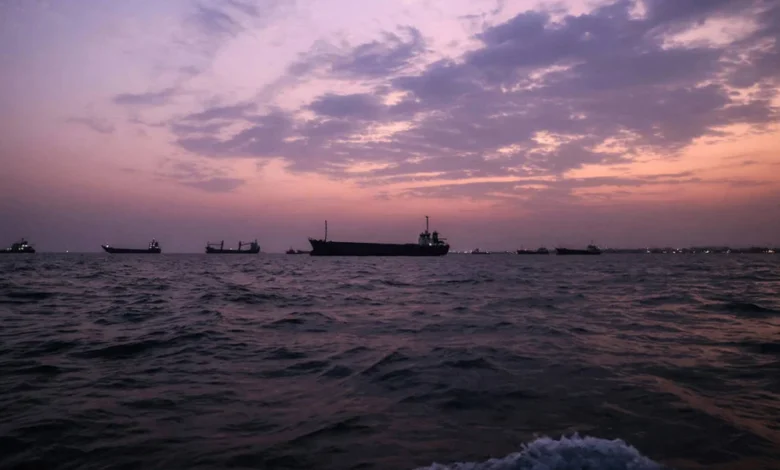
Simultaneously, Beijing found its grand strategy severely disrupted. China, which relies heavily on Middle Eastern energy imports to sustain its industrial base, suffered immense economic friction from the conflict-driven disruptions of vital maritime trade routes through the Strait of Hormuz and the Red Sea. Although Beijing attempted to position itself as a diplomatic mediator, its diplomatic leverage proved remarkably shallow. China’s inability to secure a ceasefire or protect its economic interests exposed the limits of its "Belt and Road" diplomacy when confronted with kinetic warfare. Consequently, Beijing’s narrative of inevitable, friction-free rise suffered a severe credibility blow, revealing a superpower vulnerable to distant geopolitical shocks.
Chronology of the Conflict and Escalation
While precise operational details remain classified, a broad timeline underscores the rapid deterioration of security frameworks leading up to the current geopolitical impasse:
- Early 2024–Late 2025: Regional skirmishes intensify following repeated maritime incidents in the Persian Gulf and increased drone and missile exchanges between Iranian-backed militias and U.S. positions in Syria and Iraq. Diplomatic channels regarding the Joint Comprehensive Plan of Action (JCPOA) reach a permanent stalemate.
- January 2026: Intelligence reports indicate accelerated Iranian uranium enrichment toward weapons-grade thresholds, prompting emergency consultations between Washington and Jerusalem.
- March 12, 2026: A coordinated series of precision airstrikes and cyber operations targeting Iranian nuclear facilities, command-and-control nodes, and missile silos is launched by U.S. and Israeli forces.
- April–June 2026: Iran retaliates with massive ballistic missile and drone barrages targeting regional infrastructure and U.S. military outposts. Shipping lanes in the Strait of Hormuz are effectively mined and disrupted, causing global energy benchmarks (Brent Crude) to surge past $120 per barrel.
- July–August 2026: The conflict settles into a grinding war of attrition. Both the U.S. and China absorb significant economic and strategic costs, forcing emergency legislative sessions in Western capitals and emergency economic stabilization measures in Beijing.
- September 2026: Analysts and policymakers across Europe begin reassessing the long-term structural damage to the global order, recognizing that neither Washington nor Beijing possesses the capacity to unilaterally stabilize the international system.
Supporting Data and Economic Fallout
The quantitative metrics associated with the conflict highlight the profound toll taken on global stability. According to preliminary economic modeling released by international financial institutions:
- Energy Market Shock: Global oil prices sustained an average increase of 35% over the summer of 2026, adding an estimated 1.2 percentage points to global inflation rates.
- Defense Expenditure: The Pentagon’s supplementary emergency appropriations request surpassed $95 billion for munitions replacement and force protection in the CENTCOM area of operations alone.
- Supply Chain Disruption: Maritime insurance premiums for vessels transiting the broader Western Indian Ocean and Middle Eastern corridors rose by over 300%, causing cascading delays in manufactured goods reaching European and Asian ports.
- Superpower Standing: Public opinion polling across major allied nations indicates a sharp decline in confidence regarding both U.S. security guarantees and Chinese economic reliability, creating a vacuum of global trust.
Official Responses and Diplomatic Reactions
Governments across the globe have scrambled to adjust their foreign policies in response to the shifting balance of power.
In Washington, the White House and the Pentagon have defended the necessity of the military action, arguing that a nuclear-armed Iran posed an intolerable threat to global security and the non-proliferation regime. Administration officials maintain that despite short-term costs, degrading Tehran’s offensive capabilities was a vital long-term necessity. However, domestic critics from both sides of the aisle have raised concerns over mission creep, the depletion of strategic military stockpiles, and the economic burden placed on American taxpayers.
In Beijing, Foreign Ministry spokespersons have repeatedly criticized what they term "external military adventures" that destabilize regional security and harm global economic development. Chinese state media has framed the conflict as evidence of Western hegemony’s failure, yet private diplomatic cables leaked to international press agencies suggest deep anxiety within the Chinese Communist Party leadership regarding Beijing’s vulnerability to supply chain shocks and its lack of hard security instruments in distant regions.
European capitals have adopted a posture of cautious alarm. Meeting in emergency sessions in Brussels, European Union foreign ministers acknowledged that the bloc was once again paying the highest price for instability in its immediate neighborhood—principally through energy insecurity, inflationary pressures, and secondary migration flows. Yet, the crisis has also catalyzed serious internal debates among EU leadership regarding the necessity of strategic autonomy.
Broader Impact and Implications for Europe
The convergence of American overextension and Chinese vulnerability presents Europe with a generational challenge and a corresponding window of opportunity. For decades, European security architecture relied heavily on the American security umbrella (NATO), while its economic growth benefited from open global trade routes and cheap energy imports from Russia and the Middle East.
That tripartite foundation has now fractured. With the United States increasingly distracted and resource-constrained, and with traditional multilateral institutions gridlocked, Europe can no longer afford to act merely as a regulatory superpower.
Policy architects in Berlin and Paris argue that the current crisis must serve as the catalyst for three fundamental transformations:
- Genuine Defense Integration: Europe must rapidly consolidate its defense procurement, intelligence-sharing, and rapid-deployment capabilities to ensure it can guarantee security along its own borders and immediate periphery without relying entirely on Washington.
- Economic and Energy Resilience: The painful lessons of energy dependency—first highlighted by the war in Ukraine and now compounded by the Middle East conflict—must accelerate the transition toward domestic renewable energy infrastructure, diversified supply chains, and advanced technological self-sufficiency.
- Governance Reform: The EU must streamline its decision-making mechanisms, moving away from unanimity voting in foreign and security policy to enable swift, decisive action in a rapidly deteriorating global landscape.
As the war in Iran continues to reshape the contours of international power, the old axioms of global governance are fading. The decline of unilateral American dominance and the friction stalling Beijing’s rise do not signal a peaceful multipolar harmony; rather, they herald a dangerous era defined by regional conflicts and strategic ambiguity. For Europe, recognizing this reality is no longer an intellectual exercise—it is an absolute prerequisite for survival in a world of weakened, unpredictable powers.