Prosper Links Verifiable Onchain Performance Data With Independently Priced Crypto Assets

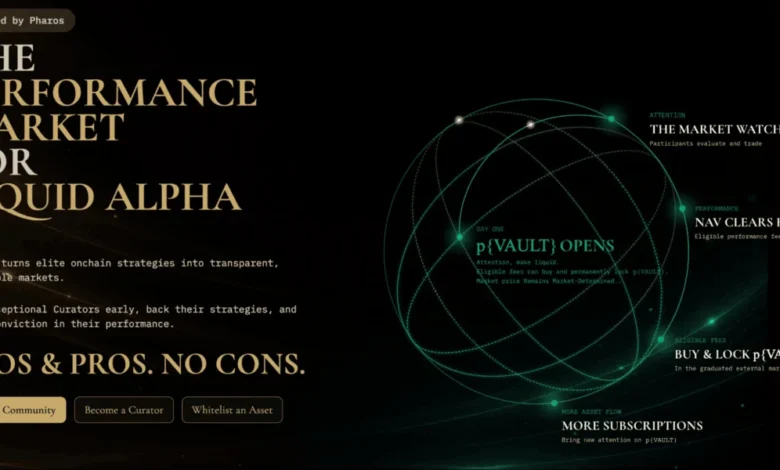
The digital asset landscape has long been defined by a dichotomy: the high-velocity, sentiment-driven nature of "meme" culture and the technical, rigid requirements of institutional-grade financial instruments. On September 17, Prosper, operating on the Pharos network, unveiled a novel framework designed to bridge this gap. By introducing the concept of "MemeRWA," the platform seeks to marry the transparency of onchain performance data with the speculative nature of crypto-native market mechanisms, all while bypassing the traditional, often cumbersome, requirements of legal asset tokenization.
The Mechanics of MemeRWA
At the core of this development is a departure from how the industry has traditionally approached Real World Assets (RWAs). Historically, the tokenization of assets—such as treasury bills, real estate, or equities—has required a "wrapped" approach where a token acts as a legal proxy for ownership. This often involves complex custodial arrangements, legal compliance, and jurisdictional hurdles.
Prosper’s approach is fundamentally different. Instead of tokenizing the asset, the platform bifurcates the financial relationship into two distinct, non-overlapping instruments. The first, "Vault Shares," serves as a transparent vehicle for investors seeking direct exposure to an underlying trading strategy. These shares track the net asset value (NAV) of a specific investment thesis.
The second instrument, known as pVAULT, functions as a fixed-supply, crypto-native asset. Crucially, the pVAULT token holds no legal claim to the underlying vault’s assets. Instead, it serves as a speculative, market-driven proxy for the performance of the vault’s curator. The price of this token is determined entirely by market sentiment and participant assessment of the curator’s ability to generate returns.
Chronology and Launch Context
The announcement on September 17 follows a period of intense development within the Pharos ecosystem. While the crypto industry saw an explosion in "Yield-Bearing Assets" throughout 2023 and early 2024, many of these projects struggled with opaque fee structures and a lack of clear accountability. Prosper’s launch aims to address these concerns by leveraging the Pharos network’s native ability to provide verifiable, real-time blockchain data.
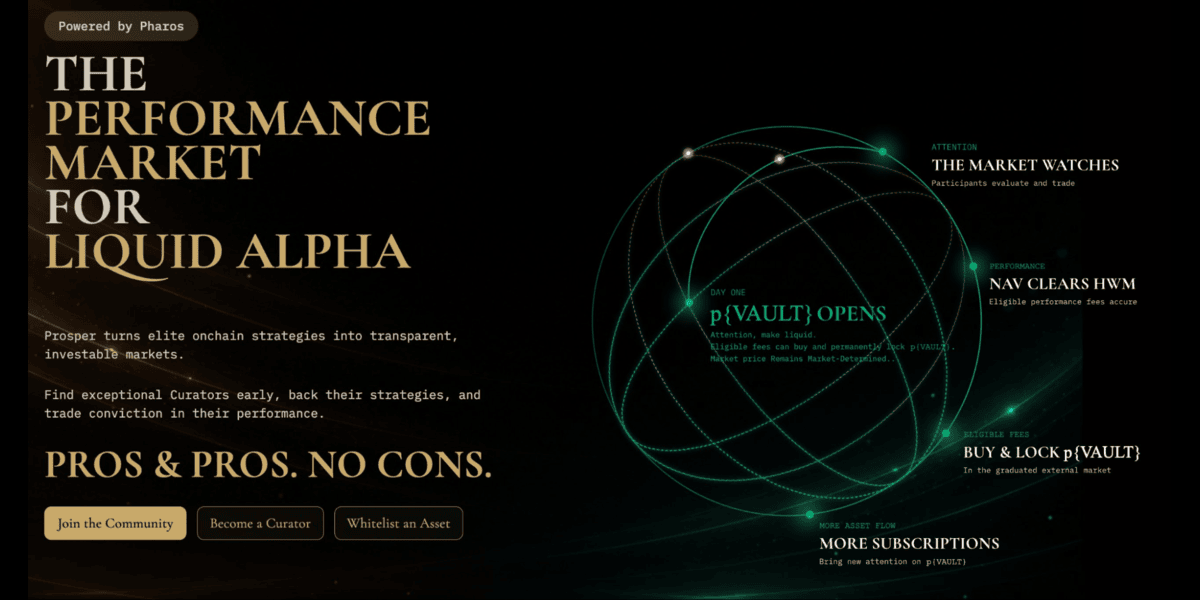
The initial phase of the rollout includes partnerships with established entities such as Stove Finance, R25 Protocol, and TopNod Wallet. These curators are tasked with managing strategies that span traditional U.S. equities, broader global stock indices, and the high-liquidity environments within the Hyperliquid ecosystem. By selecting these partners, Prosper is signaling an intent to focus on high-performance sectors that already possess established, trackable data points.
The Automated Buyback and Burn Mechanism
Perhaps the most significant innovation in the Prosper framework is its reliance on smart contracts to maintain the economic relationship between the vault’s performance and the pVAULT token. Rather than relying on management discretion, the system employs a deterministic buyback and burn protocol.
When a vault strategy achieves a "high-water mark"—a standard industry benchmark for performance—a predefined portion of the performance fees is automatically diverted. These funds are used to purchase pVAULT tokens from decentralized exchanges (DEXs) and permanently remove them from circulation. By automating this process, Prosper removes the "human element" from the price support equation, ensuring that the mechanism operates as a transparent, immutable piece of code rather than a discretionary marketing tool.
Each pVAULT token is launched with a rigid, immutable supply of one billion units. The project developers have emphasized that there are no secret allocations, no team-controlled presales, and no backdoor distributions, aiming to align the incentives of the curators with the token holders.
Expert Perspectives and Industry Philosophy
Laura Shi, Chief Business Officer at Pharos, underscored the project’s philosophy during the launch announcement. According to Shi, the convergence of open participation and onchain transparency is the natural next step for decentralized finance (DeFi).
"Crypto markets have demonstrated the power of open participation and collective conviction, while onchain finance has made economic performance increasingly transparent," Shi noted. "MemeRWA brings those ideas together. Verifiable performance data provides the signal, while pVAULT remains independently priced through participant activity."

This sentiment reflects a growing trend in the industry: the move away from "black box" trading strategies toward transparent, audit-ready performance metrics. By allowing the market to independently price the tokens, Prosper is essentially creating a prediction market for the success of professional investment managers, provided that success can be proven on the blockchain.
Risks and Market Implications
Despite the technical elegance of the framework, the model is not without inherent risks. Market participants must distinguish between the underlying performance of the vault and the market price of the pVAULT token. Because the token is not an ownership stake, its price can—and likely will—diverge significantly from the actual NAV of the vault.
This divergence represents a new type of financial risk. If the market sentiment surrounding a specific curator shifts, the price of the pVAULT token could plummet even if the underlying strategy is performing well, or vice versa. This decoupling effectively creates a volatility layer that sophisticated traders may exploit, while retail participants may find the distinction between the token and the asset confusing.
Furthermore, the lack of a legal claim means that pVAULT holders are not protected by the same regulatory frameworks that govern traditional securities. The platform explicitly states that Prosper does not custody user funds and does not execute trades; it acts purely as a decentralized infrastructure provider. This removes the "middleman" but also places the entirety of the risk management burden on the individual user and the external curators.
Broader Impact on the Financial Ecosystem
The experiment being conducted by Prosper has significant implications for the future of decentralized asset management. If the platform succeeds in creating a robust secondary market for these "performance tokens," it could pave the way for a new asset class where human skill and trading talent are commodified and traded in real-time.
For the broader crypto industry, the success of this model could serve as a blueprint for how to handle Real World Assets without the friction of legal integration. By focusing on the "performance" of the asset rather than the "ownership" of the asset, developers may be able to bypass years of regulatory red tape, provided they remain transparent about the limitations of the token.

However, the industry will be watching closely to see if curators can maintain consistent performance in volatile markets. If these strategies fail, the buyback and burn mechanism may prove insufficient to support the token price, potentially leading to rapid liquidity loss. The success of the MemeRWA framework will ultimately depend on whether the crypto-native audience finds the combination of verifiable onchain data and speculative trading to be a compelling alternative to traditional investment vehicles.
Conclusion: A New Frontier in DeFi
Prosper’s launch marks a pivot point in the evolution of Web3 finance. By utilizing the Pharos network to create a transparent, automated environment for performance tracking, the platform is challenging the industry to prove its value through code rather than rhetoric. As the initial strategies begin to produce data, the community will gain a better understanding of whether "MemeRWA" is merely a clever branding exercise or a foundational shift in how we price professional investment talent in the decentralized era.
For investors and developers alike, the coming months will be a period of intense observation. If Prosper can demonstrate that its automated mechanisms provide a fair and reliable link between strategy and token price, it could well become the standard for how decentralized protocols manage, track, and trade performance in the global digital economy. The reliance on immutable smart contracts to dictate the life cycle of pVAULT tokens provides a layer of assurance that is rarely seen in traditional finance, even if it comes with the high volatility and risk profiles common to all emerging crypto-native markets.