Global Central Banks Chart Divergent Paths as the US Federal Reserve Delivers a Hawkish 25 Basis Point Hike Amid Persistent Inflation Pressures

Global monetary policy is experiencing a notable divergence as central banks navigate a complex economic landscape characterized by sticky inflation, resilient consumer demand, and shifting geopolitical realities. Following a similar move by the European Central Bank (ECB), the United States Federal Reserve enacted a widely anticipated 25 basis point interest rate hike this week. However, the unanimous nature of the decision and the fiercely hawkish signaling embedded in the central bank’s updated economic projections caught financial markets by surprise.
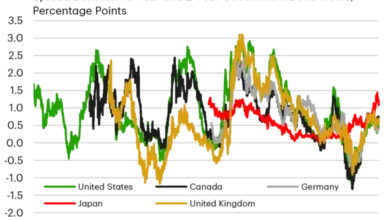
As central banking authorities from Washington to Tokyo, London, and the Nordic region calibrate their policies to combat lingering price pressures, the global financial architecture is responding with fluctuating bond yields, shifting currency valuations, and renewed debates over central bank independence.
The Federal Reserve’s Unanimous Hawkish Pivot
The Federal Open Market Committee (FOMC) pushed its benchmark interest rate higher by a quarter of a percentage point, a move that had been largely priced into short-term markets. More striking than the rate adjustment itself, however, was the complete consensus achieved among voting members. Historically, dissenting votes or nuanced reservations frequently accompany tightening cycles, yet this decision was unanimous.
Furthermore, the central bank’s updated economic projections—popularly known as the dot plot—revealed a strong consensus among members favoring at least one additional rate hike before the conclusion of the calendar year. A surprisingly large minority of officials also signaled expectations for a further tightening move extending into 2027.
During the post-meeting press conference, Fed Chairman Kevin Warsh emphasized that current monetary policy remains accommodative, even in the wake of successive tightening measures. Reflecting this forward-looking guidance, analysts anticipate two additional rate hikes ahead of the summer months, driving short-term market interest rates higher. Interestingly, long-term yields have defied this trend, declining slightly over the course of the week as investors weigh the longer-term growth implications of sustained policy restraint.
The Fed’s aggressive stance underscores its institutional independence, particularly in the face of intense political pressure. US President Donald Trump has repeatedly and publicly advocated for monetary easing, arguing that high borrowing costs hinder economic expansion. Despite the administration’s overt attempts to shape the composition of the FOMC toward a more accommodative stance, the central bank has remained steadfast in its mandate to prioritize price stability over political preferences.
Fueling the Fire: Economic Resilience and Energy Pressures
The primary catalyst behind the Federal Reserve’s continued hawkish posture is the unexpected strength of underlying demand within the United States economy. Traditional economic theory suggests that elevated interest rates should cool overheating sectors. While high borrowing costs have indeed significantly dampened housing market activity and constrained residential investment, other segments of the economy continue to expand at a robust pace.
Consumer spending has remained remarkably resilient despite stagnating real wages, supported by accumulated household savings and strong labor market fundamentals. Simultaneously, massive capital investments directed toward artificial intelligence (AI) infrastructure and technological advancement are injecting substantial liquidity into the corporate sector. Coupled with an expansionary fiscal policy stance, these dynamics are generating persistent inflationary pressures that compel the central bank to maintain its restrictive stance.
Compounding domestic demand pressures are volatile global energy markets. Central banks worldwide remain hyper-vigilant regarding energy price fluctuations, fearing that temporary commodity shocks could become embedded into broader, long-term inflation expectations. Although global oil markets experienced a minor respite this week with crude prices retreating from last week’s sharp spikes, underlying concerns remain acute. With Brent crude hovering persistently above $100 per barrel and refined petroleum products—particularly diesel—maintaining exceptionally high price levels, energy costs continue to pose a formidable challenge to price stability.
A similar dynamic is playing out across the Atlantic. In Europe, natural gas prices retreated slightly from recent highs but remain at elevated levels. European policymakers continue to monitor energy commodities closely, as these prices serve as a critical determinant for the future trajectory of eurozone interest rates.
International Divergence: Bank of Japan and Bank of England Reactions
While the Federal Reserve and the European Central Bank lean firmly into monetary tightening, other major jurisdictions are exhibiting a more cautious or divergent approach.
In Asia, the Bank of Japan (BOJ) implemented a 25 basis point rate hike, aligning with general market expectations. However, the decision was not without internal friction and market speculation. Prior to the announcement, financial markets had buzzed with speculation regarding a potential 50 basis point "jumbo hike." Ultimately, the central bank opted for the more modest quarter-point adjustment. Notably, two board members appointed under Prime Minister Takaichi voted against any rate increase whatsoever, signaling that the BOJ’s path toward policy normalization may encounter political and economic bumps along the road.
Across the English Channel, the Bank of England (BOE) adopted a notably dovish tone, triggering a swift decline in domestic market rates. Leaving the Bank Rate unchanged, UK monetary authorities did not signal an increased willingness to tighten policy, setting themselves apart from the proactive stance of the Fed and the ECB. With the UK policy rate currently resting at 3.75%, economic analysts view the rate as sufficiently restrictive, suggesting that the rationale for aggressive monetary tightening in the United Kingdom remains weak.
Upcoming Nordic Decisions and Global Economic Data
As the global central banking calendar rolls forward, attention shifts closer to Northern Europe. In the coming week, both the central banks of Norway and Sweden are scheduled to announce their latest monetary policy decisions. Unlike outcomes that are heavily telegraphed in advance, these announcements carry a high degree of uncertainty. The Norwegian rate decision, in particular, is viewed by financial analysts as a coin toss, with market pricing split evenly between a rate hike and a prolonged pause.
Simultaneously, investors will scrutinize the release of preliminary Purchasing Managers’ Index (PMI) data across major global economies. These figures will provide critical insight into the health of the manufacturing and services sectors. Within the eurozone, where unexpectedly robust economic growth over the summer provided the ECB with the political and economic leeway to accelerate tightening, analysts will be watching closely to determine whether manufacturing momentum is accelerating or beginning to plateau.
Broader Economic Implications and Market Outlook
The current constellation of global monetary policies highlights a delicate balancing act for central bankers. On one side lies the risk of premature easing, which could unmoor inflation expectations and entrench price instability. On the other side lies the danger of over-tightening, which risks tipping resilient economies into unnecessary recessions.
For financial market participants, navigating this environment requires careful attention to incoming macroeconomic data, commodity price trends, and central bank forward guidance. As the Federal Reserve demonstrates its resolve to stare down political pressure in pursuit of its inflation targets, global markets must reprice risk in an era defined by structurally higher interest rates, ongoing technological investment booms, and persistent geopolitical and energy vulnerabilities.