Gold Prices Plunge Amidst Shifting Monetary Sands and Heightened Regulatory Scrutiny

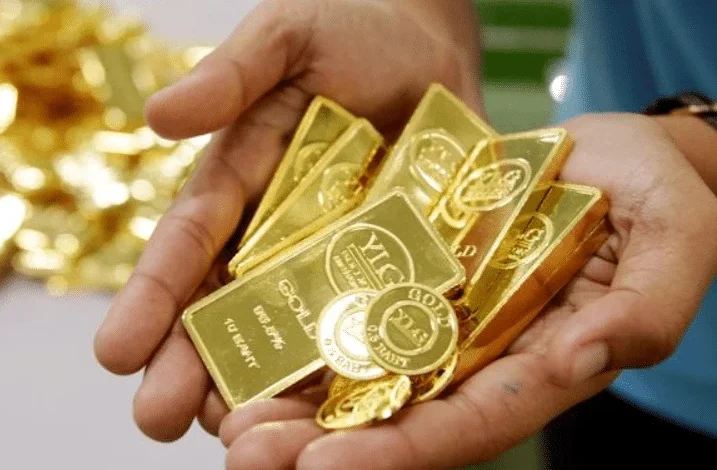
Gold prices are currently experiencing a sharp correction, a stark contrast to the robust rally witnessed earlier in January. This significant downturn is not attributable to a single factor but rather a confluence of macroeconomic shifts, forced deleveraging pressures, and decisive regulatory actions in key global markets. While the initial catalyst for this downward spiral appears to be a recalibration of expectations surrounding U.S. monetary policy, the magnitude of the price decline underscores a previously unacknowledged fragility in market positioning.
The selection of Kevin Warsh as the prospective next Chair of the Federal Reserve has demonstrably quelled anxieties about an aggressive easing cycle. This development has fostered a belief among investors that the era of exceptionally loose financial conditions is drawing to a close, with a tightening environment now anticipated. This shift in monetary outlook, coupled with a notable uptick in U.S. producer inflation figures, has provided a supportive tailwind for the U.S. dollar and real yields. Consequently, this has exerted downward pressure on gold, a non-yielding asset, in the short term. Historically, periods of rising real yields, which reflect the interest rate adjusted for inflation, tend to diminish the appeal of gold as investors can earn a return on other assets. For instance, when real yields rise from negative territory to positive, the opportunity cost of holding gold increases, making it less attractive.
The severity of the recent price drop was amplified by systematic selling across the market. Prior to the reversal, momentum indicators had registered deeply overbought conditions, rendering the market exceptionally vulnerable to a swift liquidation event once key support levels were breached. This phenomenon, often referred to as a "cascade," occurs when automated trading systems and large institutional investors, who rely on technical indicators, begin to sell en masse as predefined thresholds are crossed, triggering further selling and accelerating the price decline. This dynamic is particularly potent in markets that have experienced prolonged upward trends, as the underlying positions become increasingly leveraged and susceptible to rapid unwinding.
Developments emanating from China have starkly illustrated the extent of this volatility. Major financial institutions, including the Industrial and Commercial Bank of China (ICBC), Bank of China, and China Construction Bank, issued public advisories to precious metals investors, cautioning that the markets were exhibiting "technical fragility" and urging a stance of prudence. In a swift response to these concerns, the Shanghai Gold Exchange implemented adjustments to its margin requirements and price fluctuation limits. These measures effectively curtail the scope for aggressive speculation, signaling a governmental concern that recent price movements were more heavily influenced by leverage and speculative sentiment rather than sustained, fundamental end-user demand. This move reflects a broader effort by Chinese authorities to manage financial stability and curb excessive risk-taking within their markets.
The stress generated by the global slump has also manifested among retail investors. Reports from Kyrgyzstan indicate a rush by residents to sell certified gold bars to the state-owned Kyrgyzaltyn company following the international price decline. This behavioral shift from hoarding to capital preservation, observed in smaller, more vulnerable markets, underscores the rapid and often dramatic changes in investor sentiment that can occur in the wake of significant price corrections. Such instances highlight the interconnectedness of global financial markets and the ripple effects of price volatility, even in regions with less direct exposure to international trading hubs.
Despite the current correction, the fundamental underpinnings that have historically supported gold prices remain robust. Central banks globally continue to increase their gold reserves as a strategy for diversifying their foreign exchange holdings and as a hedge against geopolitical and economic uncertainties. This persistent demand from institutional buyers provides a structural floor for gold prices. Furthermore, on the geopolitical front, ongoing tensions between the United States and Iran continue to sustain safe-haven demand for gold, even though the immediate rhetoric may have softened. The perception of gold as a store of value during times of international instability remains a potent driver for its appeal.
This current correction does not appear to signal a definitive trend reversal. Instead, it is more accurately characterized as a necessary recalibration following a period of substantial, emotion-driven price appreciation. For gold to embark on another sustained upward trajectory, a more pronounced macroeconomic shock or a definitive pivot in global monetary policy conditions would likely be required. The market is currently digesting the implications of a potentially tighter monetary environment, and until this narrative fully plays out, gold may experience a period of consolidation or further modest declines.
Gold Price Technical Analysis: Further Losses Loom Below Key Moving Average
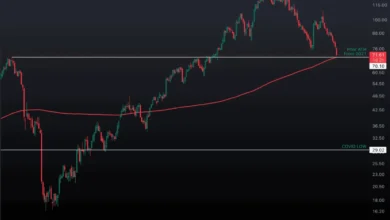
The technical outlook for gold on the 4-hour chart paints a concerning picture, with the price now trading below the significant 200-period Moving Average (MA) near $4,600. This breach represents the first instance of such a move since November 2025, indicating a potential shift towards a sustained downtrend with the possibility of further losses. However, the Relative Strength Index (RSI) has entered oversold territory, which could suggest a temporary consolidation or a short-lived pullback before any further downside movement.
The precious metal may encounter resistance as it attempts to retrace towards the 100-period MA, currently situated around $4,835. Beyond this level, the psychological mark of $5,000 and subsequently the 20-period MA at $5,250 present further hurdles. On the downside, the immediate support lies at the day’s low of $4,400. A break below this level could lead to the filling of a price gap at $4,330. Should selling pressure intensify, gold could then test the significant psychological support level of $4,000. The confluence of these technical levels suggests a period of heightened volatility and potential for continued downward pressure in the short to medium term.
Macroeconomic Drivers Behind Gold’s Correction
The recent sharp decline in gold prices can be traced back to a confluence of evolving macroeconomic factors, primarily centered around the United States. The Federal Reserve’s monetary policy stance has been a pivotal element. Initially, market participants were pricing in a scenario of continued accommodative policies, which tend to support gold prices by lowering the opportunity cost of holding non-yielding assets. However, the anticipated appointment of Kevin Warsh, perceived as a more hawkish figure, has led to a reassessment of future monetary policy. This shift implies a potential for higher interest rates and a reduction in quantitative easing, which are generally bearish for gold.
Data on U.S. producer inflation has also played a crucial role. A significant increase in producer price index (PPI) figures, which often serve as a leading indicator for consumer inflation, suggests that inflationary pressures are building within the U.S. economy. This lends further credence to the Federal Reserve’s potential pivot towards tighter monetary policy. Higher inflation, when coupled with rising interest rates, leads to an increase in real yields. As gold does not offer a yield, its attractiveness diminishes relative to interest-bearing assets when real yields are on the rise. The U.S. dollar has also benefited from these developments, strengthening against other major currencies. A stronger dollar typically exerts downward pressure on dollar-denominated commodities like gold, as they become more expensive for holders of other currencies.
Regulatory Interventions and Market Fragility
The events in China highlight a critical aspect of the gold market’s recent volatility: the role of leverage and speculative positioning. The warnings issued by major Chinese banks and the subsequent actions taken by the Shanghai Gold Exchange indicate a deliberate effort by regulators to curb excessive speculation. The exchange’s decision to adjust margin requirements and price limits suggests that the rapid price swings were not fully supported by underlying physical demand for gold. Instead, they appeared to be driven by leveraged trading, where investors borrow funds to increase their exposure, amplifying both potential gains and losses.
When such highly leveraged markets experience a reversal, forced liquidations can occur as margin calls are triggered. This deleveraging process can create a feedback loop, driving prices down rapidly and exacerbating volatility. The regulatory response in China aims to de-risk the market and ensure that price discovery is more closely aligned with fundamental supply and demand dynamics. Such interventions, while aimed at long-term stability, can contribute to short-term price dislocations as speculative positions are unwound.
Global Impact and Retail Investor Behavior
The ripple effects of gold’s price correction have extended beyond institutional trading floors, impacting retail investors and smaller economies. The situation in Kyrgyzstan, where citizens are reportedly selling gold bars to the state, exemplifies how a global price shock can translate into localized distress and a shift in individual financial strategies. For many, gold represents a tangible asset and a hedge against currency devaluation or economic instability. When its value plummets, it can trigger a loss of confidence and a rush to secure capital, even at a loss, in favor of more liquid or perceived safer assets.
This reaction underscores the psychological dimension of commodity markets. While fundamental factors drive long-term trends, sentiment and fear can accelerate price movements, especially during periods of uncertainty. The rapid shift from accumulation to divestment in markets like Kyrgyzstan highlights the vulnerability of individuals who rely on gold as a store of value in less developed or more volatile economic environments.
Underlying Strengths and Future Outlook
Despite the current headwinds, the fundamental drivers for gold ownership remain compelling. Central banks’ commitment to diversifying reserves, evidenced by their consistent purchasing activity over recent years, provides a structural source of demand. This diversification strategy is driven by a desire to reduce reliance on any single currency and to hedge against potential global economic shocks. The ongoing geopolitical tensions, particularly between major global powers, continue to foster an environment where safe-haven assets like gold are sought after.
The current price correction is unlikely to derail these long-term trends. Instead, it may serve as a healthy consolidation phase, purging excess speculation and re-establishing a more sustainable price trajectory. For gold to regain its upward momentum decisively, a renewed increase in macroeconomic stress, such as a significant global economic slowdown or escalating geopolitical conflicts, would likely be necessary. Alternatively, a clear and sustained dovish pivot from major central banks, signaling a return to easier monetary policy, could also reignite demand for gold. Until such catalysts emerge, gold prices may remain range-bound or experience further modest declines as the market absorbs the implications of a potentially tighter global liquidity environment. The interplay between monetary policy, inflation expectations, geopolitical risks, and regulatory oversight will continue to shape the trajectory of gold prices in the coming months.