Central Florida Welcomes Portrait Bank as First De Novo Financial Institution in Nearly a Decade Following $43 Million Capital Raise

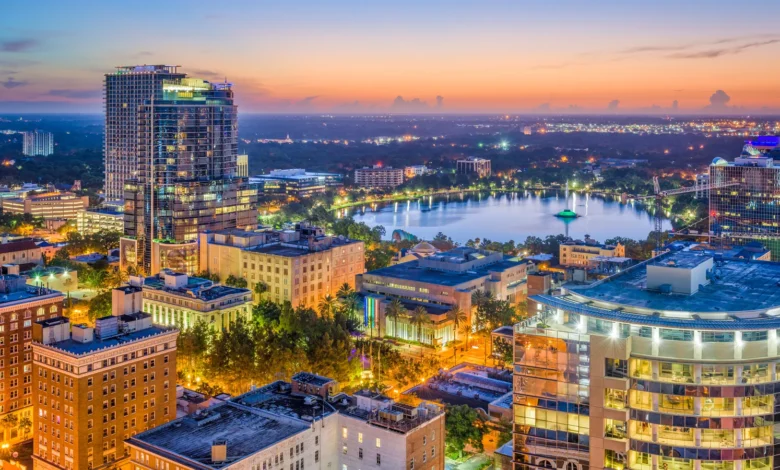
The banking landscape of Central Florida experienced a historic milestone on Saturday, September 22, 2026, as Portrait Bank officially opened its doors for business. Headquartered in Winter Park, just miles from downtown Orlando, Portrait Bank proudly claims the title of the first de novo bank—a newly chartered institution—to launch in the Central Florida market in nearly ten years.
The grand opening follows the receipt of final regulatory approvals from the Florida Office of Financial Regulation (OFR) three months prior, marking the culmination of a rigorous, multi-year journey for a founding team deeply rooted in the region’s financial sector. Led by local banking veteran and Chief Executive Officer Erik Weiner, the institution aims to fill a pronounced void in personalized commercial and private banking services across Orange County and the greater Orlando metropolitan area.
The arrival of Portrait Bank comes at a critical juncture for the region, which has undergone staggering demographic expansion over the last decade while simultaneously enduring a wave of systemic banking consolidation. By combining heavy local investment with seasoned executive leadership, the bank enters the market with substantial financial backing and a clear mandate to restore localized decision-making to small businesses, middle-market enterprises, and private wealth clients.
A Chronology of the De Novo Launch
The path to Portrait Bank’s grand opening began taking shape just over a year prior to its launch, when Weiner and his core organizing group formally submitted their initial applications to state regulators and the Federal Deposit Insurance Corporation (FDIC). Building a de novo bank requires navigating a complex labyrinth of regulatory hurdles, capital adequacy assessments, operational risk planning, and compliance framework development.
In April 2026, the institution cleared a major regulatory milestone by securing crucial conditional approvals from both the FDIC and the Florida Office of Financial Regulation. These approvals signaled that the bank’s proposed business model, risk management strategies, and leadership credentials met stringent federal and state standards.
Following the conditional green light, the founders secured their formal banking charter in June 2026. Rather than rushing immediately to open public branches, Weiner and his executive team deliberately utilized the summer months to execute a meticulous client onboarding strategy. This pre-opening operational phase allowed the bank to quietly build a pipeline of accounts, establish back-office infrastructure, and secure deposit relationships with businesses and high-net-worth individuals eager for alternative banking options. With final state clearance granted in late June, the bank spent July and August finalizing technology integrations, testing security protocols, and training staff ahead of its September public launch.
Overwhelming Local Support and Financial Backing
One of the most remarkable aspects of Portrait Bank’s formation is the sheer enthusiasm demonstrated by the local business community during its capital-raising phase. Regulatory authorities initially required the founding group to raise roughly $28 million in initial capital to capitalize the bank safely and ensure a sufficient cushion against early operational losses.
Instead of merely meeting regulatory minimums, Portrait Bank vastly exceeded expectations by pulling in $43 million from a collective of 256 local investors. This impressive tally reflects widespread local confidence in the institution’s leadership and business strategy.
To maintain broad community ownership and avoid concentrated control by a single deep-pocketed entity, the bank implemented a strict participation cap. No single investor was permitted to contribute more than $1 million. CEO Erik Weiner characterized this strategy as a highly “diversified funding effort,” ensuring that a broad cross-section of Central Florida stakeholders held a vested interest in the bank’s long-term success.
“The $43 million raised from local investors demonstrated how much the community was needing this,” Weiner stated. “This really demonstrated how much the community was needing this, how excited they were, how much they rallied behind us. We expect Portrait to be part of the heartbeat of Central Florida and make a very big impact here locally.”
Addressing Market Consolidation and the Corporate Banking Squeeze
Portrait Bank’s launch is a direct response to decades of industry consolidation that has dramatically reshaped the Central Florida financial ecosystem. According to historical market data cited by bank leadership, the number of locally headquartered banks operating in Central Florida stood at 38 in the year 2000. Over the ensuing quarter-century, aggressive mergers, acquisitions, and nationwide bank buyouts whittled that figure down to approximately half a dozen institutions.
This sweeping consolidation has left a noticeable vacuum in the market. Today, a mere four large regional and national institutions control the vast majority of commercial banking market share in the greater Orlando area. For local entrepreneurs, mid-sized business owners, and affluent families, this oligopolistic market structure has frequently translated into rigid, bureaucratic lending standards and impersonal customer service.
“There’s not a lot of choices for clients, and they feel like they’re put into a box,” Weiner explained. He noted that corporate centralization has severely diminished localized decision-making power. In large institutions, loan approvals and credit decisions are frequently outsourced to distant regional hubs or corporate headquarters far removed from the economic realities of Central Florida.

“There was less personalized service, less local decision making, and banks were making a smaller impact on the community,” Weiner said, reflecting on the consequences of consolidation. “The opportunity here to really make a difference for the business community and families here in Central Florida was too much to pass up.”
Experienced Leadership Rooted in Central Florida
Understanding the pulse of the local economy requires more than financial capital; it requires deep-seated institutional knowledge and longstanding community ties. CEO Erik Weiner is a near-lifelong resident of Central Florida, having relocated to the region at the age of eight from New York. His decades of immersion in the local business climate have provided him with an intimate understanding of the unique challenges and opportunities facing Central Florida enterprises.
Complementing Weiner’s vision is Chief Financial Officer Jeff Jenkins, a veteran financial executive who brings critical de novo expertise to the institution. Jenkins previously served as CFO at Winter Park National Bank and has successfully held the chief financial officer position at four separate de novo banks throughout the region. This combined executive pedigree equips Portrait Bank with a rare operational fluency, enabling the leadership team to anticipate regulatory nuances, manage capital efficiently, and align credit strategies with the specific needs of Florida businesses.
“We understand the priorities of Central Florida businesses and how they look at the world,” Weiner noted, emphasizing that the executive team’s familiarity with the local market differentiates Portrait Bank from out-of-state competitors.
Operating Against a Backdrop of Rapid Population Growth
Portrait Bank opens its doors within one of the fastest-growing metropolitan regions in the United States. According to data released by the Orlando Economic Partnership, which cites U.S. Census Bureau figures, Orlando’s population expanded by 1.3% in 2025. This robust growth rate outpaces the broader state of Florida’s population growth of 0.8% and positions Orlando sixth highest in growth percentage among the nation’s 30 most populous metropolitan statistical areas.
This ongoing influx of new residents, businesses, and remote professionals is generating surging demand for commercial real estate financing, small business credit lines, residential mortgages, and sophisticated wealth management services. As new companies relocate to Central Florida and existing businesses scale operations to meet rising consumer demand, the need for agile, relationship-driven commercial banking partners has never been more acute.
Traditional national banks, bound by rigid algorithmic underwriting and centralized risk models, often struggle to service niche industries or dynamic local businesses effectively. Portrait Bank’s business model centers on filling this exact gap by offering customized financial solutions tailored to the rhythms of Florida’s booming economy.

Broader Economic Implications and Industry Outlook
The successful launch of Portrait Bank is being closely watched by banking analysts and regulators across the Southeast. For years, the de novo landscape nationwide remained severely depressed following the 2008 financial crisis, constrained by heavy regulatory burdens, high compliance costs, and low interest rate environments that made launching a new bank exceptionally difficult.
However, the emergence of well-capitalized de novo institutions like Portrait Bank suggests a potential thawing in the market. As regional consolidation continues to alienate commercial clients seeking attentive service, newly chartered banks are finding fertile ground to capture disillusioned deposit accounts and high-value loan portfolios.
By clearing the $43 million funding hurdle well above regulatory requirements and securing a seasoned management team, Portrait Bank has positioned itself defensively against early economic volatility while maintaining ample liquidity to aggressively expand its asset base.
As the bank settles into its Winter Park headquarters and begins full-scale operations across Central Florida, its performance in the coming quarters will likely serve as a benchmark for other prospective de novo banks considering entry into rapidly expanding Sun Belt markets. For now, local business owners and families navigating the Orlando financial ecosystem finally have a homegrown alternative designed explicitly to keep decision-making power within the community it serves.
Related posts: