Broader Crypto Market Rallies as Bitcoin Consolidates Near $84,000 and Quant Surges 39 Percent

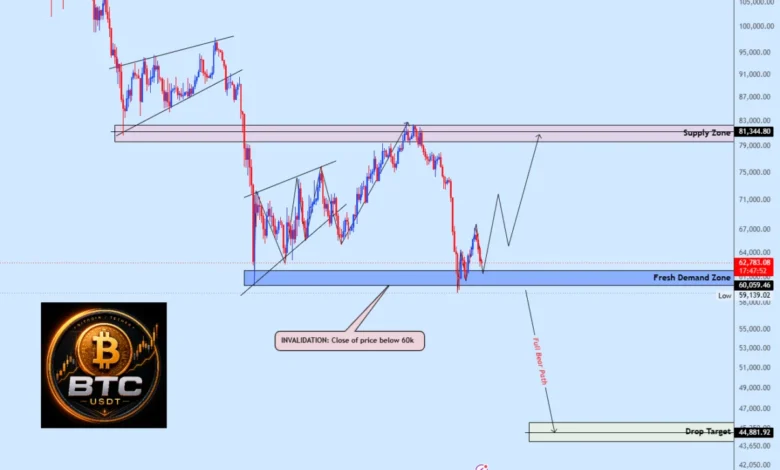
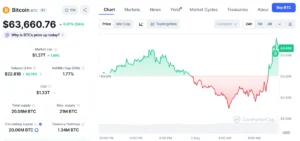
The cryptocurrency market experienced a profound shift in momentum as Bitcoin paused its aggressive upward trajectory, allowing capital to flow aggressively into alternative assets. While Bitcoin consolidated its position in the mid-$84,000 range following a near-approach to the $87,000 threshold, the broader digital asset landscape ignited. September 25 marked one of the most comprehensive altcoin rallies in recent months, characterized by exceptional market breadth and standout performances from mid- and large-cap tokens. Quant (QNT) spearheaded the charge among major digital assets, capturing the attention of institutional and retail traders alike with a staggering 24-hour gain of approximately 39%.
This sudden redistribution of market capital illustrates a classic cyclical behavior within the digital asset ecosystem. When Bitcoin dominates headlines by testing new local highs, liquidity is frequently concentrated within the leading cryptocurrency. However, once Bitcoin enters a phase of price discovery or short-term consolidation, traders often rotate profits into the altcoin sector in search of higher volatility and yield. The events of September 25 underscored this dynamic, breathing fresh life into a market segment that has largely played second fiddle to Bitcoin’s institutional exchange-traded fund (ETF) dominance throughout much of the year.
Main Facts of the Market-Wide Movement
The defining characteristic of the September 25 trading session was not merely the surge of a single token, but the unprecedented breadth of the market-wide advance. According to index tracking data, an extraordinary 93 out of the 100 constituent assets in the CoinDesk 100 index traded in positive territory during the peak of the session.
Market breadth is widely considered by veteran analysts to be a more reliable indicator of systemic health than isolated price spikes. A scenario where a market index climbs while the majority of underlying assets decline typically points to a skewed index heavily weighted by one or two dominant giants. Conversely, a day where over 90% of a comprehensive index registers gains indicates a broad-based influx of capital and a surging appetite for risk across the entire asset class.
Quant (QNT) emerged as the primary statistical outlier of the day, rocketing upward by roughly 39% within a single 24-hour window. While QNT commanded the spotlight due to the sheer magnitude of its ascent, other major altcoins, including Solana (SOL) and XRP, had already laid the groundwork by outperforming Bitcoin over the preceding seven-day period. Furthermore, dedicated altcoin-season metrics—which gauge the performance of the top 50 altcoins relative to Bitcoin over a rolling 90-day window—surged to their highest levels in more than three months, signaling a potential shift in market dominance tides.
Chronology of the Market Shift
The mechanics of this multi-day market rotation can be mapped through a distinct sequence of liquidity flows and trading behavior leading up to the September 25 milestone.
In the weeks preceding the rally, Bitcoin had commanded the lion’s share of market attention and capital inflows. Fueled by sustained institutional accumulation through spot exchange-traded funds, corporate balance sheet allocations, and regulated financial products, Bitcoin staged a formidable climb that briefly pushed its price toward the $87,000 mark. During this aggressive accumulation phase, altcoins experienced subdued trading volumes as capital was systematically drained to feed the Bitcoin rally.
As Bitcoin approached the upper boundary of its recent local resistance, buying pressure began to taper off, prompting the asset to stall in the mid-$84,000 region. This technical cooling-off period acted as the catalyst for the subsequent market rotation.
In the initial days of Bitcoin’s consolidation, capital began trickling into large-cap smart contract platforms and foundational layer-1 networks such as Solana and XRP. Traders capitalizing on short-term gains began hedging or reallocating their portfolios downward into the market-capitalization hierarchy. By September 25, this rotation evolved from a trickle into a torrent. Mid-cap protocols, enterprise interoperability networks like Quant, and decentralized finance tokens caught the wave of incoming liquidity. The compounding effect of short liquidations, thinner order books inherent to altcoins, and surging momentum triggered the explosive 93-out-of-100 green candle phenomenon observed across the CoinDesk 100.
Supporting Data and Quantitative Analysis
To contextualize the September 25 rally, it is essential to examine the underlying metrics that differentiate this event from typical speculative pumps.
Market observers closely monitor the Bitcoin Dominance index—a metric measuring Bitcoin’s market capitalization relative to the total crypto market cap—to gauge cyclical shifts. In the days leading up to the altcoin surge, the dominance metric experienced a measurable downward correction, shedding percentage points as capital flowed outward into the altcoin ecosystem.
Concurrently, derivatives market data revealed significant shifts in positioning. Ahead of Quant’s 39% breakout, open interest in QNT futures contracts rose moderately, accompanied by a negative funding rate environment in previous weeks that left several short positions vulnerable. When the spot price began to climb, a cascading series of short liquidations exacerbated the upward pressure, creating a textbook parabolic move that caught many bearish traders off-guard.
Similarly, volume metrics across decentralized exchanges (DEXs) and major centralized platforms spiked by over 40% compared to the 30-day moving average. This volume expansion confirms that the rally was backed by genuine trading activity rather than low-liquidity flash pumps on obscure order books. The breadth score—93 out of 100 constituents rising simultaneously—statistically places this session in the upper percentile of correlated market-wide green days for the calendar year, matching patterns typically observed at the onset of prior multi-week altcoin expansions.
Expert Perspectives and Industry Reactions
While retail enthusiasm reached a fever pitch following the broad market recovery, industry analysts and institutional strategists have urged caution, advising market participants to distinguish between structural trends and temporary momentum plays.
Market researchers note that while institutional interest has firmly anchored Bitcoin as a macro asset class via spot ETFs, the institutional pipeline for altcoins remains comparatively narrow. Therefore, rallies of this scale are predominantly retail-driven, fueled by speculative capital moving down the risk curve rather than sweeping corporate or sovereign adoption.
"Bitcoin does not need to continuously break all-time highs for the rest of the digital asset economy to thrive," noted a senior market strategist. "Often, the healthiest environment for altcoins is a stable, consolidating Bitcoin. When BTC goes sideways, it eliminates the fear of missing out on the primary asset and gives market participants the psychological breathing room to explore higher-beta opportunities."
At the same time, risk management desks across major digital asset trading firms have warned against overextending leveraged positions based solely on a single day of high market breadth. Veteran traders point out that altcoin rotations can reverse with equal or greater ferocity if macroeconomic data triggers a sudden flight to safety, or if Bitcoin experiences a sharp technical breakdown that abruptly sucks liquidity back into the primary asset.
Broader Impact and Market Implications
The events of September 25 carry several vital implications for the trajectory of the digital asset market in the months ahead.
First and foremost, the rally challenges the narrative that Bitcoin will permanently monopolize capital flows in the wake of institutionalization. While regulatory frameworks and financial products like ETFs have undoubtedly funneled billions of dollars into Bitcoin, the decentralized ethos and speculative dynamism of the altcoin market remain potent forces capable of generating independent momentum.
Second, the performance of utility-driven and enterprise-focused networks like Quant highlights that the market is beginning to differentiate between speculative meme tokens and assets tied to specific technological infrastructure. While speculative fervor undeniably amplified the move, assets with established use cases in cross-chain interoperability continue to attract substantial capital during risk-on phases.
Finally, the shift in market dynamics serves as a reminder of the cyclical nature of cryptocurrency trading. The interplay between Bitcoin consolidation and altcoin outperformance provides a predictable playbook for active traders, yet it demands strict adherence to risk management principles. Whether September 25 marks the true inception of a sustained "altseason" or merely a temporary relief rally within a broader Bitcoin-centric cycle will depend heavily on macro liquidity conditions, regulatory developments, and Bitcoin’s ability to defend its critical support levels in the days to come.