Binance Acquires $100 Million Stake in Circle in Landmark Strategic Partnership and Five-Year USDC Promotion Deal

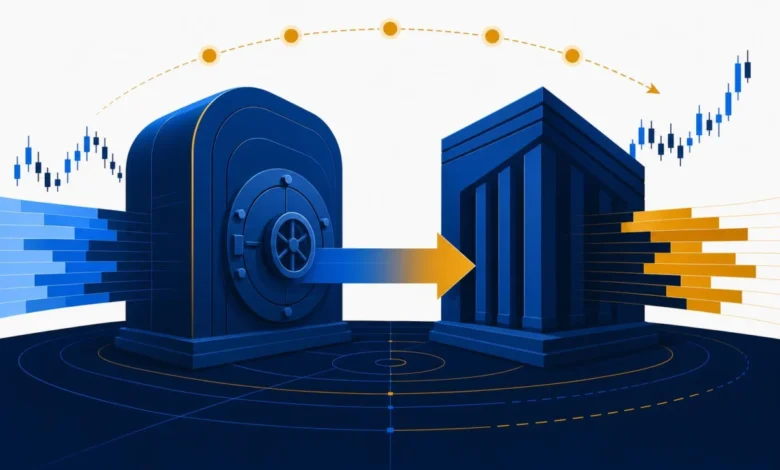
Cryptocurrency exchange giant Binance has completed a strategic $100 million equity investment in Circle Internet Financial, the issuer of the USD Coin (USDC). According to a United States Securities and Exchange Commission (SEC) Form 8-K filing, the private placement transaction closed on September 17. The sweeping agreement also establishes a comprehensive five-year commercial partnership designed to heavily promote and integrate USDC across Binance’s sprawling global ecosystem.
This high-profile corporate maneuver binds two of the most influential entities in the digital asset industry. By taking a direct equity stake in its former competitor’s parent company, Binance is fundamentally shifting its strategic alignment toward USDC. The move cements a rapidly evolving relationship between the world’s largest cryptocurrency exchange by trading volume and the issuer of the world’s second-largest stablecoin, altering the competitive dynamics of the digital dollar marketplace.
The Transaction Structure and Equity Terms
Under the terms of the private placement outlined in the regulatory filings, Circle issued 1,237,011 Class A common shares to Binance at a purchase price of $80.84 per share. This figure represented a deliberate discount relative to Circle’s prevailing market price prior to the closing of the deal, though the SEC filing omitted the exact percentage discount applied to the transaction.
As part of the protective covenants governing the private placement, Binance has agreed to a strict two-year lockup period. During this timeframe, the exchange is prohibited from selling, transferring, pledging, assigning, or hedging the acquired shares, subject to standard corporate exceptions or unless the underlying commercial agreement is terminated under specific, predefined circumstances. Binance will retain its full shareholder voting rights throughout the duration of the lockup period. Furthermore, because these shares were issued in an unregistered private placement, their eventual resale remains restricted unless subsequent registration occurs or an applicable legal exemption from registration is met.
Concurrently, the commercial agreement dictates that Circle will compensate Binance through a monthly incentive fee. This fee will be calculated as a specific percentage of USDC balances held through Circle’s innovative Modular Smart Contract Wallet infrastructure, while Binance simultaneously executes targeted promotional and marketing campaigns for the stablecoin. The precise financial yield or percentage of this monthly fee has not been publicly disclosed. Either corporate party retains the contractual right to terminate the partnership early upon the occurrence of specified triggering events, the details of which were similarly omitted from the public disclosures.
Evolution of the Alliance: A Timeline of Collaboration
The newly minted September 2025 agreement supersedes and replaces a series of prior collaborative arrangements forged between Binance and Circle over the past two years, reflecting a steady deepening of institutional ties.
The genesis of this corporate rapprochement began in late 2024. The initial partnership framework was officially unveiled during Abu Dhabi Finance Week in December 2024. At that time, Binance publicly committed to expanding the utility of USDC by making the stablecoin readily available across a broader suite of its core trading and financial products, as well as incorporating USDC directly into its corporate treasury holdings.
This foundational arrangement was subsequently updated through successive bilateral agreements signed in November 2024 and August 2025. With the completion of the September 2025 equity purchase, the relationship transcends mere operational integration. Binance has transitioned from a commercial distributor of USDC into an actual equity owner of Circle, directly tying its financial fortunes to the long-term expansion and market penetration of the stablecoin over a guaranteed five-year horizon.
Regulatory Undercurrents and Leadership Perspective
The disclosure of the SEC filing arrived amidst a complex backdrop of regulatory scrutiny for the cryptocurrency exchange. The regulatory update was published just one day following widespread media reports indicating that federal prosecutors in the United States are actively investigating whether Binance may have violated U.S. sanctions concerning Iran.
Despite the looming regulatory clouds, executive leadership at Binance has framed the multi-million dollar equity investment as an unequivocal testament to the firm’s strategic vision. Richard Teng, co-Chief Executive Officer of Binance, characterized the transaction and the accompanying five-year commercial commitment as an expression of “long-duration conviction” in both the stability of USDC and the broader maturation of the digital asset economy.
Industry analysts note that by solidifying its financial ties with a regulated, compliance-focused stablecoin issuer like Circle, Binance may be seeking to fortify its institutional standing and demonstrate cooperative alignment with traditional financial market structures, even as it navigates ongoing legal and regulatory challenges in various jurisdictions.
Market Reaction and Financial Performance of Circle Stock
Financial markets responded swiftly to the disclosure of the strategic partnership. Circle’s Class A common stock, which is publicly traded on the New York Stock Exchange under the ticker symbol CRCL, closed trading on Monday, September 21, at a price fluctuating between $94.29 and $94.49, depending on the specific consolidated market data feed utilized. The equity experienced further upward momentum, rising more than 1.3% during Tuesday’s premarket trading sessions.
Based on the higher closing price, Binance’s newly acquired stake of 1,237,011 shares is valued at approximately $116.9 million. This represents an immediate paper profit of roughly $16.9 million above the $100 million purchase price negotiated in the private placement. However, due to the mandatory two-year lockup agreement, Binance is precluded from realizing any of these unrealized gains in the near term.
Despite the positive short-term jolt provided by the Binance partnership, Circle’s stock has faced a challenging multi-month trajectory. Over the trailing 12-month period, CRCL shares have experienced a decline of approximately 34%, underperforming broader equity benchmarks significantly during the same timeframe, such as the S&P 500, which posted a 16.5% gain over the corresponding period. Market observers attribute this historical downward pressure to shifting macroeconomic interest rate environments, changing investor sentiment toward fintech equities, and intense competition within the digital asset sector.
Strategic Implications for the Stablecoin Ecosystem
The convergence of Binance’s immense distribution power and Circle’s regulated stablecoin infrastructure carries profound implications for the global cryptocurrency market. Stablecoins have increasingly become the primary circulatory system of digital finance, facilitating cross-border settlements, decentralized finance (DeFi) liquidity, and serving as a safe haven during periods of market volatility.
For Circle, securing a five-year promotional commitment from the world’s most dominant trading platform provides an unprecedented distribution channel. This alliance threatens to challenge the market share of competing stablecoins, most notably Tether’s USDT, which has historically maintained a commanding lead in total circulating supply and trading pair liquidity across global exchanges. By incentivizing USDC holdings through Modular Smart Contract Wallet infrastructure, Circle is also positioning itself at the forefront of embedded Web3 financial services.
For Binance, the arrangement secures a reliable, high-utility digital asset partner that aligns with global regulatory preferences toward fully reserved, transparent stablecoins. As regulatory frameworks for digital assets continue to tighten globally—exemplified by regimes like the European Union’s Markets in Crypto-Assets (MiCA) regulation—having deep ties to a compliant issuer like Circle provides Binance with a strategic buffer.
As this five-year partnership unfolds, market participants will closely monitor whether the integration of USDC across Binance’s product suite can successfully shift dominant trading volumes away from incumbent stablecoins, and whether Circle’s equity valuation will reflect the long-term benefits of this unprecedented exchange-issuer alliance.
Related posts: