The Evolving Landscape of US-China Relations and the Shrinking Space for Open Debate in Shanghai

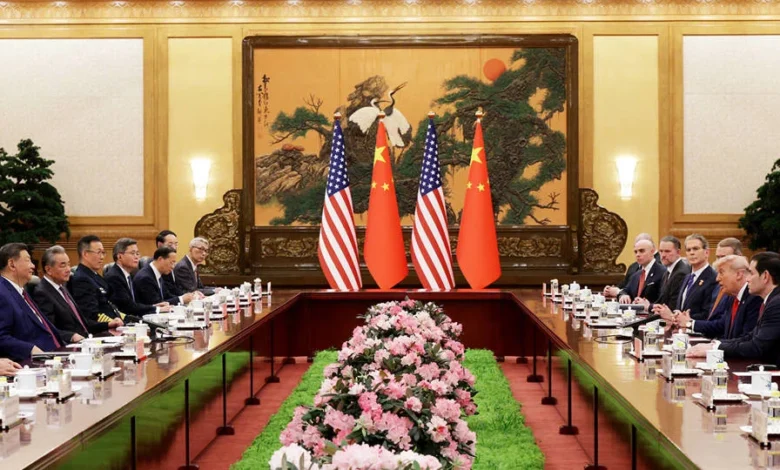
The geopolitical and economic tides connecting the United States and China are undergoing a complex realignment, a dynamic brought into sharp focus at the recent Bund Summit in Shanghai. While international delegates and policy experts gathered in China’s premier financial hub largely converged on the assessment that bilateral relations might be entering a less volatile chapter, the underlying subtext of the discussions revealed deeper anxieties. Attendees found themselves intensely preoccupied with the impending contours of a post-Trump global order and what shifting American leadership will mean for the future of Sino-American connectivity. Yet, beyond the high-level diplomatic forecasting and economic maneuvering, the most profound takeaway from the gathering may not have been the consensus on statecraft, but rather the starkly constrained environment for candid dialogue that currently defines engagement within the People’s Republic.
The shifting nature of intellectual exchange in China was underscored by personal accounts from long-standing Western observers who have watched the parameters of permissible discourse narrow significantly. For decades, international economic forums served as vital bridges between Chinese policymakers and Western financial institutions, functioning as laboratories for constructive criticism and reform-minded debate. Today, however, the institutional architecture that once welcomed rigorous policy appraisals has grown increasingly intolerant of dissent, raising critical questions about the future of transnational communication between the world’s two largest economies.
Background Context and the Bund Summit
The Bund Summit, convened annually in Shanghai, has rapidly established itself as a premier venue for financial and economic diplomacy, bringing together central bankers, corporate leaders, and academic authorities from around the globe. Set against the backdrop of Shanghai’s historic waterfront, the conference aims to foster high-level dialogue on global financial governance, green transition, and macroeconomic stability.
In late October 2026, discussions at the summit were heavily influenced by the protracted friction points of the preceding decade, which included sweeping tariffs, technological decoupling, supply chain diversification, and geopolitical posturing over Taiwan and the South China Sea. Many participants at the Shanghai gathering expressed cautious optimism that a cooling-off period could be on the horizon. Analysts at the summit noted that both Washington and Beijing face significant domestic economic pressures—ranging from real estate restructuring in China to persistent fiscal and inflationary concerns in the United States—that incentivize a pragmatic stabilization of ties.
However, this diplomatic pragmatism exists in sharp contrast to the domestic trajectory of information flow and policy debate within mainland China. While global elites debate the macro-level trajectories of trade pacts and presidential transitions, the avenues for ground-level, unfiltered economic and political analysis are visibly contracting.
The Shrinking Space for Debate: A Personal and Institutional Chronicle
The transformation of China’s intellectual climate is vividly illustrated by the experiences of long-serving foreign analysts who once enjoyed unobstructed access to the nation’s highest-level policy forums. A prime example is Stephen S. Roach, a senior fellow at Yale University’s Jackson Institute of Global Affairs and former chairman of Morgan Stanley Asia, whose engagement with China spans more than three decades.
Roach’s recent exclusion from the China Development Forum (CDF)—an elite state-backed gathering in Beijing that he attended for 25 consecutive years—marks a significant milestone in the cooling of academic and advisory exchanges. The CDF has historically functioned as the premier platform for China’s top leadership to signal economic policies to multinational chief executive officers. The decision to bar a veteran analyst who had long championed constructive engagement highlights a broader institutional retreat from external critique.
The chronology of this estrangement reflects a broader hardening of attitudes within Chinese administrative circles:
- The Era of Engagement (1990s–2010s): Decades characterized by active institutional dialogue, where foreign economists, financial leaders, and academics were routinely invited to offer structural assessments, critique monetary policies, and contribute to China’s accession to global financial systems.
- The Shift Toward Tightened Oversight (Late 2010s–2020): As geopolitical competition intensified, state security concerns began to overshadow economic openness. Access to internal data sources became restricted, and advisory circles experienced increased scrutiny regarding domestic commentary.
- The Post-Pandemic Divergence (2023–2025): Following the reopening of China’s borders after the COVID-19 pandemic, economic growth faced structural headwinds, including a prolonged property sector downturn and weakening consumer confidence. Rather than embracing open debate on these vulnerabilities, administrative responses frequently leaned toward silencing pessimistic economic forecasts.
- Formal Exclusion and Social Chilling (2026): Publicly documented bans from premier forums, alongside the cooling of personal and professional relationships in international hubs like Hong Kong—where long-time acquaintances increasingly avoid open professional association—signal a fundamental erosion of the traditional bridge-building apparatus.
This institutional shift has not been isolated to individual academics. Over recent years, several international due diligence firms, economic consultancies, and financial data providers operating within mainland China have faced regulatory crackdowns, administrative raids, or restrictions on data collection. These actions have collectively altered the risk calculus for foreign entities attempting to conduct independent research on the Chinese economy.
Structural Challenges in the Mainland Economy and Hong Kong
The core of the friction between international analysts and Chinese institutional gatekeepers frequently centers on diagnoses of structural economic malaise. Mainstream Western economic assessments, echoing perspectives previously welcomed in Beijing, point to several persistent vulnerabilities:
- The Property Sector Realignment: The long-term unwinding of China’s debt-laden real estate market continues to suppress domestic wealth generation, reduce local government revenues, and dampen consumer sentiment.
- Consumption Deficit: Despite strong manufacturing output and dominance in green technology sectors such as electric vehicles and solar panels, household consumption remains low as a percentage of Gross Domestic Product (GDP) compared to other major economies.
- Demographic Pressures: A rapidly aging population and declining birth rates present long-term structural challenges to labor supply and pension sustainability.
Parallel to these economic realities is the ongoing transformation of Hong Kong’s institutional identity. Once celebrated as a uniquely autonomous bridge between mainland China and the global financial community, Hong Kong has seen its legal, political, and journalistic landscapes significantly reshaped following the implementation of national security legislation. For international observers who spent decades navigating Hong Kong as a bastion of free-flowing information and unfettered financial debate, the local social climate has similarly chilled, with former professional counterparts exercising heightened caution in their interactions with Western researchers.
Official Responses and Institutional Perspectives
While international participants at events like the Bund Summit advocate for transparency and unvarnished intellectual exchange, Chinese official bodies maintain that these measures are necessary to safeguard national security, economic stability, and public confidence.
Beijing’s regulatory and diplomatic apparatus frequently defends the tightening of information channels by framing it as a defense against foreign economic pessimism and what state media often characterizes as coordinated attempts to talk down China’s market potential. Chinese policymakers argue that external analyses frequently overlook the resilience of the domestic industrial base, the state’s capacity to direct strategic investments, and the long-term success of high-tech modernization initiatives.
Regarding international academic forums, official representatives maintain that participation remains open to those who respect national sovereignty and contribute constructively to mutual understanding, drawing a distinct line between collaborative policy input and what authorities view as unwarranted interference or economically destabilizing rhetoric.
Implications for Global Business and Diplomacy
The widening gap between the optimistic macro-level discourse at high-profile summits and the restrictive reality of ground-level research carries profound implications for global markets and diplomatic relations.
For multinational corporations, navigating the Chinese market increasingly requires operating within an information vacuum. When independent analysts, risk assessors, and long-standing advisers are sidelined for raising structural concerns, foreign investors are left with fewer reliable benchmarks for evaluating operational risks, regulatory shifts, and long-term economic trajectories. This opacity can exacerbate market volatility and discourage foreign direct investment at a time when Beijing actively seeks to attract international capital to revitalize its economy.
Furthermore, the suppression of open debate risks reinforcing an echo chamber within domestic policymaking circles. Historically, the value of international forums like the China Development Forum and the Bund Summit lay in their capacity to provide a testing ground for external perspectives, challenging insular assumptions and encouraging policy course corrections before structural imbalances crystallized into systemic crises.
As the international community looks toward a post-Trump geopolitical landscape, the trajectory of US-China relations will depend heavily on the ability of both nations to establish stable channels of communication. However, true stability will require more than diplomatic handshakes at financial summits; it will necessitate a renewed commitment to the uncomfortable, yet essential, practice of honest intellectual exchange. Without open debate, the bridge between China and the global economic community risks narrowing to a point where mutual understanding is replaced by enduring uncertainty.