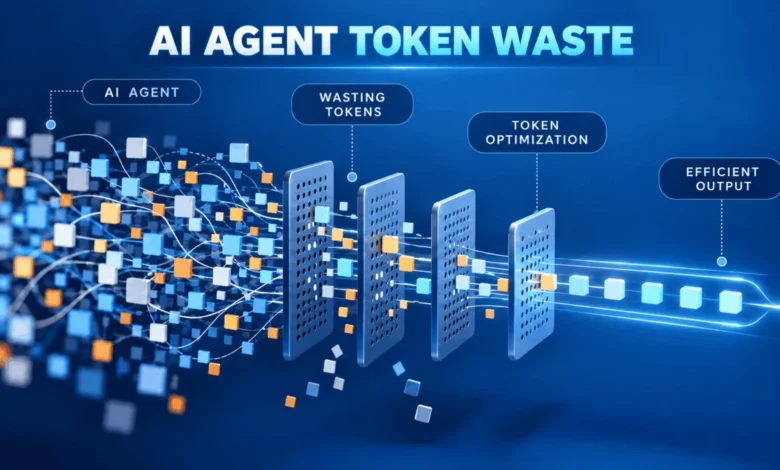
In the rapidly maturing landscape of generative artificial intelligence, the transition from weekend prototypes to production-grade agentic systems has revealed a significant financial and operational bottleneck: token inefficiency. While initial interest in Large Language Models (LLMs) focused on capability and reasoning benchmarks, enterprise adoption has shifted the conversation toward the economics of inference. Companies are increasingly finding that the naive architectural pattern of appending every interaction to an expanding context window leads to quadratic increases in latency and linear inflation of monthly API expenditures. This article delineates seven pervasive token-waste patterns currently plaguing production systems and outlines the engineering strategies required to restore cost-efficiency and system stability.
The Evolution of the Context Window Crisis
The root of modern agentic failure lies in a fundamental architectural misunderstanding: the conflation of context with state. Context refers to the ephemeral payload sent over the wire per inference request, whereas state is the durable, serialized history of an agent’s progress. In the early stages of development, engineers often treat the prompt array as an append-only database. By the third month of a production deployment, this pattern manifests as a "billing spiral," where the agent spends an increasing proportion of its budget simply re-reading its own operational history. Industry data suggests that without optimization, the cost per task for long-lived agents can grow by as much as 400% over the first six months of operation, as the cumulative length of conversational turns and tool observations exceeds the model’s efficient processing threshold.
1. Eliminating the Append-Only Trap
The most widespread mistake in agent design is the "Context Window Accumulation" pattern. By turn 20, an agent re-reading its entire history pays an exponential tax in attention costs. The architectural remedy is the implementation of a sliding context window paired with semantic rolling summarization. By passing only the last N turns verbatim and compressing older interactions into a dense background summary, engineers can maintain performance while curbing costs. However, this creates a trade-off: summarization is inherently lossy. When agents require precise data—such as cryptographic hashes or specific UUIDs—this lossiness can trigger hallucinations. Consequently, this architecture must be paired with a deterministic key-value lookup tool, ensuring that precision is maintained where necessary.
2. Streamlining Tool Result Ingestion
A significant source of hidden token waste is the ingestion of raw, machine-optimized JSON payloads from third-party APIs. When an agent queries services like Stripe, Jira, or AWS, it often receives deep, verbose structures containing metadata irrelevant to the reasoning task. A single webhook response can consume thousands of tokens. To mitigate this, engineering teams are increasingly deploying a middleware transformation layer. This layer strips null values, discards non-essential keys, and reformats data into dense YAML or structured Markdown. While aggressive filtering risks removing essential metadata—such as pagination cursors—a balanced approach preserves necessary functional keys while discarding the "noise" that typically constitutes 60-80% of raw API responses.
3. Transitioning to AST-Aware Retrieval
Coding agents and RAG (Retrieval-Augmented Generation) systems often suffer from "Grep-and-Dump" retrieval, where the orchestrator provides the entire file associated with a requested function. This is inefficient, akin to reading an entire library to find one page. Modern systems are shifting toward Abstract Syntax Tree (AST) aware retrieval. By parsing code into a live call graph during indexing, orchestrators can return only the specific function signature, docstring, and structural dependencies. Utilizing tools like Tree-sitter allows for accurate structural extraction, reducing the token count of a standard code-search operation from thousands to a few hundred. The primary risk here is index staleness; if the vector database lags behind the main code branch, the agent may reason about deprecated functions.
4. Implementing Context-Aware Tool Pruning
Many agent frameworks define the entire tool registry at the start of the prompt. For agents with large tool sets (30+ functions), this consumes a significant portion of the context budget regardless of the task at hand. The industry standard is moving toward context-aware tool pruning governed by a finite state machine. By injecting only the tools relevant to the current operational state—such as "search" during discovery and "write" during execution—developers can save up to 1,500 tokens per request. While this introduces a conflict with prompt caching strategies, the net savings often outweigh the cost of cache-misses in high-volume, low-latency environments.
5. Enforcing Circuit Breakers for Reasoning Loops
Autonomous agents, when confronted with failure, often enter recursive loops, attempting to retry a tool call that is fundamentally broken. Without hard limits, these "unbounded chain-of-thought" loops can deplete an entire monthly budget in hours. The implementation of an orchestrator-level circuit breaker is now considered a mandatory guardrail. By capping output token budgets per action and enforcing maximum retry counts, developers can force the system to escalate to human oversight or fallback logic. This prevents the "runaway billing event," which remains one of the most common causes of unexpected service outages in production agentic systems.
6. Optimizing for KV Cache and Prefixing
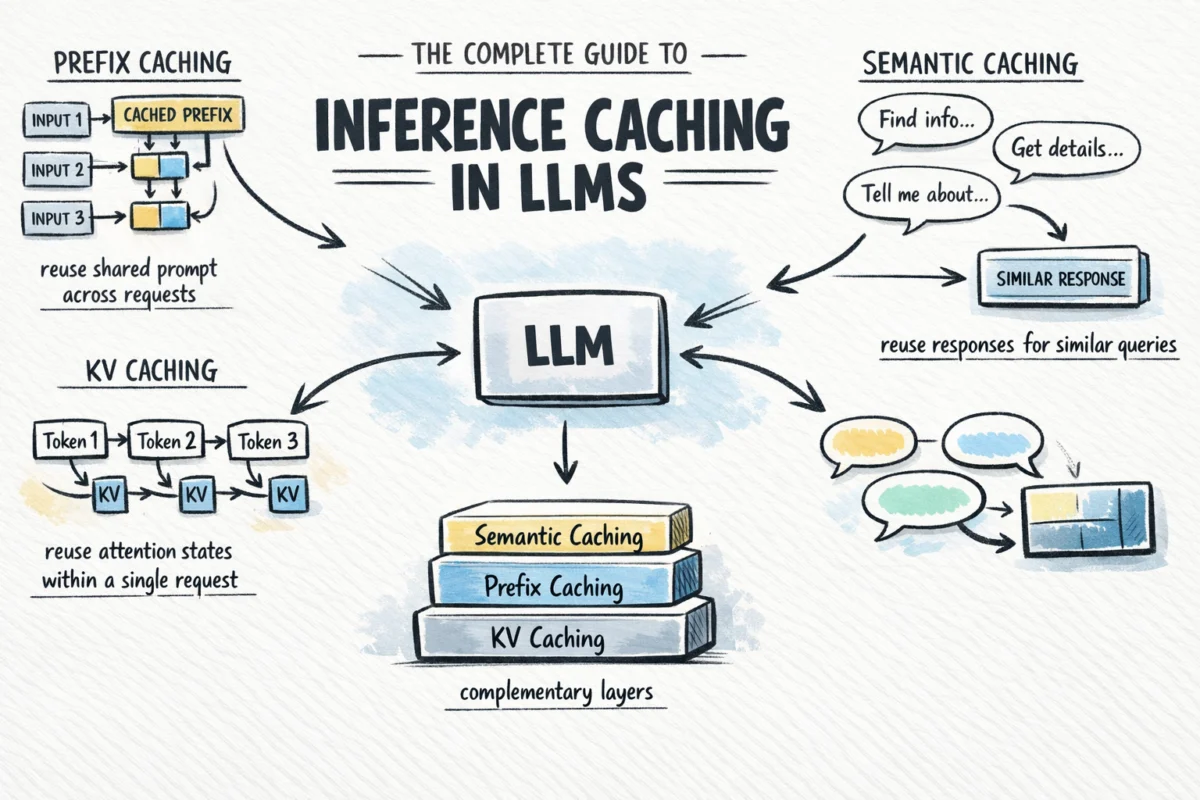
LLM providers offer prompt caching for static prefixes to reduce latency and cost. However, developers frequently invalidate these caches by injecting dynamic variables, such as timestamps or user IDs, at the very beginning of the prompt. To maximize cache hits, the industry is adopting a "static-to-dynamic gradient." By placing immutable system prompts and organizational style guides at the top of the request, and moving all dynamic variables to the bottom, the cache boundary remains stable. While provider TTL (Time-to-Live) limits vary, this structural discipline is essential for high-throughput agents where identical large system prompts are invoked thousands of times per hour.
7. Cascaded LLM Routing
Finally, the "Monolithic Routing" pattern, where frontier models are used for every task, is becoming obsolete. The economic reality is that using an Opus-tier model for simple intent classification or log summarization is inefficient. Cascaded routing, which uses lightweight models like Gemini Flash or Haiku for basic tasks and routes to frontier models only for complex, multi-step reasoning, is the current best practice. Open-source libraries like LiteLLM have facilitated this shift, allowing for provider-agnostic routing. While this introduces a potential failure point—where a small model may misclassify a request—the cost-to-output ratio improvement for large-scale systems is substantial.
Broader Implications and Future Outlook
Token optimization is no longer merely a financial exercise; it has become a fundamental component of system reliability. A bloated context window increases the probability of retrieval failures, enhances latency, and complicates debugging. As agents move from experimental sandboxes to the backbone of enterprise workflows, the architectural choices made in the initial weeks of development compound. Stale facts in vector stores and unconstrained reasoning loops create a "data quality debt" that can render an agent unmanageable. By day 100 of a production lifecycle, the goal of token management shifts from simple cost reduction to ensuring the system remains predictable, accurate, and stable under load. Engineers who prioritize structural efficiency today will find their systems significantly more resilient as the complexity of agentic workflows continues to scale.
Related posts: