How MassMutual Scaled AI and Machine Learning to Transform Life Insurance Operations and Underwriting

Massachusetts Mutual Life Insurance Company (MassMutual) has long maintained a prominent position within the financial services sector, serving more than 4 million policyowners and customers globally. Demonstrating robust financial health and stability, the mutual life insurer reported record statutory operating earnings of $3.9 billion for fiscal year 2025. Alongside this milestone, the company documented total adjusted capital of $34.4 billion and nearly $1.1 trillion in life insurance protection currently in force. Yet, behind these commanding figures lies a sweeping operational transformation driven by over a decade of continuous technological investment, culminating in advanced generative and agentic artificial intelligence implementations across the enterprise.
In its 2025 annual report, MassMutual highlighted that 51% of its workforce routinely utilizes broad-based generative AI productivity tools, yielding an estimated savings of 237,000 operational hours over the course of the year. For corporate executives and industry peers alike, MassMutual’s scale underscores a classic operational conundrum: how to dramatically improve service speed and efficiency while maintaining absolute accuracy, compliance, and control over complex financial risks. To navigate this challenge, the firm has strategically integrated machine learning and generative artificial intelligence into two foundational pillars of its business—customer service retrieval and mortality risk underwriting.
Bridging Decades of Legacy Data with Generative AI Assistance
Life insurance contracts are uniquely enduring financial products, capable of remaining in force for decades. This longevity presents a distinct operational hurdle for service representatives and financial professionals who must frequently interpret and answer complex inquiries regarding contracts written under outdated product terms and older regulatory frameworks. To alleviate this bottleneck, MassMutual developed an internal generative AI assistant designed to rapidly retrieve and synthesize decades of historical policy information.
The business problem was clear: excessive time spent manually combing through voluminous archives and escalating routine policy questions to centralized contact centers. By implementing an intuitive interface—resembling modern consumer-facing large language models—the company successfully shortened the path from a client’s initial inquiry to a verified answer. Under the leadership of Chief Information Officer Sears Merritt, MassMutual’s technology teams spent 36 months meticulously building and refining a centralized cloud-based data platform capable of aggregating, storing, and structuring the company’s vast repositories of historical records.
The integration of this generative AI assistant fundamentally shifts policy-information searches toward employee self-service. According to corporate performance metrics released in early 2025, the tool reduced overall response times by 10% while prompting financial advisors to place approximately 5% fewer calls to the internal contact center. These dual metrics indicate a marked improvement in both service velocity and advisor self-sufficiency. Notably, this infrastructure was designed and deployed across targeted business units within a remarkably compressed nine-month timeframe.
Risk Governance, Training, and Human Oversight
While the productivity gains are substantial, MassMutual’s leadership has consistently maintained a cautious and measured deployment strategy, opting to keep generative AI tools internal rather than exposing them directly to policyholders. Ensuring rigorous safety protocols, the company mandates that all employees complete formal training before gaining access to the generative AI suite. This mandatory curriculum specifically educates staff on the technology’s inherent capabilities, operational limitations, and potential for generative errors or hallucinations.
This training dovetails with the company’s broader governance framework. MassMutual’s published AI disclosures and annual reports establish strict guidelines centered on data transparency, robust privacy protections, mandatory human review for automated decisions, and continuous system monitoring. Responsibilities are formally assigned across every stage of a model’s lifecycle, with risk-based prioritization governing periodic model reviews. For organizational leaders seeking to emulate this model, the practical imperative is unmistakable: establish a clear protocol for who evaluates uncertain outputs, when an ambiguous question must be escalated to a subject-matter expert, and how errors are tracked prior to scaling system access.
Revolutionizing Mortality Risk Scoring and Underwriting
Beyond customer service enhancement, MassMutual has fundamentally redefined its core actuarial and underwriting operations through the application of advanced predictive analytics. Traditional life insurance underwriting has historically been a sluggish, friction-heavy process requiring comprehensive physical examinations, clinical blood work, urinalysis, and manual risk assessments. According to the National Association of Insurance Commissioners (NAIC), issuing a traditional policy can frequently span several months, serving as a primary deterrent for consumers seeking rapid coverage.
To overcome this barrier without compromising financial prudence, MassMutual pioneered a machine learning framework that evaluates eligible insurance applications automatically, routing complex exceptions to human underwriters. This quantitative methodology was thoroughly documented by the company’s data scientists in a peer-reviewed paper presented at the 2019 Innovative Applications of Artificial Intelligence conference, outlining the architecture behind the MassMutual Mortality Score (M3S) and the commercial analytics suite known as LifeScore360.
Developing the Predictive Mortality Model
The creation of the underlying mortality model required extensive multidisciplinary collaboration among actuaries, medical doctors, experienced underwriters, and external reinsurers. The data science team trained the predictive algorithm on a massive historical dataset comprising approximately 908,000 applications spanning from 1999 to 2014, incorporating comprehensive laboratory testing results. This historical training set encompassed 9.16 million exposure years and roughly 15,700 observed deaths, a process that necessitated the digital archiving of vast quantities of paper records.
To model long-term mortality risk, the system utilizes a sophisticated machine learning technique known as a random survival forest. Processing nearly 60 distinct applicant inputs, the algorithm estimates a 10-year mortality risk trajectory and converts it into a standardized life score ranging from 0 to 100. Higher scores signify lower relative risk within predefined demographic cohorts segmented by five-year age bands, biological sex, and smoking status.
Crucially, because applicants are ranked relative to their specific peer groups, two individuals with identical scores may possess distinct absolute mortality risks if they belong to different demographic brackets. Consequently, underwriting leadership relies on the life score for comparative risk stratification, while deterministic business rules and human exception reviews govern the final policy offer.
Staged Rollout and Automated Decision-Making
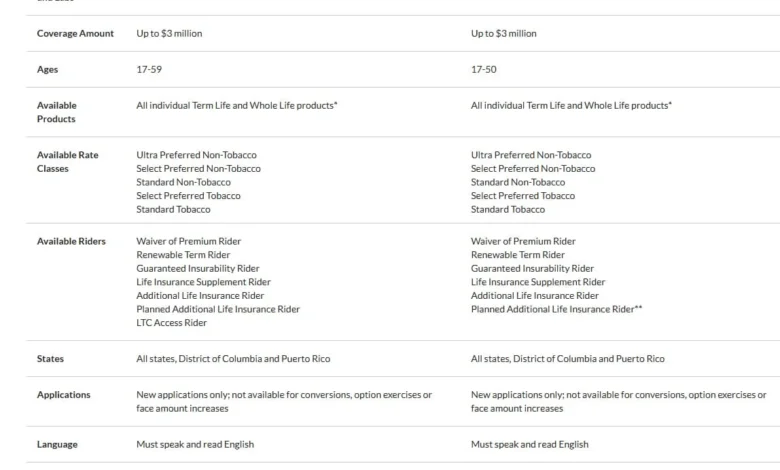
MassMutual deployed this algorithmic underwriting architecture through a carefully controlled, staged implementation. The company initially initiated a modest 1,000-case pilot running parallel to traditional human evaluations. Upon validating the model’s accuracy, MassMutual gradually expanded automation thresholds—initially automating best-class offers for policies up to $1 million for applicants aged 17 to 40, later raising the cap to $3 million and expanding the eligible age range up to 59. Ultimately, the system was scaled to encompass all standard-and-above risk classifications, achieving automated adjudication for approximately 90% of applications falling within these parameters.
This digital transformation also found traction in the broader insurance market. In March 2018, global reinsurer Swiss Re announced a strategic partnership with LifeScore Labs—then a wholly owned MassMutual subsidiary—to integrate LifeScore360 as an analytical option within its Magnum underwriting ecosystem, illustrating early commercialization of proprietary internal technology.
Modern Underwriting Practices and Ongoing Compliance Controls
MassMutual’s current underwriting disclosures reflect a mature, highly digitized framework that balances speed with risk management. Today, applicant eligibility determines whether an individual qualifies for algorithmic assessment with or without medical examinations and clinical lab testing. Programs such as MassExpress allow eligible applicants aged 17 to 50 to secure coverage up to $3 million without fluid collection, while algorithmic assessments for ages 17 to 59 may incorporate electronic health data, medical claims, pharmacy databases, and credit-related metrics.
However, meeting baseline eligibility criteria does not guarantee a streamlined, friction-free offer. Certain applicants are still mandated to complete traditional medical exams and laboratory screenings, and a subset of otherwise eligible applications are intentionally subjected to random holdouts and control audits. These randomized audits serve as a critical risk management control, enabling compliance teams to continuously evaluate automated decisions against baseline standards and detect potential algorithmic drift.
Broader Industry Implications and Strategic Takeaways
MassMutual’s multi-year technological evolution offers a masterclass for financial services executives navigating the delicate intersection of digital transformation, regulatory compliance, and enterprise risk management. By treating data readiness as a multi-year foundational investment—exemplified by the 36-month development of its cloud data platform—the insurer successfully operationalized both generative AI for service professionals and machine learning for predictive underwriting.
Ultimately, MassMutual’s success underscores three core strategic imperatives for modern financial institutions: establish unambiguous decision ownership across human and automated workflows, implement technology in deliberate, phased stages with rigorous baseline testing, and continuously invest in clean, usable data. As the insurance landscape continues to evolve, MassMutual’s trajectory demonstrates that operational velocity and rigorous risk mitigation are not mutually exclusive, but rather mutually reinforcing components of sustainable enterprise growth.