AI agent access is now available on HaasOnline TradeServer Cloud

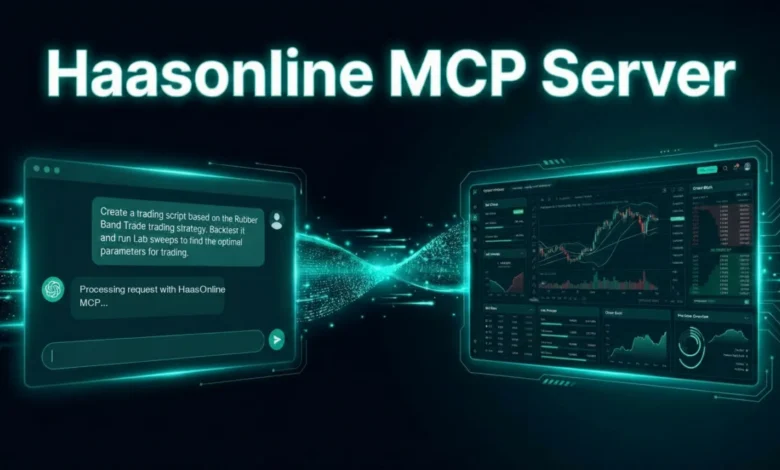
HaasOnline, a prominent provider of automated trading infrastructure, has officially launched AI agent support for its TradeServer Cloud platform. This development marks a significant shift in how traders interact with their automated portfolios, enabling direct, secure, and conversational integration with popular AI assistants such as Claude, Cursor, and VS Code. By leveraging the Model Context Protocol (MCP), the integration removes the technical friction previously associated with self-hosted AI configurations, effectively democratizing access to high-level algorithmic oversight.
The Evolution of AI Integration in Algorithmic Trading
The integration of artificial intelligence into financial markets has historically been divided into two camps: the high-frequency institutional shops utilizing proprietary large language models (LLMs) and the retail sector, which has relied on static, rule-based scripts. Since April, HaasOnline has bridged this gap by incorporating an MCP server into its self-hosted TradeServer product.
Initially, this feature required users to manage their own local infrastructure—a process that involved generating API keys, manually configuring text files, and maintaining a persistent, self-hosted environment. While secure, this workflow proved to be a barrier for traders who lacked the engineering background required to manage a local server. The transition of this capability to the TradeServer Cloud represents the company’s pivot toward a more accessible "Software-as-a-Service" model, where the infrastructure is managed centrally while maintaining high security standards.
One-Click Authentication: A Shift in Security Protocols
One of the primary deterrents to AI-integrated trading has been the risk associated with managing sensitive credentials. In traditional setups, users were often required to copy long-lived API keys into local configuration files, which inherently increased the surface area for potential security breaches.
The new Cloud implementation replaces this manual credential management with a standard OAuth 2.1 authorization-code flow utilizing Proof Key for Code Exchange (PKCE). This is the same industry-standard security framework employed by major financial institutions and global cloud service providers to allow third-party applications to interface with user data.
Under this system, the AI agent initiates a browser-based authentication request. The user grants permission on the HaasOnline interface, and the connection is established without the user ever handling or exposing an API key. This granular control allows users to revoke access at any time through their agent’s interface, providing a fail-safe mechanism that was previously difficult to manage in manual, text-file-based setups.
Functional Scope and Technical Limitations
The platform offers 46 distinct tools designed to interface with the user’s specific trading environment. The utility of this integration lies in its specificity; rather than providing a generic description of a trading strategy, the AI assistant can analyze the user’s actual grid bots, review active parameters on Binance or other supported exchanges, and cross-reference performance data against specific market conditions.
However, the architecture includes strict, immutable safety boundaries. The MCP tools integrated into the HaasOnline cloud are read-only regarding execution and financial movement. The AI agent cannot place, modify, or cancel orders, nor can it move funds between wallets or adjust the "on/off" state of a trading bot.
These constraints are not merely "recommended guidelines" but are hard-coded into the interface’s architecture. By keeping the execution layer—the actual trade placement—entirely separate from the analytical layer, the platform mitigates the risk of "hallucinations" or errors where an AI might inadvertently drain a portfolio or execute unauthorized transactions. The assistant is authorized only to interact with scripts, backtesting environments, and logging data, effectively serving as a diagnostic tool rather than a trading executor.
Practical Applications: From Portfolio Audits to Script Development
The real-world application of this technology has begun to shift the workflow of retail algorithmic traders. Industry observers have identified two primary use cases that are gaining traction.
The first is the automated portfolio audit. In a manual setting, a trader managing twenty bots across four different exchange platforms would typically require significant time to cross-reference performance, logs, and drawdown metrics. With the AI agent enabled, this becomes a natural language query. Users can ask the agent to identify underperforming bots from the previous thirty days and highlight commonalities in their settings or pair selection. This allows for a data-driven approach to portfolio maintenance that mimics the capabilities of a dedicated quantitative analyst.
The second application is the rapid prototyping of HaasScript. Developers can describe the logic they wish to implement, and the assistant can draft the corresponding HaasScript, suggest parameters for backtesting, and analyze the resulting logs for anomalies. This iterative loop—describe, draft, test, analyze—significantly accelerates the development lifecycle, allowing traders to refine their strategies without the constant task-switching between the coding environment and the trading dashboard.
Chronology of Implementation
- April 2024: HaasOnline releases the MCP server as a feature for self-hosted TradeServer users, requiring local hardware management.
- Q2–Q3 2024: Internal testing of cloud-native OAuth 2.1 authentication to remove the necessity for manual API key handling.
- Late 2024: Official launch of AI Agent access on TradeServer Cloud, enabling one-click connections for VS Code, Claude, and Cursor.
- Ongoing: Expansion of the toolset to increase the granularity of data the AI can ingest from the trading environment.
Industry Implications and Market Analysis
The move by HaasOnline signals a broader trend in the fintech sector: the shift from "tools as a dashboard" to "tools as an ecosystem." By enabling AI agents to reason over live trading data, platforms are effectively providing retail users with the same level of analytical depth previously reserved for institutional algorithmic desks.
However, the implications remain tempered by the necessity of human oversight. The automation of analysis does not equate to the automation of judgment. Even with a sophisticated AI agent, the responsibility for risk management and the decision to deploy capital remains entirely with the user. The industry consensus is that while these tools drastically reduce the time required for data processing, they do not replace the need for a fundamental understanding of market mechanics.
Availability and Service Tiers
The AI agent access feature is currently available to users subscribed to the Standard, Pro, and TradeServer tiers. The company has also opted to include this feature in their free trial periods, allowing prospective users to evaluate the impact of AI-driven analysis on their specific trading workflows before committing to a paid plan. The Starter tier remains the only subscription level without access to the MCP integration.
For those who prefer to maintain total local control, the self-hosted version of TradeServer remains unchanged. The MCP server will continue to operate locally, ensuring that for users with strict security or compliance requirements, sensitive exchange credentials never leave their own hardware.
As the integration of AI into trading continues to evolve, the focus will likely remain on balancing the efficiency of LLM-driven diagnostics with the absolute necessity of rigorous, non-negotiable security boundaries. HaasOnline’s current strategy reflects this balance, prioritizing the diagnostic utility of AI while maintaining an air-gapped approach to trade execution.
Related posts: