The resurgence of bond market yields and what investors should expect from fixed income in the current economic landscape

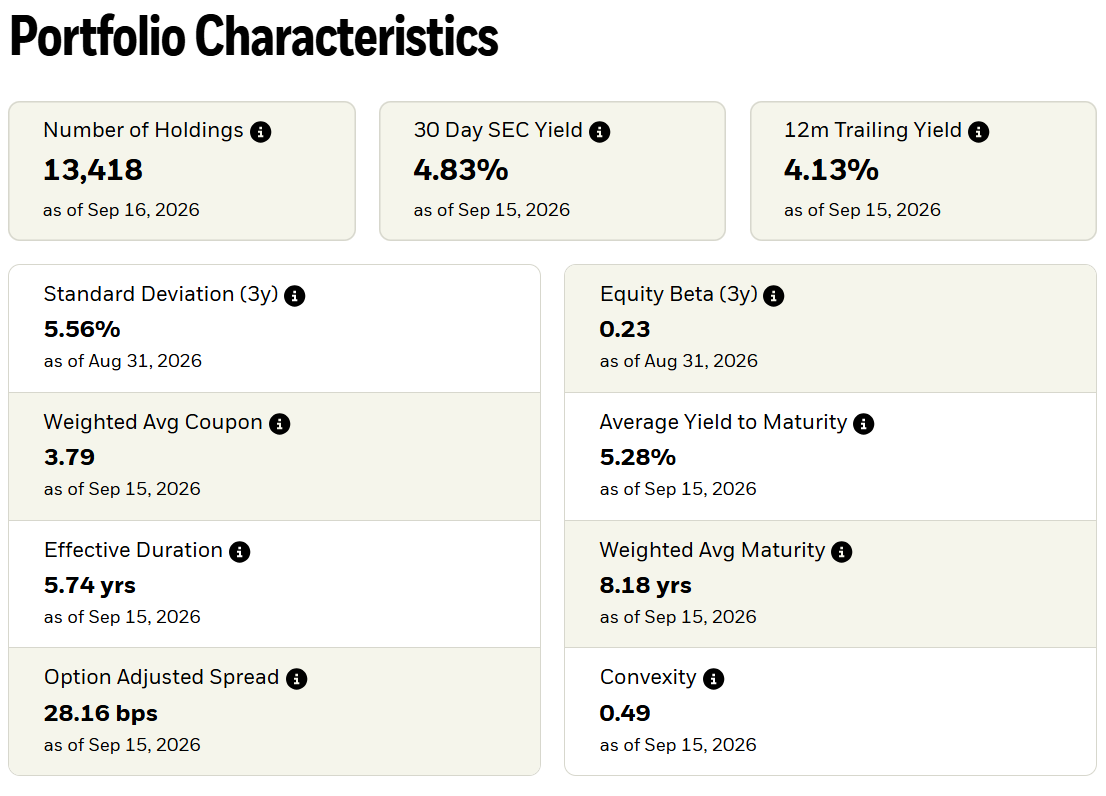
For the first time in over a decade, fixed-income investors are witnessing a landscape defined by historically significant yields, with the iShares Core U.S. Aggregate Bond ETF (AGG) offering a yield to maturity hovering near 5.3%. This shift represents a dramatic departure from the near-zero interest rate environment that characterized the 2010s and the onset of the COVID-19 pandemic, where yields on the "Agg" frequently languished below 2%. As of mid-September 2026, the 10-year Treasury note—a global benchmark for risk-free lending—is yielding approximately 5%, a sharp reversal from the sub-0.5% levels observed earlier this decade.
A Historical Perspective on the Bond Bear Market
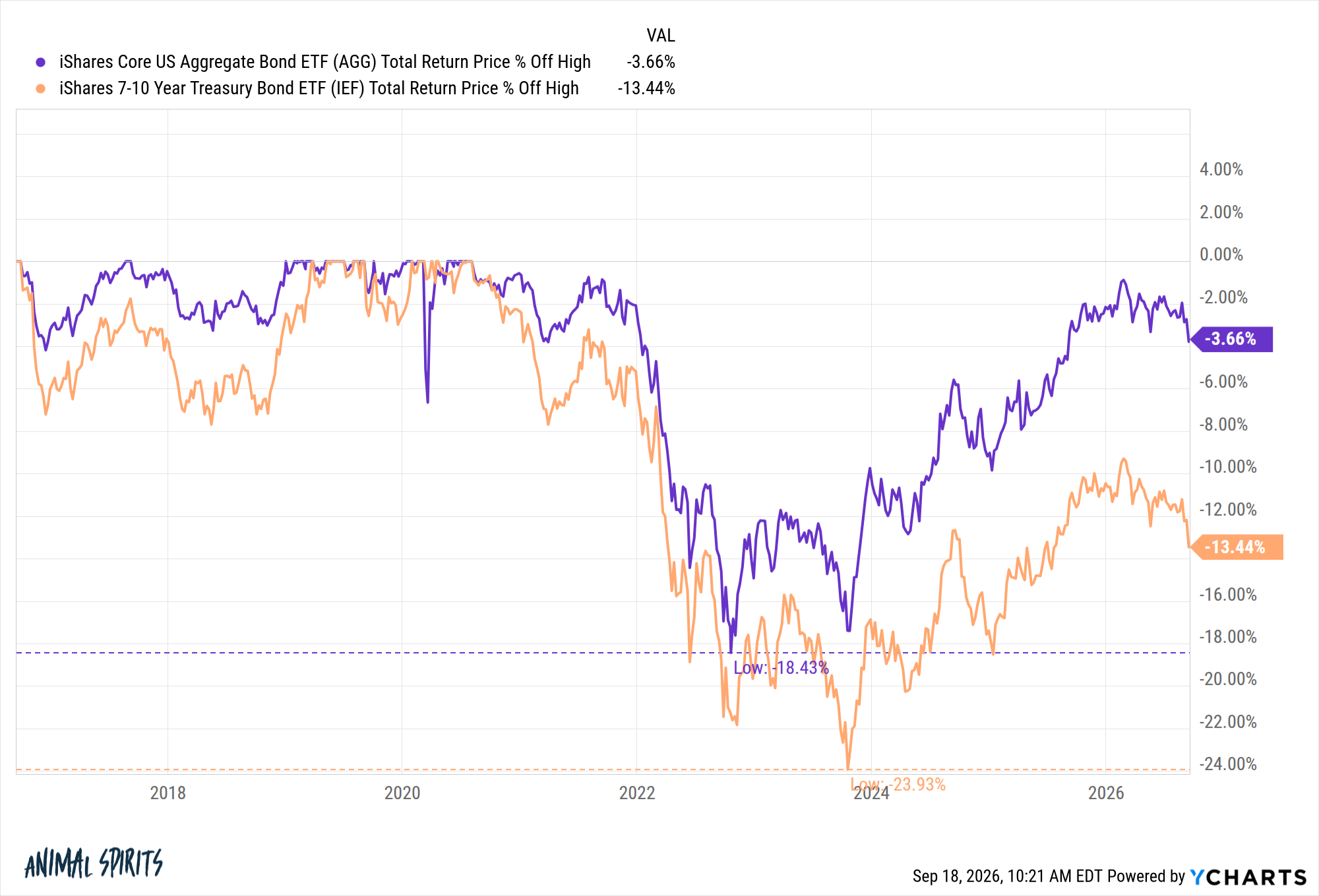
The transition to this higher-yield environment has not been without significant friction. The rapid pace of interest rate hikes initiated by the Federal Reserve to combat persistent inflation triggered what many analysts characterize as the most severe bear market in the history of the modern bond market. Between 2021 and 2024, as central banks moved aggressively to tighten monetary policy, the value of fixed-income securities plummeted.
The AGG, which serves as a proxy for the total U.S. investment-grade bond market, experienced drawdowns approaching 20% during this period. Long-term instruments, such as the iShares 20+ Year Treasury Bond ETF (TLT), fared even worse, with some portfolios enduring peak-to-trough drawdowns exceeding 40%. For many retail investors who had grown accustomed to the "lower for longer" interest rate environment, this period served as a stark reminder of the inverse relationship between interest rates and bond prices: as market yields rise, the price of existing bonds must fall to remain competitive, resulting in capital losses that often offset coupon income.
The Mathematics of Forward Returns
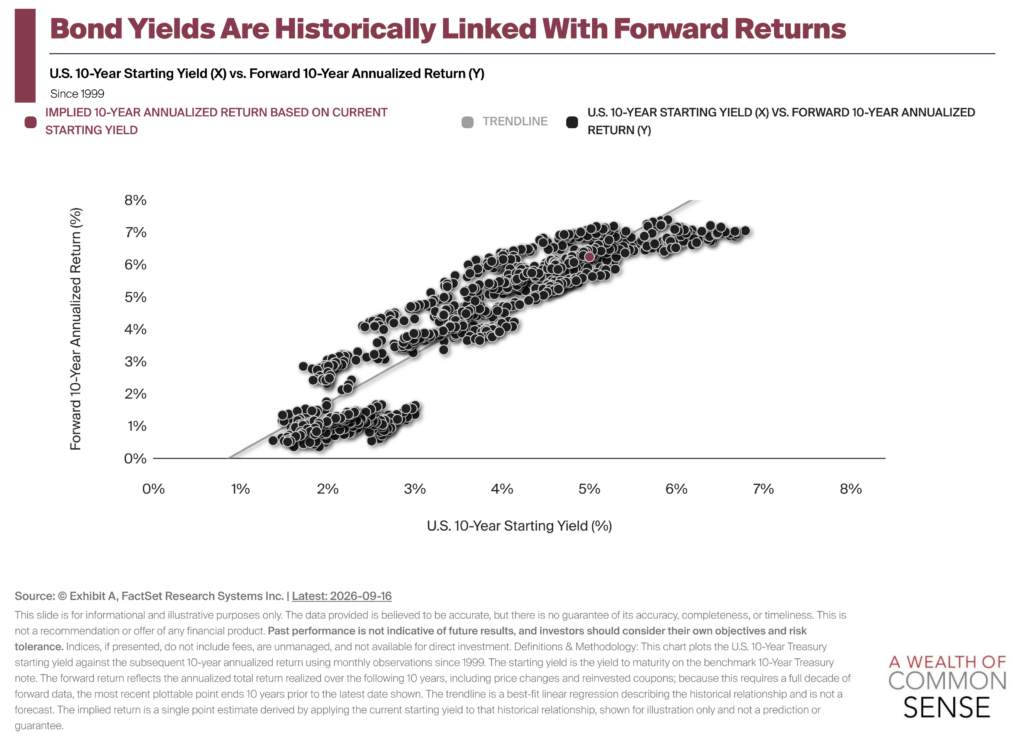
Unlike the equity market, where future performance is heavily influenced by speculative valuations and fluctuating investor sentiment, the bond market is governed by a more predictable mathematical framework. When an investor purchases a bond and holds it to maturity, the starting yield acts as a powerful anchor for expected total returns.
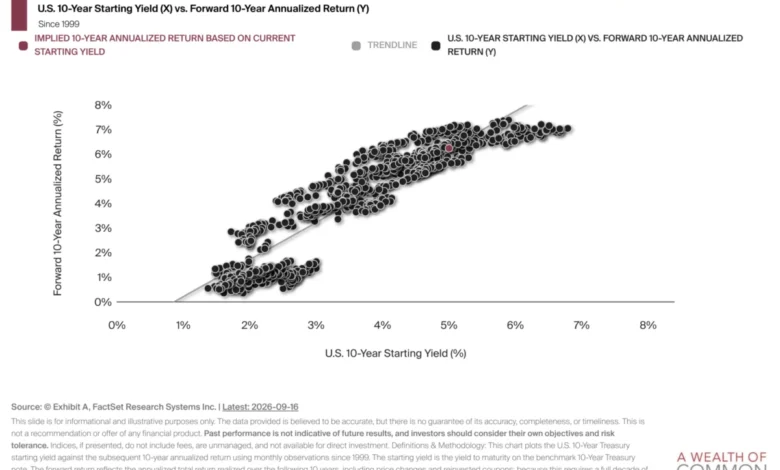
While stocks rely on earnings growth, dividend yields, and the unpredictable "emotional" component of price-to-earnings expansion, bonds offer a more transparent path to returns. Data from firms such as Exhibit A consistently demonstrate a strong correlation between the starting yield of a 10-year Treasury and its subsequent 10-year annualized return. When yields are high at the time of purchase, the probability of achieving a positive, stable return over the life of the bond increases significantly.
However, the path is rarely linear. Short-term volatility remains a constant risk, particularly for bonds with long durations. If inflation expectations remain elevated and the Federal Reserve is forced to maintain a restrictive policy stance, yields could potentially climb further, putting additional downward pressure on the market price of older bonds. Conversely, if economic cooling leads to rate cuts, those same bonds may benefit from price appreciation.
Understanding the "Guarantee" Misconception
A common point of confusion among retail investors is the distinction between a bond’s yield and a guaranteed annual return. While a yield to maturity of 5.3% provides a strong indicator of expected performance, it is not a fixed bank deposit. Investors must account for three primary factors:
- Duration Risk: The sensitivity of a bond’s price to changes in interest rates. If rates rise, the price of the bond falls, which can temporarily offset the income earned from the yield.
- Reinvestment Risk: The challenge of what to do with coupon payments as they are received. In a falling rate environment, investors may be forced to reinvest those payments at lower yields.
- Inflation Risk: The erosion of purchasing power. If inflation exceeds the bond’s yield, the real, inflation-adjusted return becomes negative.
Current data suggests that while the "Agg" has stabilized, it remains sensitive to macroeconomic data points, including monthly Consumer Price Index (CPI) releases and employment figures. Analysts at major investment firms have noted that while the initial yield is significantly more attractive than it was in 2020, the volatility inherent in the current cycle is a necessary trade-off for the higher income now available to fixed-income portfolios.
Broader Economic Implications and Expert Commentary
The current yield environment has broader implications for asset allocation strategies. For years, the lack of yield in bonds forced investors into riskier assets—such as high-dividend equities or private credit—in a desperate search for income. The return of a 5% yield on high-quality government and corporate debt allows for a more traditional "60/40" portfolio construction, where bonds can once again serve as a meaningful ballast against equity market volatility.
In a recent industry forum hosted at the Future Proof conference, experts emphasized that the primary benefit of the current yield environment is the restoration of the "income" component of total return. By providing a reliable coupon, high-quality bonds are currently offering a defensive hedge that was functionally nonexistent for most of the early 2020s. When considering the 5-to-7-year investment horizon, intermediate-term bonds are now viewed as a viable foundation for capital preservation and steady growth, provided investors can withstand the short-term price fluctuations inherent in a dynamic interest rate environment.
Summary of Market Dynamics
As of the third quarter of 2026, the bond market has fundamentally shifted from a speculative environment to one rooted in baseline income generation. While the era of record-low interest rates appears to have concluded, the new reality brings its own set of challenges. The "worst bond bear market in history" has effectively cleared the path for higher starting yields, offering investors a more favorable risk-to-reward ratio than they have seen in decades.
Ultimately, the lesson for investors is that while interest rate movements will continue to influence bond prices in the short term, the long-term compounding of a 5% yield provides a robust mechanism for wealth accumulation. Whether these yields will persist depends largely on the trajectory of inflation and the Federal Reserve’s response to economic growth, but for now, the mathematical case for holding fixed income has returned to the forefront of prudent financial planning. Investors are encouraged to look past the day-to-day volatility of the "Agg" and focus on the yield-to-maturity as the primary driver of their long-term objectives.