B.AI Accelerates Global AI Infrastructure with Trillion-Token Throughput and Integrated Agent Economy Settlement

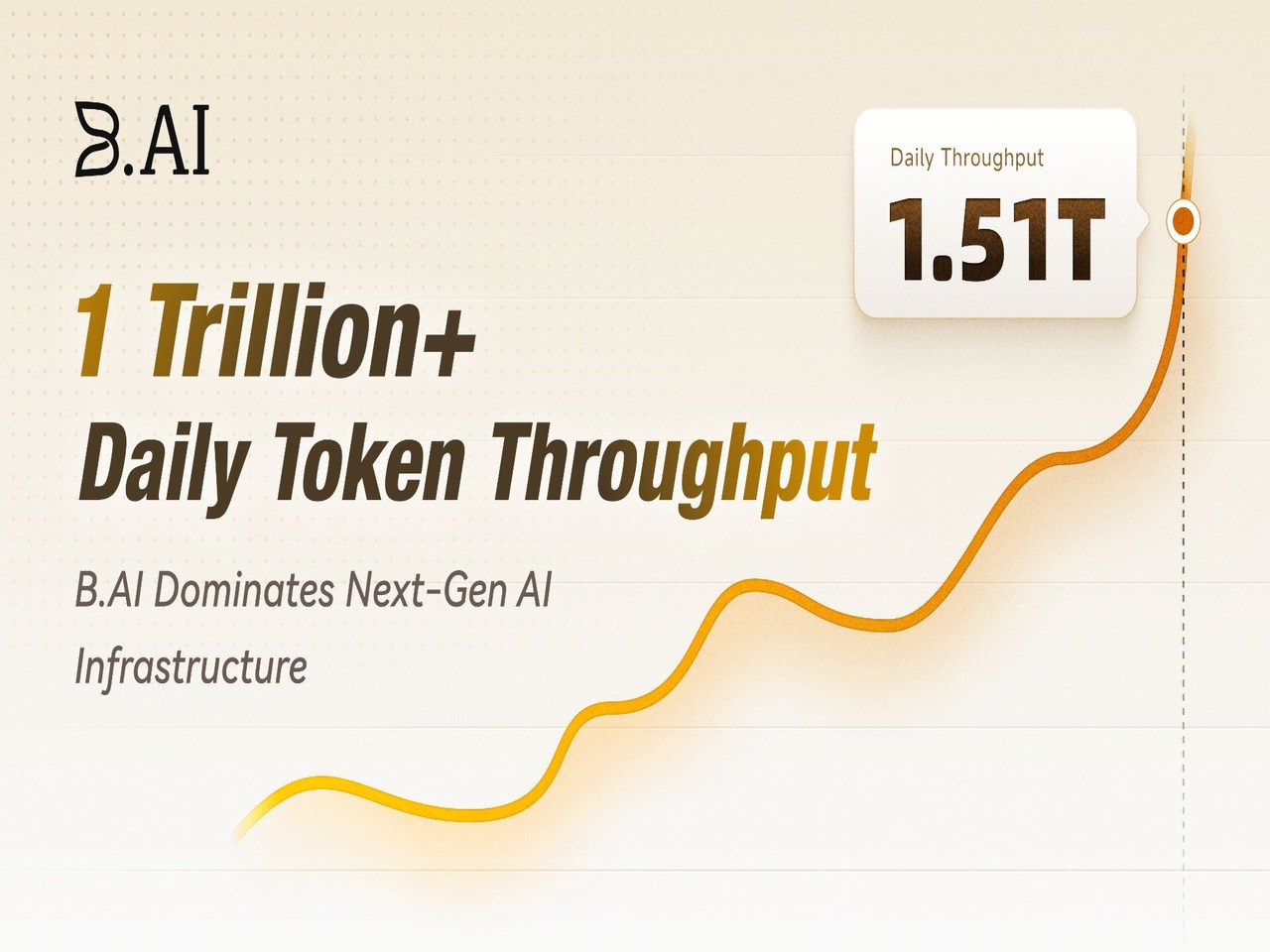
The rapid evolution of artificial intelligence has moved beyond simple model training and into an era of high-frequency inference, autonomous agents, and cross-border resource distribution. Standing at the nexus of this transformation, B.AI has emerged as a significant player in the infrastructure space, positioning itself between foundational model developers and the burgeoning agent economy. In a record-setting development, the platform has surpassed a daily throughput of 1.51 trillion tokens—a milestone achieved in just five months that underscores a 71,500-fold growth trajectory since its inception.
A Chronology of Rapid Expansion
The trajectory of B.AI reflects the compressed innovation cycles characteristic of the modern AI industry. While early aggregators like OpenRouter required roughly two years to establish their market footing, B.AI’s architecture—co-incubated by TRON and YZi Labs—has achieved similar, if not superior, operational scale within a 100-day window.
The timeline of B.AI’s ascent is marked by three distinct phases:
- The Infrastructure Launch: Initially focused on solving the fragmented nature of LLM API access, the platform established a gateway for global developers to tap into high-performance, cost-effective models.
- The Strategic Integration Phase: By aligning with major Chinese LLM providers such as DeepSeek, Qwen, GLM, and MiniMax, B.AI bridged the gap between highly efficient localized model development and the international demand for lower-cost inference.
- The Agentic Maturity Phase: Currently, the platform is shifting its focus toward the "agent economy," implementing native resource scheduling, execution capabilities, and financial settlement layers to facilitate autonomous machine-to-machine commerce.
Leveraging the Cost-Performance Advantage of Chinese LLMs
A critical driver of B.AI’s rapid throughput growth is its strategic inclusion of Chinese large language models (LLMs). Over the past 12 months, the global AI landscape has seen a shift in cost-efficiency benchmarks. Developers, particularly those building high-volume applications, are increasingly prioritizing models that provide performance parity with industry giants like GPT-4 or Claude 3.5, but at a fraction of the per-token cost.
B.AI has acted as a distribution hub for models such as DeepSeek-V4-Flash, Qwen3.8-Flash, and GLM-5.3 Flash. By integrating these models into a unified API framework, the platform allows developers to swap between models seamlessly based on cost-performance metrics. The data suggests that this strategy has been highly successful: the platform offers tiered API pricing with discounts of up to 90% compared to standard industry rates, a move that has directly incentivized the migration of high-traffic enterprise workflows to B.AI’s infrastructure.
Furthermore, the partnership with YZi Labs has provided a robust distribution engine. By onboarding early-stage developer communities and providing the technical tooling necessary for deployment, the platform has created a virtuous cycle of adoption where increased usage drives further ecosystem development.
The Financial Architecture of the Agent Economy
The transition from a "distribution-only" model to a "closed-loop infrastructure" represents the most significant evolution in B.AI’s strategy. As the industry moves toward a future dominated by AI agents—software entities that perform tasks, negotiate, and execute actions on behalf of users—the requirement for a reliable, high-speed, and global settlement layer has become apparent.
B.AI has addressed this by embedding financial settlement directly into its infrastructure. This dual-track payment system serves two primary markets:
- Traditional Web2 Integration: The platform maintains support for conventional payment gateways, including WeChat Pay, Alipay, UnionPay, and Visa. This ensures that enterprise developers can integrate B.AI into existing workflows without navigating the complexities of decentralized finance.
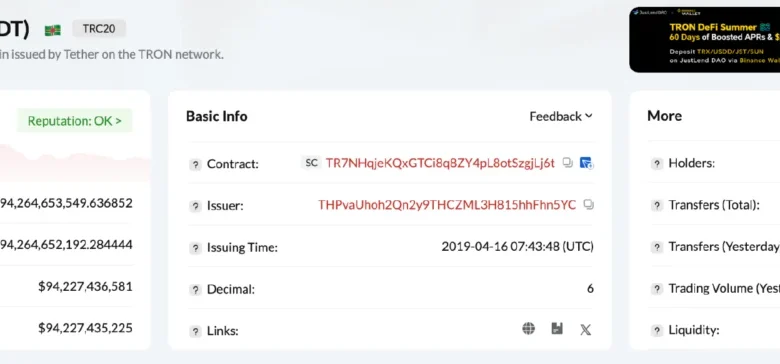
- Web3 Settlement: By leveraging the TRON network, B.AI provides a transparent, high-speed, and low-friction settlement layer for automated micro-transactions. The choice of TRON is particularly significant given its status as a primary network for stablecoin (USDT) transfers, which currently boast a circulating supply exceeding 94.2 billion units.
This architecture enables agents to operate within a "financial loop." When an agent requests a service or compute resource from another agent, the transaction is metered, routed, and settled automatically on-chain. This reduces counterparty risk and allows for the automation of complex, cross-border commercial tasks that were previously inhibited by the latency and fees of traditional banking systems.

Technical Foundations: Scheduling, Execution, and Protocol
To support the scale of the agent economy, B.AI has deployed a full-stack runtime environment. This is divided into three functional layers:
1. The Scheduling Layer
Compute scheduling is the backbone of efficient inference. B.AI’s tiered API system allows for granular control over compute procurement. By allowing developers to match specific task complexity with the appropriate compute tier, the platform optimizes resource utilization and reduces waste—an essential factor for large-scale operations.
2. The Execution Layer
The execution layer provides agents with the operational tools needed to function in the real world. Through the integration of the BAIclaw and BAI code assistants, along with "Skills" toolchains, the platform grants agents the ability to autonomously acquire data, execute code, and perform multi-step reasoning. This effectively turns an LLM from a static chatbot into an active "digital worker."
3. The Protocol Layer
Perhaps the most ambitious aspect of B.AI’s roadmap is its commitment to standardized protocols for Agent-to-Agent (A2A) commerce. By natively integrating the x402 payment protocol and the 8004 identity authentication protocol, B.AI is attempting to set the industry standard for how agents prove their identity and handle micropayments. Without such standards, the agent economy would remain a collection of siloed applications; with them, B.AI envisions an interoperable ecosystem of autonomous agents.
Broader Implications for AI Infrastructure
The rapid surge to 1.51 trillion daily tokens is not merely a quantitative achievement; it is a signal of a broader structural shift in the AI market. The traditional model of centralized, monolithic AI services is being challenged by a modular, decentralized, and agent-centric architecture.

Industry analysts observe that as the "AI-as-a-Service" market matures, the competitive advantage will move away from model creation alone and toward the infrastructure that facilitates the usage and monetization of those models. By focusing on the "plumbing" of the agent economy—the payment, identity, and scheduling protocols—B.AI is positioning itself as a foundational utility.
The implications for the broader market are twofold:
- Increased Democratization: Small and medium-sized enterprises (SMEs) can now access top-tier model performance at costs previously reserved for large-scale tech conglomerates.
- Autonomous Market Growth: The integration of stablecoin-based settlement allows for the emergence of autonomous commercial markets where agents can operate 24/7 without human intervention, effectively creating a new class of digital economic activity.
Conclusion and Future Outlook
B.AI’s current momentum suggests that the next phase of the AI boom will be defined by integration and utility. While the platform has successfully built a high-throughput distribution hub for LLMs, its long-term viability hinges on the successful adoption of its agent-based protocols. As the company continues to refine its runtime environment and expand its partnership network, the focus will likely remain on reducing friction for developers and enabling the next generation of autonomous applications.
With its base in Singapore and a clear technical focus on bridging Web2 and Web3 infrastructures, B.AI enters a period of critical scaling. The industry will be watching to see if this infrastructure can maintain its performance as it transitions from handling simple API requests to managing the complex, high-frequency, multi-agent collaborations that define the next era of machine intelligence.