Eli Lilly’s Dominance in Pharmaceuticals: A Deep Dive into Growth, Innovation, and Future Prospects

Eli Lilly and Company, a titan in the global pharmaceutical landscape, stands as a testament to sustained innovation and market leadership, boasting a formidable market capitalization of approximately $1.1 trillion. The company’s expansive portfolio spans critical therapeutic areas including diabetes, obesity, cancer, immunology, and neuroscience. However, it is its groundbreaking treatments for diabetes and weight loss, Mounjaro and Zepbound, that have propelled Lilly to the forefront of the industry, solidifying their position as the primary growth engines. These blockbuster drugs are complemented by a robust suite of other successful products, such as Verzenio for cancer, Jardiance for diabetes, Taltz for immunology, and the Alzheimer’s treatment Kisunla, all contributing to the company’s sustained financial success.
A Pipeline Poised for Future Breakthroughs
The company’s strategic vision is keenly focused on pioneering next-generation obesity treatments, with retatrutide at the vanguard of this ambitious endeavor. Simultaneously, Lilly is actively exploring the expansion of tirzepatide’s therapeutic applications, investigating its potential to address a wider array of metabolic and cardiovascular conditions. Beyond weight management, Lilly continues its significant investment in the development of novel treatments for Alzheimer’s disease, a notoriously challenging condition, alongside advancements in oncology and inflammatory disorders. This multi-faceted approach to research and development underscores Lilly’s commitment to addressing some of the most pressing unmet medical needs of our time.
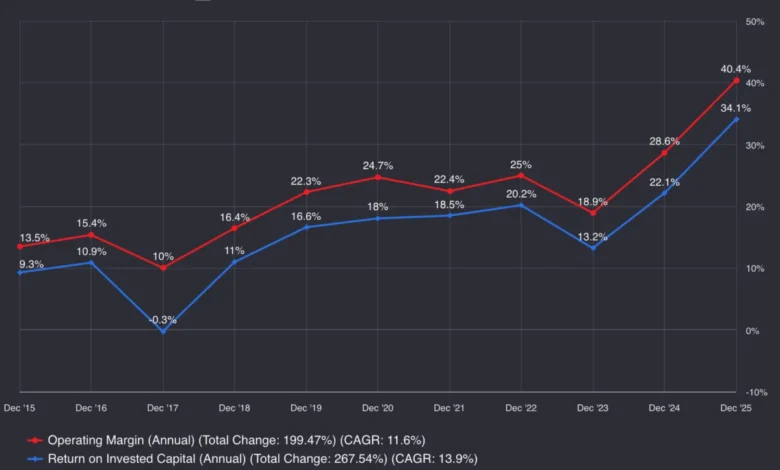
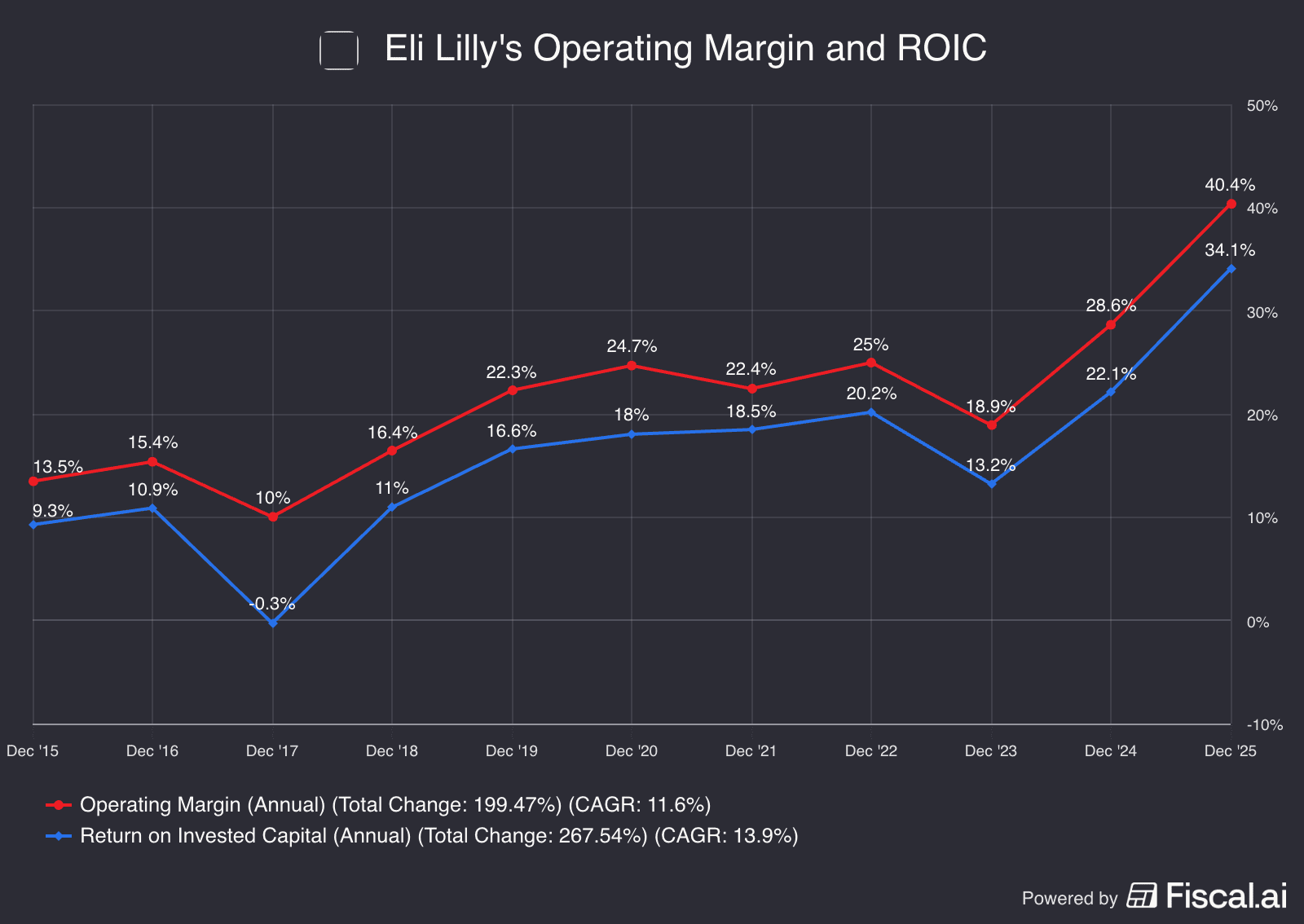
The financial trajectory of Eli Lilly has been exceptionally strong in recent years. Revenue has witnessed a consistent upward trend for eight consecutive years, with projections indicating this growth will persist. While profits have exhibited more variability, characterized by sharp increases followed by periods of stabilization or decline, the overall trend remains positive. A deeper examination of the company’s financial health, as depicted in provided charts, reveals a strengthening margin profile and an improved return on invested capital (ROIC) over the past few years. This indicates that Eli Lilly is not only growing its top line but is also becoming increasingly efficient in leveraging its capital to generate profits.
Forecasting Future Growth: Analyst Expectations and Market Sentiment
The outlook for Eli Lilly’s financial performance is overwhelmingly optimistic, as reflected in upward revisions of earnings estimates. Over the past three and six months, earnings projections have been revised higher by 4.3% and 7.1%, respectively. This positive sentiment among analysts is rooted in the company’s consistent revenue and earnings growth. According to data compiled by Bloomberg, analysts anticipate this upward momentum to continue. While specific figures from the original text are missing, the prevailing sentiment suggests robust future earnings.
Analysts have established a consensus price target of approximately $1345 for LLY stock. This target implies a potential upside of around 14% from current trading levels, signaling a degree of confidence in the stock’s future appreciation. This target is derived from a comprehensive analysis of the company’s performance, its product pipeline, and the broader market dynamics within the pharmaceutical sector.
Valuation Dynamics: A Balanced Perspective
Eli Lilly’s current valuation presents a compelling narrative, balancing past enthusiasm with present fundamentals. The company’s forward earnings multiple, while elevated, remains below the peaks achieved during the intense "GLP-1 mania" period, when Lilly and its closest competitor, Novo Nordisk, experienced unprecedented surges. Despite this tempering of valuation multiples from their zenith, Lilly’s stock has established a trading range, finding support around 23 to 25 times forward earnings over the past year – an area that previously acted as a ceiling. The upper limits of its valuation remain less defined, with shares previously stalling near 35 times forward earnings earlier in the year.
This current valuation landscape is underpinned by significant fundamental improvements. Lilly now boasts stronger profit margins, higher returns on invested capital, and consistent revenue and earnings growth. The recent attainment of record stock prices, even as the valuation multiple approached its 2026 low, highlights the remarkable growth in earnings – the critical "E" in the Price-to-Earnings (P/E) ratio. This dynamic suggests that the stock’s appreciation is largely driven by the company’s expanding profitability rather than solely by an inflated valuation multiple.
Navigating the Risks: Potential Headwinds for Eli Lilly
Despite its impressive growth trajectory, Eli Lilly faces several inherent risks that warrant careful consideration. A primary concern is the company’s increasing dependence on its blockbuster drugs, Mounjaro and Zepbound. The substantial contribution of these medications to Lilly’s overall growth makes the company’s performance particularly susceptible to competitive pressures, manufacturing capacity constraints, unforeseen safety concerns, or a decline in demand. The emergence of rival treatments, including new entrants into the obesity drug market, could exert pressure on Lilly’s market share and pricing power.
Furthermore, accessibility remains a significant hurdle. A considerable number of insurers and employers continue to impose limitations on coverage for weight-loss medications, impacting patient access and, consequently, sales volumes. Beyond these market-specific challenges, Lilly is also exposed to the standard array of risks inherent in the pharmaceutical industry. These include the possibility of clinical trial failures, delays in regulatory approvals, patent disputes that could erode market exclusivity, and ongoing pricing pressures from governments and payers worldwide. Given the stock’s current premium valuation, even minor setbacks could potentially trigger disproportionately significant negative reactions in its share price.
The Bottom Line: A Powerful Growth Story with Calculated Risks
Eli Lilly has successfully carved out one of the most compelling growth narratives within the pharmaceutical sector. This success is propelled by a potent combination of rapid revenue expansion, steadily improving profitability, and a comprehensive and innovative product pipeline. The company’s robust earnings growth has played a crucial role in moderating its valuation multiples, preventing them from reaching unsustainable levels despite the stock’s recent ascent to record highs.
For investors bullish on Eli Lilly, the company’s established market leadership, improving fundamental financial metrics, and the extensive runway for continued growth are compelling factors. Conversely, bearish perspectives may highlight the intensifying competitive landscape, the elevated market expectations already priced into the stock, and the inherent risks associated with relying heavily on a few key growth drivers. The company’s ability to navigate these challenges while continuing to innovate will be critical in sustaining its impressive performance in the years to come.
Disclaimer:
Please note that due to market volatility, some of the prices and scenarios discussed may have already been impacted by market events.