Build Alpha Unveils Monumental Software Update Integrating LLM Orchestration and Advanced Quantitative Research Pipelines

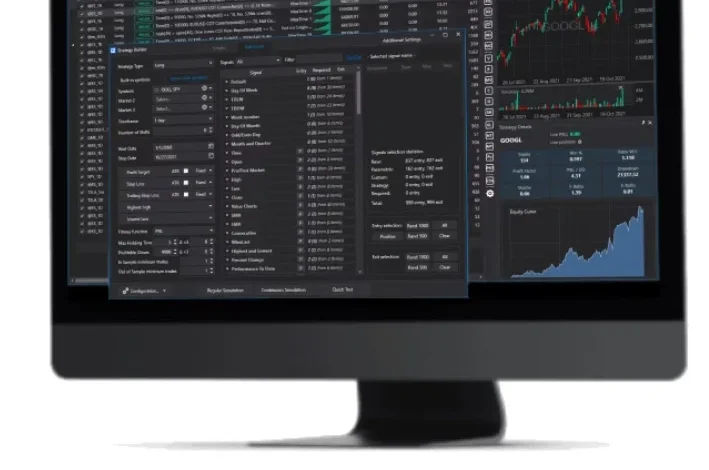
The quantitative trading software market has experienced a significant technological shift as Build Alpha released one of the most comprehensive platform updates in its operating history. Designed to bridge the gap between boutique hedge fund infrastructure and independent retail trading capabilities, the new software version introduces four fundamental architectural developments: LLM Orchestration, Sequence Workflows, Portfolio Search, and an upgraded Portfolio Suggest v2 framework.
This release moves the platform away from traditional, isolated strategy generation and toward a fully integrated, multi-round quantitative research pipeline. By combining artificial intelligence-driven automated search optimization with multi-strategy portfolio level evaluation, Build Alpha provides algorithmic traders with tools previously reserved for institutional asset management firms maintaining proprietary engineering teams.
The Evolution of Algorithmic Research Architecture
For decades, systematic strategy development followed a linear, highly manual trajectory. Quantitative researchers would formulate a hypothesis, write code, run backtests across historical market data, evaluate performance metrics manually, tweak hyperparameters, and repeat the loop. This process created distinct operational bottlenecks. Human researchers frequently suffered from cognitive fatigue, confirmation bias, and the inability to comprehensively explore millions of potential hyperparameter configurations across varying market regimes.
The latest Build Alpha release addresses these historical friction points by automating the meta-level reasoning process. Rather than forcing human operators to continuously monitor genetic algorithms, the platform allows leading artificial intelligence models to interact directly with the testing environment.
LLM Orchestration and Meta-Level Machine Learning
The integration of LLM Orchestration represents a paradigm shift in how automated trading systems optimize their parameters. Build Alpha now connects natively with major artificial intelligence providers, including OpenAI’s ChatGPT, Anthropic’s Claude, Google’s Gemini, xAI’s Grok, DeepSeek, Mistral, and Perplexity. Furthermore, any OpenAI-compatible large language model routed through OpenRouter can be utilized.
Operating as an automated supervisor, the chosen language model does not handle raw, microsecond-level tick data. Instead, it reviews summarized telemetry from Build Alpha’s genetic algorithm between optimization rounds. When the system detects performance plateaus—situations where the genetic search stops discovering statistically robust parameters—the LLM intervenes. It dynamically adjusts hyperparameter constraints, modifies fitness functions, alters robustness gates, and can even write entirely new custom signal definitions mid-session.
This capability introduces persistent memory across research sessions. As a trader utilizes the software over days, weeks, and months, the orchestrator retains historical learning patterns specific to the user’s preferred asset classes, risk parameters, and market hypotheses. For risk-averse practitioners, the feature remains completely optional; users can disable AutoTune within the additional settings menu to rely exclusively on the built-in deterministic genetic algorithm.
Automating Multi-Round Pipelines with Sequence Workflows
Complementing the artificial intelligence integration is the introduction of Sequence Workflows. Historically, validating a quantitative strategy required executing multiple discrete testing phases: a broad historical sweep across ten years of data, a subsequent refined search over the past three volatile years, a rigorous walk-forward optimization phase, and finally, a Monte Carlo permutation filter.
Sequence Workflows consolidate this entire sequence into a single, automated execution block. Users configure multi-round pipelines where each stage contains specific date ranges, simple filters—such as profit-and-loss thresholds, maximum drawdown limits, and minimum trade counts—and advanced robustness filters.
Crucially, advancement criteria can be composed dynamically. A researcher might configure a pipeline to advance to the next testing tier once twenty qualifying strategies are isolated, or after a six-hour compute window elapses, whichever comes first. If fewer than five strategies meet the strict performance gates by the conclusion of the timeframe, the sequence terminates automatically. This orchestration saves researchers significant manual monitoring time, ensuring they wake up either with a curated list of institutional-grade strategies or a clear notification that the market conditions tested yielded no viable edges.
Portfolio-Level Optimization: Portfolio Search versus Portfolio Suggest v2
A persistent weakness among independent systematic traders is the tendency to evaluate strategies in isolation. Historically, developers would build individual models, select the equity curves with the highest standalone Sharpe ratios, and combine them into a portfolio, hoping they would function cohesively. Institutional desks, by contrast, focus heavily on marginal contribution, asset correlation, and aggregate portfolio behavior.
Build Alpha’s update introduces two distinct solutions to this problem: Portfolio Search and Portfolio Suggest v2.
Portfolio Search: Building for the Aggregate Basket
Portfolio Search alters the objective function of the genetic algorithm. Instead of seeking strategies that look pristine on a standalone basis, the engine searches specifically for trading rules that complement an existing portfolio basket.
During testing demonstrations, candidates with seemingly unglamorous standalone equity curves—such as specific agricultural futures or volatility index models—frequently outperform visually attractive individual strategies. Because these "ugly" models maintain low or negative correlation with the existing portfolio, their inclusion flattens aggregate equity drawdown curves and enhances the collective Sharpe ratio. The system evaluates strategies entirely on their marginal contribution to the holistic book.
Portfolio Suggest v2: Filtering and Sizing Pre-Deployment
While Portfolio Search grows a portfolio by discovering new strategies, Portfolio Suggest v2 operates on existing pools of saved models. The upgraded v2 interface introduces a comprehensive filter panel allowing users to pre-define correlation limits and performance metrics before the software surfaces viable combinations.
Additionally, Portfolio Suggest v2 incorporates a specialized one-position-per-symbol toggle. This compliance feature ensures that constituent strategies within a basket never simultaneously hold competing positions in the same underlying asset—a vital requirement for retail traders operating under strict proprietary trading firm rules. The updated results window also features dedicated weight and allocation columns, allowing users to expand basket rows to inspect per-strategy sizing parameters instantly.
Advanced Feature Engineering and Workflow Enhancements
To support these heavy computational pipelines, Build Alpha has expanded its analytical capabilities through three new event-aware signals:
- EventPriceCustom: Allows systems to store arbitrary price or indicator values whenever a specific logical condition is met, enabling cross-referencing hours or days later.
- EventVWAP: Enables traders to anchor Volume-Weighted Average Price calculations to custom historical events, such as a volatility regime shift or an indicator crossover, rather than relying solely on standard session opens.
- CountSinceEvent: Quantifies the frequency of one market event relative to another, forming the mathematical foundation for advanced intraday mean-reversion logic.
Furthermore, the platform introduced a preview version of Prompt to Signal, enabling users to generate validated trading rules via natural language descriptions. These prompts instantly compile into exportable code compatible with major institutional execution environments, including NinjaTrader, TradeStation, MultiCharts, MetaTrader 4 and 5, TradingView Pine Script, Python, and ProRealCode.
Workflow improvements also include "Re-run Active Strategies" for rapid walk-forward validation, post-simulation filtering to tighten performance gates retroactively, custom CFD instrument support, and enhanced generation controls such as "Require One From Group" and mandatory exit rules.
Broader Implications for the Quantitative Industry
The release of these features underscores a broader demographic and technological democratization within the financial sector. Advanced machine learning meta-optimization and portfolio-level genetic searching were once exclusive domains of high-frequency trading shops and quantitative hedge funds maintaining multi-million-dollar internal software architectures.
By packaging these capabilities into a desktop application accessible to independent researchers, Build Alpha continues to narrow the operational gap between retail participants and institutional trading desks. As automated pipelines become the industry standard, the differentiator for systematic traders will increasingly rely less on raw coding capability and more on creative hypothesis generation, risk management framework design, and rigorous adherence to out-of-sample validation principles.
Build Alpha has confirmed that all updates are immediately available to current license holders, with upcoming software roadmap milestones pointing toward the introduction of a native live execution layer featuring real-time position tracking and streaming Profit and Loss telemetry.