But opaque foreign financial centers pile on Treasuries, often held by US companies and hedge funds.


The global landscape for United States Treasury securities is undergoing a profound structural shift. According to the latest Treasury International Capital (TIC) data, the allure of U.S. government debt for foreign central banks and official government institutions has diminished significantly. As of July, these "foreign official" holdings stood at $3.77 trillion at market value—a figure remarkably similar to levels observed in 2012. However, this stagnation masks a deeper trend: while the absolute value has remained static, the underlying economic environment has transformed entirely.
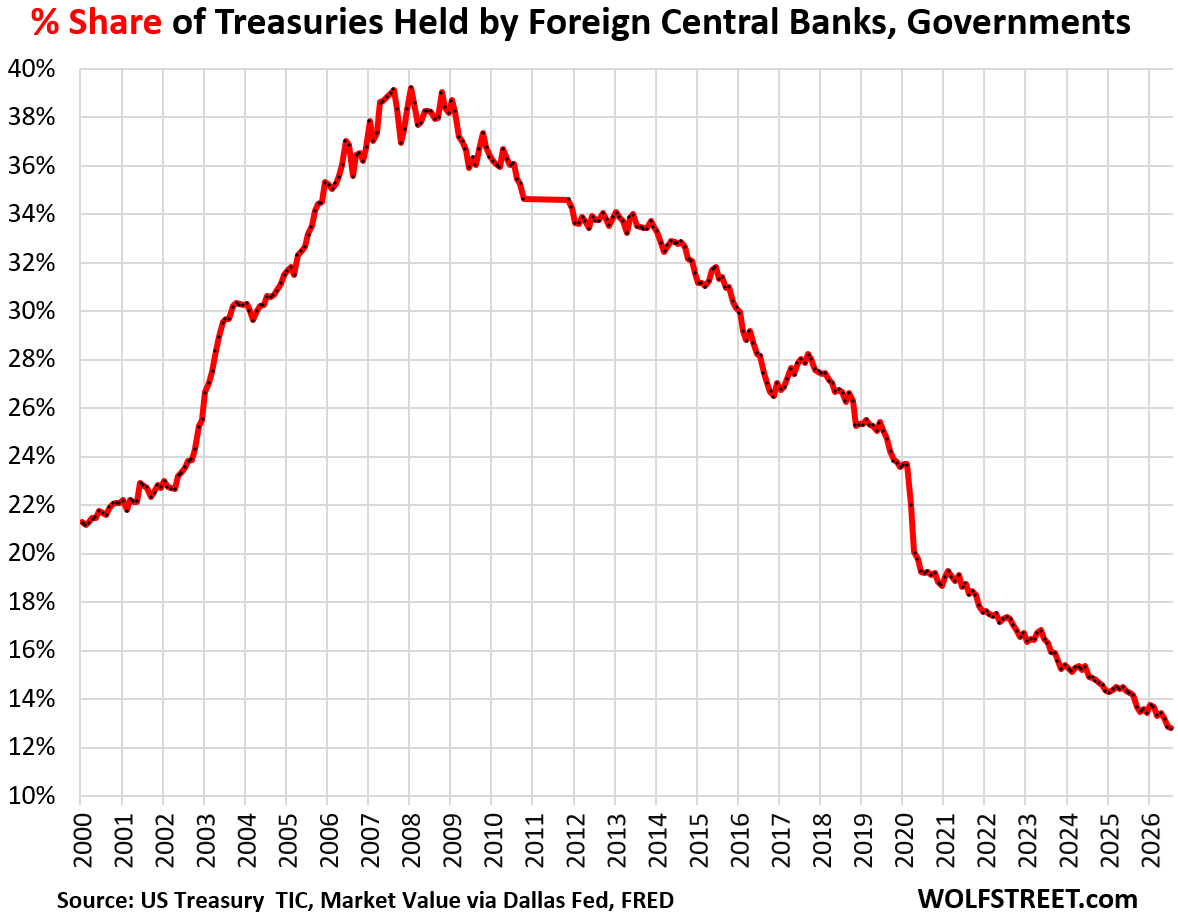
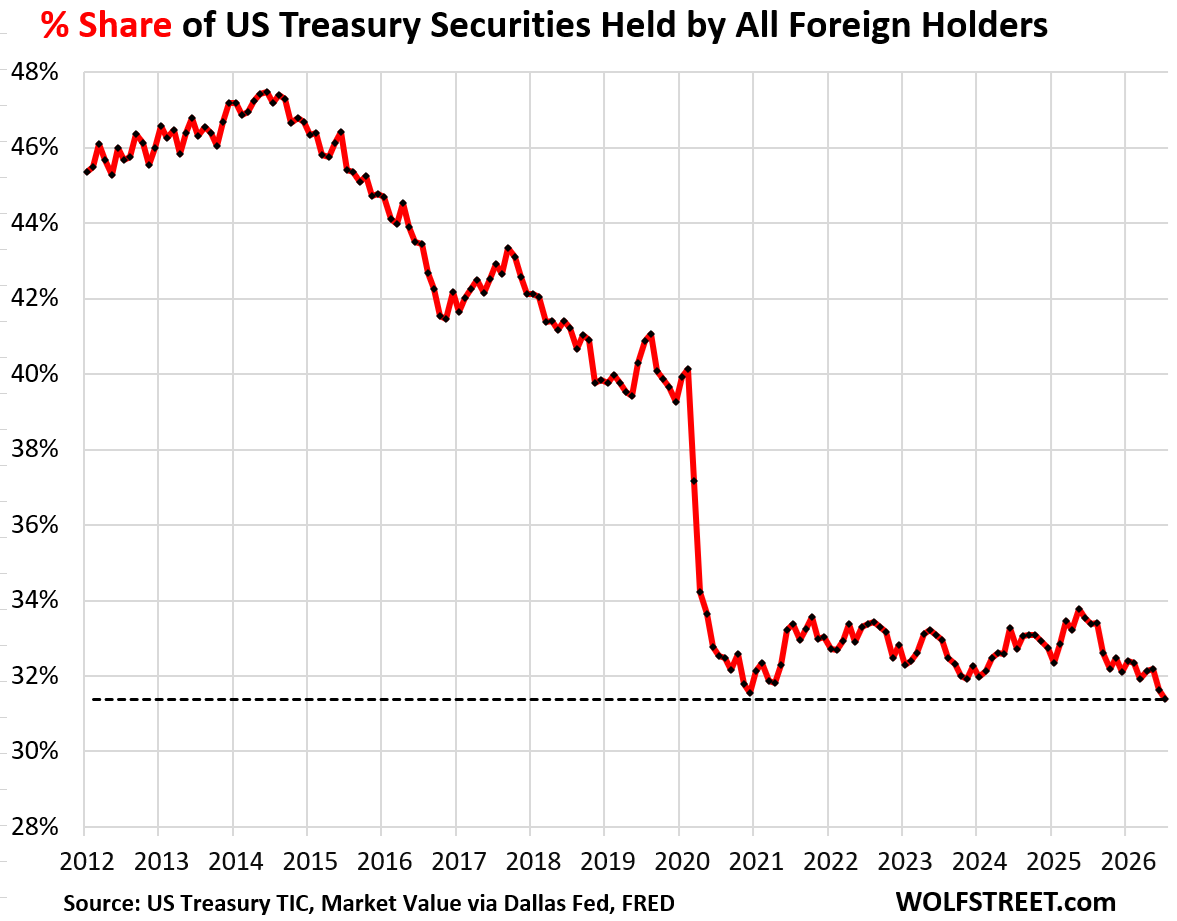
Since 2012, the total amount of marketable Treasury securities outstanding has nearly tripled. Furthermore, the cumulative impact of inflation has eroded the real value of these holdings by roughly 48%. Perhaps most striking is the declining share of U.S. debt held by foreign official entities. In 2012, these institutions accounted for 34% of all marketable Treasury securities, a figure that had climbed as high as 38% during the height of the 2007–2009 financial crisis. By July of this year, that share had collapsed to a mere 12.8%, representing the lowest level of official foreign penetration in the U.S. debt market since 1993.
The Erosion of Official Foreign Demand
The shift away from U.S. Treasuries among central banks and sovereign wealth funds is not merely a matter of shifting asset allocation; it reflects a broader move toward geopolitical diversification and, in some cases, the necessity of currency defense. The total volume of foreign holdings, which encompasses both official and private entities, saw a decline of $50 billion in July alone, settling at $9.25 trillion. While this total had trended upward for years, reaching a peak in February, the momentum has since faltered.
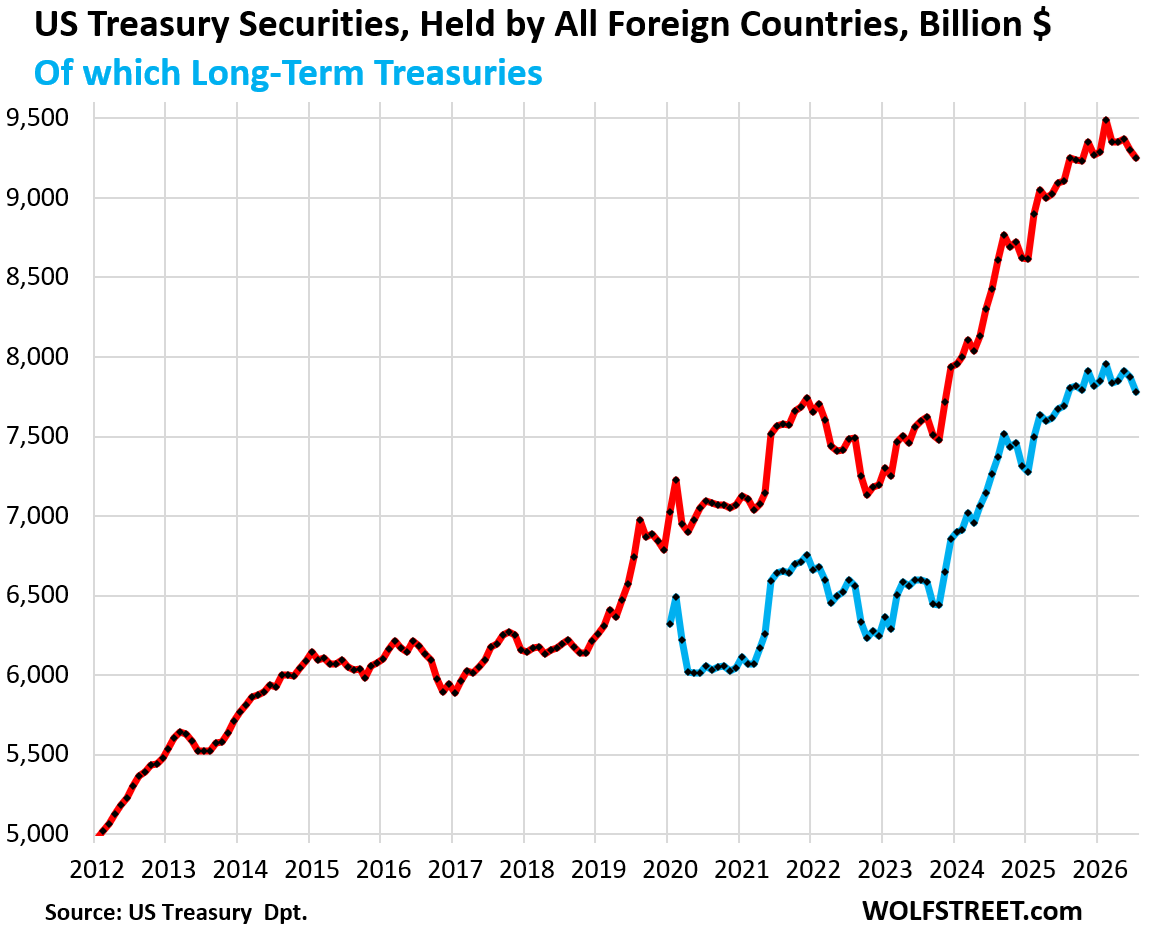
Long-term Treasury notes and bonds continue to dominate foreign portfolios, accounting for approximately $7.78 trillion, or 84% of total foreign holdings. The remaining balance consists of short-term Treasury bills, which offer liquidity but lack the long-term yield profile historically sought by foreign governments.
The Role of Financial Opaque Centers and Private Capital
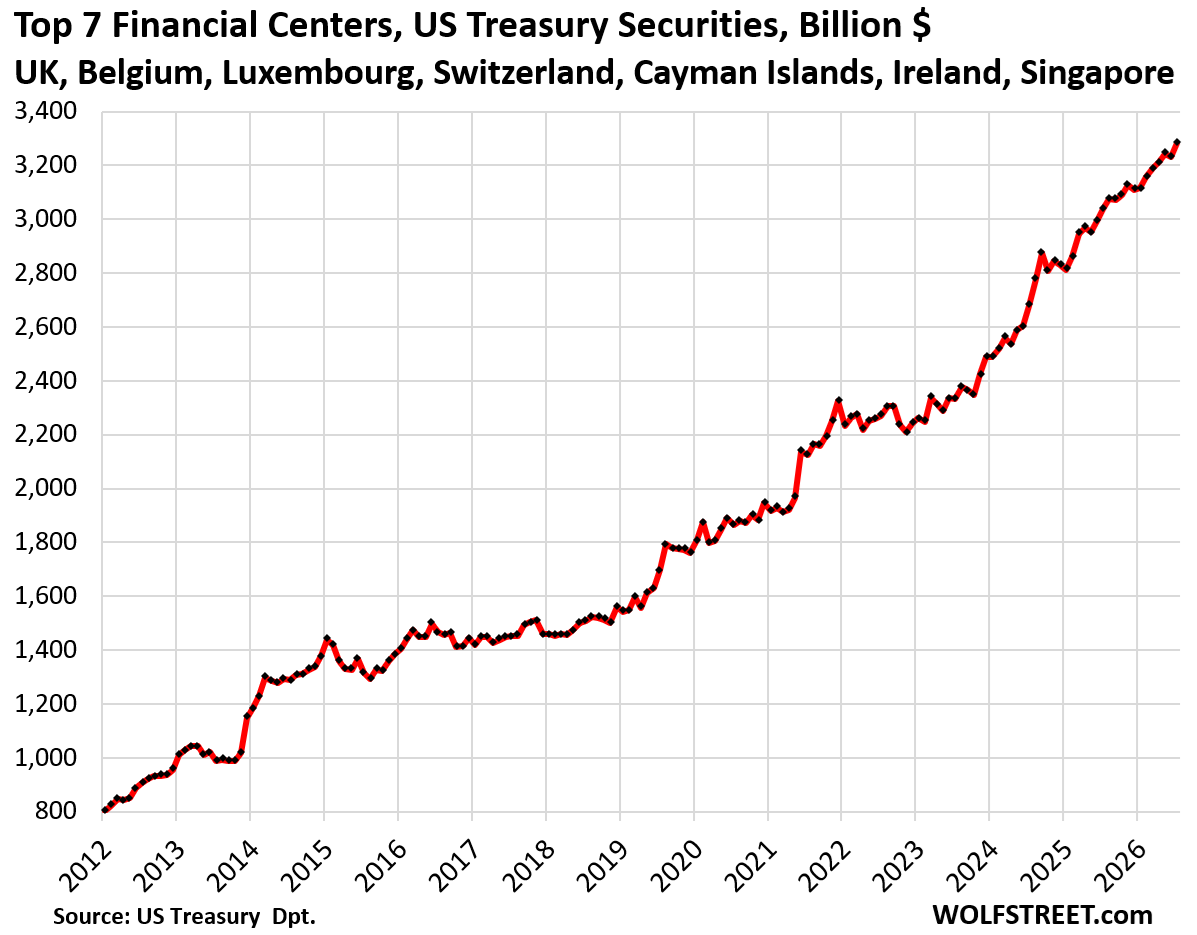
A critical distinction in modern financial reporting is the difference between "official" foreign holdings and "private" foreign holdings. The latter is often misinterpreted as representing foreign investment in the traditional sense. In reality, a significant portion of this capital originates from U.S.-domiciled hedge funds and corporations that utilize foreign financial centers—such as the Cayman Islands—as their legal base of operations.
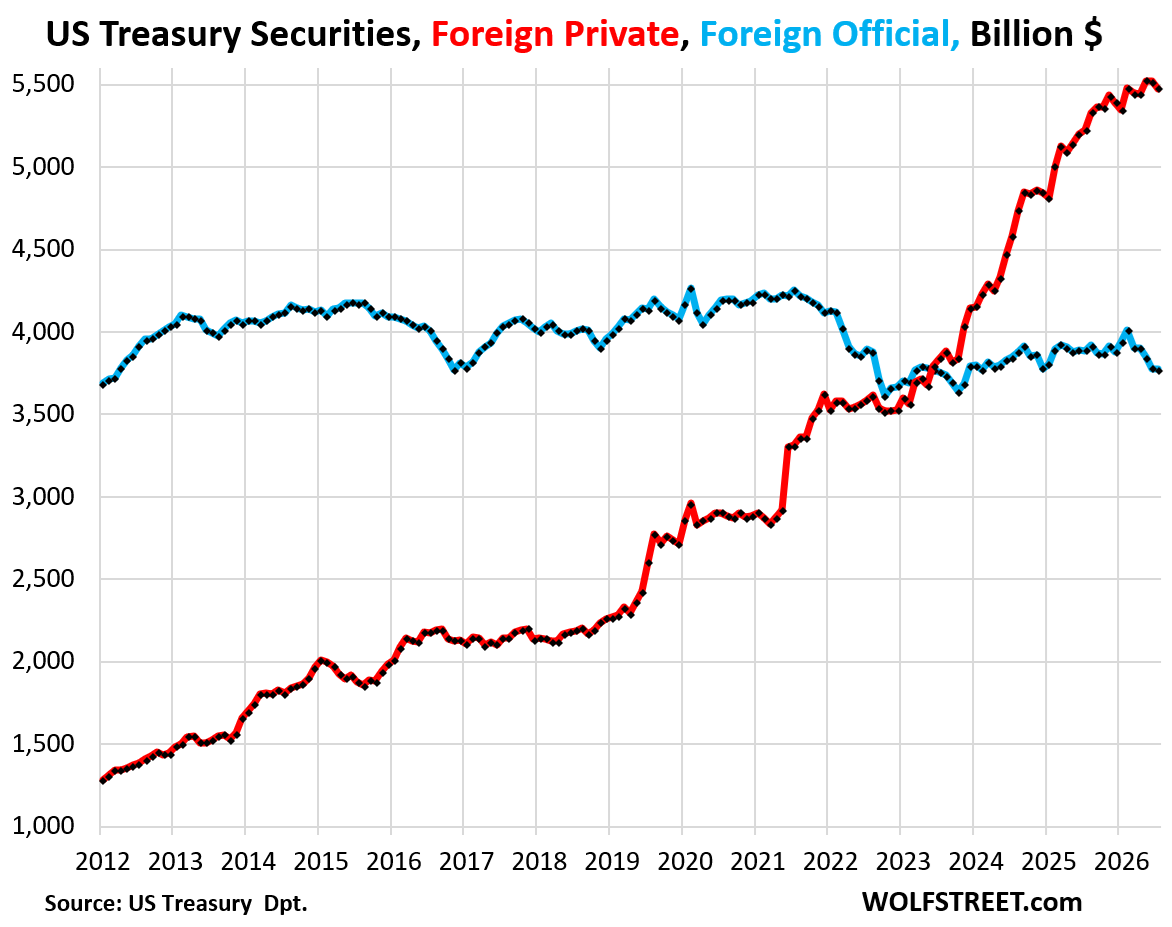
These financial centers have become hubs for the "Treasury basis trade." In this strategy, funds leverage positions by purchasing U.S. Treasuries while simultaneously selling Treasury futures to capture the spread between the two. Estimates suggest this sector now controls close to $2 trillion in U.S. debt. This "hot money" creates a precarious layer of demand; as seen during the market volatility of March 2020, such leveraged positions can lead to systemic liquidity seizures. The Federal Reserve has repeatedly expressed concern over the fragility of this segment, noting that the scale of these trades has only grown larger since the pandemic.
Furthermore, large U.S. corporations, particularly in the pharmaceutical and technology sectors, have historically utilized offshore entities in jurisdictions like Ireland to house foreign profits. By holding these profits in U.S. Treasuries through foreign-registered subsidiaries, these companies effectively avoid immediate repatriation and the associated domestic tax liabilities. Consequently, these holdings are classified as "foreign private," despite being fundamentally U.S.-owned assets.
Japan and the Currency Intervention Trade
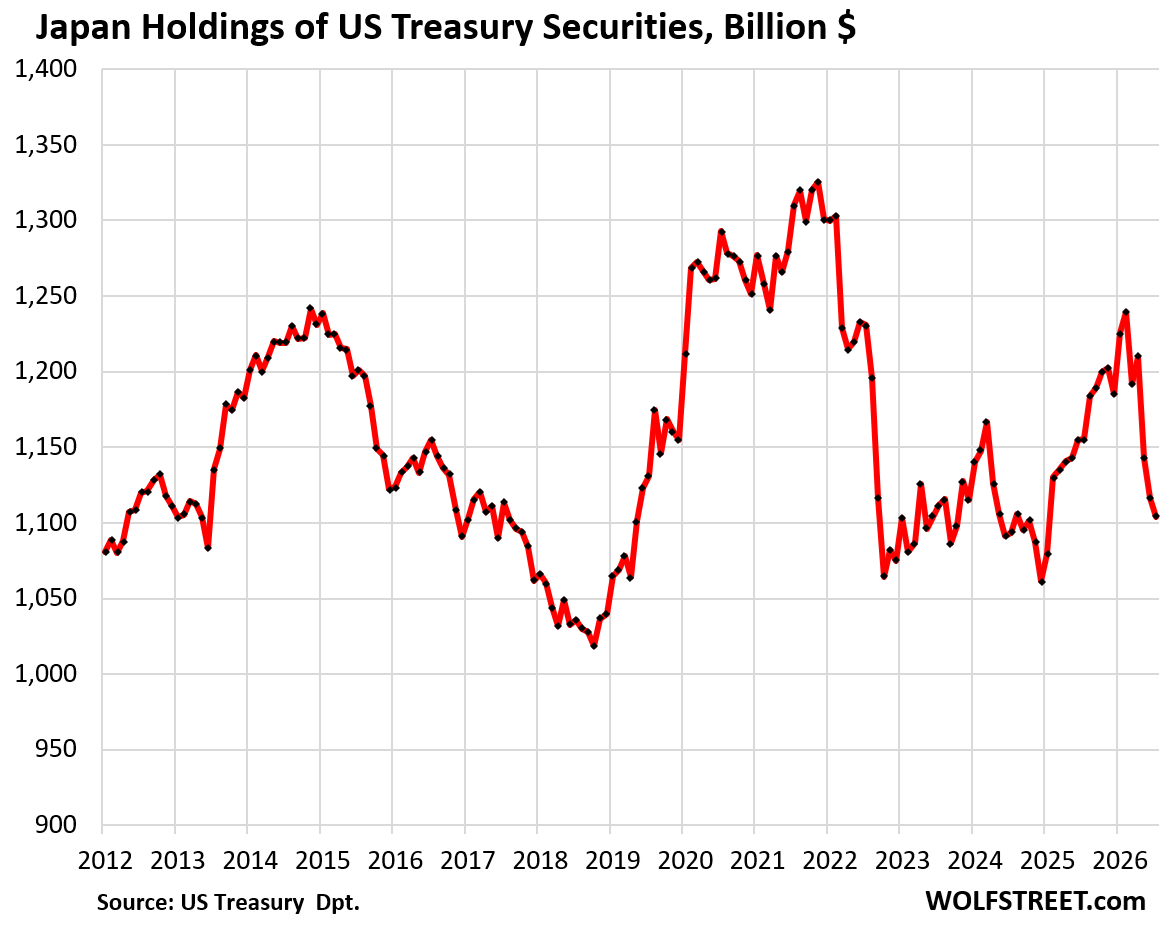
Among the most significant movers in the Treasury market is Japan, which has aggressively shed its holdings to stabilize the yen. In July, Japan reduced its Treasury position by $13 billion, continuing a downward trajectory that saw $135 billion in divestments between February and July.
This policy is driven by the necessity to prop up the yen, which has faced sustained downward pressure against the U.S. dollar. By selling Treasury securities, the Japanese government generates the dollar liquidity required for currency market interventions. This strategy has proven remarkably profitable for Tokyo. Because the original Treasuries were purchased when the yen was significantly stronger, the current liquidation at higher dollar valuations—combined with the favorable currency conversion—results in substantial gains in yen terms. While the Japanese government weighs how to utilize these profits, the broader impact remains a cooling effect on the demand for U.S. sovereign debt.

China’s Strategic Divestment
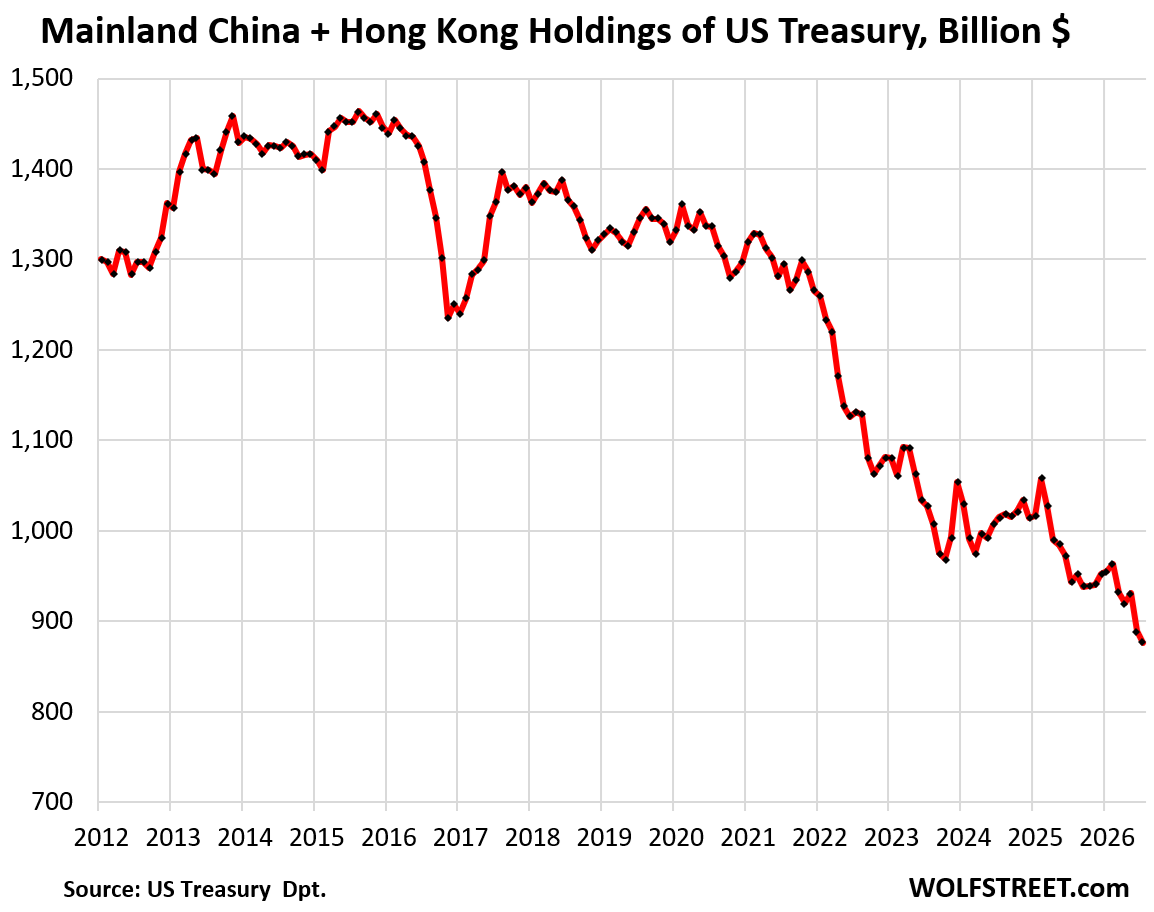
Mainland China and Hong Kong have followed a different, more persistent path. Since 2015, the two have engaged in a steady, long-term reduction of their Treasury holdings. In July, they shed an additional $13 billion, contributing to a 12-month reduction of $67 billion. Since the 2015 peak, China’s cumulative divestment has reached approximately $587 billion. As a result, China’s share of outstanding marketable U.S. Treasury securities has fallen to roughly 3.0%, rendering their influence on the market significantly less potent than it was a decade ago.
The Growing Influence of Financial Hubs
The data highlights a concentration of ownership in seven major financial centers, which together hold $3.28 trillion in U.S. debt. These jurisdictions—which include the Cayman Islands, Luxembourg, Belgium, Ireland, and others—account for 35% of all foreign holdings. This concentration underscores the "financialization" of the Treasury market, where debt is increasingly held by intermediary entities rather than foreign national treasuries.
In other regions, the trends are mixed. Canada’s holdings have displayed extreme volatility, with a $33 billion decline in July following a period of rapid accumulation. Analysts often view such fluctuations as "data noise," likely reflecting short-term adjustments by institutional intermediaries rather than long-term strategic shifts. Similarly, France saw a $42 billion contraction in July, though its banking sector frequently acts as a conduit for broader European financial activity.
Norway’s Government Pension Fund Global, the world’s largest sovereign wealth fund with $2.3 trillion in assets, remains a significant player. While its holdings rose by $4 billion in July, the fund’s management has signaled a potential shift in strategy, proposing a reduction in bond allocations that could result in an $80 billion decline in its Treasury holdings. India, by contrast, saw an increase of $16 billion in July, though its year-over-year position remains down by $17 billion. Brazil has largely held its position steady, maintaining $168 billion in holdings—a figure that remains 46% lower than its 2018 peak.
Implications for the U.S. Financial System
The aggregate trend reveals a U.S. Treasury market that is increasingly reliant on domestic buyers and highly leveraged private entities rather than the stable, long-term support of foreign central banks. The collapse of the "foreign official" share to 12.8% marks a transition point in the history of the dollar.
For the U.S. government, this shift implies a greater sensitivity to domestic interest rate cycles and the behavior of hedge funds. As the Federal Reserve continues to navigate its own balance sheet reduction and the Treasury Department manages a record-breaking issuance of new debt, the absence of traditional foreign buyers places a heavier burden on the U.S. financial system to absorb supply.
The volatility inherent in the "basis trade" and the tax-motivated holdings of corporations mean that a portion of the foreign-held debt is "hot" and susceptible to rapid liquidation during times of market stress. As global central banks move toward greater diversification and away from the dollar-centric reserve model, the U.S. Treasury market will likely face continued pressure to attract private capital, necessitating a more complex balancing act for monetary and fiscal policymakers in the coming years. The era of easy absorption of U.S. debt by foreign governments is fading, replaced by a more fragmented and volatile landscape of private, institutional, and opaque offshore participants.
Related posts: