Trump and Xi Jinping Summit Delivers High Pageantry But Little Substance on Global Crises

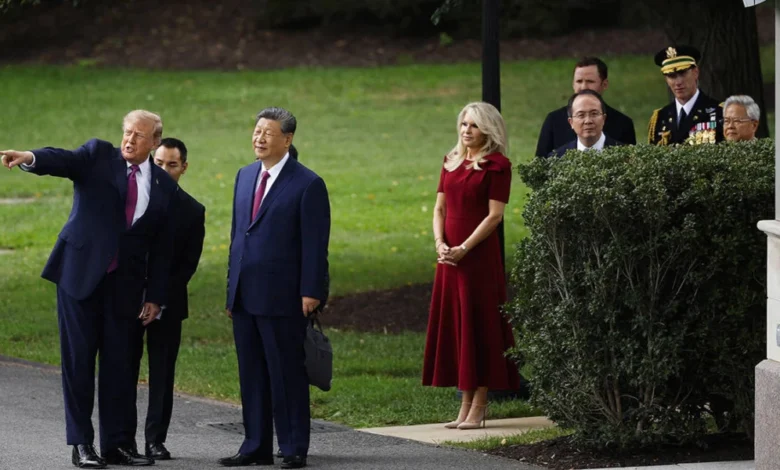
The much-anticipated diplomatic encounter between United States President Donald Trump and Chinese President Xi Jinping concluded in New Haven and Washington official circles with a palpable sense of unfulfilled potential. Despite high global stakes, the meeting yielded few concrete breakthroughs on the critical flashpoints dividing the world’s two largest economies. While international observers and financial markets had maintained modest expectations for the summit, the reliance on ceremonial flourishes in place of policy deliverables underscored a growing diplomatic deficit. Rather than resolving core structural disputes spanning international trade, artificial intelligence governance, cross-strait security regarding Taiwan, and Beijing’s diplomatic positioning in ongoing geopolitical conflicts, the summit appeared heavily defined by personal optics and political theater.
Main Facts of the Summit
The high-level talks brought together the leaders of Washington and Beijing against a backdrop of deep structural friction. Central to the discussions were four primary pillars of contention that have defined bilateral relations in recent years:
- Bilateral Trade and Tariffs: Despite ongoing economic pressures, both administrations failed to establish a roadmap for rolling back sweeping tariffs or addressing long-standing structural grievances concerning industrial subsidies and intellectual property protections.
- Artificial Intelligence Governance: As both nations vie for global technological dominance, discussions regarding AI safety frameworks, military applications, and data security standards stalled without a formal cooperative agreement.
- Taiwan and Regional Security: The status of Taiwan remained a principal point of divergence. While both leaders reiterated their established positions, no mechanisms were agreed upon to de-escalate maritime and aerial tensions in the Indo-Pacific.
- Geopolitical Conflicts: Washington pressed Beijing regarding its diplomatic and economic engagement with nations involved in two major ongoing theaters of international conflict, though these overtures failed to produce a unified stance or policy shift.
Rather than establishing binding communiqués or actionable policy frameworks, the proceedings were characterized by public displays of rapport, which critics argued masked the absence of genuine diplomatic compromise.
Chronology and Background Context
The road to the 2026 summit was paved by years of steadily deteriorating relations, marked by retaliatory trade measures, technological decoupling, and heightened military posturing.
- 2018–2019: The escalation of the US-China trade war under the first Trump administration introduced sweeping tariffs on hundreds of billions of dollars worth of bilateral trade, fundamentally altering global supply chains.
- 2020–2024: Subsequent years witnessed an institutionalization of strategic competition, with the introduction of bipartisan legislative measures in the US—such as the CHIPS and Science Act—aimed at restricting China’s access to advanced semiconductor manufacturing technologies.
- Early 2026: Preparations for the summit began amid mounting macroeconomic headwinds in China, characterized by a protracted real estate slowdown and sluggish domestic consumption, alongside persistent domestic political pressures within the United States ahead of mid-term legislative cycles.
- September 30, 2026: The summit convened under intense global media scrutiny, carrying the weight of high public expectations for economic stabilization, only to conclude with generalities rather than definitive bilateral agreements.
Supporting Data and Economic Realities
The economic backdrop of the summit highlighted the absolute necessity of stable bilateral communication, even as political friction persisted. According to recent data from global financial institutions, bilateral trade between the United States and China remains vast, hovering near historical highs despite years of targeted decoupling efforts.
- Trade Volume: Total merchandise trade between the two nations continues to surpass $600 billion annually, underscoring a deep structural interdependence that corporations on both sides struggle to sever entirely.
- Technology Investments: Venture capital and corporate investment in artificial intelligence and semiconductor research have increasingly bifurcated into distinct Western and Eastern ecosystems, reducing collaborative technological output while accelerating duplication of effort.
- Global Growth Impact: According to International Monetary Fund (IMF) projections, prolonged economic friction between Washington and Beijing accounts for a measurable drag on global gross domestic product (GDP) growth, disproportionately affecting export-dependent emerging economies in Southeast Asia and Latin America.
These macroeconomic indicators reinforce the argument made by trade economists that symbolic summits without tangible regulatory alignments do little to mitigate the systemic costs of ongoing uncertainty.
Official Responses and Diplomatic Reactions
Reactions from allied capitals, domestic lawmakers, and economic sectors reflected a complex mix of relief that dialogue remains open, paired with profound frustration over the lack of substantive outcomes.
In Washington, congressional leaders from both major parties expressed skepticism regarding the efficacy of high-level meetings that bypass rigorous institutional negotiations. Members of key national security committees noted that while high-level engagement is vital for crisis communication, the absence of verification mechanisms or binding commitments renders the talks largely symbolic.
Meanwhile, international trade associations and multinational corporate executives voiced disappointment over the missed opportunity to stabilize supply chains. Business leaders had anticipated clear guidance regarding future regulatory compliance standards, particularly concerning critical minerals, cross-border data flows, and tariff exemptions. The lack of clarity left boardrooms to navigate an unpredictable regulatory landscape for the foreseeable future.
From Beijing, state-affiliated media outlets emphasized the positive value of direct dialogue, framing the meeting as a necessary step toward maintaining strategic stability. However, official statements reiterated China’s firm stance on issues concerning its sovereign integrity, particularly regarding Taiwan and industrial policy, signaling that Beijing remains unwilling to alter its core strategic trajectory under external pressure.
Broader Impact and Implications
The failure of the summit to produce substantive agreements carries significant long-term implications for global governance, security architectures, and international trade.
First, the persistence of unresolved trade and technology disputes ensures that the global economy will continue operating within a fractured framework. Businesses will likely accelerate "de-risking" and "friend-shoring" strategies, shifting investments away from traditional manufacturing hubs toward neutral third-party nations such as India, Vietnam, and Mexico. While this diversification builds resilience for individual firms, it also introduces permanent inefficiencies into global supply chains, exerting upward pressure on consumer prices worldwide.
Second, the lack of cooperative frameworks for artificial intelligence governance raises mounting concerns among technology ethicists and security analysts. Without bilateral guardrails regulating military applications of AI and automated decision-making systems, the risk of miscalculation or unintended escalation in high-stakes environments increases significantly.
Finally, the summit’s reliance on political theater rather than institutional diplomacy highlights the challenges of managing great power competition in the modern era. As domestic political imperatives in both nations increasingly favor hardline postures, diplomatic channels risk becoming platforms for public posturing rather than venues for pragmatic problem-solving. Unless future engagements transition from ceremonial displays to rigorous, staff-driven negotiations, the systemic rivalry between the United States and China is poised to remain a defining, and destabilizing, feature of the twenty-first-century geopolitical landscape.