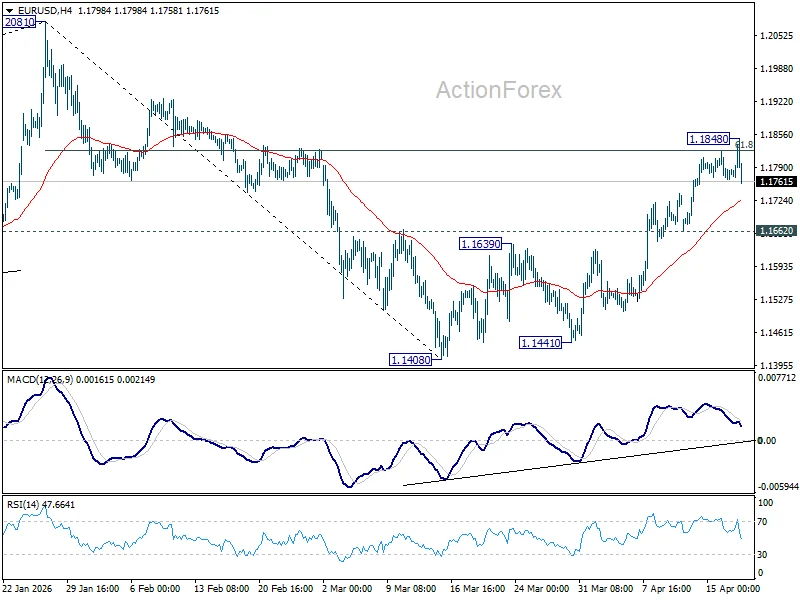
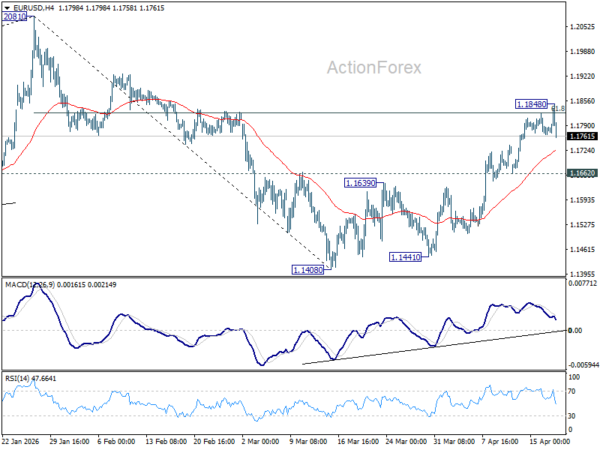
The Euro (EUR) has found itself at a pivotal moment against the U.S. Dollar (USD) this week, with the EUR/USD currency pair exhibiting a neutral bias after a notable surge last week. The pair’s ascent from a low of 1.1408 to a high of 1.1848 was significant, yet it ultimately stalled shy of decisively breaching the key 61.8% Fibonacci retracement level, calculated at 1.1824, derived from the 1.2081 to 1.1408 price range. This technical resistance has now shifted the immediate outlook to a more cautious, neutral stance for the current trading week.
Navigating Key Technical Levels: The Short-Term Outlook
For the EUR/USD pair, the immediate future hinges on its ability to consolidate gains above the 1.1824 mark. A sustained trading performance above this level would likely re-ignite bullish sentiment, paving the way for a retest of the 1.2081 high. This level represents a significant psychological and technical hurdle that, if overcome, could signal a more profound shift in market dynamics.
Conversely, the downside risk remains considerable. A firm break below the support at 1.1662 would significantly undermine the recent positive momentum and could trigger a deeper retracement, potentially driving the pair back towards the recent low of 1.1408. Traders and market participants will be closely monitoring these levels for indications of the next directional move.
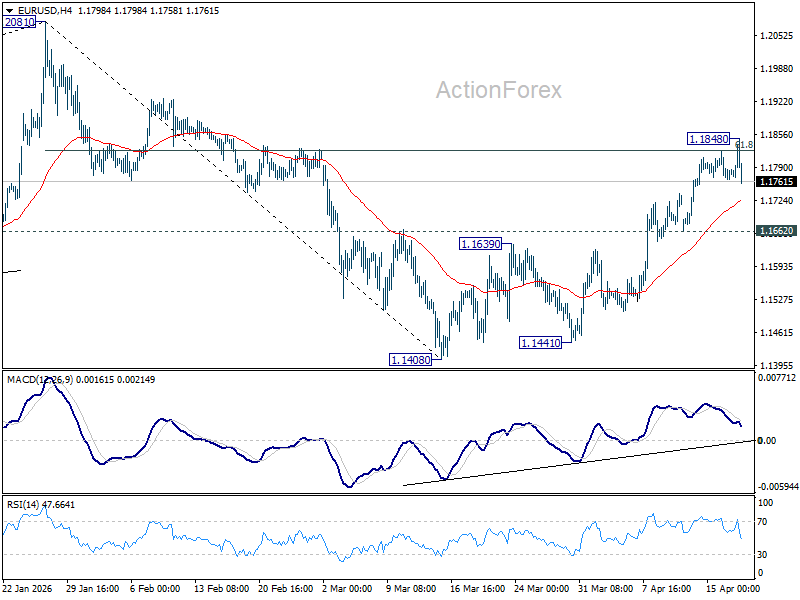
The initial ascent that propelled the EUR/USD from 1.1408 was a testament to a period of renewed Euro strength, which contrasted with earlier bearish pressures. However, the inability to decisively overcome the 61.8% retracement suggests that the market is still weighing conflicting fundamental and technical signals. This indecision is reflected in the current neutral bias, implying that neither the bulls nor the bears have established clear dominance.
The Bigger Picture: Corrective Move or Trend Reversal?
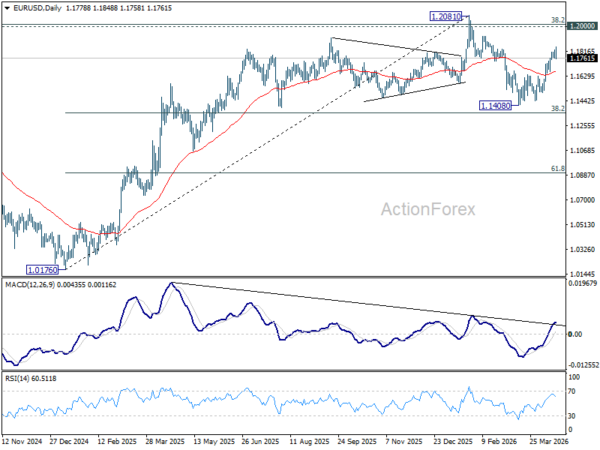
Zooming out to the broader market context, the EUR/USD’s behavior suggests a more complex interplay of forces. The strong support encountered around the 38.2% Fibonacci retracement of the 1.0176 to 1.2081 range, specifically at 1.1353, offers compelling evidence that the prior pullback from the 1.2081 high might be a corrective phase within a larger upward trend, rather than the beginning of a sustained bearish reversal.
Furthermore, the 55-week Exponential Moving Average (W EMA), currently situated around 1.1507, has also served as a significant support level, reinforcing the notion of underlying buying interest in the Euro. This confluence of technical support levels underscores the resilience of the Euro against the U.S. Dollar in the medium term.
The immediate focus for market watchers remains firmly fixed on the 1.2000 psychological resistance level, which is also a significant cluster of resistance points. A decisive breakthrough above this level would carry substantial long-term bullish implications, potentially signaling a significant turning point for the pair.
However, the narrative remains contingent on price action. A decisive breach below the 1.1408 support level would, in contrast, revive concerns about a medium-term bearish trend reversal. This highlights the critical nature of the current trading range and the importance of the upcoming price movements in defining the Euro’s trajectory against the U.S. Dollar.
Long-Term Perspective: The 1.2000 Barrier and Multi-Decade Trends
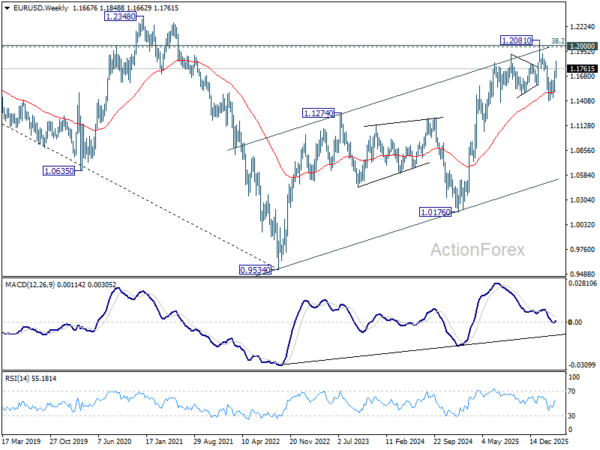
The long-term outlook for the EUR/USD is heavily influenced by a crucial Fibonacci retracement level: the 38.2% retracement of the extensive 1.6039 to 0.9534 range, which stands at approximately 1.2019. This level, in close proximity to the psychologically significant 1.2000 mark, is a key determinant for the future direction of the currency pair.
A rejection at this formidable resistance zone would likely signal the continuation of the multi-decade downtrend that originated from the 2008 high of 1.6039. In such a scenario, the overall outlook would remain neutral at best, with the market likely to consolidate or trade within a defined range without a clear directional bias.
Conversely, a decisive and sustained break above the 1.2000/1.2019 area would represent a significant technical event. It would suggest a potential long-term bullish trend reversal, opening the door for further upside potential. The next major target in such a scenario would be the 61.8% Fibonacci retracement level, located at 1.3554, which would mark a substantial recovery for the Euro from its recent lows.
The historical context is important here. The multi-decade trend from 1.6039 has seen the Euro depreciate considerably against the U.S. Dollar, influenced by a range of factors including economic divergence between the Eurozone and the United States, monetary policy differentials, and geopolitical events. The current price action represents a potential challenge to this long-standing trend.
Supporting Data and Market Dynamics
To provide further context, it is essential to consider the underlying economic data and market sentiment that influence the EUR/USD pair.
Economic Indicators:
- Inflation: Recent inflation data from both the Eurozone and the United States has been a key driver. Higher-than-expected inflation in the U.S. has historically supported the dollar, while similar trends in the Eurozone can bolster the Euro. The current data sets are being closely scrutinized for their implications on future monetary policy decisions by the European Central Bank (ECB) and the Federal Reserve.
- Interest Rate Differentials: The divergence in interest rate policies between the ECB and the Federal Reserve remains a primary determinant of currency strength. If the Federal Reserve maintains a more hawkish stance (higher interest rates) than the ECB, it generally favors the U.S. Dollar. Conversely, any indication of the ECB moving towards tighter monetary policy could support the Euro. Recent commentary from central bank officials is closely monitored for shifts in forward guidance.
- Economic Growth: GDP growth figures for both economies play a crucial role. Stronger economic performance typically attracts investment and supports a country’s currency. Recent Purchasing Managers’ Index (PMI) data, retail sales figures, and industrial production reports are all critical indicators in this regard. For instance, a slowdown in Eurozone manufacturing, as indicated by recent PMI surveys, could weigh on the Euro.
- Geopolitical Factors: Global geopolitical events can significantly impact currency markets by influencing risk appetite and capital flows. Uncertainty or escalation of conflicts can lead to a flight to safe-haven assets, often benefiting the U.S. Dollar. Conversely, a de-escalation of tensions can foster risk-on sentiment, potentially benefiting currencies like the Euro.
Market Sentiment:
- Risk Appetite: The prevailing risk sentiment in global financial markets influences the EUR/USD. During periods of high risk aversion, investors tend to move towards perceived safe-haven assets, such as the U.S. Dollar and U.S. Treasuries. In contrast, periods of optimism and increased risk appetite can lead investors to seek higher yields in riskier assets, potentially benefiting the Euro.
- Commodity Prices: For the Eurozone, which is a significant importer of commodities, fluctuations in energy prices can have a notable impact on its trade balance and economic outlook, indirectly affecting the EUR/USD. A sustained rise in oil prices, for example, can increase the Eurozone’s import bill, potentially pressuring the Euro.
Timeline and Chronology of Recent Movements
To understand the current market positioning, a brief review of recent price action is instructive.
- Early to Mid-Last Week: The EUR/USD commenced a notable upward movement from the 1.1408 level. This phase was characterized by increasing buying interest in the Euro, possibly driven by positive economic data releases from the Eurozone or a perceived shift in global risk sentiment.
- Late Last Week: The rally extended to 1.1848, reaching proximity to the critical 61.8% Fibonacci retracement at 1.1824. However, the pair failed to establish a decisive foothold above this resistance, indicating a pause or consolidation in the upward momentum. This failure to break through a key technical level marked a turning point in the immediate sentiment.
- Beginning of Current Week: The initial bias for the trading week has been assessed as neutral. This reflects the indecision in the market following the stalled rally. Traders are now awaiting further catalysts to determine the next directional impulse.
The pattern of a strong rally followed by a failure to decisively break key resistance is a common technical pattern that often precedes a period of consolidation or a potential reversal. The market is, in essence, taking a breath to reassess the prevailing conditions.
Broader Impact and Implications
The performance of the EUR/USD pair has far-reaching implications for global trade, investment, and economic policy.
- International Trade: A stronger Euro makes Eurozone exports more expensive for countries using other currencies, potentially dampening export volumes. Conversely, it makes imports cheaper for Eurozone consumers and businesses. For U.S. exporters, a weaker dollar (which a stronger Euro implies) can make their goods more competitive in international markets.
- Investment Flows: Currency movements influence international investment decisions. A strengthening Euro can attract foreign investment into Eurozone assets, while a weakening Euro might prompt capital outflows. Similarly, the relative strength of the U.S. Dollar impacts investment decisions concerning U.S. assets.
- Central Bank Policy: The EUR/USD exchange rate is a significant consideration for both the ECB and the Federal Reserve. Significant appreciation or depreciation can influence inflation dynamics and economic growth, prompting central banks to adjust their monetary policy stances. For instance, a persistently strong Euro could contribute to disinflationary pressures in the Eurozone, potentially delaying or moderating the pace of interest rate hikes by the ECB.
- Global Economic Stability: As the two most traded currencies in the world, the EUR/USD exchange rate plays a crucial role in the stability of the global financial system. Volatility in this pair can spill over into other markets, affecting commodity prices, equity valuations, and overall investor confidence.
Expert Analysis and Market Commentary
While direct quotes from specific individuals are not provided in the source material, the analysis presented reflects a common approach taken by financial analysts and trading desks. The reliance on Fibonacci retracements, moving averages, and key support/resistance levels is standard practice in technical analysis.
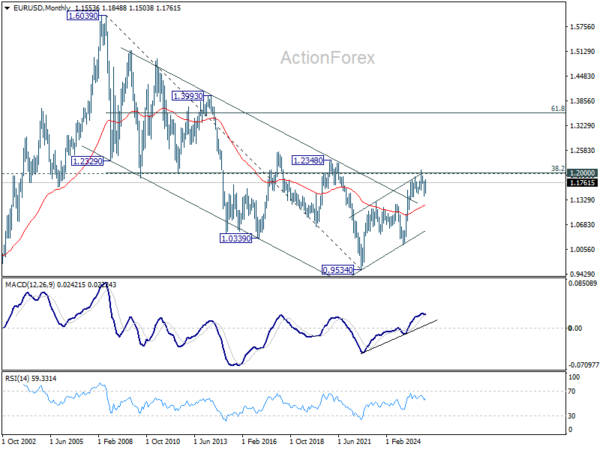
The mention of a "multi-decade down trend" from 1.6039 signifies the long-term bearish sentiment that has characterized the EUR/USD for a considerable period. The current price action is seen as a potential challenge to this established trend. Analysts are thus focused on whether the recent strength represents a mere blip or the dawn of a new, sustained upward cycle.
The emphasis on "decisive breaks" and "sustained trading" highlights the importance of confirmation in technical analysis. Markets often exhibit false breakouts, where a price briefly breaches a level before reversing. Therefore, analysts look for clear, sustained movements above or below key levels to confirm a trend shift.
The current neutral bias suggests that the market is in a state of equilibrium, with opposing forces balancing each other out. This often occurs when there is a lack of clear fundamental catalysts or when conflicting signals are present. Investors are likely waiting for definitive economic data, central bank pronouncements, or significant geopolitical developments to guide their next moves.
Conclusion: Awaiting Clarity
The EUR/USD currency pair stands at a critical juncture, poised between the possibility of renewed upside momentum and the risk of a significant retracement. The recent failure to decisively overcome the 61.8% Fibonacci retracement at 1.1824 has shifted the immediate outlook to neutral. The coming trading sessions will be crucial in determining whether the pair can reclaim the 1.2000 psychological level and challenge long-standing bearish trends, or if it will succumb to selling pressure and revert towards lower support levels. The interplay of economic data, central bank policies, and global market sentiment will be paramount in shaping the Euro’s trajectory against the U.S. Dollar in the weeks and months ahead.
Related posts: