GBP/USD Ascends for Second Week Amid Economic Resilience and Shifting Dollar Dynamics


The British Pound Sterling (GBP) versus the United States Dollar (USD) concluded its second consecutive trading week on a positive note, buoyed by market expectations of a prudent approach from the Bank of England in response to robust economic indicators emanating from the United Kingdom. Concurrently, the U.S. Dollar experienced a notable decline, touching four-year lows as geopolitical anxieties and concerns surrounding the Federal Reserve’s independence weighed on its valuation, before finding a measure of stability.
The pair’s upward momentum pushed it to fresh peaks not seen since October 2021, reaching levels near 1.3860, before experiencing a retracement below the mid-1.3700s. This downward correction, observed on Thursday and Friday, was primarily attributed to a legislative agreement reached between President Trump and the U.S. Senate, which successfully averted a government shutdown. Adding to the dollar’s weakness, President Trump’s nomination of Kevin Warsh as the next Chair of the Federal Reserve also contributed to market apprehension.
Economic Landscape: Divergent Signals and Monetary Policy Stance
From an economic data perspective, the United Kingdom’s economic calendar presented a relatively light schedule, with no major releases commanding significant market attention. In contrast, the U.S. Federal Open Market Committee (FOMC) meeting served as the week’s primary economic highlight. As widely anticipated by financial analysts, the central bank opted to maintain its benchmark interest rates unchanged. Federal Reserve Chair Jerome Powell’s subsequent press conference offered little definitive clarity to the markets, with Powell reiterating the Fed’s commitment to a data-dependent approach in formulating future monetary policy decisions.
However, a significant piece of U.S. economic data emerged on Friday, with the Producer Price Index (PPI) report surpassing forecasts. The monthly Core PPI registered a 0.7% increase, while the headline PPI saw a 0.5% rise. These figures indicate a persistent inflationary pressure within the U.S. economy, further solidifying market expectations for potential interest rate cuts later in the year. This "sticky inflation" narrative, as described by some economists, presents a complex backdrop for the Federal Reserve’s next moves.
Geopolitical Undercurrents and Risk Sentiment
Adding a layer of complexity to the currency markets, ongoing geopolitical developments, particularly those concerning Iran and the protracted conflict between Russia and Ukraine, continued to exert a negative influence on global risk sentiment. These international tensions have contributed to a cautious market environment, suggesting that the upward trajectory for GBP/USD may encounter further volatility and resistance. The interconnectedness of global events means that these geopolitical flashpoints can have ripple effects across various asset classes, including foreign exchange.
Looking Ahead: Key Events to Watch for GBP/USD
The upcoming week is poised to be crucial for the GBP/USD pair, with several high-impact economic events on the horizon that could significantly influence its volatility. Market participants will be closely scrutinizing the Bank of England’s upcoming policy announcement. While the consensus among economists is that the BoE will hold its policy rate steady, the internal voting split within the Monetary Policy Committee (MPC) could provide valuable insights into the sentiment surrounding the timing of any potential future rate adjustments. A more hawkish split might signal a quicker path to rate hikes, while a dovish split could suggest a more prolonged period of accommodative policy.
On the U.S. side, the labor market data remains a paramount factor for the Federal Reserve as it calibrates its monetary policy. The Non-Farm Payrolls (NFP) report, a key indicator of employment trends, is projected to show an increase, with estimates suggesting a rise from 50,000 to 75,000. The unemployment rate is expected to hold steady at 4.4%. Any substantial deviation from these projections, whether positive or negative, could trigger significant market reactions and influence the Federal Reserve’s outlook.
Weekly Technical Outlook: Navigating Profit-Taking and Support Levels
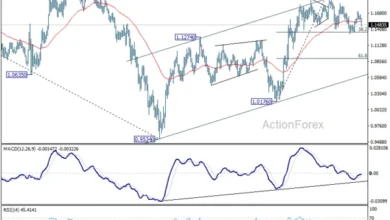
From a technical perspective, the GBP/USD pair’s daily chart depicts a corrective move downwards following a brief breach of the supply zone situated above the 1.3850 mark. The pair has shed over 100 pips, and the Relative Strength Index (RSI) has retreated below the 50.0 threshold, signaling a potential for further declines in the short term. However, the 1.3700 level is expected to act as a crucial support, potentially halting the downward trend before the next significant support level at 1.3600, a psychologically important round number, and subsequently, a demand zone near 1.3500.

On the upside, key resistance is identified at the 1.3800 level, followed by the monthly high of 1.3860, and then at 1.3925. The probability of the pair testing the 1.4000 mark in the immediate future appears limited, primarily due to profit-taking pressures that have emerged following the recent rally. Nevertheless, the broader bullish trend remains intact, provided the pair stays comfortably above its key moving averages. Any significant buying traction emerging from the identified major support zones could pave the way for a renewed push towards fresh highs.
Background Context: The Federal Reserve and Monetary Policy Independence
The nomination of Kevin Warsh as the next Federal Reserve Chair, as alluded to in the article, carries significant weight in understanding the market’s reaction. The Federal Reserve, often referred to as the "Fed," is the central banking system of the United States. Its mandate includes maximizing employment, stabilizing prices (controlling inflation), and moderating long-term interest rates. The independence of the Federal Reserve from political influence is a cornerstone of its credibility and effectiveness.
Historically, concerns about political interference in monetary policy can lead to market instability. Presidents often have the opportunity to nominate members to the Federal Reserve Board of Governors, including the Chair. However, these nominations are subject to confirmation by the U.S. Senate. The market’s reaction to such nominations can be interpreted as a gauge of how investors perceive the potential for continuity or disruption in the Fed’s established policy framework. Kevin Warsh, a former Fed governor himself, brings a known quantity to the discussion, but his specific economic philosophy and approach to monetary policy would be closely scrutinized by market participants.
The Federal Reserve’s current stance, characterized by a data-dependent approach, means that its decisions on interest rates and other monetary tools are heavily influenced by incoming economic data, such as inflation figures, employment numbers, and GDP growth. This approach aims to provide flexibility and responsiveness to evolving economic conditions. However, it can also lead to periods of uncertainty as markets attempt to decipher the Fed’s future intentions based on economic reports.
The Bank of England’s Balancing Act
In the United Kingdom, the Bank of England (BoE) faces its own set of economic challenges and policy considerations. The BoE’s Monetary Policy Committee (MPC) is responsible for setting the UK’s main interest rate. Like the Fed, the BoE aims to maintain price stability and support sustainable economic growth. Recent economic data from the UK, suggesting resilience, has led markets to anticipate a cautious approach from the BoE. This caution might stem from a desire to avoid premature tightening that could stifle recovery, or from an awareness of global economic uncertainties.
The "MPC vote split" mentioned in the article is a critical indicator of internal consensus within the Bank. A unanimous vote to hold rates unchanged might suggest broad agreement on the current economic outlook. However, a divided vote, with some members advocating for a rate hike or cut while others prefer to hold, can signal differing views on the pace of inflation, the strength of the economy, and the appropriate path for monetary policy. For instance, if a significant number of MPC members vote for a rate hike, it could be interpreted as a signal that interest rates are likely to rise sooner rather than later, which would typically support the British Pound. Conversely, a strong showing for a vote to cut rates would likely weigh on the currency.
Implications for Global Markets and Investors
The interplay between the U.S. dollar’s performance, geopolitical risks, and the monetary policy decisions of major central banks like the Federal Reserve and the Bank of England has broad implications for global markets and investors. A weakening U.S. dollar can make dollar-denominated assets more expensive for foreign investors, potentially impacting capital flows. It can also influence commodity prices, as many are priced in dollars.
For currency traders and investors, the GBP/USD pair represents a significant trading opportunity. The recent gains in GBP/USD, driven by UK economic strength and dollar weakness, illustrate the potential for currency pairs to move based on divergent economic fundamentals and market sentiment. However, the inherent volatility, amplified by geopolitical concerns and potential policy shifts, underscores the importance of thorough analysis and risk management.
The mention of "profit-taking" in the technical forecast highlights a common market phenomenon where traders sell assets after they have experienced a significant price increase to lock in gains. This can lead to temporary price reversals or corrections, even if the underlying trend remains positive. Understanding these technical dynamics, alongside fundamental economic factors, is crucial for navigating the complexities of the foreign exchange market.
The article’s concluding advice to consider trading forex and its disclaimer about retail investor losses serve as a reminder of the inherent risks associated with currency trading. The foreign exchange market is characterized by high leverage, which can magnify both profits and losses. Therefore, a deep understanding of market dynamics, coupled with robust risk management strategies, is paramount for any participant. The reference to specific brokers and platforms, while indicative of the trading environment, also necessitates due diligence on the part of the individual investor to select entities that align with their trading objectives and risk tolerance.