Federal Reserve Lifts Federal Funds Rate to 4 Percent in Unanimous 12-0 Vote as Markets Navigate Competing Macroeconomic and Regulatory Headwinds

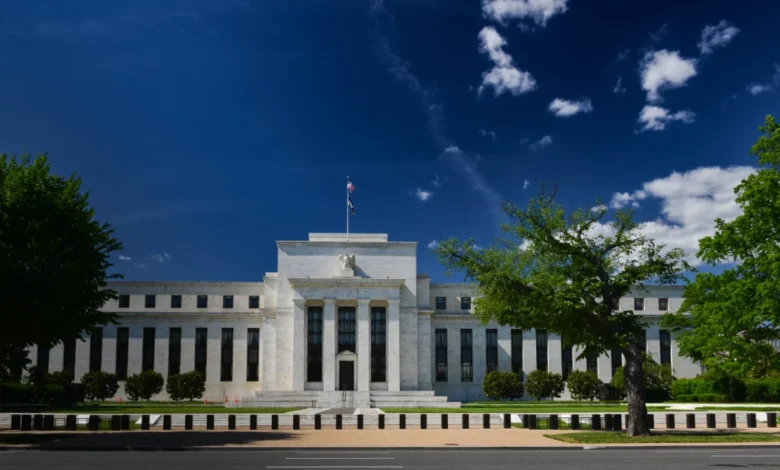
The Federal Open Market Committee delivered a unanimous 12-0 vote on September 16, 2026, raising the federal funds target range to 3.75%–4%. The decision marked the first monetary tightening action by the central bank since 2023 and served as the inaugural interest rate adjustment under the chairmanship of Kevin Warsh. The policy shift arrived amid a complex financial landscape, coinciding with a setback for digital asset legislation in the United States Senate and broader adjustments across traditional equity and fixed-income markets.
At the time of the announcement, Bitcoin traded near $75,549, while Ether hovered around $2,387, both registering modest losses for the session. Conversely, major traditional equities indexes, including the S&P 500, the Nasdaq 100, and the Russell 2000, maintained positive territory. The timing underscored a divergence between macroeconomic policy transmissions and sector-specific legislative developments, leaving digital asset markets to digest competing domestic signals.
A Unanimous Decision and Diverging Projections for 2027
The official policy statement released by the Federal Reserve described broader economic activity as expanding at a solid pace, while characterizing domestic inflation as remaining elevated. Policymakers framed the twenty-five-basis-point increase as a proactive measure to support a timelier return to the central bank’s stated 2% inflation target.
Accompanying economic projections revealed a committee anticipating further monetary tightening. Sixteen of the participating officials penciled in at least one additional rate increase before the conclusion of the calendar year, while only two members favored maintaining the current target range.
For the 2027 outlook, the committee displayed a notable split. Eight members projected continued rate increases, while four anticipated that the central bank would initiate its first policy rate cuts. A striking development within the summary of economic projections was Federal Reserve Chair Kevin Warsh’s decision to withhold his individual rate projection dot. This departure from conventional practice by a sitting chair leaves the median policy path without the explicit input of the official guiding the institution’s direction.
Concurrently, the Federal Reserve adjusted secondary facility rates to align with the higher target range. The interest rate paid on reserve balances was increased to 3.90%, the primary credit rate rose to 4.00%, and the standing repo facility rate was adjusted to 4.00%, with all changes taking effect the following business day.
Market Anticipation and Fixed-Income Adjustments
Financial markets had largely priced in the quarter-point adjustment ahead of the meeting, with federal funds futures indicating a probability of approximately 91% to 92% for a hike. This high degree of market certainty meant the policy shift was absorbed gradually in the days preceding the vote, muting immediate post-announcement volatility.
Equities remained resilient throughout the release, while Treasury yields drifted lower across the curve. The yield on the two-year Treasury note settled at 4.64%, the ten-year yield eased to 4.95%, and the thirty-year bond yield moved to 5.31%. This yield curve posture reflected an expectation among bond traders that the current tightening cycle is approaching its terminal rate, shifting market focus from the headline quarter-point increase to forward-looking policy guidance.
Market analysts noted that the primary driver of market reaction would depend less on the 25-basis-point adjustment itself and more on the central bank’s communication regarding future economic conditions. By avoiding a surprise hold or a more aggressive fifty-basis-point increase, the committee minimized immediate systemic shock.
Bond Yield Movements and Implications for Digital Assets
The behavior of the fixed-income market provided a nuanced signal for speculative asset classes, including cryptocurrencies. Typically, a monetary tightening cycle introduces upward pressure on borrowing costs and increases the opportunity yield on cash and short-dated government securities. However, the concurrent decline in long-dated Treasury yields on rate-decision day suggested a different underlying narrative among fixed-income investors.
Long-dated Treasury yields establish the baseline discount rate that alternative and risk-on assets must surpass to attract capital. A downward drift in the ten-year and thirty-year yields serves to lower this hurdle rate, mitigating the opportunity cost of holding non-yielding assets such as Bitcoin.
If the broader debt market assessment holds true—that a 4% federal funds rate represents a near-term ceiling for this cycle—the most restrictive phase of monetary policy may be substantially priced in. This dynamic explains why digital asset valuations avoided sharp systemic sell-offs following the rate announcement, maintaining relative stability despite the tighter policy setting.
The Legislative Overhang: The Senate Defeat of the CLARITY Act
Despite supportive signals from declining long-term bond yields, major digital assets remained under downward pressure, highlighting a structural weight independent of monetary policy. Just one day prior to the Federal Reserve’s announcement, the United States Senate rejected cloture on the bipartisan CLARITY Act by a margin of 49 to 50.
The legislative defeat effectively strips the digital asset industry of the comprehensive market-structure framework it had pursued in Washington for two years. With midterm elections approaching, the failure of the bill has effectively closed the realistic window for federal regulatory clarity for the remainder of the year.
Consequently, digital asset markets have faced a split-screen reality. Traditional equities respond primarily to macroeconomic liquidity and growth metrics, enabling them to rally on fully priced-in monetary actions. Cryptocurrencies, by contrast, must navigate both macroeconomic monetary conditions and an increasingly complex regulatory vacuum. Over the seven-day period surrounding the Fed decision, digital assets experienced broader downward pressure driven largely by regulatory uncertainty rather than the interest rate path alone.
Transmission Channels Between Federal Reserve Policy and Digital Assets
While the Federal Reserve does not explicitly reference digital assets in its policy deliberations, monetary tightening is transmitted to the broader financial ecosystem through well-established economic channels.
First, higher policy rates increase yields on cash equivalents and short-term sovereign debt, raising the opportunity cost for institutional and retail allocators holding non-income-generating assets. Second, tightening actions frequently strengthen the U.S. dollar, placing downward valuation pressure on dollar-denominated risk assets. Third, monetary contraction reduces aggregate liquidity available for speculative deployment. Finally, higher rates temper overall market risk appetite, steering capital toward defensive, income-yielding positions.
Economic research underscores the growing integration of digital assets into global financial plumbing. Empirical studies published by the International Monetary Fund (IMF) have documented an increasing positive correlation between Bitcoin and traditional equity indices, such as the S&P 500, as institutional participation has deepened. Additional IMF research indicates that contractionary U.S. monetary policy shocks historically exert downward pressure on cryptocurrency valuations, establishing that macro policy remains an influential external variable for the asset class.
Near-Term Catalysts and the Path Forward
The September FOMC decision leaves several critical macroeconomic questions unresolved. With a significant majority of committee participants leaning toward additional tightening before the year concludes, incoming economic data—particularly upcoming consumer price index and employment reports—will dictate whether the Federal Reserve pauses or extends its rate-hiking campaign.
The release of the FOMC meeting minutes on October 7 will provide further transparency regarding internal committee deliberations and the proximity of open policy dissent.
For the digital asset sector, the primary challenges remain regulatory and structural. In the absence of federal market-structure legislation, industry participants continue to operate under case-by-case enforcement and guidance from regulatory bodies such as the Securities and Exchange Commission (SEC) and the Commodity Futures Trading Commission (CFTC). This regulatory environment contrasts with international jurisdictions, such as Europe, which has operated under the Markets in Crypto-Assets (MiCa) regulatory framework since late 2024.
Moving forward, market participants are closely monitoring spot Bitcoin and Ether exchange-traded fund (ETF) flows. Sustained institutional inflows remain a vital counterweight to the structural selling pressure generated by domestic regulatory hurdles, serving as a primary indicator for whether current valuation floors will hold through the remainder of the year.
Related posts: