USD/JPY Navigates Volatility, Key Levels to Dictate Near-Term Direction Amidst Broader Bullish Outlook

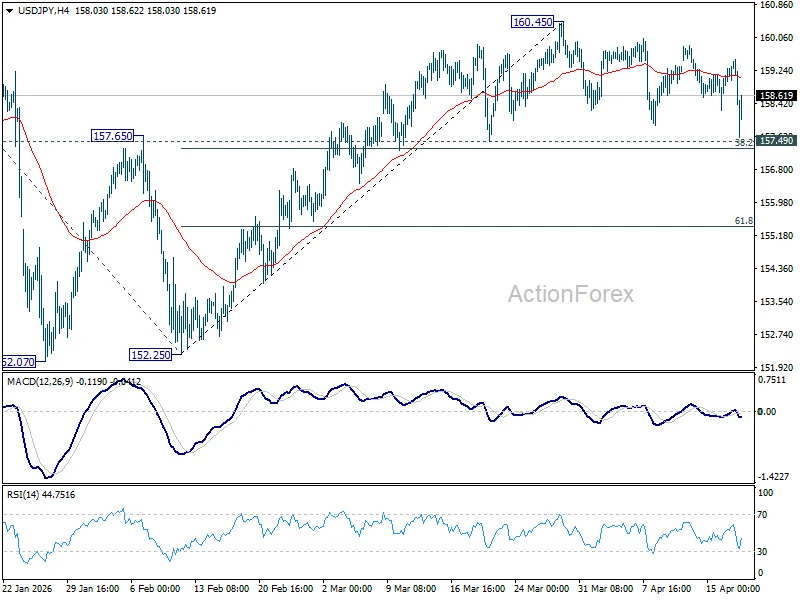
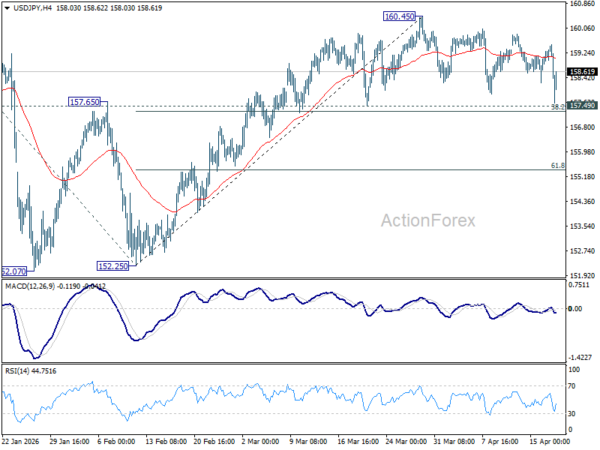
The USD/JPY currency pair has demonstrated significant price fluctuations over the past week, yet it has largely remained confined within a defined trading range, consistently trading below the 160.45 resistance level. This week, the initial market bias for USD/JPY is assessed as neutral, with analysts closely watching key technical indicators to determine the next directional move. The prevailing sentiment suggests a potential for further upside movement, provided that the critical cluster support around 157.49 remains intact. This support zone, which incorporates the 38.2% Fibonacci retracement of the move from 152.25 to 160.45, calculated at approximately 157.31, is seen as a crucial technical barrier.
Should the USD/JPY pair manage to break decisively above the 160.45 resistance, the immediate target would be a retest of the recent high at 161.94. However, a firm breach below the 157.31/49 support area could trigger a more substantial decline, potentially pushing the pair back towards the 61.8% Fibonacci retracement level, which is situated around 155.38.
Technical Analysis and Key Support/Resistance Levels
The technical landscape for USD/JPY is characterized by several critical price points that are expected to guide its trajectory in the coming trading sessions.
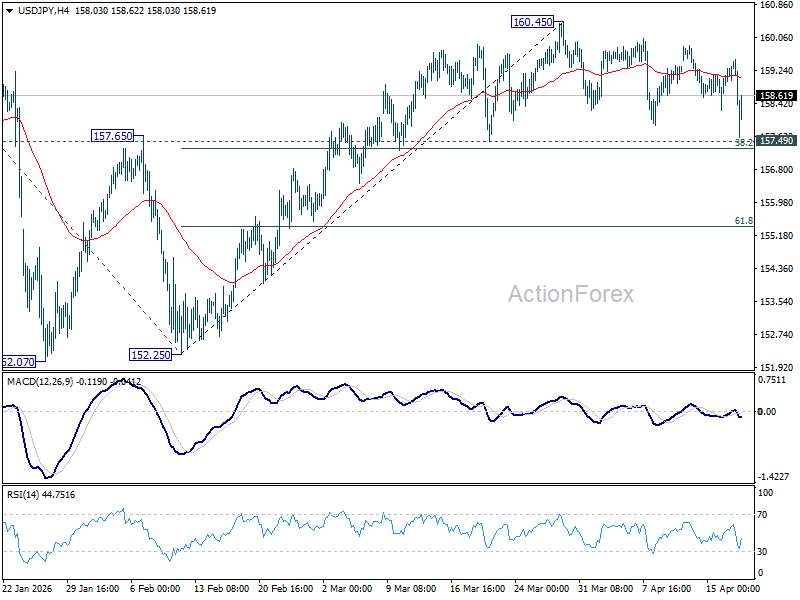
Near-Term Outlook (This Week):
- Neutral Initial Bias: The pair’s recent volatility has resulted in an indecisive short-term outlook.
- Key Support: 157.49 (Cluster support, including 38.2% Fibonacci retracement at 157.31). This level is paramount for sustaining any upward momentum.
- Resistance to Watch: 160.45. A breakout above this level is a prerequisite for further gains.
- Upside Target (if 160.45 is breached): 161.94 (Recent high).
- Downside Risk (if 157.31/49 is broken): 155.38 (61.8% Fibonacci retracement).
Broader Context and Longer-Term Trends
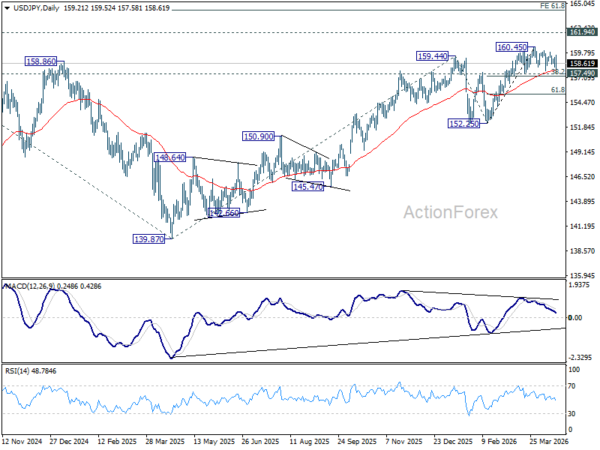
Examining the broader market picture, the prevailing analysis indicates that a corrective pattern originating from the 2024 high of 161.94 may have concluded with a three-wave movement down to 139.87. This suggests that the larger uptrend, which commenced from the 2021 low of 102.58, could be poised for a resumption.
The Larger Uptrend and Its Drivers
The potential for the resumption of the larger uptrend from 102.58 is a significant development for market participants. This scenario remains the favored outlook as long as the 55-week Exponential Moving Average (EMA), currently positioned around 153.61, continues to act as a reliable support. The 55-week EMA is a widely watched technical indicator that can signal the health of a longer-term trend. Its ability to hold as support would reinforce the bullish thesis for USD/JPY.
A decisive break above the 161.94 high is anticipated to open the door for more substantial gains. Specifically, this would target the 61.8% projection of the move from 102.58 to 161.94, measured from the 139.87 low. This projected target stands at approximately 176.75.
Historical Performance and Market Drivers
The USD/JPY pair has a history of exhibiting strong trends, often influenced by the interest rate differentials between the United States and Japan, as well as global risk sentiment. In recent years, the divergence in monetary policy between the Federal Reserve and the Bank of Japan has been a primary driver of the yen’s weakness against the dollar. While the Federal Reserve has been in a tightening cycle or maintaining higher interest rates, the Bank of Japan has maintained an ultra-loose monetary policy, albeit with some recent adjustments.
This policy divergence has created a favorable environment for USD/JPY appreciation. The significant appreciation observed since the 2021 low of 102.58 reflects this fundamental imbalance. Market participants have been keenly observing any shifts in central bank communication and policy stances, as these can quickly alter the currency dynamics.
Long-Term Perspective: Sustained Bullishness
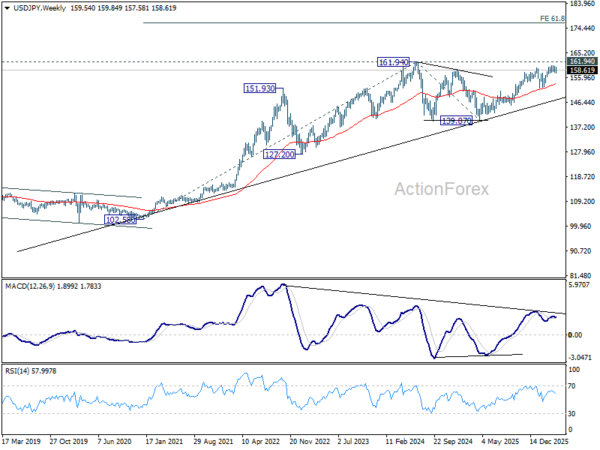
Looking further into the long-term picture, the uptrend that began from the 2011 low of 75.56 is still considered to be in progress and may be on the cusp of resuming its upward trajectory. The robust nature of this long-term trend suggests underlying strength in the pair.
Medium-Term Targets and Key Anchors
In the medium term, a firm breach of the 161.94 resistance level is crucial. Such a move would bring into focus the 61.8% projection of the price range between the 2020 low of 102.58 and the 2024 high of 161.94, projected from the 139.87 low. This target is estimated to be around 176.55.
The long-term outlook for USD/JPY is expected to remain bullish, with the 139.87 support level serving as a critical anchor. Even in the event of a significant pullback, as long as this support level holds firm, the overall bullish sentiment is likely to be sustained. This implies that any substantial dips in the price could be viewed as buying opportunities by long-term investors.
Underlying Economic Factors and Potential Influences
The trajectory of USD/JPY is intricately linked to a multitude of economic factors affecting both the US and Japanese economies.
United States Economic Landscape:
The US economy, while showing signs of resilience, has been navigating challenges such as inflation and the impact of monetary policy tightening. Key economic data releases, including inflation reports (CPI, PPI), employment figures (Non-Farm Payrolls), and manufacturing and services indices (ISM), are closely scrutinized. The Federal Reserve’s stance on interest rates, particularly its pace of potential rate cuts or hikes, remains a dominant theme. Any indications of a stronger-than-expected US economy could bolster the dollar, while signs of weakness might temper its strength.
Japanese Economic Landscape:
Japan’s economy has been characterized by a prolonged period of low inflation and accommodative monetary policy. However, recent developments have seen the Bank of Japan (BOJ) make incremental shifts, including the normalization of its yield curve control policy and the end of negative interest rates. These adjustments are being watched for their potential impact on the yen. Factors such as export performance, domestic consumption, and inflation trends within Japan are also critical. A strengthening Japanese economy and a less dovish BOJ stance could provide support for the yen.
Global Economic Conditions and Risk Sentiment:
Global economic growth prospects, geopolitical developments, and investor risk appetite also play a significant role in currency markets. During periods of heightened global uncertainty or risk aversion, the Japanese yen has historically acted as a safe-haven currency, leading to its appreciation. Conversely, in times of strong global growth and risk-on sentiment, capital tends to flow into higher-yielding assets, often benefiting currencies like the US dollar.
Implications for Traders and Investors
The current technical setup and the underlying economic narratives present several implications for traders and investors involved with USD/JPY:
- Range Trading Strategy: In the short term, the bounded trading range below 160.45 suggests that a range-trading strategy might be effective, focusing on buying near support levels and selling near resistance. However, traders must remain vigilant for breakouts.
- Breakout Potential: The key resistance at 160.45 and the subsequent target at 161.94 represent potential opportunities for trend-following strategies. A decisive break above these levels could signal the start of a significant upward move.
- Risk Management: The support level at 157.31/49 is crucial. A failure to hold this level could lead to a sharp decline, necessitating robust risk management protocols for any long positions.
- Long-Term Bullish Bias: The broader technical outlook points towards a sustained bullish trend. Investors with a longer time horizon may consider accumulating positions, with the 139.87 support level acting as a critical stop-loss point.
- Central Bank Watch: Continuous monitoring of monetary policy decisions and forward guidance from both the Federal Reserve and the Bank of Japan is imperative. Any surprises in policy shifts could trigger significant currency movements.
Conclusion
The USD/JPY pair is currently at a critical juncture, characterized by a neutral short-term bias but a firmly established long-term bullish trend. The pair’s ability to navigate the immediate price levels around 160.45 and 157.49 will dictate its near-term direction. The broader technical picture, supported by the divergence in monetary policies and the potential for a resumption of the long-term uptrend from 102.58, suggests that upside potential remains significant. However, traders and investors must remain attentive to key economic data releases and central bank communications that could influence the fundamental drivers of this major currency pair. The 55-week EMA at 153.61 and the 139.87 support level are critical anchors for the bullish thesis, while the 161.94 high remains the immediate upside hurdle that, if cleared, could pave the way for further significant appreciation towards projected targets around 176.55-176.75.