Gold Surges Past $5,500 Amid Record-Breaking Rally Before Facing Sharp Correction and Consolidation


The global precious metals market has experienced a period of unprecedented turbulence, with gold prices surging past the historic $5,500 threshold before encountering immediate and aggressive profit-taking. This monumental milestone followed an extraordinary 20% gain achieved over the course of January—representing the yellow metal’s strongest monthly performance since 1980. Fueled by a potent mix of escalating geopolitical friction, persistent macroeconomic uncertainty, and the introduction of aggressive new United States trade tariffs, bullion captured the attention of institutional and retail investors alike. However, this parabolic ascent met formidable resistance, culminating in a sharp technical correction that witnessed spot prices plunge by more than 4% in a single trading session. As the market enters a phase of anticipated consolidation, traders, central banks, and institutional analysts are closely examining the underlying catalysts driving this historic commodity super-cycle and evaluating whether current price floors can withstand mounting macroeconomic headwinds.
Background Context and Catalysts of the Rally
To fully comprehend the magnitude of gold’s recent trajectory, one must examine the confluence of geopolitical and economic pressures that have dominated the global landscape over the past year. Traditionally viewed as the ultimate safe-haven asset, gold has benefited immensely from a structural shift in global asset allocation. Persistent geopolitical instability, particularly across the Middle East and Eastern Europe, has embedded a permanent risk premium into commodity pricing. Investors and sovereign entities are increasingly treating geopolitical friction not as a series of isolated shocks, but as a baseline condition of the modern global economy.
Compounding these geopolitical anxieties are aggressive trade policy shifts emanating from Washington. The implementation and expansion of sweeping US trade tariffs have reignited fears of a fragmented global trade framework, prompting investors to divest from riskier equities and fiat-adjacent instruments in favor of hard assets. Furthermore, a decisive catalyst behind gold’s structural strength has been relentless central bank accumulation. Emerging market central banks, seeking to diversify their foreign exchange reserves away from traditional Western debt instruments and mitigate vulnerability to financial sanctions, have engaged in sustained, multi-year bullion purchases. This institutional demand has created a robust structural floor for gold, insulating the metal from typical cyclical downturns and paving the way for its historic push through the $5,500 barrier.
Chronology of the Market Movement
The remarkable price action observed in recent weeks can be traced through a distinct sequence of market milestones and volatility spikes. The journey began with steady accumulation late last year, which rapidly accelerated into a parabolic breakout as January unfolded.
Week 1 to Week 3 of January: Driven by heavy institutional buying and safe-haven inflows catalyzed by fresh trade tariff announcements and escalating international trade tensions, spot gold systematically dismantled psychological resistance levels. The momentum accelerated past the $5,000 mark and quickly breached the unprecedented $5,500 threshold, culminating in a 20% monthly accumulation—a historic return not witnessed since the inflationary shocks of 1980.
Late January Session: The velocity of the rally ultimately triggered overextended technical conditions. Encountering immediate and fierce resistance at higher levels, a sudden wave of profit-taking swept through global exchanges. This downward pressure was severely exacerbated by a sudden, sharp rebound in the US dollar index (DXY), which increased the opportunity cost of holding non-yielding bullion for foreign buyers.
Single-Session Correction: In a dramatic reversal, spot prices plunged over 4% in a single trading session, testing the resilience of lower-tier support structures and forcing leveraged market participants to unwind long positions.
Current Phase: The market has transitioned from parabolic acceleration to a tense period of consolidation. Traders are currently assessing whether newly established demand zones possess the structural integrity to prevent a deeper retracement toward psychological and historical moving-average supports.
Institutional Outlook and Long-Term Price Forecasts
Despite the suddenness of the recent correction, major financial institutions and institutional research desks maintain a fundamentally bullish thesis for the medium-to-long term. The general consensus among analysts is that the fundamental pillars supporting the gold bull market remain entirely intact.
Prominent among these institutions is UBS, which has aggressively revised its macroeconomic forecasts upward. The Swiss banking giant now projects that gold prices could scale new heights, reaching $6,200 per ounce by mid-2026. This upgraded forecast is predicated on two primary economic assumptions. First, UBS analysts anticipate that real interest rates across developed economies will eventually moderate as central banks are forced to ease monetary policy to support slowing economic growth. Lower real yields historically inverse favorably with gold prices, as the opportunity cost of holding the non-interest-bearing metal diminishes. Second, the bank underscores that geopolitical risk premiums are no longer temporary anomalies but permanent structural components of asset pricing, ensuring sustained safe-haven demand for the foreseeable future.

Moreover, the persistent demand for "stateless" assets—wealth stores that exist independently of any single government’s fiscal policy or sovereign debt obligations—continues to attract both institutional portfolios and sovereign wealth funds. This structural demand is expected to effectively limit downside risks, ensuring that major price corrections are met with aggressive institutional dip-buying rather than prolonged bear markets.
Macroeconomic Headwinds and Event Risks
While the long-term trajectory points upward, the pathway to $6,000 and beyond is fraught with near-term event risks and formidable macroeconomic hurdles. Chief among these challenges is the monetary policy stance of the US Federal Reserve.
Despite market hopes for aggressive monetary easing, US economic data has frequently surprised to the upside, displaying persistent resilience in labor markets and consumer spending. This economic robustness has fueled speculation that the Federal Reserve may maintain its "higher for longer" interest rate regime. A prolonged high-rate environment poses a direct headwind for gold, as elevated yields on US Treasury bonds and cash equivalents increase the opportunity cost of holding bullion. During the most recent press conference, Federal Reserve Chair Jerome Powell reiterated a strictly data-dependent policy approach, emphasizing that future interest rate adjustments will be entirely dictated by incoming economic metrics rather than predetermined timelines.
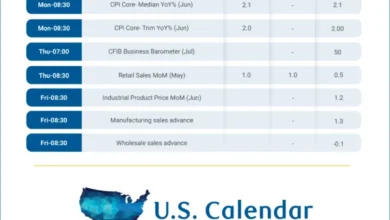
Consequently, market participants are hypersensitive to upcoming domestic economic releases. Attention has now shifted squarely toward the upcoming US Producer Price Index (PPI) report. As a key indicator of wholesale inflationary pressures, the PPI data will provide vital clues regarding whether inflationary momentum is cooling sufficiently to allow the Fed to pivot toward monetary easing, or if persistent price pressures will force the central bank to maintain its restrictive stance. Any deviation from expectations in these key data releases is expected to inject immediate volatility back into the precious metals complex.
Technical Analysis and Market Outlook
A detailed examination of the technical landscape reveals critical battlegrounds for bulls and bears alike. On the 4-hour chart, gold has established a solid demand zone near the $5,100 level, a threshold that has been thoroughly tested and defended over recent trading sessions.
However, the intensity of the recent correction has driven prices below the critical 20-period moving average (MA), signaling a short-term resurgence of selling pressure and shifting near-term momentum in favor of the bears. If the $5,100 demand zone fails to hold against incoming selling volume, analysts warn that spot prices could experience an accelerated descent toward the psychological $5,000 milestone. Further down, deeper structural supports await at the 100-period and 200-period moving averages, positioned at $4,820 and $4,600, respectively.
Conversely, momentum indicators offer early hints of stabilization. The Relative Strength Index (RSI), which previously slipped below the neutral 50.0 baseline during the sharp sell-off, has flattened significantly. This flattening action points toward a cooling of immediate selling pressure and supports the narrative of an impending consolidation phase before the market chooses its next directional breakout.
Should bullish momentum reemerge, the yellow metal faces a series of well-defined technical hurdles on its path to recovery. The immediate upside test lies at the 20-period moving average, currently situated near $5,280. A decisive break above this moving average would open the door for a subsequent retest of the $5,400 resistance level, with a successful clearance paving the way for a renewed challenge of the historic $5,600 peak.
Broader Market Implications and Future Outlook
The dramatic swings in the gold market carry profound implications for the broader financial ecosystem. For institutional portfolio managers, the recent volatility underscores the delicate balancing act between capitalizing on safe-haven appreciation and navigating the risks of overextended technical rallies. The integration of gold as a core strategic hedge against systemic fiscal risks, sovereign debt expansions, and geopolitical fragmentation has been firmly validated by the events of early 2026.
At the same time, retail investors and market speculators are being forced to navigate an environment characterized by lightning-fast price discovery and heightened sensitivity to macroeconomic data releases. As central banks continue their accumulation programs and geopolitical tensions simmer without clear resolutions, the structural foundation of the gold market remains robust.
Looking forward, the immediate market action will likely be dictated by upcoming inflation prints, central bank commentary, and developments on the international trade and geopolitical fronts. Whether the market successfully consolidates above its newly formed floors to build momentum for a run toward UBS’s ambitious $6,200 target, or succumbs to a deeper correction forced by a stubbornly hawkish Federal Reserve, gold remains the ultimate barometer of global economic and political anxiety. Market participants will continue to monitor every incoming data point, knowing that the next major catalyst could trigger another historic shift in the world’s oldest and most enduring financial asset.