Global financial markets stand at a critical juncture as a high-stakes central bank calendar unfolds, putting the credibility of key monetary authorities under intense pressure. At the center of this turbulence are the United States Federal Reserve and the Bank of Japan (BoJ), both grappling with shifting inflationary pressures, political interference, and complex macroeconomic environments. Meanwhile, the Bank of England (BoE) and the Bank of Canada (BoC) navigate their own domestic challenges as geopolitical tensions, particularly the protracted conflict in the Middle East, continue to reverberate through global energy markets and supply chains.
The overarching anxiety rippling through Wall Street and international trading desks is exacerbated by a notable reduction in policy transparency. With explicit forward guidance largely abandoned by major central banks in recent years, market participants are forced to parse nuanced speeches and incoming high-frequency data for clues. The upcoming interest rate decisions will not only shape borrowing costs for millions of households and businesses but will also test the independence of central banks amidst mounting political pressure from global leaders.
The Federal Reserve and the Weight of Political and Economic Pressures

As the Federal Open Market Committee (FOMC) prepares for its pivotal policy meeting, the debate within the central bank has rarely been more contentious. Markets currently price in roughly a two-thirds probability of a 25-basis-point increase in the federal funds rate. However, a deeply divided committee threatens to produce a split vote, reflecting conflicting interpretations of the current economic landscape.
The hawkish tone set by Fed Chief Kevin Warsh during his address at the Jackson Hole Economic Symposium signaled a hardening stance against stubborn inflation, though he stopped short of explicitly committing to an immediate rate hike. Subsequent commentary from various regional Fed presidents ahead of the designated blackout period reinforced this tighter policy bias. Conversely, dovish dissents from influential figures such as Governor Christopher Waller and New York Fed President John Williams highlight a distinct fracture within the leadership.
Compounding these internal divisions is external pressure from the White House. President Trump has renewed public demands for aggressive rate cuts to secure the lowest borrowing costs globally. For Fed leadership, navigating this political pressure ahead of the November midterms while maintaining institutional independence remains a delicate balancing act. A decision to hold rates or delay tightening could be misconstrued as yielding to political influence, potentially undermining market confidence in the central bank’s commitment to its 2% inflation target.
Underlying Economic Data and the Inflation Dilemma

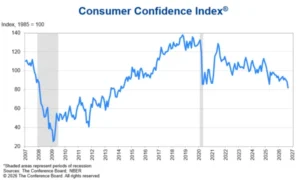
The FOMC’s policy deliberation is anchored by a complex matrix of economic indicators. While headline inflation has persistently hovered above the Fed’s 2% objective, labor market momentum has visibly cooled, and consumer sentiment has grown increasingly fragile. To gauge the health of the domestic consumer, markets will closely monitor the August retail sales report slated for release on Wednesday. Additional data points filling the weekly calendar include the Empire State manufacturing index on Tuesday, crucial housing market metrics on Thursday, and industrial production figures on Friday.
The core of the inflation debate centers on whether domestic disinflationary trends are robust enough to counteract external shocks. Chief among these are the brewing energy price pressures stemming from the ongoing conflict in Iran and persistent technological supply constraints, such as global chip shortages. Given that inflation has remained above target for an extended period and the economy shows no immediate signs of tumbling into a recession, policy analysts argue that the threshold for maintaining restrictive policy remains low. Furthermore, the likelihood of a prolonged Middle East conflict makes second-round inflationary effects virtually unavoidable, raising the risk that the Fed could fall behind the curve if it hesitates.
The Bank of Japan Confronts a Historic Policy Pivot
Across the Pacific, the Bank of Japan is facing its own critical inflection point. Throughout much of 2026, Japanese inflation trended downward, but this trajectory is reversing as government subsidies phase out and the lagged effects of past currency depreciation and elevated global oil prices drive up import costs.

BoJ board members have voiced growing alarm regarding the threat of an inflation overshoot. Yet, Governor Kazuo Ueda has historically shown reluctance to signal an aggressive acceleration in the pace of policy tightening. The true catalyst for shifting market expectations has instead materialized from external diplomatic and economic pressure, particularly from the United States. The Trump administration, led by Treasury Secretary Scott Bessent, has taken an increasingly assertive stance against further weakness in the Japanese yen, prompting Tokyo’s political leadership to signal a more accommodating stance toward monetary normalization.
Recent commentary from advisors close to Prime Minister Takaichi suggests that the government is prepared to greenlight a faster cadence of rate hikes from the BoJ, potentially transitioning from semi-annual adjustments to a quarterly schedule. Market participants have priced in roughly a 75% probability of a 25-basis-point increase at the central bank’s upcoming Friday meeting, alongside expectations for an additional 75 basis points of cumulative tightening through the end of 2027. To prevent a knee-jerk sell-off in the yen driven by investor disappointment, Governor Ueda will need to adopt a decidedly hawkish rhetoric during his post-meeting press conference, particularly in the wake of nationwide Consumer Price Index (CPI) figures released earlier that day.
Bank of England Remains Sidelined Amid Divergent Views
In contrast to the frantic policy adjustments anticipated in Washington and Tokyo, the Bank of England appears comfortable remaining on the sidelines for the immediate future. This cautious posture marks a notable departure from the heightened inflation alarms sounded by UK policymakers earlier in the year when energy markets experienced severe volatility.

Nevertheless, internal divisions within the Monetary Policy Committee (MPC) mirror those seen across global central banks. Chief Economist Huw Pill has consistently emerged as a leading hawkish voice, advocating for prompt policy action to prevent temporary inflation spikes from embedding themselves into long-term price dynamics. Conversely, Governor Andrew Bailey has adopted a decidedly dovish tone, recently suggesting that further rate hikes are not pre-programmed and characterizing second-round inflationary effects as subdued.
The UK economic data calendar presents a mixed picture. Headline inflation climbed to 2.9% year-on-year in July, driven by a 13% increase in the domestic energy price cap at the start of the third quarter. With energy regulators announcing a subsequent 4% hike for the fourth quarter—and no immediate resolution to the Middle East conflict in sight—headline price pressures are projected to trend higher into early 2027. Ahead of Thursday’s rate decision, markets will dissect Wednesday’s core and services CPI reports, Tuesday’s labor market statistics, and Friday’s retail sales data to gauge whether the MPC will be forced to reconsider its patient stance at subsequent meetings.
Canadian CPI and International Economic Developments
In North America, the Bank of Canada (BoC) is similarly scrutinizing domestic price stability following a hawkish hold at its September policy meeting. Headline inflation has remained anchored near 3.0% since April, largely propelled by elevated gasoline costs. While the central bank elected to keep its benchmark rate unchanged, its accompanying statement emphasized mounting upside risks to inflation, leading investors to fully price in a 25-basis-point rate increase by December. A hotter-than-expected Canadian CPI print on Monday could accelerate these expectations forward to the October policy announcement.

Beyond North America and Asia, the global economic calendar features several critical data releases that will dictate cross-asset sentiment. In Europe, final Eurozone inflation estimates for August are scheduled for publication on Wednesday. In Asia, China will release comprehensive industrial output and retail sales figures for August on Tuesday, providing a vital barometer for global manufacturing demand. Meanwhile, New Zealand will report its second-quarter Gross Domestic Product (GDP) growth figures on Thursday, rounding out a consequential week for international monetary policy and macroeconomic surveillance.