HaasOnline TradeServer Expands Automated Trading Capabilities with Full BloFin Spot Market Integration


HaasOnline, a leading provider of professional-grade cryptocurrency trading automation software, has officially announced the integration of BloFin’s spot market into its TradeServer Cloud platform. This development marks a significant expansion of the partnership between the two entities, as HaasOnline users can now execute automated trading strategies across more than 350 spot pairs on the BloFin exchange. Previously, HaasOnline’s support for BloFin was restricted to derivatives, specifically USDT-margined and COIN-margined perpetual contracts. By incorporating spot market access, traders now have the ability to manage both leveraged futures positions and non-leveraged spot accumulation strategies within a unified ecosystem.
Chronology of the BloFin and HaasOnline Partnership
The collaboration between HaasOnline and BloFin represents a strategic alignment between a high-frequency, algorithm-focused trading software provider and a derivatives-heavy digital asset exchange. BloFin, which transitioned from a quant-focused finance firm established in 2019 to a public-facing exchange in 2023, prioritized robust API functionality from its inception. This architecture made it a natural target for integration with HaasOnline’s TradeServer.
The initial phase of this partnership focused exclusively on the derivatives market, acknowledging BloFin’s reputation as a high-liquidity venue for perpetual futures. Traders were initially able to connect their BloFin accounts to HaasOnline to automate complex strategies involving up to 150x leverage. While spot price data was available for monitoring purposes during this period, the execution layer remained dormant. The recent update removes this barrier, effectively allowing users to treat BloFin as a comprehensive, multi-asset trading environment. By bridging the gap between derivatives and spot, the update addresses the demands of institutional and retail traders who require a singular interface for hedging, arbitrage, and long-term asset accumulation.
Technical Architecture and Execution Mechanics
A critical component of this integration is the handling of order types. Because BloFin’s spot order endpoints do not natively support stop-loss or take-profit orders—features typically associated with derivatives venues—HaasOnline has implemented a server-side logic solution. When a user deploys a bot or initiates a Smart Trade on a spot pair, the TradeServer monitors the market price in real-time. If a predefined exit condition is met, the software automatically triggers the necessary closing order. This "Smart Trade" functionality ensures that, despite the underlying exchange’s technical limitations, users maintain the risk management capabilities required for professional trading.
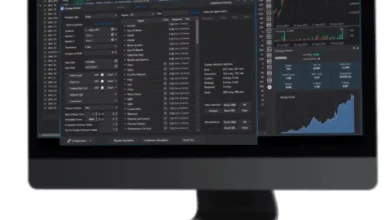
In the TradeServer interface, the integration treats BloFin as three distinct exchange accounts: BloFin SPOT, BloFin USDT, and BloFin COIN. This segmentation allows for granular control, enabling traders to run diverse strategies simultaneously without conflict. For instance, a user can operate a Dollar-Cost Averaging (DCA) bot on the spot account while simultaneously managing a high-leverage hedging strategy on the USDT-margined perpetual account.
Market Implications and Risk Management
The addition of spot trading to the BloFin-HaasOnline pipeline carries significant implications for market participants, particularly regarding risk management. Spot trading, by definition, involves the acquisition of the underlying asset without the influence of leverage, which significantly reduces the probability of liquidation events—a primary concern in perpetual futures markets. However, automation introduces unique risks that differ from manual trading.
Industry analysts observe that automated systems execute strategies with high precision and speed, which can be a double-edged sword. While it allows for immediate response to market volatility, it also means that flawed strategies can result in rapid capital depletion if not properly monitored. HaasOnline recommends that users implement rigorous risk management protocols, including position sizing limits, stop-loss thresholds, and periodic audits of bot performance. The firm emphasizes that while the software provides the tools for automation, the responsibility for risk parameters remains entirely with the user.
Analysis of the BloFin Exchange Ecosystem
BloFin’s emergence in the competitive cryptocurrency exchange landscape has been driven by its focus on programmatic access and a user base comprised largely of quantitative traders. By eschewing mandatory KYC for basic account tiers and focusing on API stability, the exchange has positioned itself as a preferred venue for high-volume automated traders.
Data regarding exchange volume indicates that while BloFin remains a derivatives-centric platform, the introduction of spot pairs is a calculated effort to capture market share from more established incumbents. By integrating with established automation platforms like HaasOnline, BloFin gains access to a sophisticated user base that demands high uptime, low latency, and deep API documentation. This integration serves to legitimize BloFin’s spot offerings, providing the liquidity necessary for automated grid bots and market-making strategies to function efficiently.
Operational Setup and Integration Guidelines
For users looking to initiate automated trading on the newly available spot venues, the process requires a systematic approach to API management. The integration involves a three-step workflow: account creation, credential generation, and secure linking.
- Account Provisioning: Users must maintain an active, funded BloFin account. The platform supports various deposit methods and requires identity verification only for higher-tier withdrawals, which serves to streamline the onboarding process for professional traders.
- API Key Management: Security is paramount when linking third-party software to an exchange. Users are instructed to generate API keys with strictly defined permissions, ensuring that the software has access to trading endpoints without the ability to initiate unauthorized withdrawals. HaasOnline provides a comprehensive setup guide that assists users in configuring these keys to prevent common errors, such as the inclusion of trailing whitespace in credential fields.
- Deployment: Once linked, the TradeServer Cloud interface allows for the deployment of a wide array of strategies. Whether utilizing pre-built templates or custom-coded scripts, users can apply their existing strategies to BloFin’s 350+ spot pairs.
Broader Impact on the Automation Industry
The expansion of HaasOnline into BloFin’s spot market reflects a broader trend in the fintech industry: the consolidation of multi-asset trading tools. As cryptocurrency markets mature, the distinction between "crypto-native" trading venues and traditional financial instruments continues to blur. Traders are increasingly moving away from manual, exchange-specific interfaces toward centralized, third-party software that provides a unified view of their holdings across multiple venues.
By offering a seamless transition between futures and spot trading on a single exchange, HaasOnline is effectively reducing the friction associated with cross-market strategies. This is particularly relevant for arbitrageurs who may look to exploit price discrepancies between the spot and futures markets on the same exchange—a strategy that is significantly easier to execute when both venues are managed within the same automation framework.
Future Outlook
As of the current announcement, the integration is fully live and available to all TradeServer Cloud users. The technical team at HaasOnline has indicated that they will continue to monitor the performance of the BloFin API, with future updates expected to refine the execution speed and add support for more advanced order types as BloFin updates its own infrastructure.
For those new to the ecosystem, the availability of a 7-day trial period offers a low-risk entry point to test the integration. As the digital asset market continues to evolve, the reliance on such tools will likely grow, particularly as institutional interest demands more sophisticated risk management and execution capabilities. Traders are advised to consult the official documentation provided by both BloFin and HaasOnline to ensure compliance with security best practices and to stay updated on future feature releases.
In summary, the integration of BloFin spot markets into the HaasOnline TradeServer Cloud is a notable advancement that provides traders with increased flexibility and robust automation capabilities. By bridging the gap between spot and derivatives, this update equips users with a comprehensive toolkit for navigating the complexities of the modern cryptocurrency market, provided they maintain a diligent approach to risk management and operational security.