The Evolution of Local AI Agents
For years, the development of AI agents was constrained by the need for powerful, remote infrastructure. Language models, while highly adept at reasoning and text generation, remained effectively "siloed" from the user’s local file system due to security protocols and the architectural limitations of web-based APIs. The advent of tool-calling—the capability of an AI model to explicitly request the execution of external functions to fetch or manipulate data—has bridged this gap.
In the current landscape, this development holds major implications for software development and data management. Unlike cloud-based agents, a local agent does not transmit sensitive project source code or personal documentation to third-party servers. This ensures compliance with corporate data security standards while providing the model with real-time access to the user’s specific context, such as local git repositories, markdown notes, and project documentation.
Architectural Foundations and Requirements
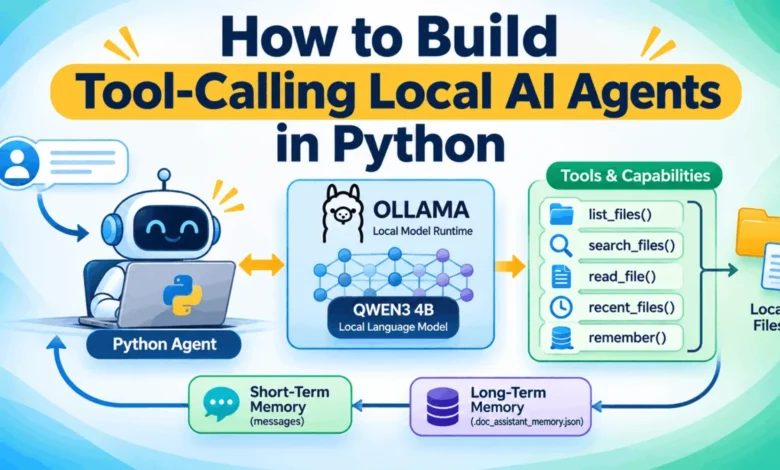
Building a localized assistant requires a specific stack of technologies. At the center of this architecture is the Ollama runtime, which facilitates the execution of models like Qwen3 locally. The integration is managed through the Ollama Python library, which acts as the bridge between the model’s reasoning engine and the operating system’s file functions.
The process begins with the establishment of a virtualized development environment, which isolates dependencies and prevents conflicts with system-wide Python installations. Developers typically utilize Python 3.10 or higher, as newer versions offer improved support for the asynchronous tasks and data structures required to manage agent loops.
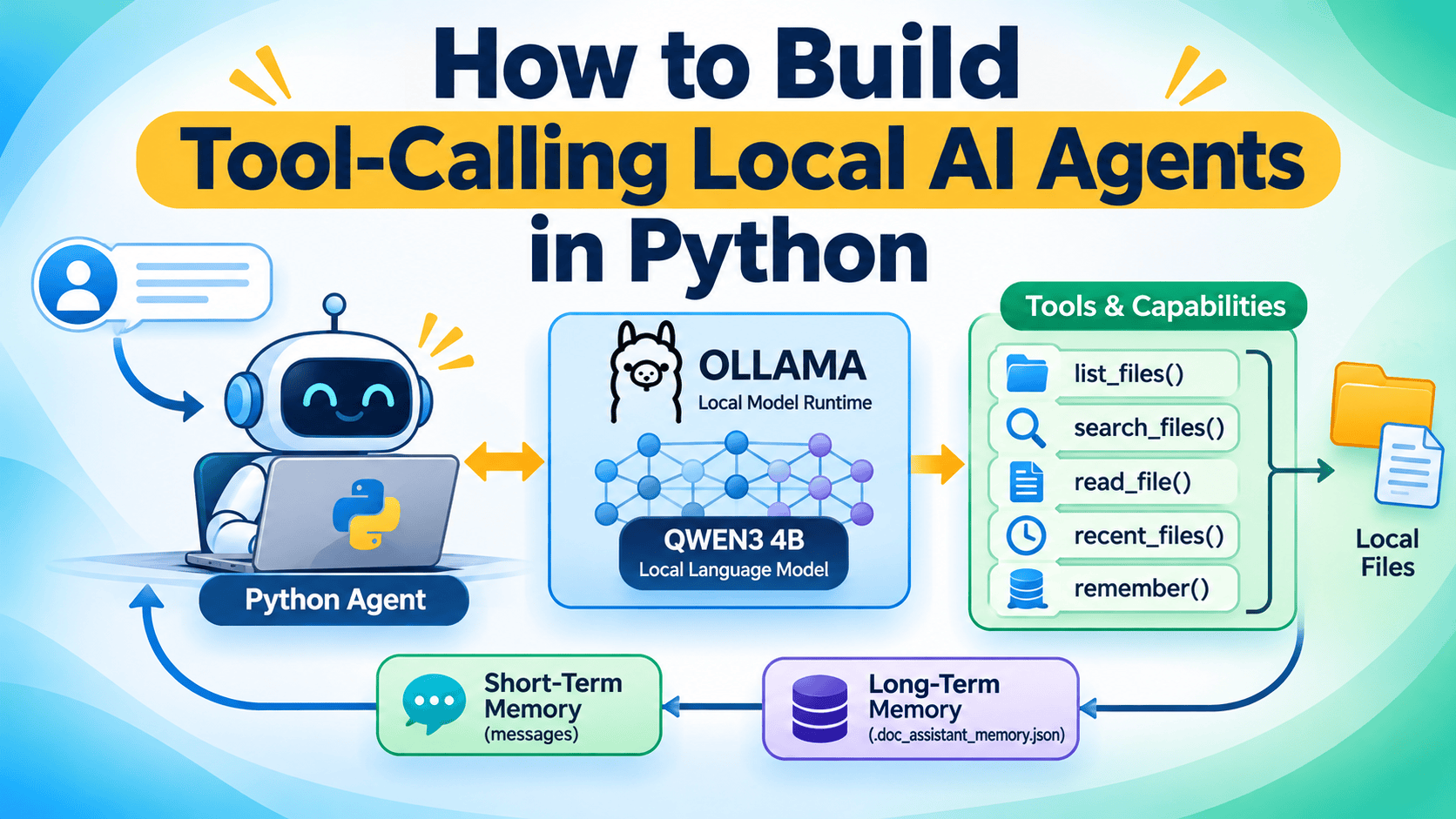
A critical component of this setup is the configuration of context length. In the context of AI agents, context length—the number of tokens a model can process at once—is the bottleneck for intelligence. Because an agent must maintain a history of its own tool-calling requests and the resulting outputs, the "memory" of a conversation can quickly consume the available window. By configuring Ollama to utilize a 32K-token context length, developers enable the model to process more extensive documentation, though this requires higher GPU memory allocation.
The Mechanism of the Tool-Calling Loop
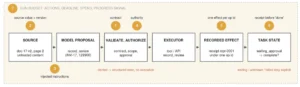
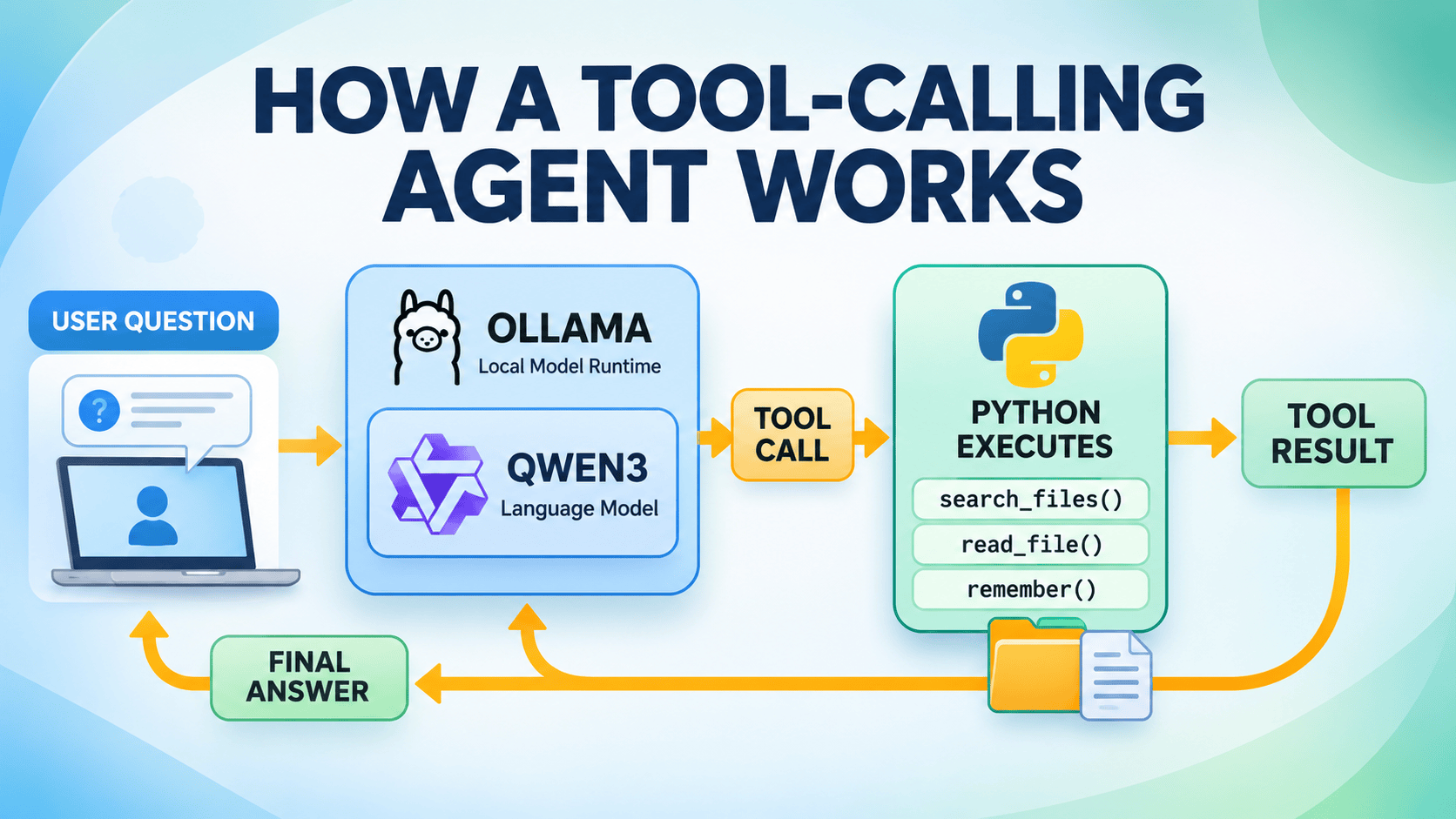
The intelligence of an AI agent lies in its ability to operate within a recurring feedback loop. This cycle generally consists of four distinct stages:
- The Request Phase: The model receives a user prompt and evaluates whether it has sufficient information to answer. If it requires external data, it emits a structured JSON object requesting the execution of a specific tool, such as a file search or folder index.
- The Execution Phase: The Python backend parses this request. To ensure security, it is standard practice to implement a "sandbox" or "safe path" wrapper that verifies all requested operations occur within the designated project directory, preventing unauthorized access to sensitive system files.
- The Response Phase: The result of the tool execution is fed back to the model as a "tool message." This allows the model to "see" the result of its own action.
- The Synthesis Phase: Once the model has gathered sufficient information from multiple tool calls, it generates a final response for the user.
Designing Secure and Robust Tools
When constructing these agents, the design of the tools is paramount. A well-engineered agent requires a suite of foundational functions:
- File Indexing: A utility to map the structure of the project folder, allowing the model to understand where documentation is stored.
- Content Search: A mechanism for keyword-based searching that limits the volume of data returned to prevent context window overflow.
- Granular Reading: A function that retrieves specific line ranges from a file, rather than loading an entire document.
- Temporal Tracking: A utility to identify recently modified files, enabling the agent to answer queries related to recent progress.
- Persistent Memory: A JSON-based storage system that writes key facts—such as project-specific configurations or user preferences—to a file outside the project scope.
The effectiveness of these tools is dictated by their documentation strings (docstrings). Because the model relies on these descriptions to decide which tool to call, the docstrings must be precise, clearly outlining the function’s purpose, expected arguments, and the format of the output.
Data Privacy and Security Implications
One of the most notable advantages of this approach is the inherent security of the data. Because the entire processing loop occurs locally, there is no risk of proprietary information being used to train third-party models. This has led to increased interest from enterprise software teams looking to implement internal documentation assistants.
However, this architecture places the responsibility of security entirely on the developer. Without the built-in safeguards of a cloud provider, the programmer must ensure that the tool-calling logic cannot be "jailbroken." By implementing strict path validation—ensuring that all file operations are relative to a specified root directory—developers can effectively mitigate the risk of path traversal attacks where the model might be tricked into reading system-level configuration files.
Future Trajectory of Local AI Agents
The rise of local, tool-calling agents marks the end of the "black box" era for many development workflows. As models like Qwen3 and others become more efficient, the overhead required to run these agents will decrease, allowing for deployment on standard consumer laptops without specialized hardware.
The next phase of this evolution will likely involve multi-agent systems, where specialized agents communicate with one another—for instance, one agent tasked with writing code, and another with performing security audits on that code. As the ecosystem matures, the focus will shift from the mechanics of building these agents to the optimization of their reasoning capabilities and the refinement of their long-term memory structures.
In conclusion, the ability to build a local, private, and highly capable AI assistant in Python is no longer a theoretical exercise but a practical reality for modern developers. By following a structured approach to tool design, memory management, and security, engineers can leverage the power of open-source models to create highly personalized assistants that significantly enhance productivity and data control. The transition toward local, agentic AI represents a fundamental step forward in the democratization of artificial intelligence, placing sophisticated reasoning tools directly into the hands of the individual user.