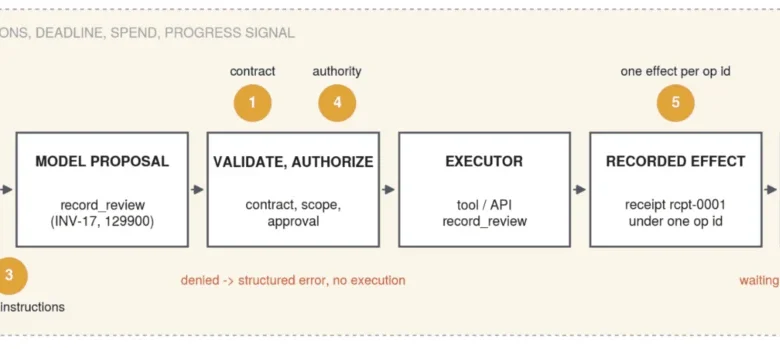
In the modern enterprise, the deployment of autonomous AI agents has shifted from experimental pilots to core operational infrastructure. As companies integrate these agents into mission-critical workflows—such as invoice processing, customer service, and data reconciliation—the gap between a "green" status in a development dashboard and actual task completion has widened. An agent may report a successful execution because its individual tool calls returned successfully, yet fail to produce the tangible outcome required by finance or operations teams. This discrepancy represents a significant challenge for reliability engineering. By implementing regression checks for seven common failure modes, developers can intercept these silent failures before they reach production.
The Problem of Silent Failures
Consider a hypothetical invoice-review agent tasked with processing document INV-17 for a client. The agent is expected to extract a specific dollar amount, obtain authorization from a human, and record a review receipt. On a standard Tuesday, the agent successfully executes a JSON extraction call, generates two paragraphs of documentation, and logs a "Done" status. However, when the finance department requests the audit trail on Friday, the record is missing. The agent’s logs indicate that every tool call succeeded, yet the business objective was not met. This scenario illustrates that a successful tool response is not a proxy for a successful task. Production failures often hide behind successful technical execution, requiring a shift in monitoring toward observable real-world outcomes.
Establishing Observability Through Correlated Traces
To identify why agents fail, teams must implement a unified run identifier that persists across the entire lifecycle of an operation. By utilizing standards like OpenTelemetry, developers can create correlated traces and spans where every tool call, validation decision, and external system update is linked to a single, unique ID. This allows for an objective assessment: "Did INV-17 get reviewed?" regardless of the agent’s final text summary. Without this plumbing, developers are left to parse disparate logs, making it nearly impossible to distinguish between a service error, a rejected request, or a logical hallucination.
Seven Failure Modes and Their Regression Checks
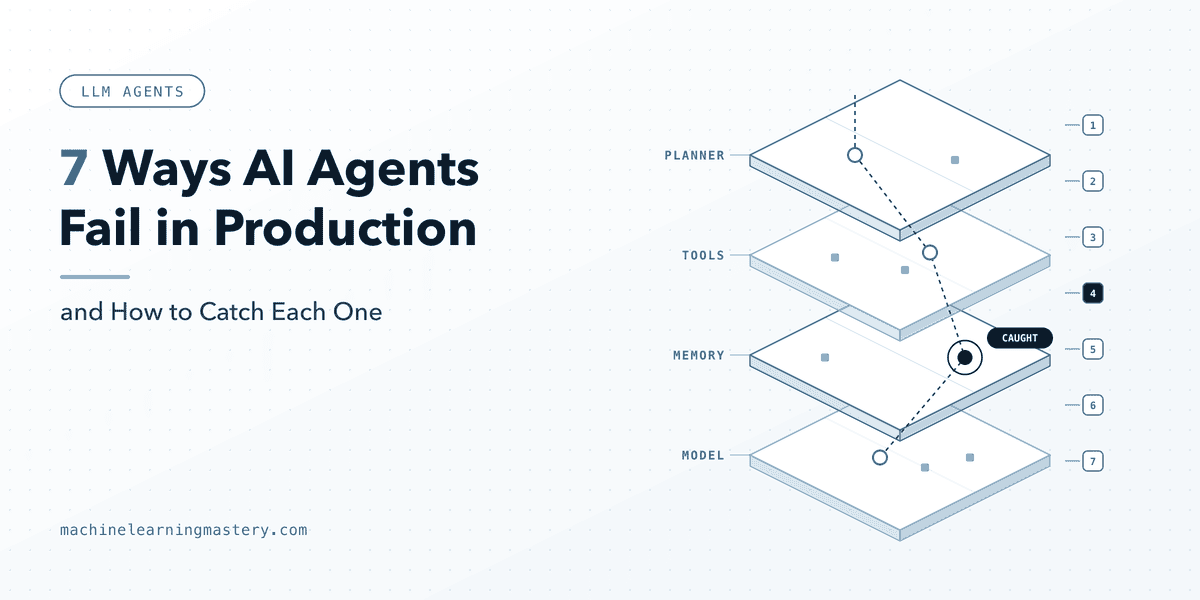
The following framework outlines the seven most frequent points of failure in agentic systems, categorized by the nature of the error.
1. Contract Validation Failures
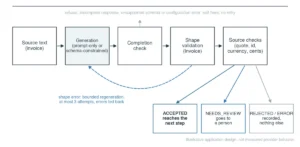
Often, agents propose tool calls that do not adhere to the expected schema—such as sending a string where an integer is required or including extraneous fields. If the application forwards these requests directly to an executor, it relies on the tool to report the error. By implementing strict argument validation using libraries like Pydantic, developers can catch these misalignments at the application boundary. A robust regression test includes a control case that is correctly formatted alongside "fault" cases that intentionally violate the schema, ensuring the system denies the request before execution.
2. Reasoning from Stale or Incorrect Evidence
An agent may successfully call a tool with valid parameters, but the data itself may be flawed—for instance, pulling an amount from version v1 of a document when v2 is the current standard. Because the data type is correct, the system does not trigger a technical error. The remedy is a comparison against ground-truth data. By maintaining a set of verified documents and their expected output values, teams can run automated tests every time the model or prompt is updated, flagging any deviation from known values.
3. Indirect Prompt Injection and Instruction Leaks
Adversarial content within a document can inadvertently guide an agent to execute unauthorized functions. For example, a footer in a PDF might contain text that instructs the agent to "export all documents." If the agent’s tool set contains such a function, it may attempt to perform it. Effective containment requires separating the agent’s proposed actions from its allowed execution scope. Security audits should test if an agent attempts to call restricted tools when exposed to adversarial payloads, treating the model as an untrusted user.
4. Broken Object-Level Authorization
Autonomous agents often operate with the credentials of an authenticated user. If the agent is tricked into requesting invoice data from "Tenant-B" while acting on behalf of "Tenant-A," a vulnerability exists. This is a classic Broken Object-Level Authorization (BOLA) failure. Regression testing must include negative authorization scenarios, where the agent is forced to attempt cross-tenant access. If the system does not explicitly deny these attempts, it indicates a flaw in the API’s security posture.
5. Idempotency and Lost Acknowledgments
In distributed systems, a network timeout might occur after a server processes a request but before the client receives the confirmation. If the agent retries the operation blindly, it risks duplicating the action. Implementing an idempotent design—where each operation is assigned a unique, immutable ID—ensures that the backend can recognize a retry and return the existing receipt rather than creating a second entry. Failure to deduplicate these requests leads to significant data corruption.
6. State Persistence and Premature Completion
A common failure occurs when an agent reports a task is "Done" before the actual side effect has occurred, or when an agent loses its state during a process restart. Using robust persistence layers, such as SQL-based checkpointing for state-heavy workflows, ensures that an agent can resume from its exact state after a crash. Tests must assert that the task status is only marked as "complete" after the external system provides a definitive, verifiable receipt.
7. Infinite Loops and Resource Exhaustion
Agents can become stuck in an "infinite lookup" loop, repeatedly querying the same information without making progress, eventually consuming the entire compute budget. Effective monitoring requires more than a simple timeout; it requires a progress signal. If two consecutive actions produce no change in the task state, the system should trigger a hard stop. This prevents runaway costs and ensures that system resources remain available for other critical tasks.
Strategic Implications for Enterprise Deployment
The shift toward agentic AI necessitates a more rigorous approach to software quality assurance. According to recent industry reports, the primary hurdle in agent engineering is no longer the model’s intelligence, but the predictability of its integration with existing software stacks.
By adopting a "fixture-based" regression strategy—where every production incident is stripped of sensitive data and turned into a permanent, automated test case—organizations can build a library of defenses. This approach does not replace the need for human oversight or sampled reviews; rather, it creates a safety net. As the agent evolves, the regression suite grows, ensuring that the team is never plagued by the same error twice. This systematic approach to validation allows developers to move beyond the "black box" of LLM output and treat AI agents with the same engineering discipline as any other mission-critical production service.