Navigating the 3Commas v1 Sunset: A Comprehensive Migration Guide for Automated Traders


The impending deactivation of the 3Commas v1 platform on September 11, 2026, represents a significant structural shift in the retail cryptocurrency trading landscape, compelling thousands of users to manually migrate their automated strategies to new infrastructure. As 3Commas pivots to its v2 environment—a platform developed in partnership with WunderTrading—the lack of automated migration tools means that every active bot, configuration, and API connection must be re-established by hand. This forced transition serves as a critical juncture for traders to evaluate whether their current infrastructure aligns with their long-term risk management and operational requirements.
The Chronology of the 3Commas v1 Decommissioning
The transition process began in earnest following the official announcement from 3Commas, which outlined a definitive sunset date for their legacy v1 systems. By September 11, 2026, the company will terminate all v1 API connections, effectively rendering existing bots non-functional. Because the v2 platform utilizes an entirely different technological architecture, user strategies are fundamentally incompatible with the new system.
For the average retail trader, this necessitates a methodical approach to data extraction. Users are advised to catalog their current bot parameters—including base order sizes, safety order configurations, and price deviation settings—before the final shutdown date. Furthermore, the migration requires the generation of new API keys, as existing connections to exchange partners will not carry over to the v2 infrastructure. This process is not merely a software update; it is a full-scale infrastructure migration that demands precision to avoid financial slippage or unintended trade executions.
Architectural Divergence and Market Implications
The shift to v2 brings into focus the varying philosophies of automated trading platforms. While 3Commas v2 focuses on a hosted-only model, other competitors like HaasOnline advocate for a self-hosted architecture. The core distinction lies in control: self-hosted solutions, such as the HaasOnline TradeServer, allow the trading engine to operate on a user’s private hardware or dedicated virtual private server (VPS).
This architectural choice carries significant weight for professional traders. In a self-hosted environment, exchange keys remain localized, and the execution engine is not subject to the platform-wide maintenance schedules or deactivation dates set by a third-party provider. For traders managing significant capital, the ability to maintain independent control over the bot’s execution environment is often viewed as a primary mitigation against platform risk. Conversely, hosted solutions prioritize ease of use and reduced technical overhead, which may remain the preferred choice for casual participants who do not wish to manage server-side infrastructure.
Comparative Exchange Coverage
A critical component of any migration plan is ensuring that the target platform maintains connectivity to the user’s preferred liquidity venues. 3Commas v2 currently supports nine major exchanges, including Binance, Bybit, OKX, Bitget, Kraken, KuCoin, Coinbase, Gate, and Hyperliquid.
Comparatively, established platforms like HaasOnline provide broader coverage, extending to venues such as WOO X, Phemex, BloFin, and Gemini. Traders must perform a gap analysis of their current exchange footprint before committing to a new provider. For instance, while most platforms support spot and futures trading on top-tier exchanges, specific derivative products or regional variants—such as Binance US or niche futures pairs—may vary. Users operating on exchanges that are scheduled for cessation, such as the BitMEX closure on September 23, 2026, should treat these events as immediate priorities to avoid stranded positions.
Technical Mapping: Translating Strategy Parameters
Rebuilding a strategy requires more than just copying numbers; it requires an understanding of how different platforms calculate risk and order sizing. A primary point of friction in the migration process involves unit discrepancies. For example, 3Commas traditionally defines order sizes in the quote currency (e.g., USDT), whereas other platforms may require the base currency or contract counts.
Dollar Cost Averaging (DCA) Bot Translation
When transitioning a DCA bot, the vocabulary of "safety orders" versus "DCA orders" must be carefully aligned.
- Base and DCA Order Sizes: Users must convert quote-currency allocations into the base coin units required by the new platform. Failure to adjust this calculation results in unintended position sizing.
- Price Deviation and Multipliers: While concepts like price deviation percentages and order size multipliers are industry standards, the compounding logic can differ. Users should verify if the target platform calculates steps from the base order or cumulatively from the last fill.
- Profit Targets: Understanding the difference between a "percentage from base" and "percentage from average" is essential. Mapping a target profit incorrectly can lead to prematurely closing positions or failing to capture desired price movements.
Grid Trading Adjustments
Grid bots are generally more straightforward to migrate, as they are defined by fixed mathematical ranges. However, traders must pay close attention to the handling of maker/taker fees and the specific mode of the grid—arithmetic versus geometric. In a manual migration, one must verify if the platform requires the total investment amount to be distributed across levels or if it requires a per-level allocation. Furthermore, the "automatic balancing" feature, which buys or sells the base asset to fill the grid, should be explicitly toggled to ensure the bot begins operation with the desired exposure.
Signal Integration and Advanced Automation
For users who rely on external triggers, such as TradingView alerts or custom API-driven signals, the migration provides an opportunity to modernize their automation pipeline. 3Commas’ Signal Bot architecture is functionally similar to the webhooks and API-driven execution models found on professional-grade platforms.
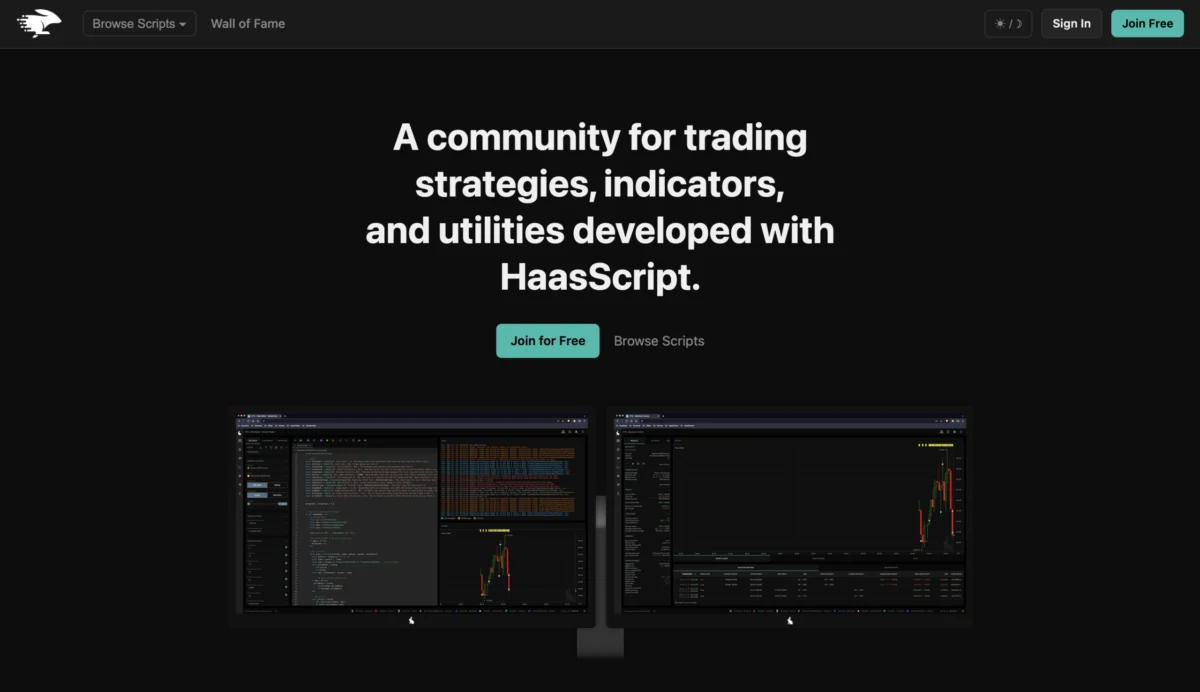
The primary difference lies in the integration depth. Advanced users may opt to move away from rigid "Signal Bots" toward customizable scripting environments. Platforms that offer visual editors or robust scripting languages (like HaasScript) allow for backtesting custom indicators against historical data—a feature that provides a statistical edge over simple webhook-based triggers. By shifting to a script-based approach, traders can incorporate complex logic, such as multi-indicator confluence, which is often difficult to replicate in standard signal-bot interfaces.
Strategic Planning for Migration
A successful migration should be executed in a phased, orderly fashion to minimize downtime. The following roadmap is recommended for users currently navigating this transition:
- Inventory Audit: Export all current bot configurations, including take-profit levels, stop-loss triggers, and active DCA ladder steps.
- Platform Verification: Compare the exchange-specific API requirements for the target platform to ensure compatibility with your existing liquidity venues.
- Environment Setup: If choosing a self-hosted option, provision the server infrastructure at least one week prior to the final migration date.
- Dry-Run Testing: Deploy the rebuilt strategies in a "paper trading" or "simulated" mode for at least 48 hours. This confirms that the logic, including order size calculations and signal receipt, behaves as expected.
- Staggered Deployment: Begin by migrating low-volume strategies first. Once performance is verified, migrate core capital-intensive bots.
- Decommissioning: Only after the new bots are confirmed to be executing correctly should the v1 bots be disabled, ensuring no overlapping orders or unintended market exposure occurs.
Broader Market Implications
The forced migration of the 3Commas user base highlights the inherent risks of dependency on centralized, hosted SaaS (Software as a Service) platforms in the crypto-asset space. When a platform undergoes a structural pivot, the burden of continuity falls entirely on the user. This trend may accelerate the adoption of decentralized or self-hosted trading solutions, as professional traders increasingly prioritize platform independence.
Furthermore, the complexity of this migration serves as a reminder of the need for standardized documentation in automated trading. As the industry matures, the friction between platforms—manifested in different terminologies for identical functions—remains a barrier to entry. For the time being, however, the responsibility rests with the trader to ensure that their technical execution remains consistent across the evolving landscape of crypto-automation tools. By treating this migration not as a hurdle, but as a technical audit, users can refine their strategies and potentially improve the efficiency of their automated workflows in the long term.