From Pairs to Portfolio: Evolving Statistical Arbitrage Strategies for Independent Traders

The landscape of statistical arbitrage, a sophisticated trading strategy aimed at exploiting temporary price discrepancies between related financial instruments, is undergoing a significant evolution, particularly for independent traders. While traditional pairs trading has long been a cornerstone of this approach, its inherent limitations in capital efficiency and signal utilization are prompting a shift towards more integrated, portfolio-based methodologies. This exploration delves into the advancements in statistical arbitrage, focusing on a strategy termed "Triangulated Stat Arb," which promises to enhance expected returns and offer greater variance control by analyzing the interconnectedness of multiple trading pairs.
The Limitations of Traditional Pairs Trading
Pairs trading, at its core, involves identifying two historically correlated assets whose prices have temporarily diverged. A trader simultaneously buys the undervalued asset and sells the overvalued one, anticipating their price relationship will revert to its historical mean. This strategy offers a degree of market neutrality, as the long and short positions are designed to offset each other’s exposure to broad market movements.
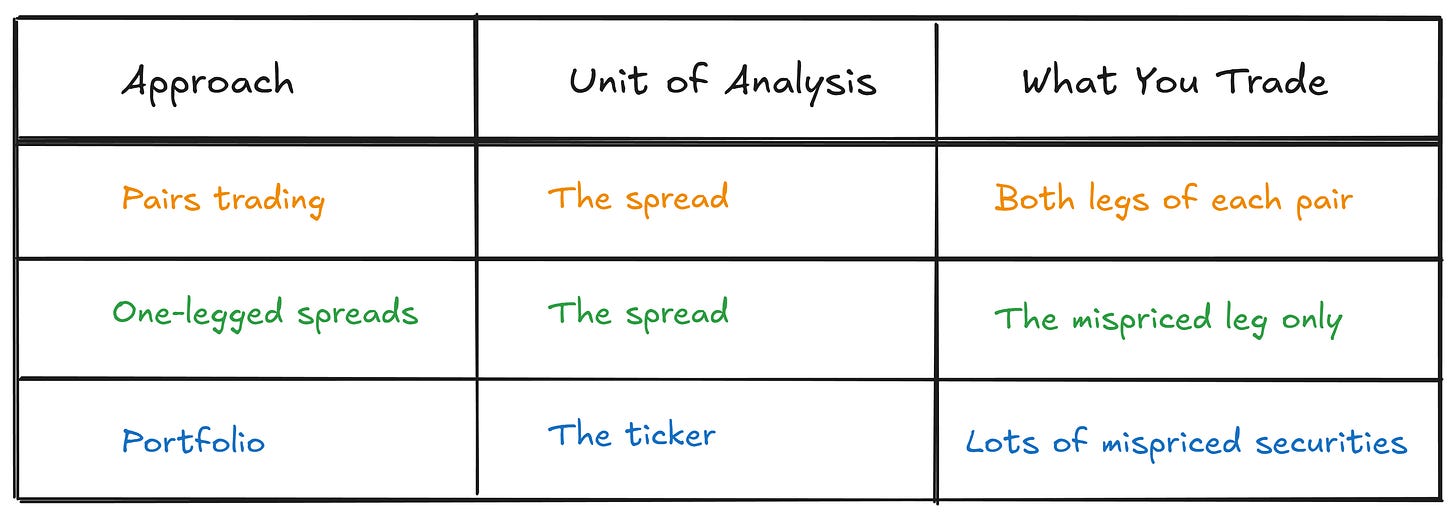
However, for independent traders managing limited capital, traditional pairs trading presents several challenges. Firstly, it demands substantial buying power. Trading both legs of a pair ties up capital in both the long and short positions, thereby limiting the number of pairs an individual trader can actively manage. If a trader has identified 100 potential pairs but can only afford to trade 10 due to capital constraints, a significant portion of their analytical edge goes unutilized.
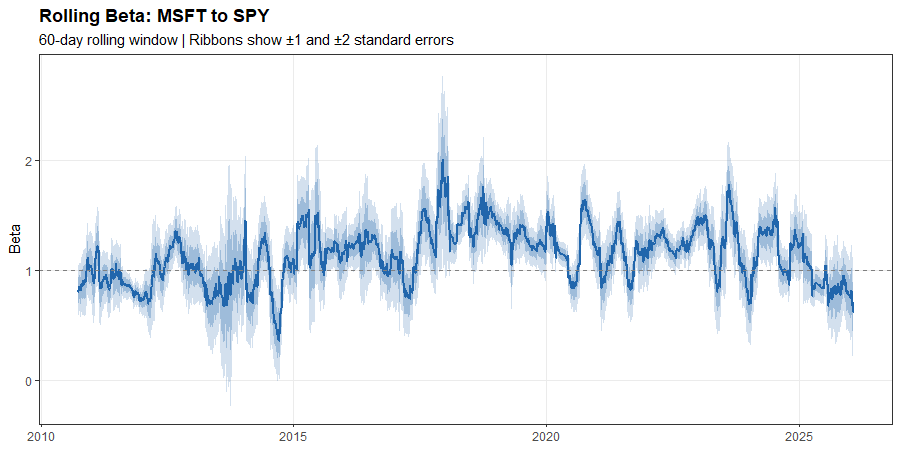
Secondly, while trading only the mispriced leg of a pair can improve capital efficiency and potentially boost expected returns, it introduces considerable variance. This approach essentially accepts a more volatile trading experience in exchange for potentially higher rewards. The challenge lies in accurately identifying the mispriced leg. While observing which stock moved more significantly during a divergence can offer clues, it’s not foolproof. Market or sector-wide movements (beta) can also influence individual stock prices, making it difficult to definitively pinpoint the truly mispriced security solely based on price action.
The Emergence of Network Analysis in Statistical Arbitrage
The limitations of single-pair analysis have spurred the development of more sophisticated techniques that leverage the collective information embedded within a network of related trading instruments. This approach moves beyond analyzing individual spreads in isolation and instead examines the relationships between multiple overlapping pairs.
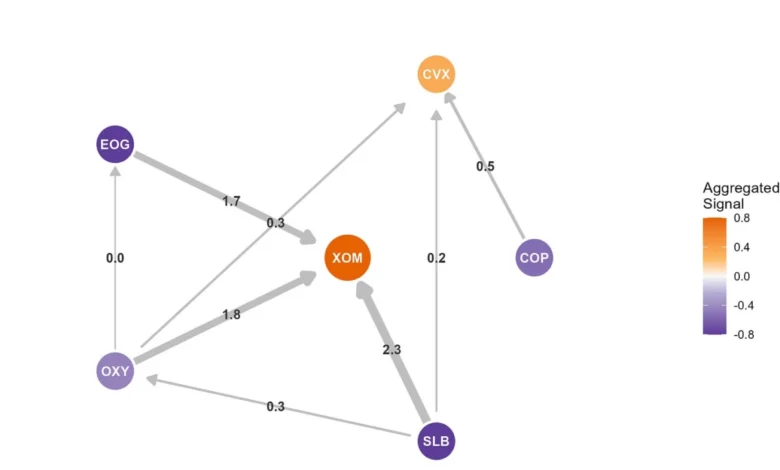
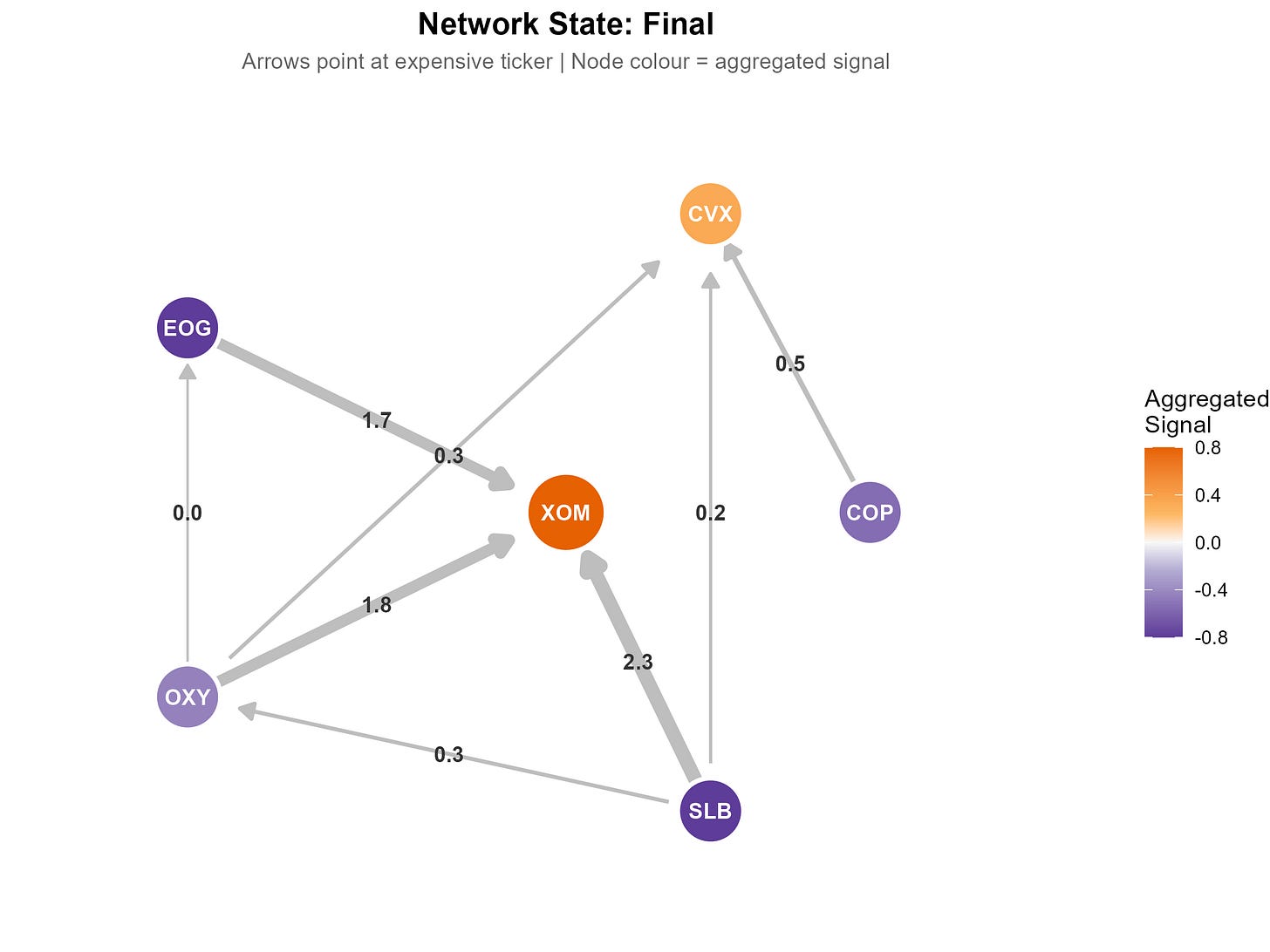
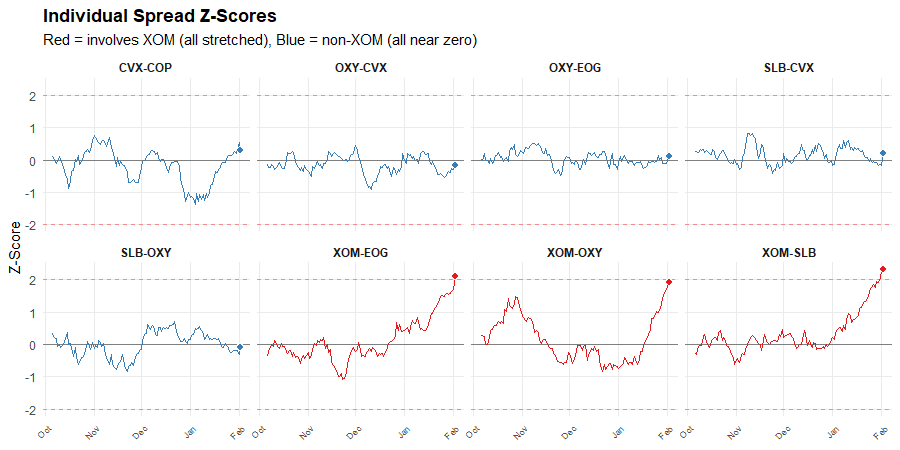
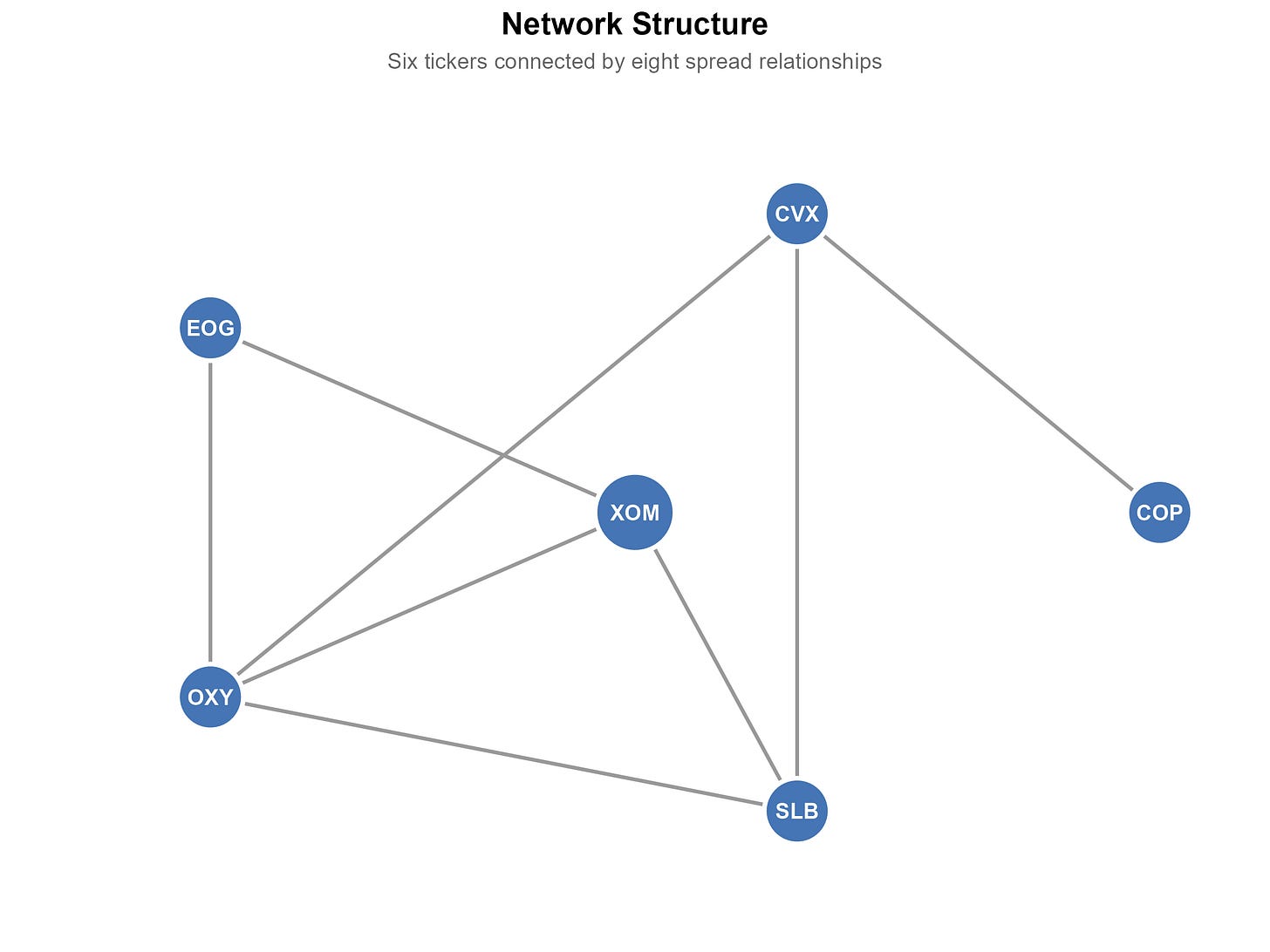
Consider a small universe of six energy stocks, from which eight distinct spreads can be constructed. By analyzing the statistical deviations (z-scores) of these spreads over time, a clearer picture of relative mispricing can emerge. For instance, if a particular stock, such as ExxonMobil (XOM), consistently appears as the outlier in multiple spreads—meaning XOM is statistically rich or cheap relative to several other energy companies like SLB, CVX, OXY, EOG, and COP—this collective evidence provides a more robust signal of mispricing than any single spread might offer.
The visualization of these relationships, often represented as a network graph where tickers are nodes and spreads are edges, allows traders to observe the interconnectedness and the dynamic evolution of their relative valuations. When XOM exhibits significant deviations against a majority of its counterparts, it strongly suggests that XOM itself is the mispriced security, rather than a general mispricing within individual pairs. This network perspective harnesses the power of consensus among related instruments.
Triangulated Stat Arb: A Portfolio Approach
This enhanced understanding of inter-asset relationships has led to the development of "Triangulated Stat Arb," a strategy that shifts the focus from trading individual spreads to constructing a diversified portfolio of individual securities. Unlike traditional pairs trading, where capital is deployed on both legs of a spread, Triangulated Stat Arb uses the information from multiple spreads to identify and trade individual securities that are demonstrably mispriced relative to a broader universe.
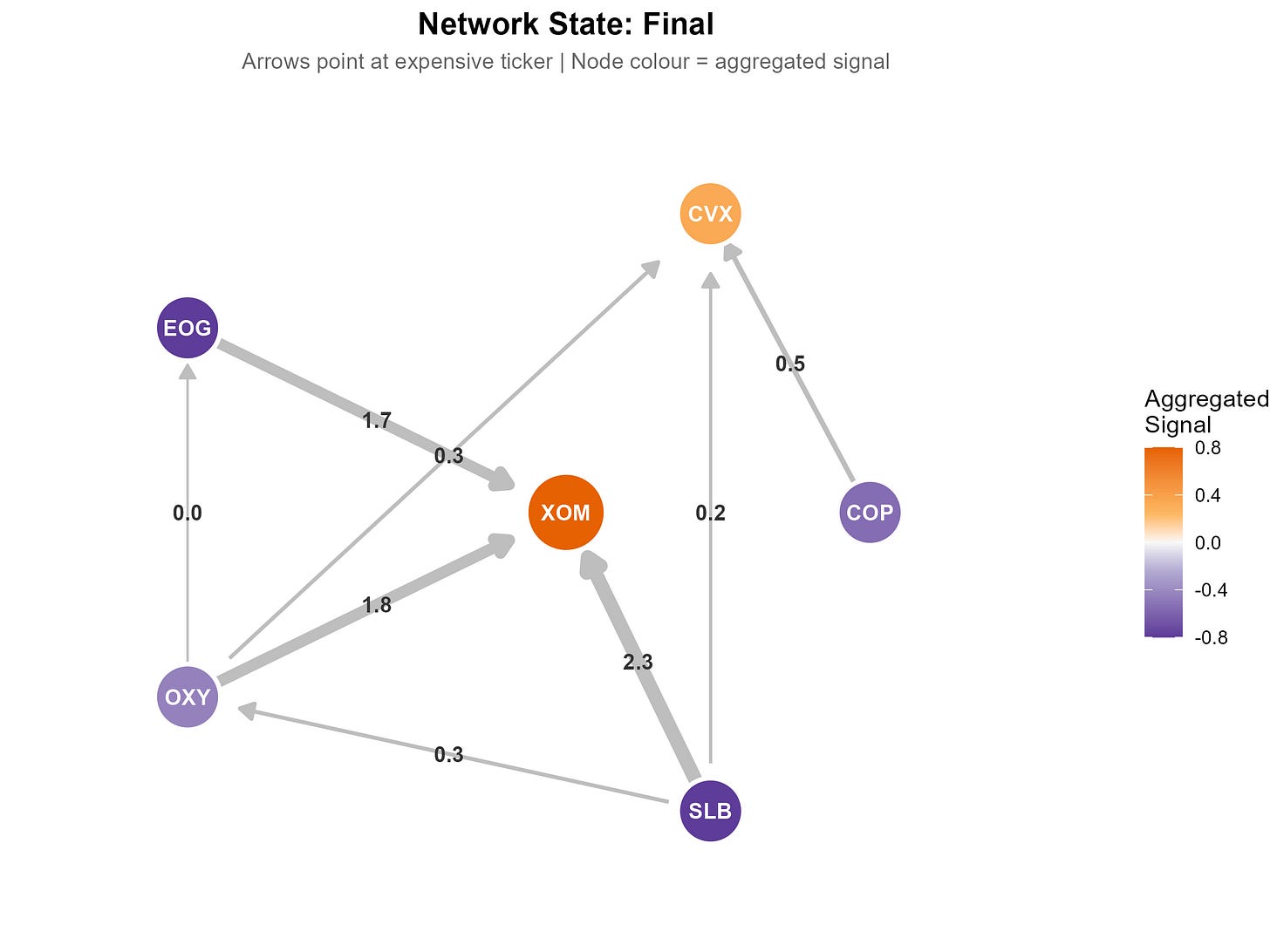
The mechanics of this approach involve "flattening" spread-level signals into ticker-level signals. For every spread that exhibits a statistically significant deviation, the signal is decomposed into two individual ticker signals. For example, if the XOM-SLB spread has a z-score of +2.3, indicating XOM is rich relative to SLB, this translates into a "sell XOM" signal with a magnitude of +2.3 and a "buy SLB" signal with a magnitude of -2.3.
This decomposition is performed for all identified spreads within the universe. Each ticker then accumulates a series of "votes" from the spreads it participates in. By aggregating these votes, a more robust and conviction-driven signal for each individual security can be generated. A ticker that consistently appears rich across multiple relationships, like XOM in the energy stock example, will have a strong positive aggregate signal, suggesting it should be considered for shorting. Conversely, a ticker consistently appearing cheap will have a strong negative aggregate signal, indicating it should be considered for a long position.
Key Advantages of Triangulated Stat Arb
This portfolio-centric approach offers several distinct advantages over traditional pairs trading:
- Enhanced Capital Efficiency: By targeting only the demonstrably mispriced securities (the "mispriced legs"), capital is not tied up in fair-value hedges. This allows independent traders to deploy their capital more effectively and potentially manage a larger number of positions.
- Improved Signal Utilization: The strategy aggregates information from the entire universe of analyzed spreads. This means that a greater proportion of the analytical insights generated by the trader’s research pipeline can be translated into actionable trades, addressing the "100-pairs problem."
- Reduced Transaction Costs: Since trades are executed only on the securities identified as mispriced, transaction costs are effectively halved compared to traditional pairs trading, which requires executing two trades for each pair.
- Diversification Benefits: Instead of holding pairs, which offer a specific type of hedge, this strategy builds a portfolio of individual long and short positions. This diversification can be managed and adjusted to align with the trader’s overall objectives, offering more flexibility in risk management.
- Higher Expected Returns and Variance Control: The core principle is that genuinely mispriced securities will exhibit deviations against multiple partners, reinforcing the signal while washing out random noise. By aggregating these signals, traders can achieve higher expected returns by directly targeting mispricing, while still benefiting from the inherent variance reduction of a hedged portfolio (a basket of longs against a basket of shorts).
Addressing the Nuances of Network Agreement
While the network approach provides a powerful framework, real-world market data is rarely as clear-cut as the idealized energy stock example. Areas of the network might be sparser, with fewer interconnections, and the influence of market-wide or sector-wide beta can obscure individual stock mispricings. Determining genuine conviction from mere coincidence among overlapping signals becomes critical.
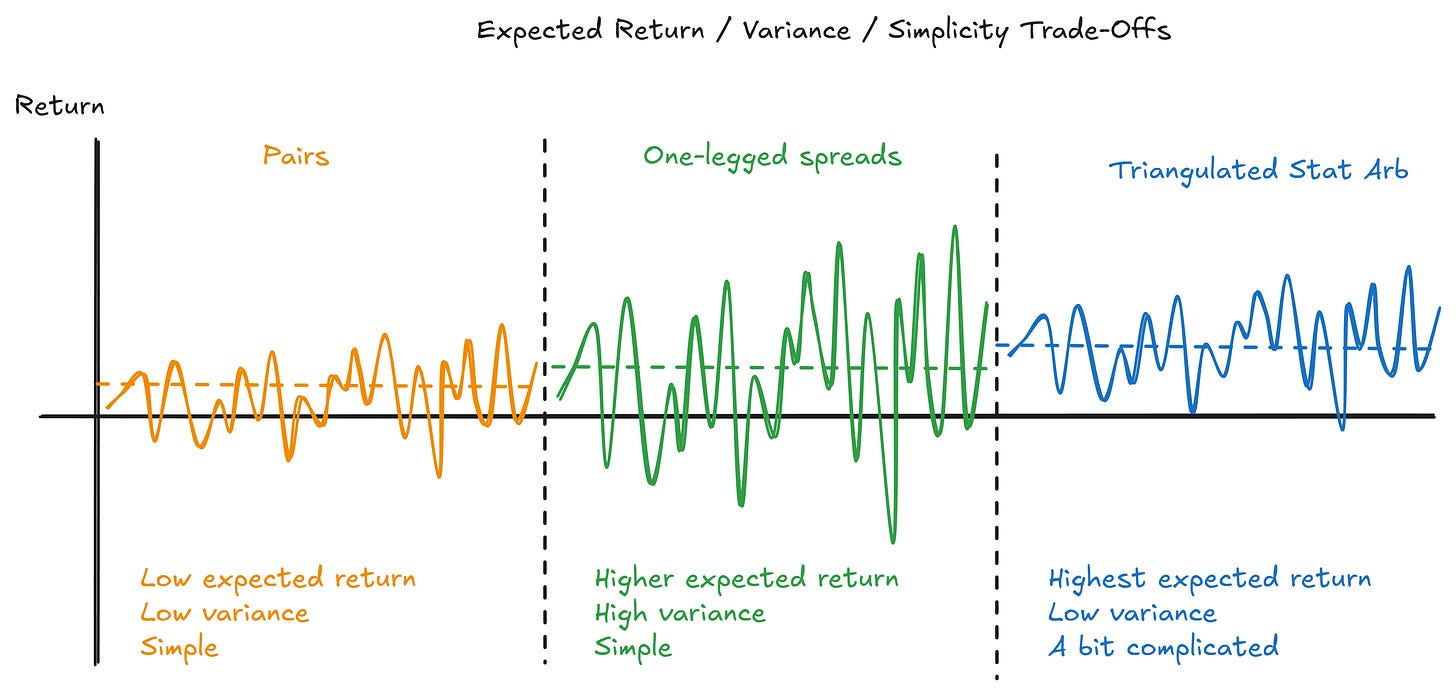
This is where the "triangulated" aspect of the strategy truly shines. It provides a systematic mechanism for assessing the quality and conviction of aggregated signals derived from the network. By navigating the interconnectedness of the market, traders can develop a more sophisticated understanding of when a signal represents a robust opportunity versus transient noise. The next steps in understanding Triangulated Stat Arb would involve detailing how this "navigation" is achieved and how it allows for a more precise assessment of signal quality.
Broader Implications for Independent Traders
The evolution towards portfolio-based statistical arbitrage, as exemplified by Triangulated Stat Arb, signifies a maturation of quantitative trading strategies accessible to independent traders. It moves beyond simplistic pairwise correlations to embrace a more holistic view of market relationships. This approach not only enhances profitability through improved capital efficiency and signal utilization but also offers a more robust risk management framework.
Furthermore, the aggregated ticker-level signals can be integrated into broader multi-factor trading portfolios. The insights derived from statistical arbitrage can be treated as another alpha factor, complementing other quantitative signals such as value, momentum, or quality. This integration allows for a more comprehensive and sophisticated approach to portfolio construction, potentially leading to superior risk-adjusted returns.
The journey from simple pairs to complex portfolios reflects a continuous drive within the quantitative finance community to extract greater informational value from market data. As computational power increases and analytical techniques advance, strategies like Triangulated Stat Arb are likely to become increasingly important tools for independent traders seeking to compete effectively in today’s sophisticated financial markets. The ability to leverage network effects and build diversified portfolios of mispriced assets offers a compelling path forward, promising higher returns with more controlled risk.