President Trump Vows to Slash Credit Card Swipe Fees as Midterm Election Stakes Rise

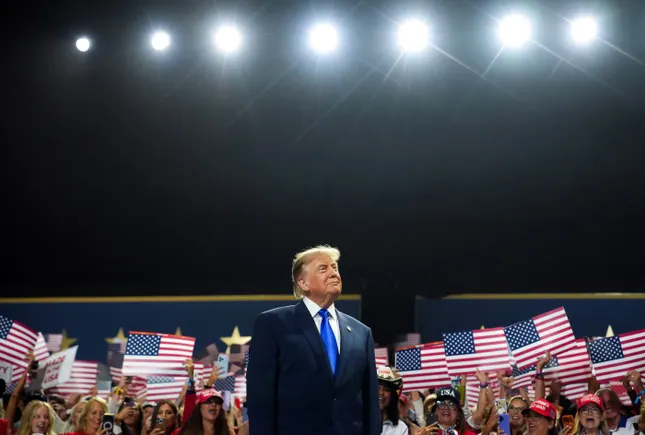
President Donald Trump escalated his campaign rhetoric regarding the financial services sector on Wednesday, utilizing a keynote address at the Republican midterm convention in Dallas to pledge a sweeping overhaul of credit card swipe fees. The President asserted that such a move would return approximately $1,200 annually to the average American household, positioning the policy as a cornerstone of his economic platform ahead of the critical midterm elections. While the President’s promise energized the base, it also reignited a long-standing and high-stakes debate between the retail industry and the nation’s largest financial institutions.
The proposed reform centers on the Credit Card Competition Act (CCCA), a bipartisan legislative effort that seeks to break the perceived duopoly held by Visa and Mastercard. By requiring banks to provide merchants with at least one alternative, non-affiliated payment network, proponents argue that the current market stagnation—which allows card networks to set high interchange rates—will be replaced by competitive pressure, ultimately lowering costs for businesses and consumers alike.
The Legislative Landscape and the Road to Reform
The quest to regulate interchange fees is far from a new phenomenon in Washington. The narrative began in earnest with the 2010 Durbin Amendment, a provision of the Dodd-Frank Wall Street Reform and Consumer Protection Act. That amendment successfully capped debit card swipe fees for large banks, yet it notably excluded credit cards. For over a decade, retail trade groups have lobbied for an expansion of these protections to cover the credit market, arguing that the costs imposed by card networks represent an "hidden tax" on every transaction.
In recent years, the movement has gained legislative momentum through the sponsorship of Senator Roger Marshall (R-KS) and Senator Dick Durbin (D-IL). The bipartisan nature of the bill reflects the broad dissatisfaction among business owners, from small-town convenience stores to massive national retailers. As the midterm elections approach, the political calculus has shifted; with the balance of power in both the House and the Senate hanging in the balance, supporters of the CCCA are looking to leverage the current administration’s populist economic messaging to finally push the bill across the finish line.
Market Dynamics: The Conflict Over "Swipe Fees"
At the heart of the controversy is the fee structure applied to every credit card purchase. When a consumer uses a credit card, the merchant is charged an interchange fee, typically ranging from 1.5% to 3% of the transaction value. These fees are collected by the card-issuing bank and the network. Merchants contend that these fees are arbitrary, opaque, and significantly higher than those found in other developed economies, such as the European Union, where caps are strictly enforced by regulation.
President Trump’s recent comments, in which he claimed that U.S. fees are "seven to eight times higher" than those in other countries, mirror the talking points frequently cited by the Merchants Payments Coalition (MPC). Doug Kantor, an MPC executive committee member, has consistently argued that these fees are a primary driver of inflation at the point of sale. "Credit card swipe fees drive up costs for small businesses and prices for American families every day," Kantor stated following the President’s Dallas speech.
However, the financial industry offers a starkly different interpretation of the economic reality. The Electronic Payments Coalition (EPC), which represents banks, credit unions, and payment networks, has pushed back aggressively against the narrative that swipe fees are excessive. The EPC argues that the revenue generated by these fees is essential for maintaining the security, integrity, and innovation of the global payment ecosystem.
The Industry Counter-Argument: Security and Innovation
The Electronic Payments Coalition emphasizes that the merchant-led argument ignores the significant investments made in cybersecurity, fraud prevention, and the rewards programs that consumers have come to expect. According to industry data, card networks have invested billions into tokenization and encryption technologies that allow for near-instant, secure global commerce.
In a recent press release, the EPC characterized the supporters of the CCCA as relying on "cherry-picked statistics and half-truths." Their argument is twofold: first, that merchant revenue has surged over the past decade due to the efficiency of card payments; and second, that mandated competition could lead to a degradation of the security features that protect consumers from fraud. They contend that if banks are forced to accept lower interchange rates, the first casualties will likely be consumer loyalty programs, cash-back incentives, and the robust fraud detection systems that currently shield users from billions in losses annually.
Political Implications for the Midterm Cycle
The political theater surrounding this issue is heightened by the upcoming midterm elections. President Trump’s explicit backing of the CCCA serves a dual purpose: it provides a tangible, kitchen-table issue to rally voters, and it strengthens the profile of key congressional allies like Senator Marshall, who is currently navigating a competitive re-election campaign in Kansas.
The strategy is clear: by aligning with the retail lobby, the administration is attempting to create a populist coalition that pits the "Main Street" merchant against the "Wall Street" financial behemoths. Yet, the path to legislative success remains treacherous. The financial lobby is among the most well-funded and organized forces in Washington. They have successfully thwarted multiple attempts to attach the CCCA to "must-pass" legislation, such as defense spending bills or annual appropriations packages.
The recent addition of sponsors such as Senators Bernie Moreno (R-OH), Cynthia Lummis (R-WY), and Angus King (I-ME) indicates that the bill is gaining traction, but the filibuster-prone environment of the Senate remains a significant hurdle. Furthermore, the House of Representatives, where Representatives Lance Gooden (R-TX) and Zoe Lofgren (D-CA) lead the charge, is also divided on the extent to which the government should intervene in private contract law.
Economic Analysis: Will Consumers Actually Save?
A critical question remains: if the legislation passes and swipe fees are reduced, will those savings be passed on to the consumer? Economists are divided. Skeptics point to the aftermath of the original Durbin Amendment, noting that while merchants saw a decrease in overhead costs, there was little evidence of a corresponding decrease in the price of goods or services for the average consumer.
Critics of the President’s proposal argue that if swipe fees are reduced, retailers will simply absorb the difference as increased profit margin rather than lowering prices. Conversely, proponents argue that in a highly competitive retail market, the reduction in overhead will eventually force businesses to lower prices to maintain a competitive advantage.
The complexity of the global payments system ensures that this debate will continue long after the midterm elections. While the President has promised to "straighten it out very quickly," the intersection of federal regulation, private banking interest, and retail economics is notoriously resistant to rapid resolution.
A Look Ahead
As the nation moves toward the midterm cycle, the discourse around credit card fees will likely intensify. For the retail sector, this is an existential fight to reclaim a portion of their margins. For the financial sector, it is a fight to preserve a business model that has supported the growth of the digital economy for decades.
Whether the President’s pledge translates into legislative reality depends on the composition of the next Congress. If Republicans retain control of both chambers, the likelihood of a vote on the CCCA increases substantially. However, the influence of the financial services lobby and the technical complexities of implementing a third-network mandate mean that the final policy—should it pass—may look significantly different from the current draft.
For now, the debate serves as a stark reminder of the influence of economic policy on the daily lives of Americans. As both sides dig in for a protracted legislative battle, the promise of $1,200 in annual savings remains a potent, if debated, campaign narrative that will undoubtedly echo through the halls of Congress in the months to come. The outcome will not only affect the balance of power in Washington but will also redefine the architecture of the American payment system for years to follow.