EUR/USD Weekly Outlook: Euro Resilience Faces Resistance Near Multi-Year Highs Amid Evolving Central Bank Expectations


The foreign exchange market experienced a week of notable turbulence in the EUR/USD currency pair, characterized by an initial surge for the single currency followed by a measured retracement as the US dollar attempted a recovery. Throughout the trading week, the exchange rate navigated a complex landscape defined by shifting geopolitical dynamics, high-stakes fiscal negotiations in Washington, mixed macroeconomic data releases from both sides of the Atlantic, and crucial signals regarding the future trajectory of monetary policy from the Federal Reserve and the European Central Bank.
While the euro managed to demonstrate underlying resilience supported by better-than-expected regional gross domestic product and stable inflation figures, the US dollar found a footing following the averted government shutdown and the nomination of a market-friendly candidate for the Federal Reserve chairmanship. As traders look ahead to a data-heavy calendar featuring crucial employment statistics and central bank communications, the technical landscape suggests that the currency pair is undergoing a healthy correction below the psychological 1.1900 threshold after probing multi-year highs above the 1.2000 handle.
Chronology of the Week: Geopolitical Pressures and Fiscal Stalemates
The weekly trading cycle began under a cloud of bearish sentiment for the greenback. Early in the week, the US dollar slumped to multi-year lows, pressured by a combination of brewing geopolitical concerns and persistent market anxieties regarding the long-term institutional independence of the Federal Reserve. Investors grew increasingly wary of external pressures on monetary policy decision-making, prompting capital outflows from dollar-denominated assets and fueling a strong rally in the shared European currency.
However, the narrative shifted mid-week. Market apprehension eased significantly after President Donald Trump and congressional leaders in the Senate reached a definitive agreement to avert a potentially disruptive federal government shutdown. The avoidance of a fiscal crisis eliminated a major source of short-term systemic risk for the US economy, breathing new life into the American currency.
The recovery of the greenback gained further momentum with the official nomination of former Federal Reserve Governor Kevin Warsh as the next Chairman of the central bank. Financial markets interpreted the selection of Warsh—a known advocate for sound money and monetary discipline—as a reassuring development that would safeguard the traditional autonomy of the Fed. This political and institutional stabilization allowed the dollar to claw back its steep losses, halting the euro’s aggressive ascent and forcing the EUR/USD pair into a corrective phase.
Diverging Economic Indicators: US Inflation Stickiness Versus Eurozone Growth Resilience
The macroeconomic data flow throughout the week presented a contrasting picture of the economic health of the United States and the Eurozone, complicating the policy calculus for both central banks.
In the United States, economic releases painted a mixed picture. On one hand, factory orders outperformed analysts’ consensus expectations, pointing to persistent manufacturing durability. On the other hand, the labor market showed signs of softening as initial jobless claims ticked higher, while the broader US trade deficit widened noticeably, signaling ongoing external sector imbalances. More importantly for monetary policy, the Producer Price Index (PPI) and Core PPI figures for the period revealed sticky, stubborn inflation. The readings came in stronger than forecasted, directly challenging the narrative that price pressures were smoothly fading back to the central bank’s target.
This hotter-than-anticipated inflation print reinforced the prevailing market consensus that the Federal Reserve will adopt an exceptionally cautious approach to cutting interest rates, pushing back against expectations of aggressive monetary easing. These sentiments were explicitly echoed by regional central bank officials. Atlanta Fed President Raphael Bostic delivered public remarks emphasizing that inflation remains uncomfortably high. Bostic argued that the Federal Reserve must maintain a patient stance, keeping the threshold high for any near-term reductions in the federal funds rate.
Conversely, fundamental data emerging from the Eurozone provided modest, yet welcome, support for the euro. Fourth-quarter gross domestic product figures for the broader Eurozone, alongside robust readings from Germany—Europe’s largest economy—exceeded economists’ forecasts. These metrics demonstrated that the regional economy maintained a surprising degree of resilience, even if the underlying growth backdrop remained modest. Furthermore, German inflation metrics, including the Harmonized Index of Consumer Prices (HICP) and core measures, held steady and hovered comfortably close to the European Central Bank’s official medium-term target.
Monetary Policy Outlook: ECB Stasis and Long-Term Dollar Cycle Debates

The divergence in macroeconomic realities has solidified specific expectations regarding the future policy stance of the European Central Bank. Analysts and institutional economists representing major financial firms, including Rabobank, TD Securities, and Brown Brothers Harriman, widely anticipate that the ECB will maintain its primary deposit facility rate at the current 2.00% level for an extended period.
According to these institutional assessments, policymakers at the ECB currently see little operational urgency to either cut or hike interest rates. While this steady-state approach provides a stabilizing anchor for the euro, it also introduces subtle economic challenges, as the recent strength of the single currency raises underlying concerns regarding the international competitiveness of Eurozone exporters.
Looking at the broader structural horizon, strategists at Nordea and UOB have introduced a compelling macro-driven perspective, highlighting the genuine risk that the US dollar may be entering a prolonged, multi-year downward cycle. This hypothesis is grounded in historical market patterns, which frequently demonstrate that extended phases of dollar depreciation follow major cyclical peaks. Furthermore, shifting portfolio behaviors among international foreign investors who are diversifying away from dollar-heavy allocations lend credence to this structural bearish view on the greenback. These long-term projections suggest that the EUR/USD exchange rate has ample structural room for further appreciation over the coming years, provided that Eurozone economic growth and price stability remain contained and the ECB refrains from sudden policy deviations.
Key Economic Events and Data Releases Ahead
As the foreign exchange market transitions into the coming week, traders and institutional investors will turn their attention to a dense and high-impact economic calendar. The scheduled releases are expected to dictate the near-term directional momentum of the EUR/USD pair.
On the European front, market participants will closely monitor incoming economic updates, though the primary focal point will be the official policy meeting of the European Central Bank. The ECB is widely projected to leave interest rates unchanged. Consequently, market attention will center on the tone of the post-meeting press conference and the communication strategy of ECB officials. Analysts will scan the rhetoric for any explicit verbal pushback against the recent appreciation of the euro, as excessive currency strength could threaten the regional economic recovery.
In the United States, the macroeconomic calendar is dominated by critical labor market statistics. Employment data, encompassing the Non-Farm Payrolls (NFP) report, the unemployment rate, and average hourly earnings, will serve as the definitive litmus test for the health of the American labor market. These figures will be instrumental in refining market expectations regarding the path of Federal Reserve policy. Any significant statistical surprise in the employment figures—whether stronger or weaker than anticipated—has the high potential to trigger sharp, volatile price movements in the EUR/USD pair as investors rapidly re-evaluate the relative monetary policy trajectories of the Fed versus the ECB.
Technical Analysis: Corrective Downside Action Under 1.1900
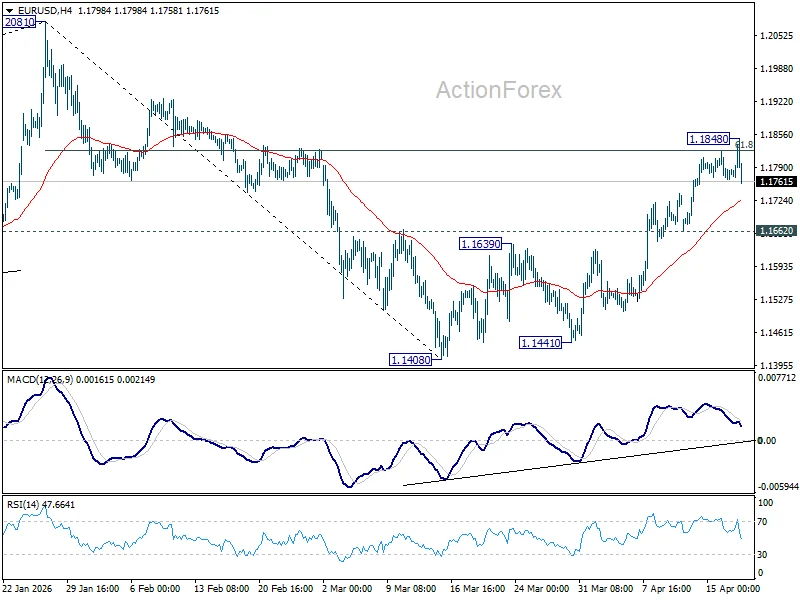
From a technical perspective, the daily chart of the EUR/USD currency pair reveals a classic corrective phase following an aggressive rally that drove prices to more-than-four-year highs above the milestone 1.2000 psychological barrier.
Following the inability to sustain momentum above the 1.2000 handle, the currency pair retreated below the previously broken supply zone, slipping back under the key 1.1900 benchmark. Momentum oscillators reflect this cooling phase; the Relative Strength Index (RSI) has successfully retreated from overbought territory and is trending gradually downward, exposing underlying short-term weakness. Despite this corrective pullback, the broader technical structure retains a constructive bias, as key moving averages continue to slope upward, offering robust underlying support to the market.
Immediate technical support for the downside is concentrated near a bullish price gap situated around the 1.1830 region. Should selling pressure intensify, the next line of defense rests at the horizontal support level established at 1.1800. A defense of these levels would preserve the integrity of the broader upward structure.
Conversely, for the bullish momentum to resume and challenge the prevailing correction, the exchange rate must achieve daily and weekly price acceptance above the psychological 1.2000 mark. A decisive break and stabilization above this ceiling would clear the path for the pair to target subsequent resistance levels at 1.2100, with an eventual medium-term eye on the 1.2200 threshold.
Market participants are advised to maintain rigorous risk management protocols given the density of upcoming macroeconomic catalysts and the heightened sensitivity of central bank rhetoric to incoming data developments.