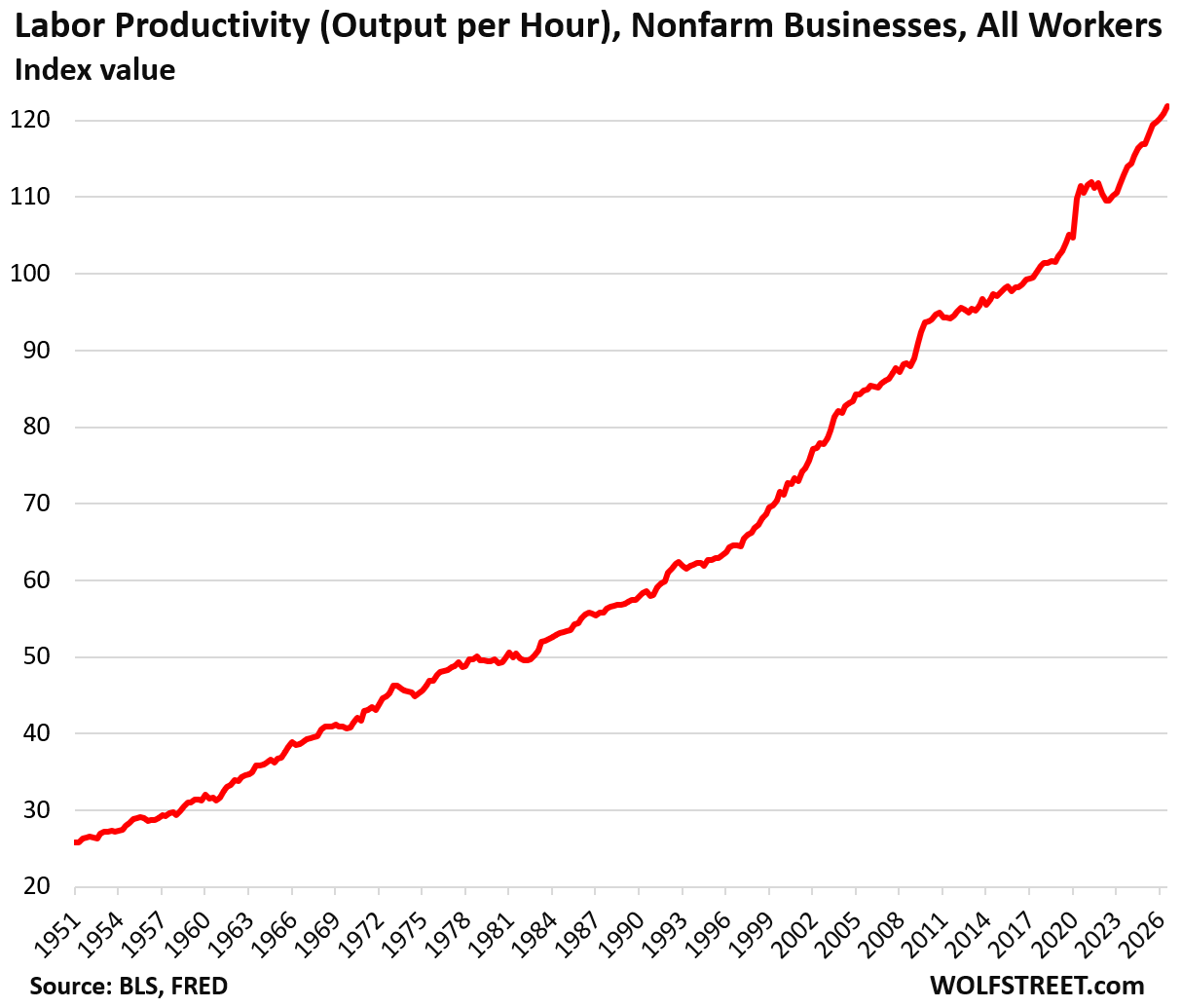
Continually improving technologies, from automation to the computerization of everything, have caused labor productivity to soar.

The landscape of modern industry is undergoing a seismic shift, driven by capital-intensive investments that prioritize technological efficiency over headcount. Across the United States, the construction of state-of-the-art semiconductor fabrication facilities—or "fabs"—serves as a primary case study for this transformation. These facilities, often costing upwards of $20 billion, represent the pinnacle of modern industrial strategy. A typical facility might require $3 billion in construction costs and an additional $17 billion in highly specialized machinery. Once fully operational, these plants operate with a lean workforce of roughly 2,000 employees, consisting primarily of highly skilled engineers, technicians, and specialized logistics personnel. In this environment, the cost of human labor is eclipsed by the massive capital expenditure required to maintain the machinery that generates the output.
The Historical Evolution of Industrial Labor
To understand the current state of productivity, one must look at the evolution of manufacturing over the last century. A century ago, automobile assembly was a labor-intensive process, with nearly every step performed by human hands. Today, the modern automotive plant is a bastion of industrial robotics and algorithmic precision. Management consulting firms, including Oliver Wyman, alongside the Center for Automotive Research, estimate that human labor costs now account for a mere 8% to 12% of the total cost of manufacturing a motor vehicle.
This decline is not merely a consequence of cost-cutting; it is the result of a systematic effort to replace manual tasks with automation. Tasks such as precision welding, painting, and intricate material handling are now handled by machines that operate with a consistency and speed impossible for humans to match. While the total number of workers has decreased, the nature of the remaining roles has shifted. The modern factory floor requires fewer general laborers and significantly more individuals capable of programming, maintaining, and overseeing complex robotic systems.
The Computerization of White-Collar Work
The trend toward automation is not confined to the assembly line; it has fundamentally reorganized the white-collar sector. The image of the traditional office—populated by rows of secretaries, manual typists, and massive physical filing systems—has been rendered obsolete by the digital revolution. Computerization and the widespread adoption of enterprise software have automated functions that once defined office life: inventory management, invoicing, payroll processing, and accounts receivable.
This transformation occurred in waves. The 1970s and 1980s introduced early data processing, while the 1990s and 2000s saw the internet bridge the gap between businesses and their internal operations. Today, cloud computing and automated workflows have essentially eliminated the need for manual data entry, shifting the role of the employee from a "doer" of administrative tasks to an "orchestrator" of digital systems.
Macroeconomic Impact and Productivity Metrics
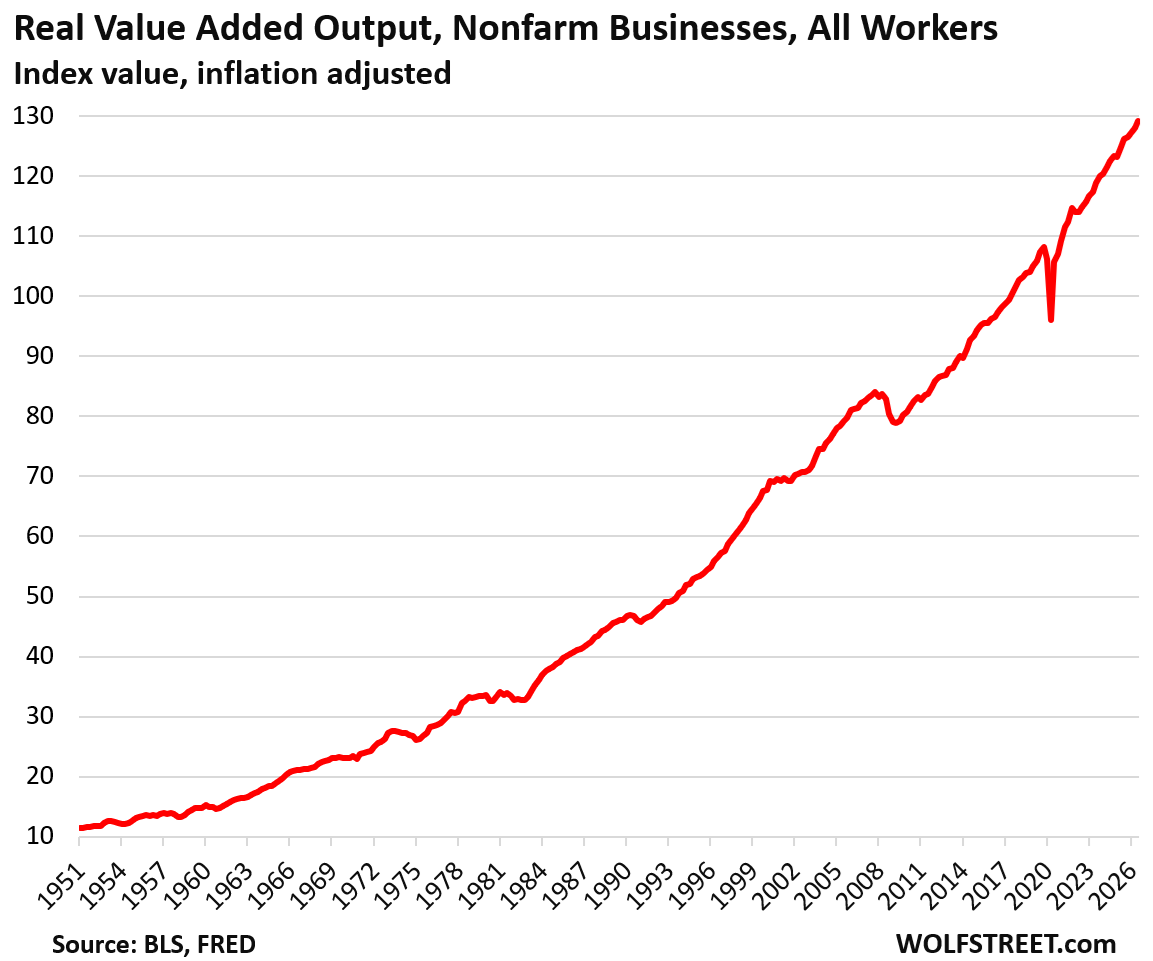
The impact of these technological investments is reflected clearly in national economic data. Since 1982, the "real" (inflation-adjusted) value-added output for all workers in nonfarm businesses has quadrupled. Since 1999 alone, this output has doubled. This staggering growth in productivity is the direct byproduct of constant innovation and the massive capital investments made by corporations to reduce the labor component of their total output.
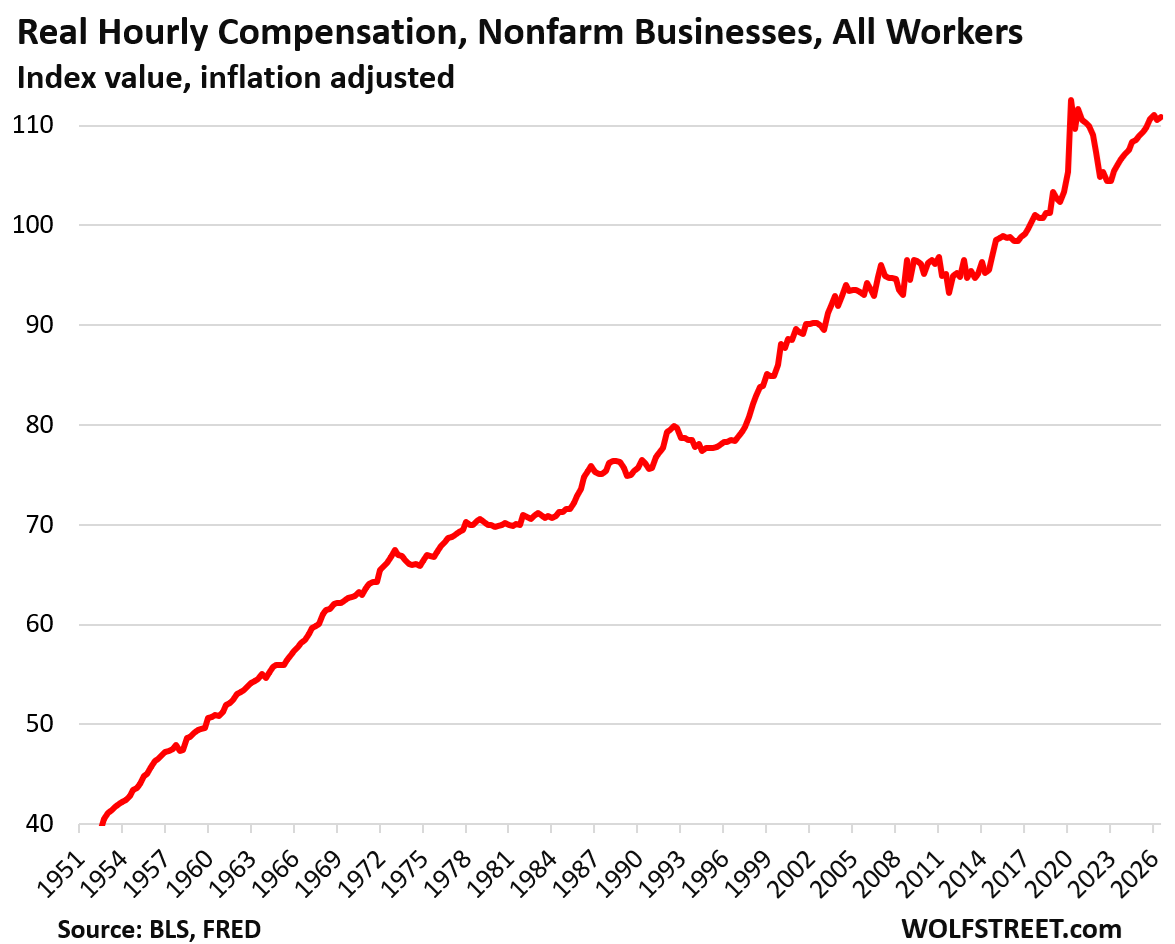
However, this transition has created a complex relationship between productivity and compensation. While the share of total output allocated to labor has declined, the remaining workers—who are increasingly specialized—have seen their hourly compensation rise in real terms. Despite the volatility introduced by the inflationary spikes of 2021 and 2022, which temporarily compressed real wages due to surges in healthcare and benefit costs, the long-term trend indicates that highly skilled labor is increasingly valuable.
The "Self-Service" Economy
An often-overlooked factor in the rise of labor productivity is the outsourcing of labor to the consumer. The integration of technology into the retail and banking sectors has effectively moved the burden of labor from the business to the client. Modern examples include:

- Banking: Automated Teller Machines (ATMs) and mobile banking applications allow customers to perform transactions that previously required a teller. This has allowed financial institutions to increase output without a corresponding increase in branch-level staffing.
- Retail: The proliferation of self-checkout kiosks in grocery stores and big-box retailers has shifted the scanning and bagging process to the consumer.
- Services: Automated car washes and self-service fuel stations allow businesses to provide high-volume services with minimal human intervention.
In these sectors, labor productivity soars because the "work" is performed by the customer, facilitated by the firm’s technology. The firm captures the value of the output while minimizing payroll expenses.
The AI Frontier: A New Paradigm?
As we move deeper into the 21st century, the focus has shifted to the potential impact of Artificial Intelligence (AI). There is a prevailing anxiety that AI may represent a unique turning point, potentially destroying more jobs than it creates. Historical precedents suggest that every major technological shift—from the Steam Engine to the Personal Computer—was met with similar fears of mass displacement.
So far, the evidence regarding AI remains mixed. While AI has certainly begun to automate cognitive tasks in fields like marketing, programming, and data analysis, it has simultaneously spawned an entirely new economic ecosystem. The demand for AI infrastructure, cybersecurity to protect against AI-driven threats, and the rapid growth of AI-focused startups suggest that the labor market is adapting. Employment levels in the United States have remained resilient, and the "tight" labor market of the mid-2020s suggests that the economy is absorbing these changes rather than collapsing under them.
Implications for the Future Workforce
The implications of this trajectory are profound for both policy makers and individual workers. While the economy as a whole benefits from lower production costs and higher productivity, the transition is not frictionless. Individuals whose skill sets are rendered obsolete by automation face significant hurdles. The "upskilling" requirement is becoming a permanent feature of the modern career path.
For the employer, the shift toward a machine-heavy, low-labor-cost model is an existential imperative. Companies that fail to invest in the latest automation technologies risk being outcompeted by those that can produce at higher volumes for lower costs. This creates a feedback loop: as technology becomes cheaper and more capable, the barrier to entry for capital-intensive industries rises, further consolidating the dominance of firms that can afford the initial investment.
In conclusion, the soaring productivity observed over the past four decades is not a temporary phenomenon but the result of a long-term structural change in how value is created. By shifting the physical labor of production to machines and the administrative labor of operations to software—or even to the consumer—the modern economy has achieved an unprecedented level of output. While the jury is still out on the long-term net effect of AI, the overarching lesson of the last century remains clear: technology does not just replace labor; it forces labor to evolve toward higher complexity and, consequently, higher reward. The challenge for the future will not be the absence of work, but the capacity of the workforce to keep pace with the accelerated rate of technological change.
Related posts: